Can Caraway Pans Go in the Oven
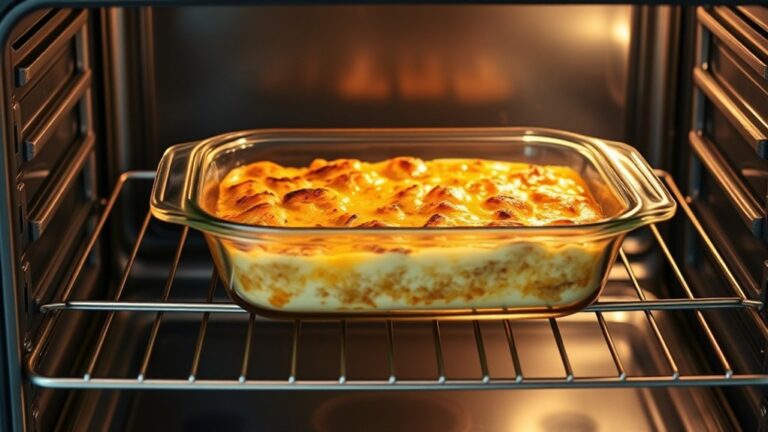
Yes, Caraway pans can go in the oven, but only within the exact temperature limit for your specific model. It is important to verify whether the handles, lids, and any silicone parts are oven-safe before placing the pan inside.
Even small mistakes, like placing a hot pan on a cold surface or using a broiler setting, can cause damage. The details matter here, and one exception can change everything.
Key Takeaways
- Yes, Caraway pans are oven-safe, but only within the specific temperature limit listed for each product.
- Many Caraway pans are rated up to 550°F, while lids often have a lower limit, around 350°F.
- Always follow the lowest-rated component in the set, including lids, handles, and any nonmetal parts.
- Do not use the broiler unless Caraway explicitly allows it for that exact pan or accessory.
- Check the product label or care guide before heating, and avoid sudden temperature changes or overheating.
Are Caraway Pans Oven-Safe?
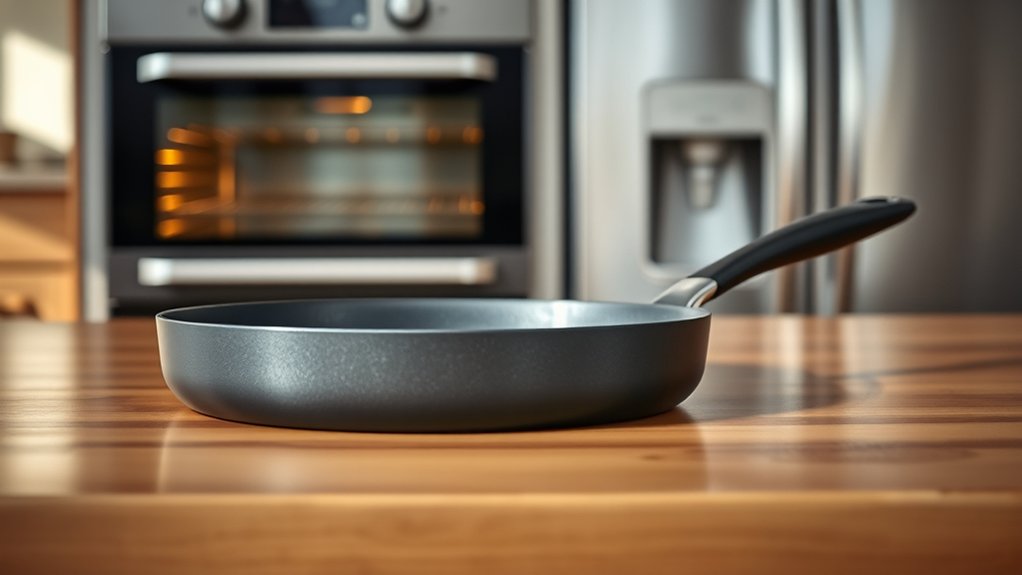
Yes, Caraway pans are oven-safe, but only within the brand’s stated temperature limits. You can move them from stovetop to oven when you need even finishing, browning, or keeping food warm.
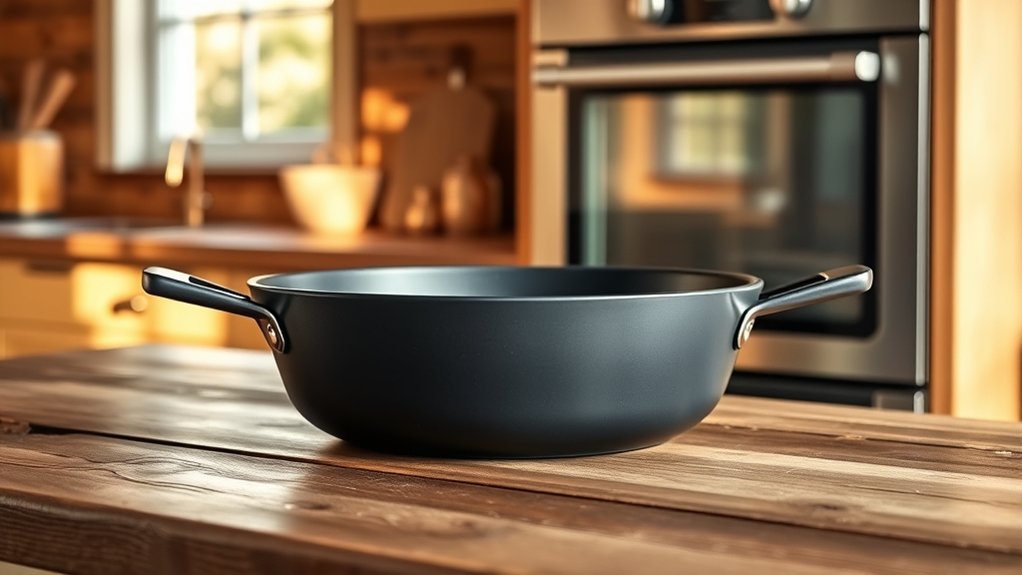
The ceramic-coated aluminum body handles oven use well, and the handles stay usable for standard baking tasks. Still, you should inspect each pan before heating: look for chips, warping, or loose hardware, because damage can affect performance.
Use dry oven mitts and avoid sudden temperature changes to protect the coating and extend service life. For practical oven maintenance, keep racks clean and positioned to give the pan stable support.
In kitchen organization, store lids and pans separately so you can grab the right piece quickly and reduce unnecessary handling. If you follow the manufacturer’s instructions and keep the pan in good condition, you’ll use it safely and efficiently for everyday roasting, reheating, and baking tasks.
Caraway Oven Temperature Limits
Caraway recommends using its cookware in the oven only up to the temperature limit listed for your specific piece, which is typically 550°F for most pans and 350°F for lids. You should treat these limits as absolute, because exceeding them can weaken the coating, warp the base, or damage handles and trim.
The cookware’s oven safe materials and heat resistant design are intended for controlled baking, roasting, and finishing at standard kitchen temperatures, not extreme heat. You’ll get the best performance when you match the oven setting to the lowest rated component, especially if a lid is attached.
Always check the exact product label or manufacturer guidance before you preheat, and avoid broiler use unless Caraway explicitly allows it. If you need higher heat, switch to a pan rated for that range. Staying within the stated limit preserves durability, appearance, and cooking consistency.
Which Caraway Pans Can Go in the Oven
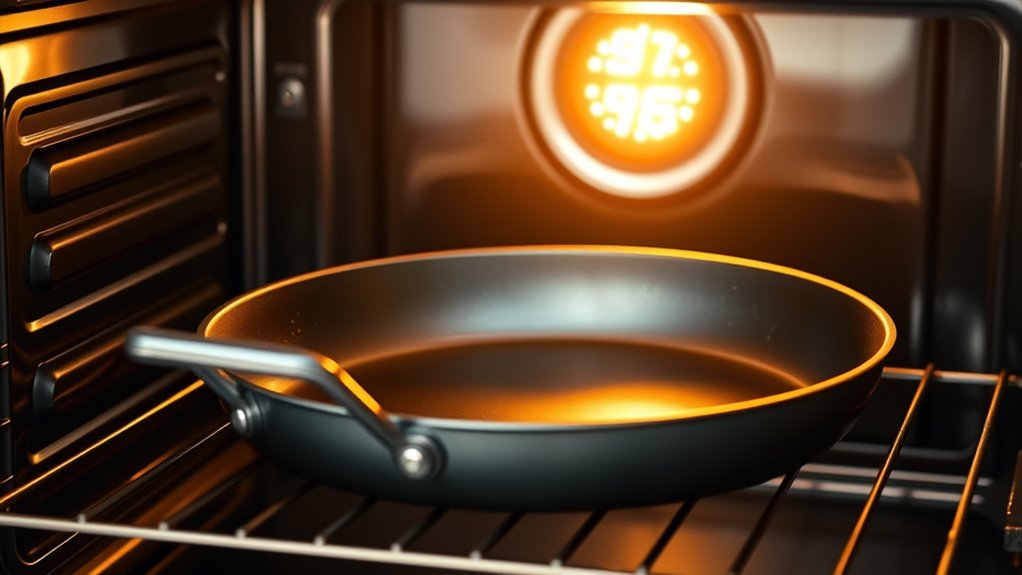
Not every Caraway pan is oven-safe at the same temperature, so you’ll need to check the specific piece you own before use. In general, you can put Caraway’s stainless steel or cast iron pieces in the oven if the manufacturer’s guidance lists them as oven safe.
You can also use many ceramic-coated fry pans and sauté pans within their stated material limits, but you must verify the maximum temperature for your model before heating. Use the product label, packaging, or the oven safe FAQ on Caraway’s site to confirm the exact rating.
If your pan has a nonstick coating, treat the coating’s limit as the governing factor, not the stovetop rating. For best results, avoid guessing and match the pan’s construction to its published limit. When you stay inside those material limits, you reduce coating damage, warping, and performance loss.
Are Caraway Handles and Lids Oven-Safe?
Whether Caraway handles and lids are oven-safe depends on the specific component and temperature rating. You need to check the exact product specs before you assume oven safe compatibility. In many cases, the pan body can tolerate higher heat than the handle hardware or lid parts.
Caraway lids often have stricter lid material limits because glass, silicone, or coated pieces may have different maximum temperatures than the cookware itself. If your setup includes removable handles, confirm whether they’re rated for continuous oven exposure or only brief use.
You should also verify whether any knob, gasket, or vent contains heat-sensitive materials. To stay safe, match the oven setting to the lowest-rated component in the set. If the manufacturer lists a maximum temperature, don’t exceed it.
When you’re uncertain, remove the lid or handle assembly and use only the component explicitly marked oven-safe.
Why Caraway Pans Work in the Oven
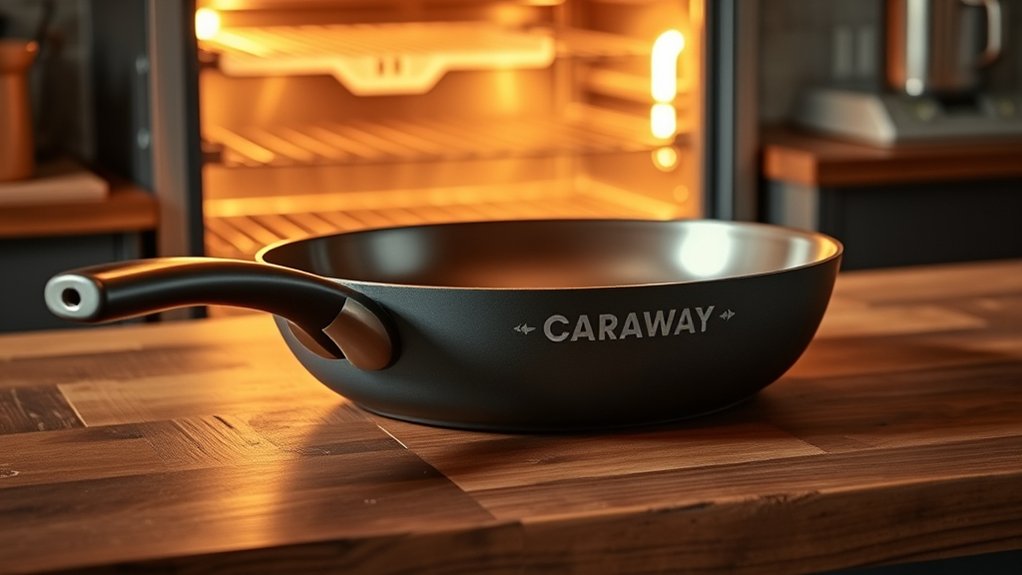
Caraway pans work in the oven because they use oven-safe materials that tolerate high temperatures without warping or releasing harmful compounds. You can rely on their heat-resistant design to keep the pan’s structure stable during baking and roasting.
That combination lets you move from stovetop to oven with predictable performance.
Oven-Safe Materials
What makes Caraway pans oven-safe is their materials and construction: the cookware uses an aluminum core for fast, even heat distribution, plus a ceramic-based nonstick coating that’s designed to tolerate oven temperatures within the brand’s stated limit.
You can trust this combination because aluminum conducts heat efficiently, while the coating resists breakdown when you stay inside that range. Many oven safe myths claim nonstick cookware always fails in the oven, but material failure usually happens only when you exceed the rated temperature or misuse the pan.
If you want reliable performance, check the handle and lid components too, since the pan body isn’t the only factor. Keep the pan within specifications, and you’ll get consistent baking results without premature wear or coating damage.
Heat-Resistant Design
Why do Caraway pans handle oven heat so well? You’re seeing a heat-resistant design built for controlled temperature exposure. The pan body uses a rigid aluminum core that distributes heat evenly, so you don’t get hotspots that stress the coating.
Caraway applies a ceramic-based surface that stays stable at typical baking temperatures, which supports oven safety when you follow the stated limits. The rivet-free, smooth cookware design also reduces weak points where heat can concentrate.
Because the handle geometry and exterior finish are engineered for thermal stability, the pan keeps its structure without warping during normal oven use. For best results, you should avoid broiler-level heat and sudden temperature shocks, since those conditions can exceed the design intent and shorten performance.
How to Use Caraway Pans in the Oven
To use Caraway pans in the oven, first confirm that the pan is oven-safe, then keep the temperature at or below the manufacturer’s stated limit, which is typically 550°F for the pan body but lower for any included lid or accessory. Remove plastic handles, silicone grips, or other nonmetal parts if your model includes them, and place the pan on a stable oven rack.
Use dry oven mitts when you move it, since moisture can reduce grip. Don’t preheat an empty pan for long periods, and avoid thermal shock by skipping sudden transfers from a hot oven to cold water.
If you’re comparing two word ideas for setup, focus on fit and airflow, not irrelevant discussion. After baking, let the pan cool on a heat-safe surface before washing. You should also check that knobs and lids meet the same temperature rating before reuse.
Best Foods for Caraway Pans
You can use Caraway pans for oven-safe foods like roasted vegetables, casseroles, baked fish, and sheet-pan proteins because they heat evenly and support stable cooking. Choose foods that release moisture gradually and fit the pan’s size, so you maintain consistent contact with the cooking surface.
Avoid high-sugar glazes, broiler-intensive dishes, and foods that can scorch quickly, since they can damage the finish and reduce performance.
Oven-Safe Food Options
When baking in Caraway pans, choose oven-safe foods that cook evenly and don’t require extreme heat, such as roasted vegetables, casseroles, baked pasta, fish, chicken cutlets, and sheet-pan-style meals. You’ll get the best results when you match the food to the pan’s heat range and surface size.
Many oven safe misconceptions and temperature myths come from confusing high heat with better browning; in practice, moderate temperatures usually work well.
| Food | Benefit |
|---|---|
| Roasted vegetables | Even caramelization |
| Baked pasta | Stable moisture retention |
| Chicken cutlets | Consistent surface contact |
You can also use your Caraway pan for salmon, grain bakes, and au gratin dishes. Keep portions in a single layer when possible, and the coating will help release food cleanly after cooking.
Foods To Avoid
Avoid high-heat, abrasive, or moisture-heavy foods that can stress Caraway’s nonstick coating or cook unevenly. You should skip recipes that demand searing, dry roasting, or prolonged bubbling, because they can reduce release performance and complicate oven care.
For kitchen safety, avoid:
- Sugar-heavy glazes that can caramelize fast and scorch.
- Acidic sauces with long bake times, since they may break down residue and stain.
- Dense, wet batters that trap steam and prevent even heat transfer.
You’ll get better results with moderate-moisture ingredients and controlled temperatures. Don’t overload the pan, and avoid metal utensils or harsh scrubbing after cooking.
These limits protect the coating, support consistent results, and extend the pan’s usable life in daily oven use.
Common Caraway Oven Mistakes to Avoid
One common mistake is putting a Caraway pan in the oven without checking its specific temperature limit first. You should verify the model’s maximum rating before preheating, because exceeding it can warp the base or damage the coating.
Don’t use broil unless the instructions explicitly allow that heat level, since direct radiant heat is harsher than standard baking. Avoid placing the pan on an empty rack with no support; use a stable middle rack for even airflow and consistent browning.
If you’ve compared caraway cookware brands, remember that not all nonstick systems tolerate the same thermal load. Also, don’t assume caraway hydration needs affect oven safety; moisture in food changes cooking behavior, not the pan’s rated limit.
Keep handles clear of heating elements, and don’t stack other bakeware on top, because pressure can scratch the surface. Read the care guide, and match your recipe’s temperature to the pan’s exact specifications.
How to Care for Caraway Pans After Baking
After baking, let your Caraway pan cool on a heat-safe surface before washing it. Rapid temperature changes can stress the coating and the base. Use lukewarm water, a soft sponge, and mild dish soap to remove residue without abrading the ceramic surface.
If food sticks, soak the pan for 10 to 15 minutes, then lift buildup with a nonabrasive scraper. Avoid steel wool, harsh powders, and dishwasher cycles since they can shorten the finish’s service life. These care tips help preserve release performance and even heating.
- Rinse promptly after use to prevent baked-on staining.
- Dry fully with a lint-free towel to reduce spotting.
- Store with a soft liner or pan protector to prevent scratches.
For tougher messes, mix baking soda with a little water and apply it as one of your cleaning hacks. Then rinse thoroughly and inspect the surface before putting it away.
Frequently Asked Questions
Can Caraway Pans Go Under the Broiler?
No, you shouldn’t put Caraway pans under the broiler; that dangerous heat can damage the coating.
Check cookware compatibility first, since most nonstick ceramic pans aren’t broiler-safe. Use oven-safe settings only to protect your pan.
Are Caraway Pans Safe for Pizza Baking?
Yes, you can use Caraway pans for pizza baking, as long as you stay within the manufacturer’s temperature limits. Think of oven safety like a guardrail, keeping your crust crisp and your pan protected.
Do Caraway Pans Need Preheating Before Oven Use?
No, you don’t need to preheat Caraway pans themselves; your oven should preheat first.
Follow the preheating requirements on the care guide, and keep oven safety in mind to avoid thermal shock, warping, or coating damage.
Can Caraway Pans Go From Fridge to Oven?
No, you shouldn’t rush caraway pans from fridge to oven; thermal shock can crack coatings.
You’ll protect oven safety by letting the pan warm briefly at room temperature before heating, especially with heavy temperature changes.
Are Caraway Pans Safe for Convection Ovens?
Yes, you can use caraway pans in convection ovens if you follow oven compatibility limits; they’re generally convection-safe, but not broiler-suitable. For pizza baking, respect preheating requirements and avoid fridge to oven suitability.
Conclusion
So, can Caraway pans go in the oven? Yes—if you follow the exact oven-safe limit on your specific model. You should remove any plastic or silicone parts, avoid sudden temperature shifts, and never exceed the rated heat.
Think of the pan’s coating like a calibrated tool: it performs well only within spec. If you treat it carefully, you’ll get reliable oven results without warping, coating damage, or unsafe handle failure.
In conclusion, using Caraway pans in the oven is safe as long as you adhere to the recommended guidelines. Proper care ensures the longevity and performance of your Caraway pans.