What Temp to Cook Chicken in Oven
When you cook chicken in the oven, the right temperature depends on the cut you choose. You can roast a whole bird at 375°F, bake breasts at 400°F, or use 425°F for thighs and legs when you want crisp skin.
But temperature alone won’t finish the job, and the difference between dry meat and juicy chicken comes down to one simple step you can’t skip.
Key Takeaways
- Whole chicken and mixed pieces cook well at 375°F for even roasting and safety.
- For deeper browning, start whole chicken at 400°F for 15 minutes, then reduce to 375°F.
- Boneless chicken breasts roast best at 400°F until they reach 165°F at the thickest part.
- Chicken thighs and legs cook best at 425°F for crisp skin and juicy meat, reaching 175°F to 185°F.
- Always use an instant-read thermometer, then rest chicken before carving for juicier results.
What Is the Best Oven Temp for Chicken?
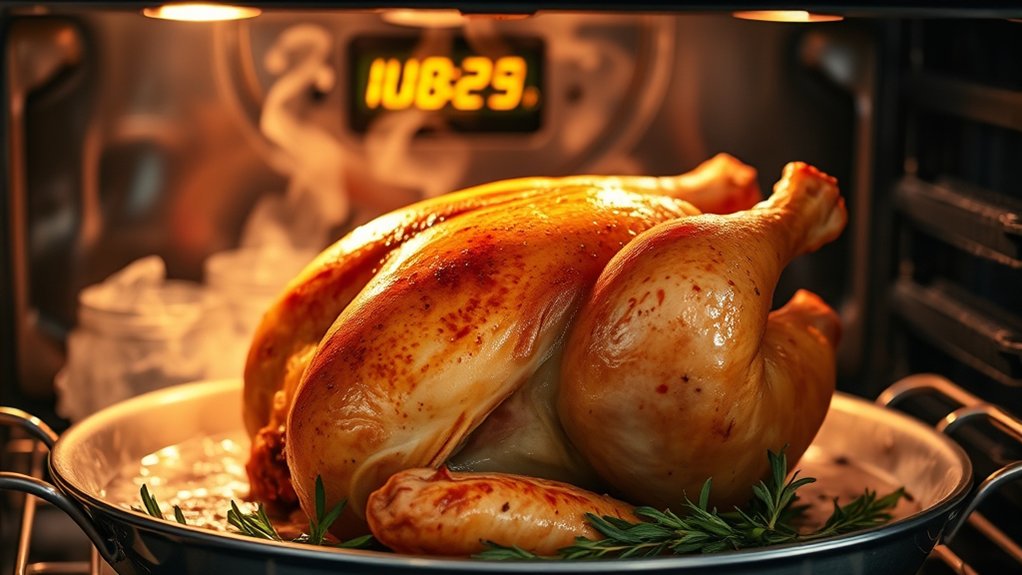
What’s the best oven temperature for chicken? You should set your oven to 375°F for most whole chickens and mixed pieces. This temperature gives you even heat, steady browning, and reliable doneness without drying the meat too quickly.
If you want deeper color, start at 400°F for the first 15 minutes, then lower it to 375°F.
Use a rack in a roasting pan so hot air can circulate under the bird. Pat the chicken dry, season it, and place it skin-side up. For kitchen safety, keep raw chicken away from ready-to-eat foods and wash your hands and surfaces after handling it.
Tool recommendations matter here: use an instant-read thermometer to check the thickest part of the meat, not the bone. Cook until the chicken reaches 165°F at the center. Let it rest before carving so the juices settle and every bite stays moist.
Best Oven Temp for Chicken Breasts
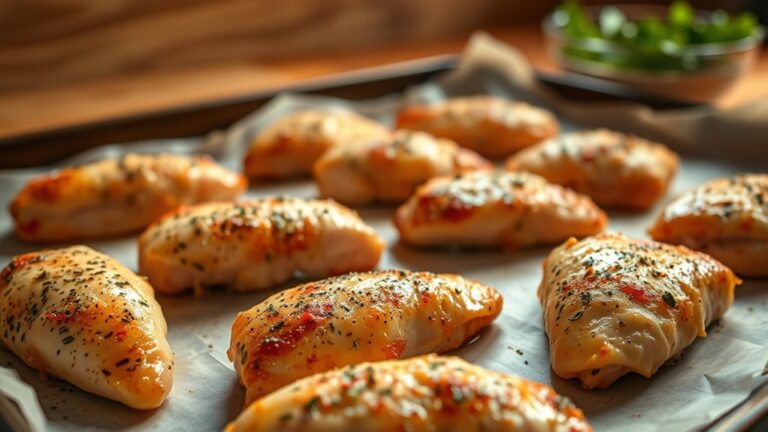
For chicken breasts, set your oven to 400°F for the best balance of browning and juiciness. You’ll get firm, evenly cooked meat without drying it out. Use this temperature for boneless breasts, which cook quickly and benefit from steady heat.
Pat the chicken dry, brush it with oil, and season it well so the surface browns nicely. If your breasts are very thick, pound them to an even thickness for more consistent results.
Pat the chicken dry, brush with oil, and season well for a nicely browned, flavorful surface.
Place them on a lined sheet pan or in a lightly oiled baking dish, then roast until the thickest part reaches 165°F. Start checking early, since oven size and breast thickness affect timing.
Let the chicken rest for 5 minutes before slicing so the juices stay inside. If you’re cooking skin on thighs in the same meal, keep them on a separate tray, since they need different handling and timing.
Best Oven Temp for Chicken Thighs and Legs
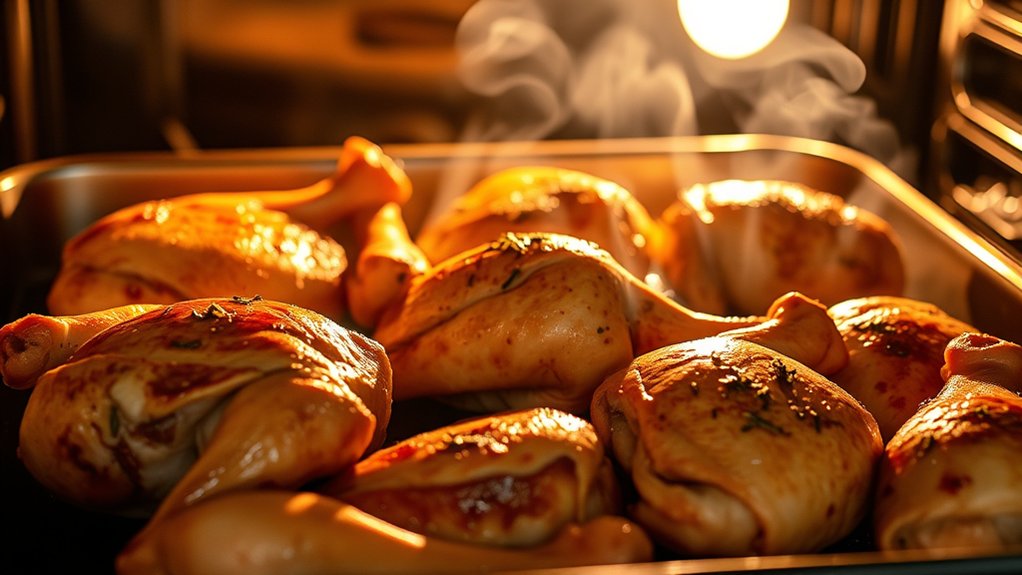
For chicken thighs and legs, set your oven to 425°F for crisp skin and tender, juicy meat. You’ll get the best results when you pat the pieces dry, season them well, and place them skin side up on a rack or sheet pan. This temperature renders fat quickly, which helps preserve a juicy texture without drying out the meat.
| Step | Tip |
|---|---|
| Prep | Dry the skin |
| Season | Use salt, pepper, herbs |
| Roast | 425°F, uncovered |
| Check | 175°F to 185°F internal |
| Rest | 5 to 10 minutes |
For bone in tips, give the pieces a little extra time if they’re large. Thighs and legs taste best when the juices run clear and the meat pulls easily from the bone. Don’t lower the heat too much; you’ll lose that crisp exterior. Keep an eye on color, and use a thermometer for accuracy.
How to Roast a Whole Chicken
To roast a whole chicken, set your oven to 425°F and start with a dry bird, because moisture on the skin will keep it from browning well. Pat it with paper towels, then rub the skin with oil or softened butter, salt, pepper, and any herbs you like.
Start with a dry bird and a hot oven for skin that browns beautifully and crisps well.
Tuck the wing tips under and tie the legs if you want a neater shape and more even cooking. Place the chicken breast side up in a roasting pan or on a rack over a sheet pan. Roast timing usually runs about 20 minutes per pound, though a smaller bird may finish sooner.
For flavor tweaks, add garlic, lemon, shallots, paprika, or thyme under the skin or in the cavity. Let the chicken roast undisturbed so the skin turns crisp and deeply golden. If the surface browns too quickly, shield it loosely with foil.
Finally, rest the bird before carving, so the juices settle and the meat stays tender.
How to Check Chicken Doneness
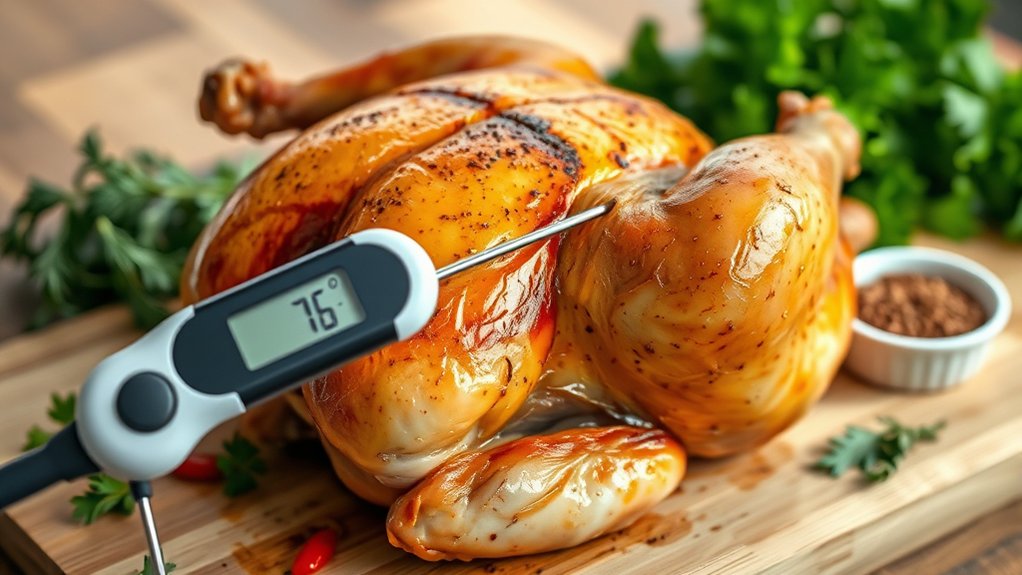
How do you know when chicken is done? Use a thermometer as your main check: insert it into the thickest part, avoiding bone, and look for 165°F. That’s your safest target for juicy, fully cooked meat. You can also use visual cues to confirm doneness.
- The juices run clear, not pink.
- The meat looks opaque, not translucent.
- The legs or thighs move easily at the joint.
- The center feels firm, not rubbery.
Keep tips for timing in mind, since cut size changes cooking time. If you’re checking breasts, start early; if you’re roasting dark meat, give it a little longer.
Your equipment needs are simple: a reliable instant-read thermometer and tongs. For safe handling, rest chicken on a clean plate and wash tools after testing.
If you want hacks for dryness, pull the bird right at 165°F and rest it before slicing. Finish with flavor boosters like pan juices, herbs, or a quick brush of butter.
Frequently Asked Questions
Should Chicken Be Covered While Baking?
You should cover chicken if you want moisture retention, especially with a lid vs uncovered debate; uncover it near the end to brown.
You’ll get juicier meat and better texture when you balance both.
Can I Bake Chicken From Frozen?
Yes, you can bake chicken from frozen, but don’t rush frozen safety against thaw timing. You’ll need extra time, steady heat, and a thermometer; cook until the thickest part reaches 165°F.
How Long Should Chicken Rest After Baking?
You should rest chicken 5–10 minutes after baking; thicker pieces need 10. This rest time keeps juices in.
While it rests, consider garnish ideas, glaze options, and boardroom etiquette for serving neatly.
Does Marinating Change Oven Cooking Time?
Usually, no; marinating rarely changes oven time, though a heavier coating can slow browning. You’ll notice marinating effects mainly in flavor absorption, not safety.
Still, always cook until the chicken reaches 165°F internally.
Can I Use a Convection Oven for Chicken?
Yes, you can use a convection oven for chicken; it cooks faster and more evenly. You’ll usually lower the set temperature by 25°F, which helps convection benefits while preserving flavor retention and preventing dryness.
Conclusion
Now you know the right oven temp for any chicken cut, so you can cook with confidence. Use 400°F for breasts, 425°F for thighs and legs, and 375°F for a whole bird, or start hotter for better color.
If you’re tempted to skip the thermometer, don’t—165°F in the thickest part is the difference between juicy and dry. Let the chicken rest, then carve and serve. That extra few minutes is worth it.
Remember, the key to perfectly cooked poultry lies in the correct temp to cook chicken in oven, ensuring safety and delicious results every time.