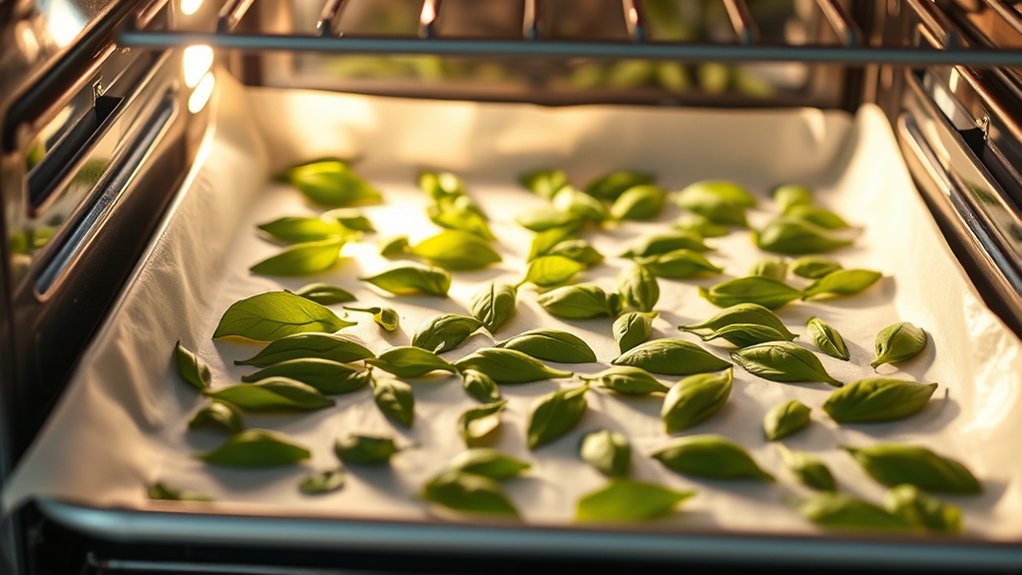
How to Dry Basil in the Oven
You may not know that drying basil in the oven helps it keep more flavor when you dry it fast at very low heat instead of letting it slowly wilt.
To do it well, you’ll need clean leaves, a lined baking sheet, and an oven set as low as it can go. Spread the leaves in one layer, watch them closely, and store them the right way so they stay green and useful—there’s a simple detail that makes all the difference.
Key Takeaways
- Wash basil gently, pat it completely dry, and remove tough stems before drying.
- Preheat the oven to its lowest setting and line a baking sheet with parchment paper.
- Arrange basil leaves in a single layer so they dry evenly without overlapping.
- Keep the oven door slightly open if needed and watch until leaves are crisp and crumble easily.
- Cool the leaves fully, then store them in an airtight container away from light and moisture.
What You Need to Oven-Dry Basil
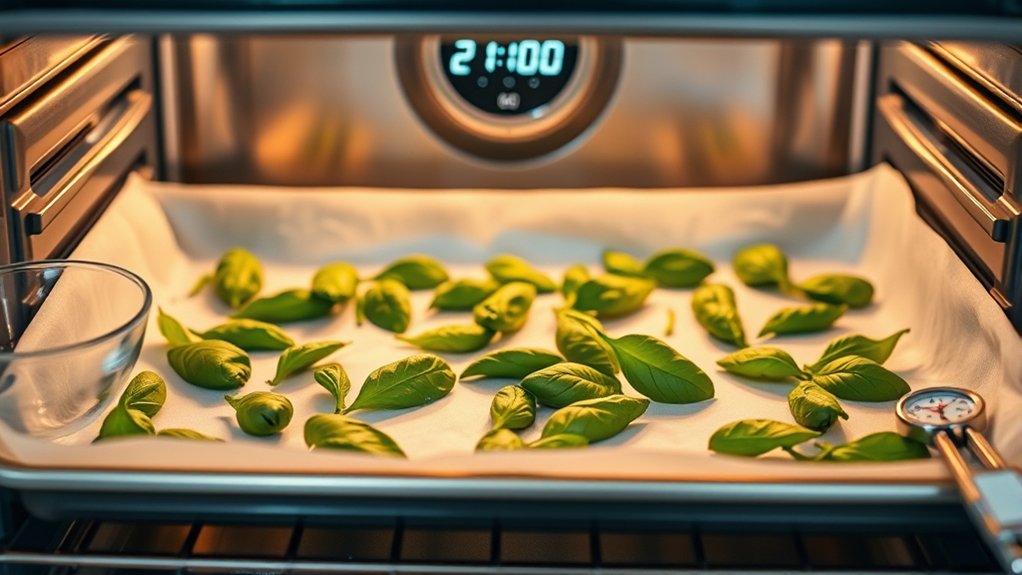
To oven-dry basil, you only need a few simple supplies: fresh basil leaves, a baking sheet, parchment paper, and an oven that can hold a low temperature. You’ll also want a clean towel, a sharp knife or kitchen scissors, and an airtight container for storage after drying.
Fresh basil, a baking sheet, parchment paper, and low heat are all you need to begin drying.
Choose a baking sheet that fits easily in your oven, because stable oven bottom layer placement helps the leaves dry evenly without scorching. Parchment paper keeps the basil from sticking and makes cleanup easier.
If you’re planning discussion ideas for how you’ll use the dried herb later, keep a label or marker nearby so you can date the jar. A low, steady heat matters more than speed, so make sure your oven can stay warm without baking the leaves.
With these basic tools ready, you’re set to move on to preparing the basil with confidence and control.
How to Prepare Basil Leaves
Start by washing the basil gently under cool water to remove any dirt without bruising the leaves. Then pat the leaves completely dry with a clean towel or paper towels, since extra moisture can slow drying in the oven.
Finally, remove any tough stems so you’re left with tender leaves that’ll dry evenly.
Wash Basil Gently
Rinse the basil leaves gently under cool running water to remove any dirt, grit, or tiny insects without bruising them. Use your fingers to separate overlapping leaves so the water reaches every surface.
As you wash basil, keep the stems and leaves moving lightly in the stream, then lift them out instead of rubbing or squeezing them. Gentle handling matters because basil bruises easily, and damaged leaves can darken before drying.
Check the undersides for soil or hidden debris, especially near the stem tips. If you find stubborn specks, swish the leaves in a bowl of cool water and let the grit settle, then lift the basil out. This careful wash leaves your basil clean and ready for the next step.
Dry Leaves Thoroughly
How do you keep basil from steaming in the oven? After washing, you need to dry leaves thoroughly before they go on the tray. Spread them in a single layer on clean kitchen towels or paper towels, then pat the tops lightly to lift water without bruising the basil.
Flip each leaf and repeat until the surfaces feel dry, not damp. Let them air-dry for a few minutes if needed, especially around the thicker parts where droplets hide. Good moisture removal matters because any leftover water can slow drying and dull the flavor.
Check the leaves closely under bright light; if they still glisten, keep blotting. Once they’re fully dry, you can move on with confidence, knowing the oven will remove moisture instead of trapping it.
Remove Tough Stems
Trim away the tough stems before the basil goes into the oven so the leaves dry evenly and stay tender. Hold each sprig near the top, then remove stems with your fingers or a small knife.
Snip just above a leaf node if you want to keep a few short pieces attached, but discard any thick, woody parts. You can leave the smallest tender tips, since they dry quickly and won’t affect texture.
If you’re working with large bunches, sort the basil first and separate damaged leaves, yellowing bits, and any rosary leaves that feel too fibrous. Keep only healthy, flat leaves for the best results.
Once you’ve cleaned the basil, spread the leaves in a single layer so airflow reaches every surface and the oven dries them evenly.
How to Dry Basil in the Oven
Drying basil in the oven gives you a quick way to preserve its bright flavor without much fuss. Preheat your oven to the lowest oven temperature, then line a baking sheet with parchment. Arrange the basil in one layer, making sure the leaves don’t overlap.
You want steady heat, not browning, so keep the door slightly open if your oven runs hot. Watch the leaves until they feel crisp and crumble easily.
| Step | What you do |
|---|---|
| Prepare | Pat basil dry and spread it out |
| Heat | Use low oven temperature on a lined sheet |
| Finish | Cool, then crumble for basil storage |
Once the leaves cool, store them in an airtight jar away from light and moisture. This keeps their color and aroma stronger for longer.
How Long to Dry Basil in the Oven
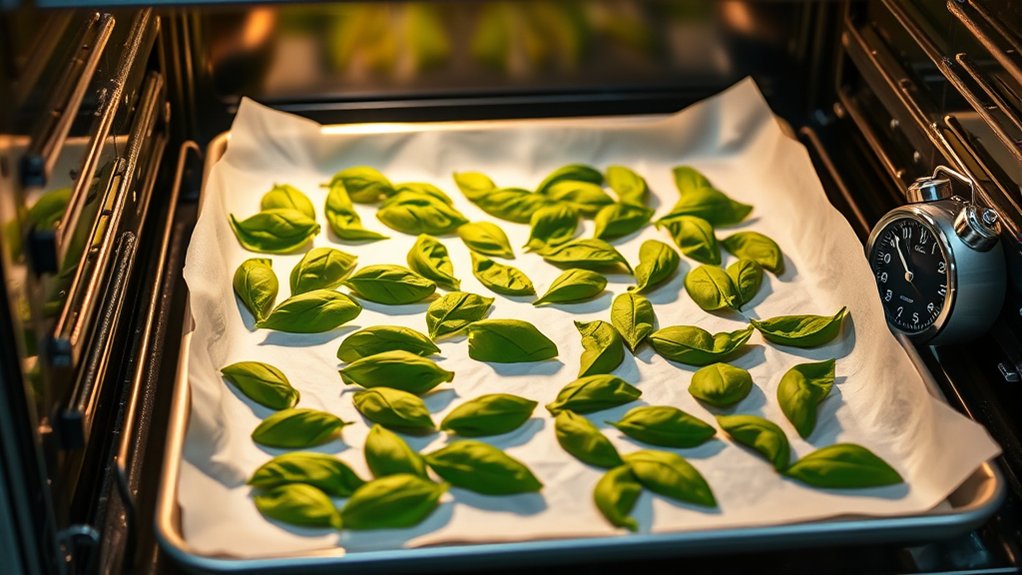
You’ll usually need 20 to 40 minutes to dry basil in the oven, depending on leaf size, moisture, and your oven’s lowest setting. Check it often so the leaves don’t scorch, and pull them out when they feel crisp and crumble easily.
When the basil is fully dried, the leaves should look dull, be brittle to the touch, and break apart without bending.
Drying Time Range
In most cases, basil takes about 20 to 30 minutes to dry in the oven, though the exact time depends on your oven’s true temperature, how thickly you’ve spread the leaves, and how much moisture they hold. For reliable results, use the lowest heat setting and keep the leaves in a single layer so air can circulate.
Your best practices should include checking the basil every 5 minutes after the 15-minute mark, since small differences in heat can speed things up fast. Good moisture control also matters: if the leaves were washed, pat them dry first and let excess water evaporate before baking.
Thicker, juicier leaves may need a little longer, while smaller leaves often dry sooner. If your oven runs hot, shorten the time and watch closely.
Signs Of Dried Basil
Once the basil has spent enough time in the oven, look for a crisp, brittle texture and a deep green color that may be slightly darker than fresh leaves. You should be able to crumble the leaves easily between your fingers without any soft spots.
If they still bend, give them more time and check again every few minutes. Proper basil color preservation depends on low heat, so keep using smart oven temperature tips to avoid browning.
The leaves should feel dry all the way through, not leathery or damp at the center. When they’re ready, let them cool fully before storing. Cooling helps confirm they’ve finished drying and prevents trapped moisture from ruining the batch later.
How to Store Dried Basil
How should you store dried basil so it keeps its flavor? Keep it simple: use proper dried herb storage and move the basil into airtight containers right after it cools. Choose a clean glass jar, spice tin, or small food-safe container with a tight lid. Label it with the date so you can track freshness.
| Storage method | Best use |
|---|---|
| Airtight glass jar | Everyday pantry storage |
| Small metal tin | Light protection |
| Vacuum-sealed bag | Long-term backup |
Store the container in a cool, dark cabinet away from the stove, sink, and sunlight. Keep moisture out by using a dry spoon each time you scoop some out. Don’t crush the leaves until you’re ready to use them; whole dried leaves hold aroma longer.
When you seal the lid well and limit air exposure, you’ll preserve the basil’s taste for months.
How to Keep Basil Green and Flavorful
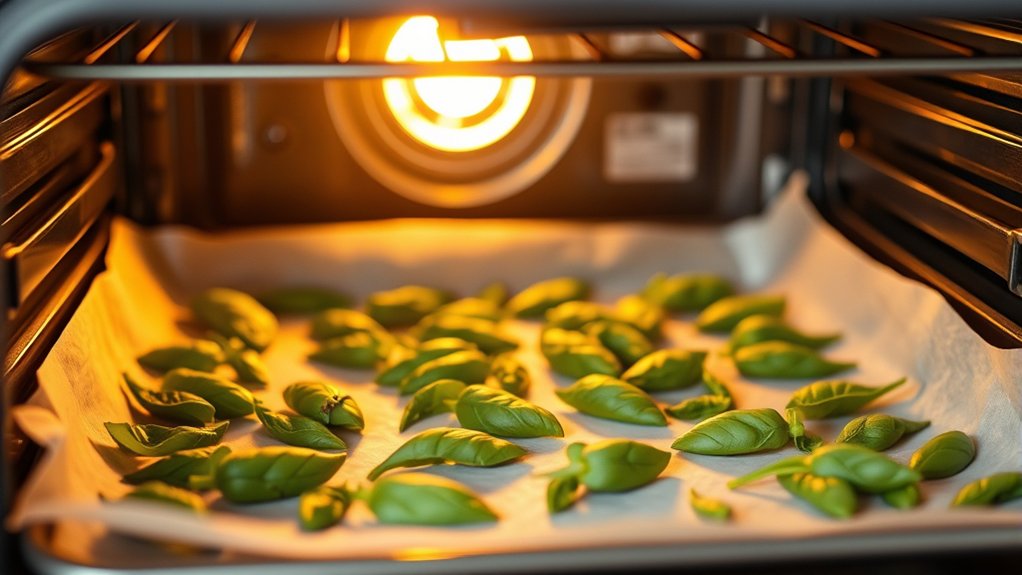
To keep dried basil green and flavorful, dry it quickly at a low oven temperature so the leaves don’t scorch or lose their color. You should pick basil in the morning, when oils are strongest, then rinse it gently and pat it completely dry.
Pick basil in the morning, dry it quickly at a low temperature, and protect its bright green flavor.
Spread the leaves in a single layer on a lined baking sheet, and leave space so hot air can move around them. Check often, because even a few extra minutes can dull the color and weaken the aroma.
As soon as the leaves crumble, remove them and cool them fast. Store them in an airtight jar away from light and heat.
If you have extra fresh basil, use tips for freezing basil to preserve more of its bright flavor. You’ll also keep more of the health benefits of basil when you handle it carefully and avoid overcooking. Crush the leaves only when you’re ready to use them, so the fragrance stays vivid.
Frequently Asked Questions
Can You Oven-Dry Basil Stems Too?
Yes, you can oven-dry basil stems too, but you’ll want to use tender basil stems only. Remove thick stems, spread them out, and watch oven drying safety closely so they don’t scorch or taste bitter.
Is Dried Basil Safer Than Freezing It?
Dried basil is generally safer than freezing it, like locking flavor in a pantry vault. You’ll reduce moisture, which helps prevent spoilage, and it’ll store longer if you keep it airtight and away from heat.
Can Other Herbs Be Dried With Basil?
Yes, you can dry other herbs with basil if their herbs compatibility and drying methods match; parsley, oregano, and thyme work well.
You’ll want similar moisture levels, so adjust timing and check frequently.
Does Oven-Dried Basil Lose Nutrients?
Yes, oven-dried basil can lose some nutrients because heat affects delicate compounds, but you’ll still keep plenty for basil preservation.
You can minimize nutrient loss during oven drying by using low heat and short drying times.
Can You Dry Basil Without Parchment Paper?
Yes, you can dry basil without parchment paper; use a clean baking sheet or oven-safe rack instead. For two word discussion ideas, consider air drying, oven drying, and herb storage.
Flip leaves often for even drying.
Conclusion
When you dry basil in the oven, keep the heat low, the leaves spaced out, and your eye on the tray. You’ll know they’re ready when they crumble like autumn leaves.
Let them cool fully, then store them in an airtight, dark container so their color and flavor last longer. Crush the leaves only when you need them, and you’ll keep that fresh basil taste ready for soups, sauces, and more.
By following these steps, drying basil in the oven ensures you preserve its vibrant flavor for all your cooking needs.