How to Roast Carrots in the Oven
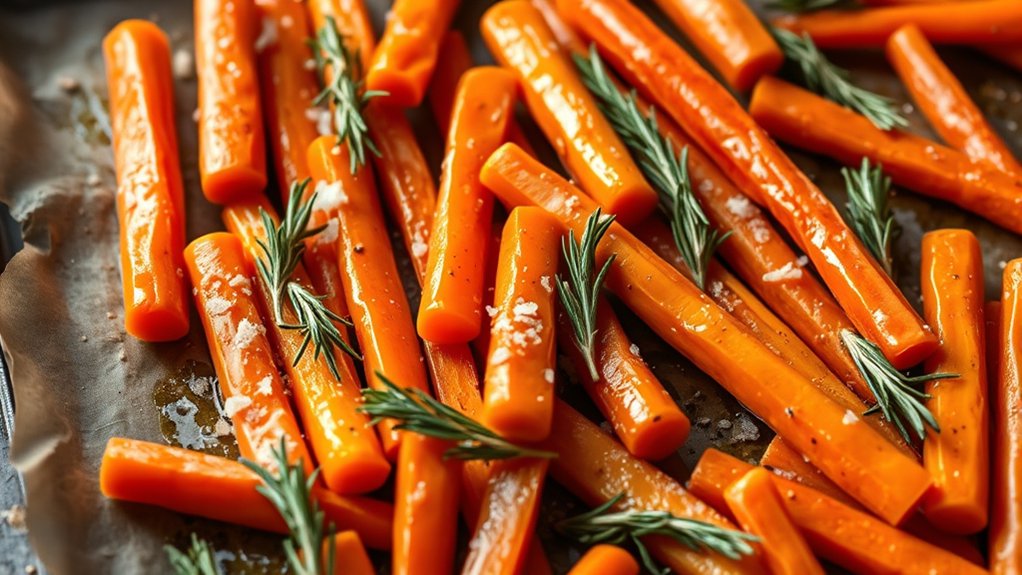
A hot oven can turn humble carrots into something deeply sweet and browned at the edges. Roasting carrots in the oven brings out their natural sugars and enhances their flavor. You’ll get the best results when you choose firm carrots, cut them evenly, and keep the seasoning simple with oil, salt, and pepper.
Roast them on a lined sheet until tender and caramelized, then finish with a bright touch that makes you want just one more bite.
Key Takeaways
- Preheat the oven to 400°F to 425°F, and line a rimmed baking sheet for even roasting.
- Choose firm, medium carrots, peel and trim them, then cut thick ones lengthwise for uniform pieces.
- Toss carrots with olive oil, salt, and pepper, then spread them in a single layer with space between pieces.
- Roast for 20 to 30 minutes, turning once, until edges are browned and centers are fork-tender.
- Finish with lemon juice, herbs, or spices like cumin or smoked paprika, and serve warm.
How Do You Roast Carrots in the Oven?
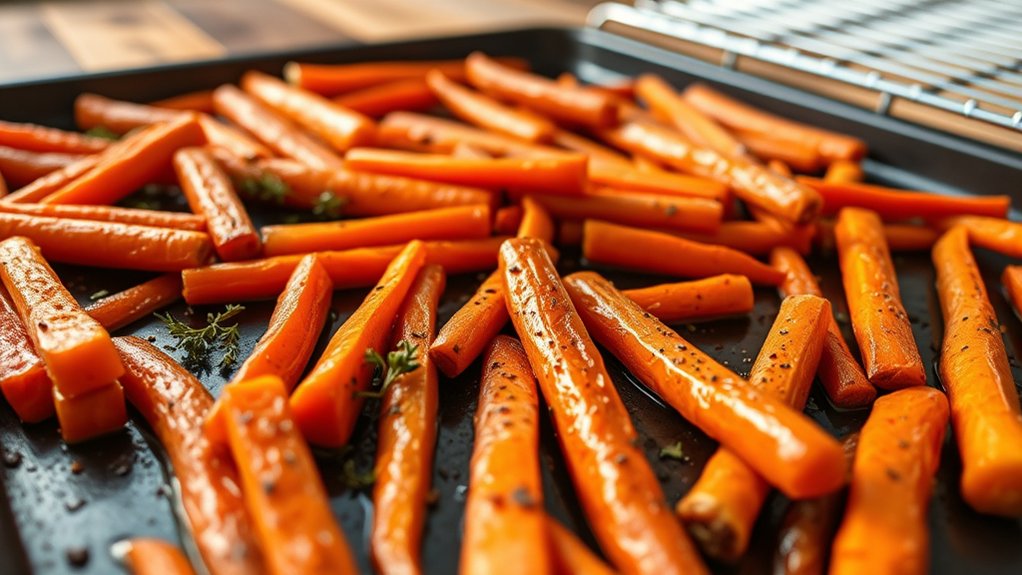
To roast carrots in the oven, you start by preheating it to 400°F and prepping the carrots so they cook evenly. Peel them if you want a smoother finish, then slice thick carrots in half lengthwise so they brown at the same pace.
Toss them with olive oil, salt, and pepper, then spread them on a lined baking sheet in a single layer. Give them space; crowded carrots steam instead of caramelize. Roast for 20 to 30 minutes, turning once, until the edges darken and a fork slides in easily.
For seasoning alternatives, try cumin, thyme, maple syrup, garlic powder, or smoked paprika. Finish with lemon juice or fresh herbs for brightness.
If you have leftovers, cool them before roast carrot storage in an airtight container; they’ll keep in the fridge for several days and reheat well.
Choose the Best Carrots for Oven Roasting
Pick carrots that feel firm, smooth, and deeply colored, since fresh ones roast up sweeter and more evenly. You’ll get the best results with medium-sized carrots, because they cook through without turning mushy or burning at the edges.
If yours are thick, slice them lengthwise so they roast at the same pace as smaller pieces.
Fresh Carrot Quality
For the best oven-roasted carrots, start with firm, brightly colored roots that feel heavy for their size and have smooth skin without cracks, limp tops, or soft spots. When you choose fresh carrots, look for crisp edges and a clean, earthy aroma that signals good quality selection.
If the tops are attached, they should look perky, not wilted, because tired greens can mean the roots have already lost moisture. Skip fluffy roots with wrinkled skin or rough patches; those often taste dull after roasting.
A little soil texture on the surface is fine, but you want produce that still feels lively, not gritty or dry. Pick carrots that snap cleanly when bent, and you’ll get sweeter flavor, better browning, and a tender, caramelized finish.
Best Carrot Sizes
Carrot size matters almost as much as freshness when you roast them, because evenly sized pieces cook at the same rate and brown with better control. You should choose medium carrots, about 1/2 to 3/4 inch thick, with firm, tapering bodies; they’re sweet, sturdy, and easy to slice into batons or coins.
Tiny carrots can dry out, while oversized ones may stay woody in the center.
- Picture pencil-thick carrots for fast roasting.
- Picture plump roots cut into glowing wedges.
- Picture baby carrots lined up like orange beads.
- Picture long carrots halved lengthwise for crisp edges.
Match the size to your seasoning options, then roast until tender. For storage tips, keep unwashed carrots cold and dry, so they stay crisp until you’re ready to cook.
Prep Carrots for Even Roasting
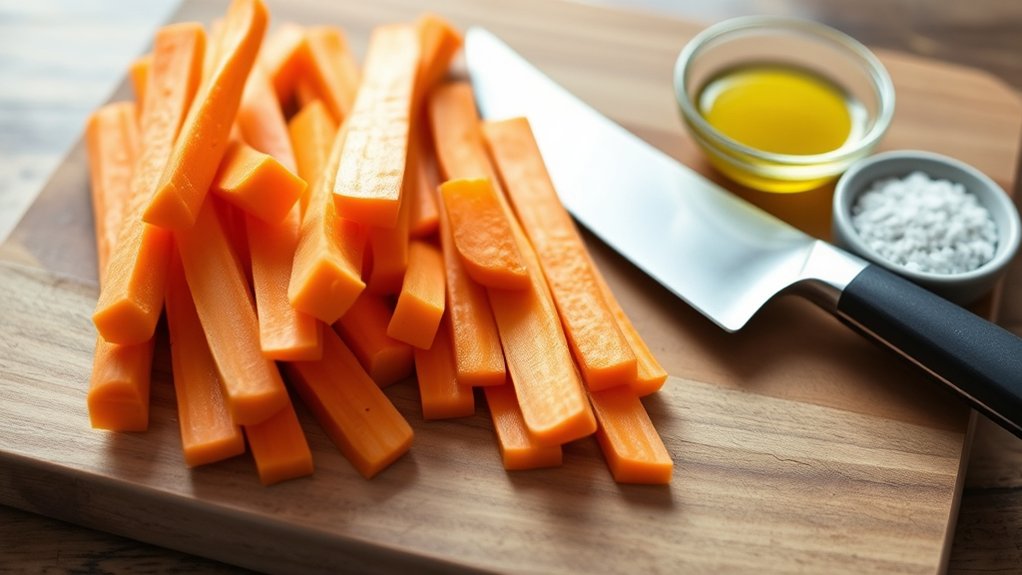
Start by peeling the carrots and trimming off the ends so they roast with a clean, even finish. Then cut them into similar-sized pieces, since matching thickness helps them cook at the same pace.
If you want crisp edges and tender centers, keep every piece as uniform as you can.
Peel And Trim Carrots
Peel the carrots if the skins are thick or rough, then trim off the tops and tapered ends so they cook at the same pace. This peel and trim step keeps your carrot prep clean, neat, and ready for the oven.
Use a sharp peeler and a small knife, working with calm, steady strokes. You want smooth surfaces that catch oil and seasoning evenly.
- A glossy orange carrot, bare and bright
- A clipped green crown on the cutting board
- A tapered tip removed, leaving a tidy cylinder
- A pile of ready carrots, lined up like little torches
When you finish, rinse away stray peel and pat the carrots dry. That simple reset helps them roast with better color, sweeter edges, and a more polished finish.
Cut For Uniform Size
How should you cut them for even roasting? Aim for pieces that match in thickness so they brown at the same pace. If some carrots are thick and others thin, split the larger ones lengthwise until they resemble the smaller ones.
That cut consistency helps prevent charred edges and undercooked centers. For most ovens, 1/2-inch sticks or coins work well, but adjust for size and shape. Use this quick guide:
| Carrot size | Best cut |
|---|---|
| Thin | Leave whole or halve |
| Medium | Slice into coins |
| Thick | Quarter lengthwise |
Uniform sizing gives you control, so every piece cooks evenly, turns tender, and develops a sweet, caramelized finish without extra babysitting.
Keep the Seasoning Simple
What do carrots really need before they hit a hot oven? Just enough seasoning to let their natural sweetness lead. For roasting basics, start with a light coat of olive oil, salt, and pepper; that’s the foundation.
Then think about flavor pairings that support, not smother, the carrot’s earthy bite.
- Gloss the sticks with oil so they shine like amber.
- Sprinkle salt evenly, as if dusting a fresh path.
- Add a crack of pepper for a quiet edge.
- Finish with thyme, cumin, or a whisper of garlic.
You don’t need a heavy spice mix or a sweet glaze to get depth. A simple hand keeps the carrots clean, bright, and caramel-ready.
If you want extra character, add herbs after roasting so they stay vivid. Keep the seasoning balanced, and each bite will taste focused, warm, and naturally rich.
Roast Carrots at the Right Temperature
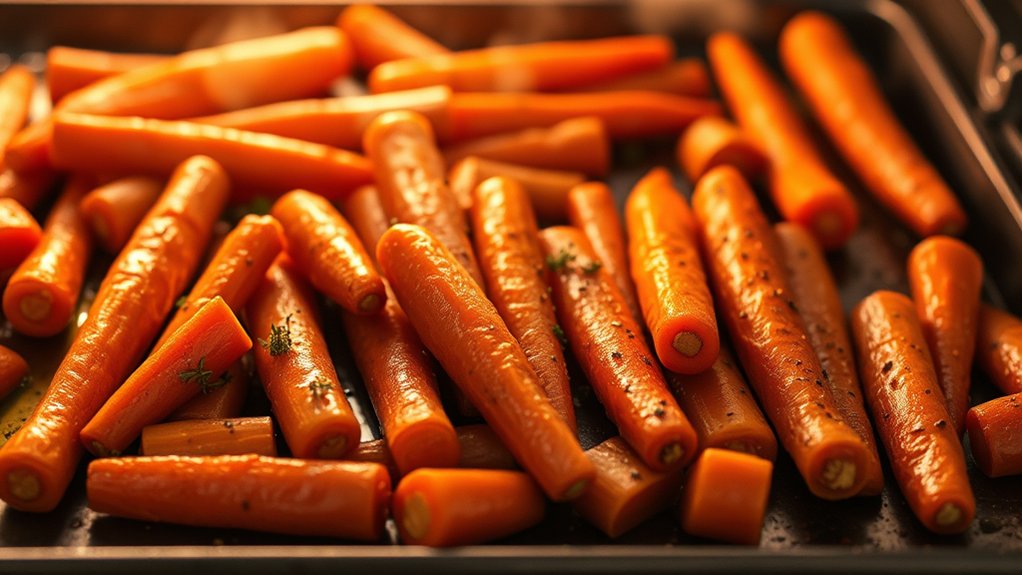
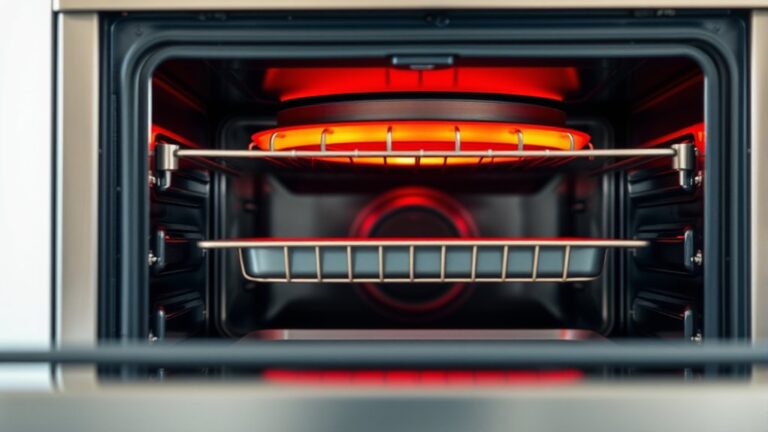
For tender, caramelized carrots, you’ll want a hot oven around 400°F to 425°F so the edges brown before the centers turn soft. This roast temp gives you the best balance of sweetness and structure, and it helps develop deep carrot flavor without drying them out.
If your oven runs cool, nudge it higher; if it runs hot, pull back a bit. Use sturdy kitchen tools like a rimmed sheet pan and a spatula so the carrots stay in a single layer and roast evenly.
Keep an eye on cooking time, since thin carrots may soften in 20 minutes while thicker pieces need closer to 30. You’re aiming for glossy, browned surfaces and a fork-tender bite, not mush.
A steady temperature lets the natural sugars concentrate, turning plain carrots into something rich, nutty, and vivid, with edges that taste almost candied.
Finish and Serve Roasted Carrots
When the carrots are tender and the edges are browned, pull the pan from the oven and let them rest for a minute or two. This brief pause helps the glaze settle, so you can finish and serve them with clean, glossy surfaces. Toss them gently with a splash of lemon juice, a drizzle of olive oil, or a pat of butter if you want extra shine.
Taste a piece and add salt, pepper, or herbs to sharpen the flavor.
- Pile them on a warm platter.
- Scatter chopped parsley, dill, or thyme over the top.
- Add toasted nuts for crunch and color.
- Serve beside chicken, fish, grains, or a bright dip.
Use these final touches to show off your roasting techniques and keep the carrots vivid, fragrant, and inviting. Pass them at once, while they’re still warm, and enjoy the sweet, caramelized finish.
Frequently Asked Questions
Can You Roast Carrots With Their Skin On?
Yes, you can roast carrots with their skin on; just scrub them well. For roasted carrot skin questions and carrot texture concerns, you’ll keep more flavor and save prep time, especially with small, tender carrots.
How Do You Store Leftover Roasted Carrots?
Store your leftover roasted carrots in an airtight container and refrigerate them within two hours. Use leftover storage labels if needed.
You’re better off labeling leftovers with the date, then reheating them gently within four days.
Can Roasted Carrots Be Frozen for Later?
Yes, you can freeze roasted carrots for later. Use frozen carrot storage by cooling them fully, then freezing roasted carrots in airtight bags.
You’ll keep good flavor for soups, mash, or quick sides.
What Sauces Pair Well With Roasted Carrots?
You can pair roasted carrots with tahini, yogurt, or honey mustard; sweet meets tangy, earthy meets bright. Try carrot sauce pairings with citrus herb complements: lemon dill, orange thyme, or parsley chimichurri for balance.
How Do You Reheat Roasted Carrots Without Drying Them Out?
Use reheating methods like a covered skillet or low oven at 300°F. You’ll boost moisture retention by adding a splash of water or butter, protect roasting temps, and preserve flavor preservation without drying them out.
Conclusion
So there you have it: carrots, those humble little roots, can turn oddly glamorous in a hot oven with almost no effort from you. Peel them if you like, cut them evenly, season simply, and roast them until their edges bronze and their centers soften.
A squeeze of lemon or a sprinkle of herbs makes them seem far more sophisticated than they really are. Funny how the easiest side dish can steal the show.
Roasting carrots in the oven truly transforms their flavor and texture, making this simple technique a must-try for anyone looking to elevate their meals.