How to Cook Lamb Chops in Oven
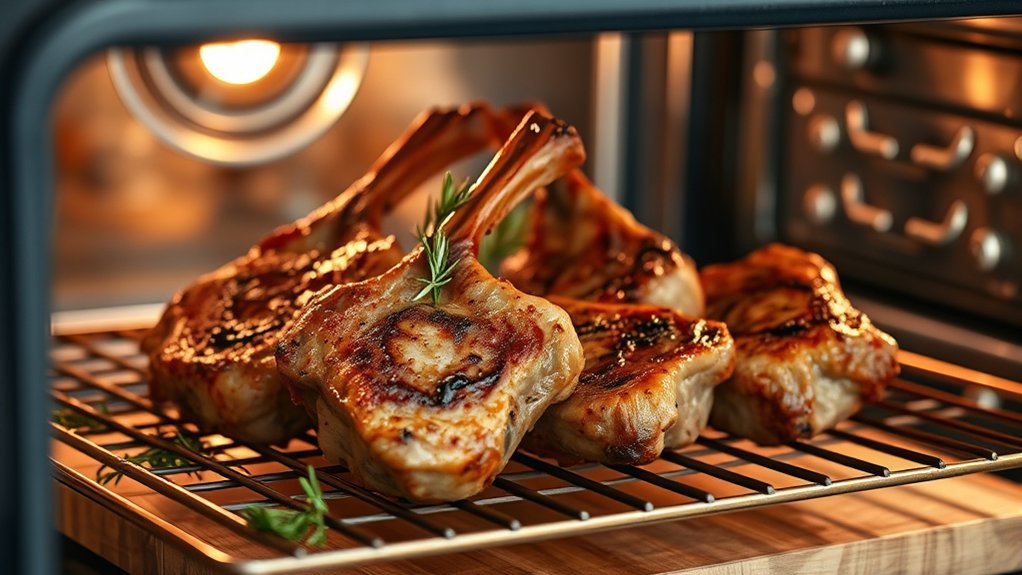
To cook lamb chops in the oven, you’ll want to start with the right seasoning, a hot pan, and careful timing. Building deep flavor is key, using garlic, rosemary, thyme, and lemon zest.
Begin by searing the chops before finishing them in a 400°F oven. The difference between tender, juicy lamb and overcooked meat often comes down to a few small steps. These steps matter more than you might think.
Key Takeaways
- Preheat the oven to 400°F and use chops of similar thickness for even cooking.
- Season lamb chops with olive oil, salt, pepper, garlic, rosemary, thyme, and optional lemon zest.
- Sear chops briefly in a hot skillet for extra browning, then transfer to the oven.
- Bake 8–12 minutes for standard chops, or 12–15 minutes for thicker cuts, until 130–145°F.
- Rest chops 5–10 minutes, then serve with pan juices, flaky salt, and fresh herbs.
What You Need for Oven-Baked Lamb Chops
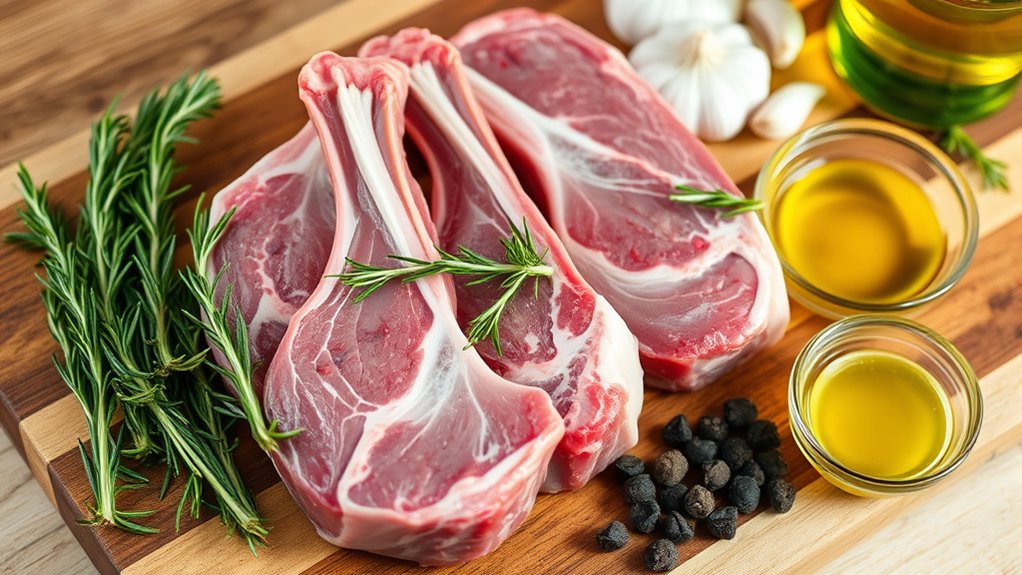
Before you start, gather the essentials for oven-baked lamb chops: lamb chops, olive oil, salt, black pepper, garlic, and any herbs or seasonings you want to use. Choose chops of similar thickness so they cook evenly.
Gather lamb chops, olive oil, salt, pepper, garlic, and herbs, then choose chops of similar thickness for even cooking.
You’ll also need a rimmed baking sheet or oven-safe skillet, plus parchment or foil for easier cleanup. A meat thermometer helps you verify doneness without guessing.
If you want seasoning alternatives, keep cumin, rosemary, thyme, paprika, or lemon zest on hand for a different profile. For lamb chop substitutes, use bone-in pork chops or thick-cut veal chops, but adjust cooking time for each cut.
Set out tongs and a small bowl for mixing oil and seasonings. Trim excess surface fat if needed, but leave enough for flavor and moisture. With these tools and ingredients ready, you can move straight into preparation and cooking.
How to Season Lamb Chops for Baking
Choose seasonings that complement lamb’s rich flavor, such as garlic, rosemary, thyme, salt, black pepper, and a little lemon zest. If you use a marinade, mix it well so each ingredient coats the chops evenly.
Then let the chops rest long enough for the flavors to absorb before baking.
Choosing Flavorful Seasonings
What seasonings bring out the best in lamb chops? You should build flavor with garlic, rosemary, thyme, black pepper, and salt, since these herbs complement lamb’s richness without overpowering it.
For a stronger profile, add crushed fennel seeds, cumin, or smoked paprika in small amounts. Use flavor pairing to match lamb’s earthy taste with bright notes like lemon zest or Dijon mustard.
If you want budget friendly ideas, rely on dried herbs, pantry spices, and a simple salt-and-pepper base; they still deliver excellent results. Keep the blend balanced, so each seasoning supports the meat instead of masking it.
Taste your mix before applying it, and adjust the salt, heat, or herb intensity to suit your preference and cooking plan.
Applying Marinade Evenly
Once you’ve mixed the seasonings, rub them over the lamb chops in a thin, even layer so every side picks up flavor. Use your hands to press the mixture into the meat, then turn each chop and coat the edges.
This applying marinade step works best when you keep the layer light, since excess clumps can block browning. For even coverage, massage the chops for 20 to 30 seconds, focusing on thicker spots and any exposed fat.
- Place chops on a tray to catch drips.
- Season both sides before resting.
- Let spices adhere for 10 minutes.
- Wipe excess from the bone end.
When you finish, the surface should look uniformly seasoned, not wet or paste-like.
Should You Sear Lamb Chops Before Baking?
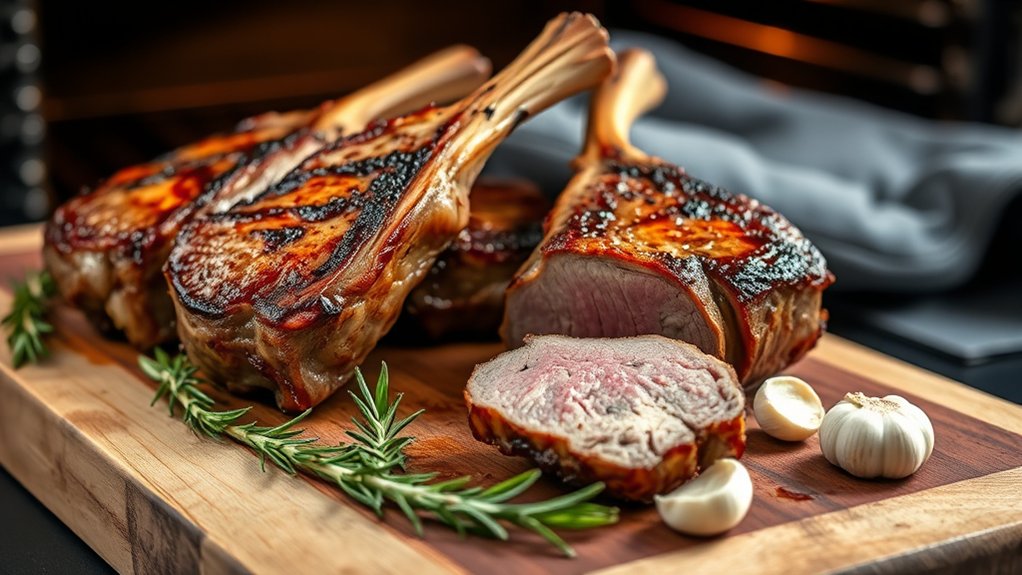
Searing lamb chops before baking can boost flavor, improve browning, and help you build a better crust. You can skip it when you’re short on time or want a gentler finish, especially with thinner chops.
If you do sear, use a very hot skillet and a small amount of oil so you can brown the surface quickly without overcooking the meat.
Benefits Of Searing
A hot sear gives lamb chops a flavorful crust, locks in surface juices, and adds color that makes the meat more appetizing. You also gain key searing benefits: deeper browning, better texture, and faster oven finishing.
That initial contact with high heat starts flavor locking through the Maillard reaction, which develops savory notes you can’t get from baking alone. Use a heavy skillet, preheat it until it’s very hot, and sear each side briefly.
- Build a crisp, seasoned exterior
- Intensify natural lamb flavor
- Improve visual appeal on the plate
- Support even oven cooking afterward
When To Skip Searing
Skip the sear if you’re short on time, cooking very small or thin lamb chops, or using a recipe that already builds strong browning another way. In those cases, baking alone can still give you a well-cooked result with less effort and less cleanup.
You should also skip searing when you want a simpler dinner plan or need to keep topic ideas focused on flavor rather than technique. Searing adds value, but it isn’t always necessary.
If your goal is tenderness and even doneness, the oven can handle it without that extra step. Keep your attention on internal temperature, resting time, and seasoning, because those factors matter more than searing when timing is already tight or the chops are naturally delicate.
Best Searing Techniques
When you do sear lamb chops before baking, use a hot skillet, a small amount of oil, and a short sear on each side until the surface browns well without overcooking the meat. Pat the chops dry first, then season them evenly so they sear instead of steam.
Sear in batches to keep the pan hot, and finish in the oven immediately for even doneness. Use precise knife skills to trim excess fat and expose clean edges. For flavor pairing, choose rosemary, garlic, thyme, or Dijon before baking.
Heat the skillet until it shimmers.
Turn chops once, not repeatedly.
Rest the meat after baking.
Deglaze the pan for a quick sauce.
What Temperature Is Best for Lamb Chops in the Oven?
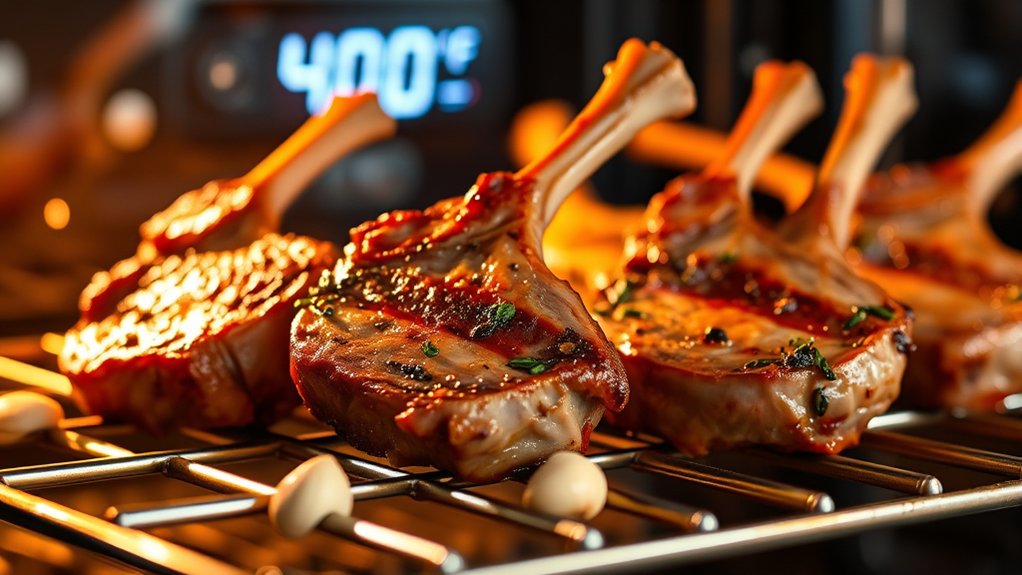
For oven-baked lamb chops, set the temperature to 400°F for the best balance of browning and tenderness. You’ll get a hot oven that builds a crisp exterior without drying the meat. This setting also supports carryover cooking, so you should pull the chops when they’re just shy of your target doneness and let them finish on the plate.
Resting then improves tenderness through resting, keeping the juices in the meat instead of on the board.
| Oven Temp | Best Use |
|---|---|
| 375°F | Gentler cooking |
| 400°F | Ideal balance |
| 425°F | Faster browning |
| 350°F | Less browning |
| 450°F | Aggressive sear |
Use 400°F for most lamb chops, especially rib or loin cuts. If your chops are very thin, the same temperature still works, but you should watch them closely because they’ll heat quickly. For thicker chops, 400°F helps the surface brown before the center overcooks.
How Long to Bake Lamb Chops
How long you bake lamb chops depends on their thickness, the oven temperature, and how done you want them. At 400°F, you’ll usually need 8 to 12 minutes for standard chops, while thicker cuts may need 12 to 15 minutes. If you lower the heat to 375°F, add a few minutes, but keep your schedule consistent; unrelated timing leads to uneven results.
Use the same pan size and rack position each time to avoid insufficient pairing between heat exposure and chop size.
- Thin chops: 6 to 8 minutes
- Standard chops: 8 to 12 minutes
- Thick chops: 12 to 15 minutes
- Broiler finish: 1 to 2 minutes per side
For best control, preheat fully before you bake. Then let the chops rest briefly after the oven, so juices redistribute and texture stays even.
How to Tell When Lamb Chops Are Done
Wondering if your lamb chops are ready? Use an instant-read thermometer for the most reliable check. Insert it into the thickest part of the chop, away from bone, and read the temperature after it stabilizes. For medium-rare, aim for 130°F to 135°F; for medium, 135°F to 145°F. Remember that carryover cooking will raise the temperature a few degrees after you remove the chops from the oven.
You can also assess doneness by touch. A medium-rare chop feels slightly springy, while a firmer chop indicates greater doneness. Clear juices and browned edges help confirm your result, but color alone isn’t enough. Precision matters here, much like funeral etiquette or space exploration, where careful observation prevents mistakes.
Let the chops rest for 5 minutes before serving so the juices redistribute and the texture stays tender.
Best Sides for Oven-Baked Lamb Chops
Roasted vegetables, creamy potatoes, and bright salads make the best sides for oven-baked lamb chops because they balance the meat’s richness without overpowering it. You should choose sides that add texture, acidity, or mild sweetness. Pair lamb with carrots, asparagus, or Brussels sprouts for a clean, savory contrast.
If you want comfort, serve garlic mashed potatoes or roasted baby potatoes; they support lamb chop nutrition by adding potassium and fiber when you keep portions moderate. For a fresher plate, use arugula, cucumber, and lemon vinaigrette.
- Choose seasonal vegetables for better flavor.
- Add a grain like couscous for a structured base.
- Use herbs such as mint, rosemary, or parsley.
- Match lamb chop substitutes with similar sides, like portobello steaks or thick cauliflower cutlets.
Keep the plate simple, and let each side support the lamb’s flavor.
How to Rest and Serve Lamb Chops
Once your lamb chops come out of the oven, let them rest for 5 to 10 minutes so the juices redistribute and the meat stays tender. During this lamb chop resting period, place them on a warm plate and tent loosely with foil.
Don’t wrap tightly, or you’ll trap steam and soften the crust. Aim for a serving temperature of warm, not piping hot, so each bite stays juicy and flavorful.
| Step | Action |
|---|---|
| 1 | Rest chops undisturbed |
| 2 | Keep foil loose |
| 3 | Check serving temperature |
| 4 | Plate and serve |
Before serving, spoon any pan juices over the meat for extra flavor. You can also finish with flaky salt, fresh herbs, or a squeeze of lemon.
Serve immediately with your prepared sides, and keep portions evenly arranged for a polished presentation.
Frequently Asked Questions
Can I Cook Frozen Lamb Chops Directly in the Oven?
Yes, you can cook frozen lamb chops directly in the oven, but you should expect longer cooking time. Check frozen thaw safety, avoid crowding, and monitor oven thaw timing so you reach a safe internal temperature.
What Wine Pairs Best With Oven-Baked Lamb Chops?
You’ll pair oven-baked lamb chops best with a medium-bodied red, like Syrah, Cabernet Sauvignon, or Rioja; their tannins support rich meat. Wine pairing ideas should emphasize flavor balance with herbs, garlic, or rosemary.
Should I Marinate Lamb Chops Overnight for More Flavor?
Yes, you should marinate lamb chops overnight for deeper flavor. You’ll improve marinade timing and let flavor oils penetrate better, but don’t overdo acidic ingredients, or they’ll toughen the meat and mute its natural taste.
Can I Use Bone-In and Boneless Chops Interchangeably?
You can’t use bone-in and boneless chops interchangeably without adjustments. For bone-in vs boneless substitution guidance, you’ll need to reduce cooking time for boneless cuts and check internal temperature closely for reliable results.
How Do I Store Leftover Baked Lamb Chops Safely?
You’d think leftovers deserve a throne, but they don’t. Cool lamb chops within 2 hours and refrigerate at 40°F or below. Use airtight freezer packaging, ensure labeling clarity, and enjoy them within fridge shelf life.
Conclusion
Now you’ve got everything you need to make oven-baked lamb chops that taste downright legendary. Season them well, sear for a rich crust, roast at 400°F, and pull them out before they overcook into sadness.
Let them rest so the juices stay put, then finish with pan drippings, herbs, and lemon. Pair them with your favorite sides, and you’ll serve a meal that feels straight out of a high-end restaurant—without the drama.
With these simple steps, cooking lamb chops in the oven becomes an easy way to enjoy a delicious, impressive dinner any night of the week.