How to Cook Wings in the Oven
You probably don’t realize that oven wings get crispier when you dry them more than when you add extra oil. When cooking wings in the oven, choose wings of similar size, pat them very dry, and season lightly with salt and oil.
Set them on a wire rack over a sheet pan, then bake at 425°F until golden, flipping halfway through. One small finish makes a big difference, and it’s the step most people skip.
Key Takeaways
- Choose fresh or fully thawed wings of similar size, and pat them completely dry for crispier skin.
- Season lightly with salt and a little oil; avoid heavy coating that makes the skin cakey.
- Bake wings on a wire rack over a sheet pan at 425°F in a single layer with space between pieces.
- Flip the wings halfway through, and broil briefly at the end if needed for extra crunch.
- Rest the wings for 3 minutes, then sauce and serve with dips and sides kept separate.
Choose the Best Wings
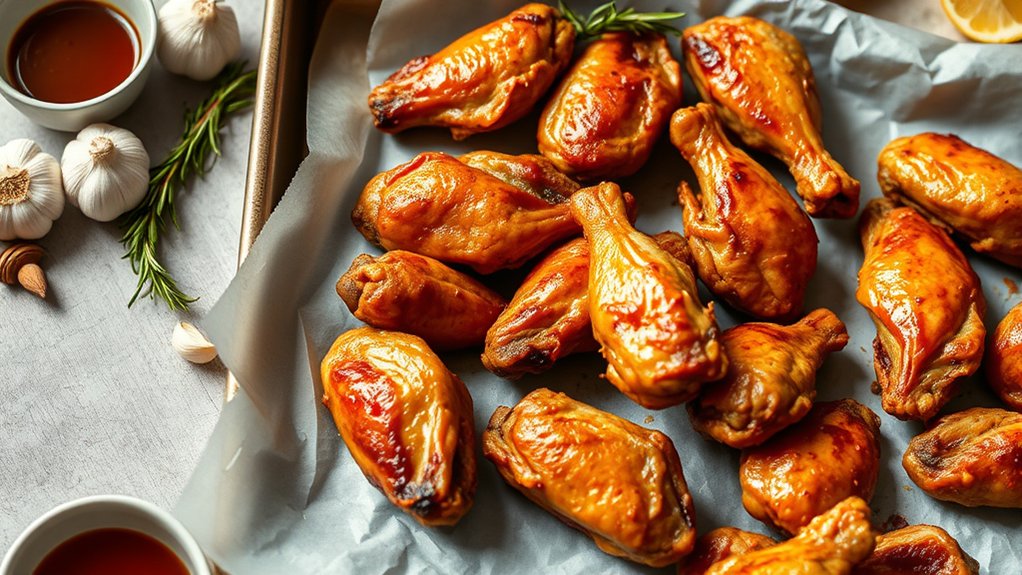
For the best oven-baked wings, start with fresh or fully thawed chicken wings that are similar in size so they cook evenly. When you choose wings, inspect the skin and meat for a firm feel and a clean, neutral smell.
You can buy whole wings, or separate drumettes and flats; compare options based on how you plan to serve them and how much meat you want on each piece. If you want easy handling, select separated pieces, but whole wings give you more control over trimming.
Look for wings with minimal excess fat and no torn skin, because that helps you choose texture later when the heat renders the surface. Pat the wings dry after opening the package, then sort out any pieces that are unusually small or large.
Consistent size gives you predictable results and helps you avoid overcooked edges and undercooked centers.
Season for Crispy Flavor
Now that your wings are dry, season them in a way that helps the skin crisp, not steam. Use a light coating of oil, then add salt so it draws out surface moisture and boosts browning.
Dry wings first, then season lightly with oil and salt to help the skin crisp beautifully.
Keep your seasonings variety balanced; too much powder can cake and dull the skin. Aim for bold flavor with clean coverage, not a thick crust. For better texture contrast, pair savory spices with a little heat or sweetness.
- Toss wings with 1 to 2 teaspoons oil per pound.
- Sprinkle salt evenly over every side.
- Add pepper, garlic powder, and paprika.
- Include cayenne or chili powder for heat.
- Finish with a small amount of sugar if you want extra browning.
Season right before baking so the coating stays even and the skin keeps its snap. Press the spices on gently, then arrange the wings in a single layer on the pan.
Dry the Wings Well
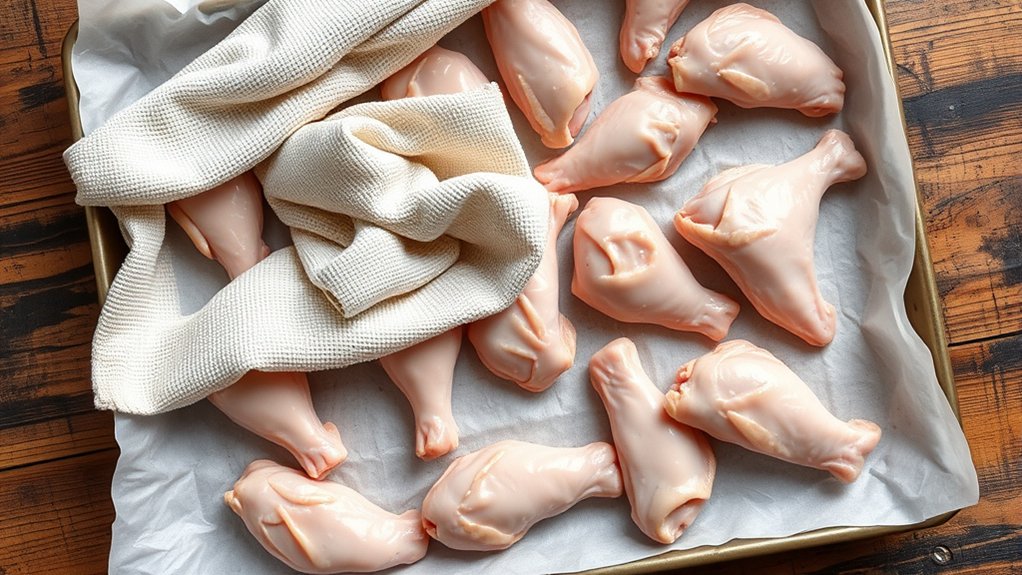
Pat the wings dry with paper towels on every side, including the underside and between the joints, because any leftover moisture turns to steam in the oven and softens the skin. Press firmly instead of wiping, so you lift surface water without pushing it around.
If the wings feel slick, repeat with fresh towels until they’re barely damp. You can set them on a wire rack over a sheet pan for 10 to 15 minutes to let air finish the job. This brief rest works well with other drying methods, especially if you’ve rinsed or thawed the wings.
Keep the pieces in a single layer and leave space between them so air can move freely. When you dry wings thoroughly, the seasoning stays put and the skin starts out ready for better texture.
Don’t rush this step; dry wings bake more evenly when you remove as much moisture as possible before they go into the oven.
Bake Until Crispy
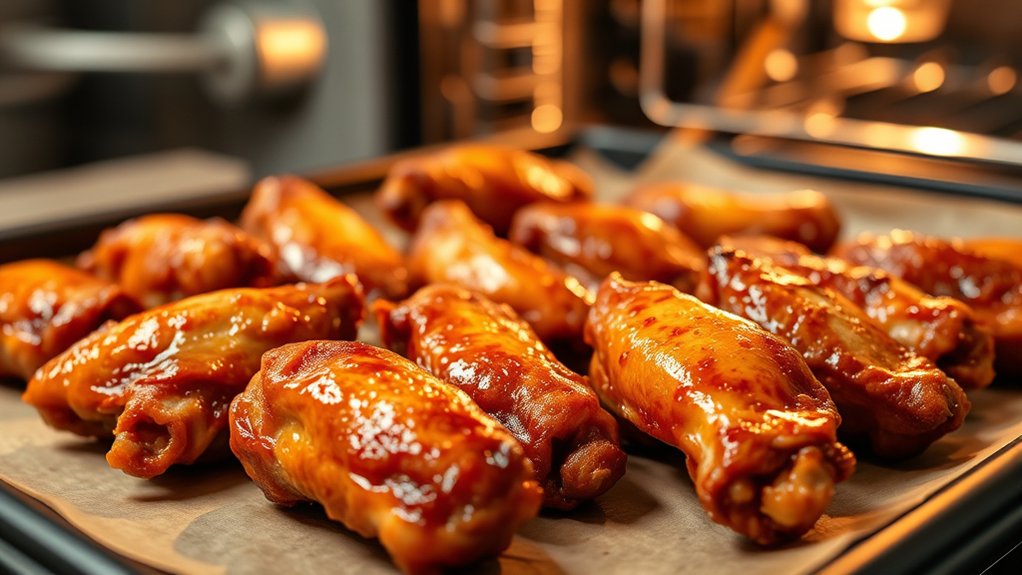
Bake the wings on a wire rack set over a sheet pan so hot air can circulate underneath and help the skin crisp on all sides. Preheat your oven to 425°F for a balanced oven setup that browns the skin without drying the meat. Arrange the wings in a single layer, leaving space between each piece.
Bake the wings on a wire rack so hot air crisps the skin all around.
- Place the rack in the center position.
- Use parchment only under the pan, not on the rack.
- Bake until the fat renders and the skin tightens.
- Check for deep golden color at the edges.
- Look for crispy tips and a firm, blistered surface.
Keep the heat steady and avoid crowding, which traps steam and softens the skin. Bake until the wings turn evenly golden and the exterior feels dry to the touch. If your oven runs hot, lower the temperature slightly and continue baking until the skin reaches the crispness you want.
Flip and Finish
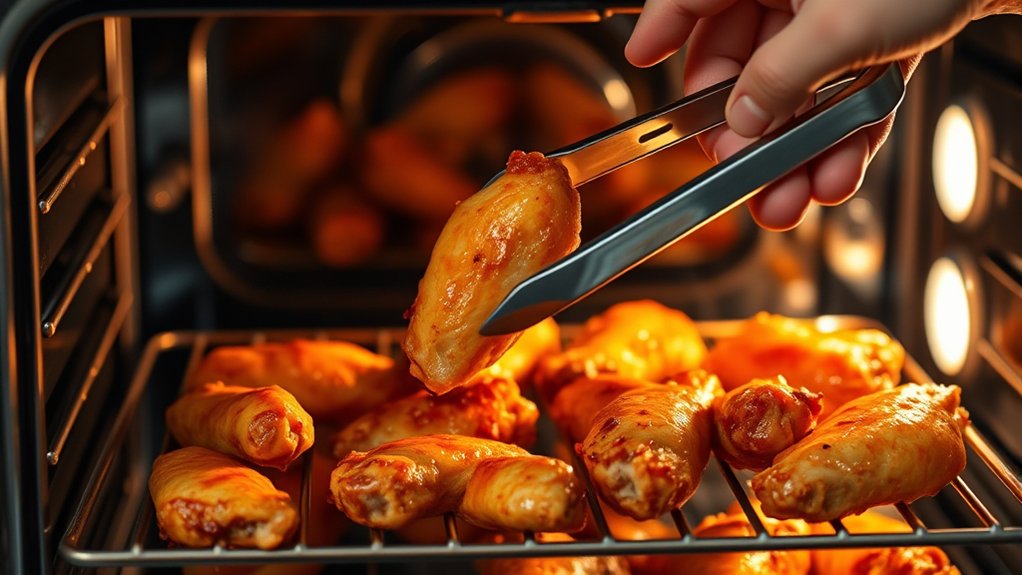
Flip the wings halfway through baking so both sides cook evenly. This helps the skin crisp up on all surfaces and prevents one side from staying soft.
For extra crunch, finish them under the broiler for a minute or two, watching closely so they don’t burn.
Flip at Halfway
About halfway through the cooking time, turn the wings over so both sides brown evenly and the skin crisps all over. Use tongs and flip each wing in one smooth motion to keep the coating intact. This flip halfway step supports even crisping and helps the wings cook uniformly.
Lift the wings gently to avoid tearing the skin. Rotate the tray if your oven heats unevenly. Return the wings to the same rack position. Keep the oven door open only briefly. Resume roasting until the skin looks deeply golden.
After you flip, check that the wings aren’t sticking to the pan. If they are, loosen them carefully before continuing. Finish cooking until the surface looks dry and bronzed, then serve right away.
Crisp Evenly On Both Sides
Once you’ve turned the wings, keep roasting them until both sides pick up an even, deep golden color. Rotate the pan if your oven heats unevenly, and leave space between pieces so hot air can circulate. This helps you maintain crisp balance without steaming the skin.
Watch for even browning at the edges and along the thicker drumette side; pale spots usually need a few more minutes. Use the guide below to judge progress:
| Look | What to do |
|---|---|
| Pale, soft skin | Roast longer |
| Patchy color | Rotate pan |
| Deep gold, firm skin | Remove soon |
| Uniform browning | Rest before serving |
When the wings look consistently crisp, take them out and let them settle briefly.
Finish With Broil
To finish the wings with a broiled blast, move the pan to the upper rack and flip each piece so the second side faces up. Set the broiler to high and watch closely; this finishing technique crisps skin fast. Keep the door cracked if your oven allows it, and rotate the pan once for even heat.
Aim for 1 to 3 minutes, depending on size and color. Use this broil timing to deepen browning without burning.
Check every 30 seconds.
Pull wings when edges turn mahogany.
Avoid overcrowding the pan.
Use tongs for safe flipping.
Rest wings 3 minutes before saucing.
You’ll lock in crunch, boost flavor, and keep the meat juicy.
Toss With Your Favorite Sauce
Once your wings finish baking, transfer them to a large bowl while they’re still hot. Add your favorite sauce and toss them until every wing is coated evenly and thoroughly.
Serve them right away so the sauce clings well and the skin stays crisp.
Sauce After Baking
When the wings come out of the oven, let them rest for 2 to 3 minutes, then toss them in your favorite sauce while they’re still hot. Hot wings absorb flavor best, so work quickly and keep the sauce consistency smooth enough to cling. Use a large bowl and a gentle coating method that lets each wing get a light, even gloss.
Warm thick sauces slightly. Thin overly dense sauce with butter or water. Add wings in small batches.
Toss until the surface looks shiny. Serve immediately for the best texture.
If you want extra flavor, add a second light toss after the first. Keep the sauce balanced so it complements the baked skin without making it soggy.
Coat Evenly Thoroughly
Toss the wings in a large bowl with your chosen sauce until every piece is evenly coated. Use tongs or a wide spatula to lift and turn the wings from the bottom, so the sauce reaches the skin, joints, and edges.
Work quickly while the wings are hot; that helps the glaze cling and keeps the texture crisp. If the sauce is thick, add it in small amounts and toss again to avoid clumps.
For extra even coating, let excess sauce drip off before transferring the wings to a serving platter or rack. This method also supports better heat distribution if you return them to the oven for a minute or two, letting the glaze set without steaming the skin.
Serve With Easy Sides
Round out your oven-baked wings with easy sides that don’t steal the spotlight. Choose sides ideas that balance heat, crunch, and richness, then use simple serving tips to keep the meal organized and hot. Build the plate with one cool element, one crisp element, and one starch so each bite feels complete.
Serve celery and carrot sticks for freshness. Add ranch or blue cheese for dipping. Offer oven fries or potato wedges for substance. Include a simple coleslaw for crunch and tang. Set out garlic bread or rolls to catch extra sauce.
Arrange wings on a warm platter and place dips in small bowls nearby. Keep wet and dry foods separate until serving so the coating stays crisp. If you’re feeding a crowd, double the easiest side and garnish with chopped parsley or lemon wedges for a clean finish.
Frequently Asked Questions
Can I Use Frozen Wings Without Thawing First?
Yes, you can use frozen wings, but you’ll need a longer thawing timeline or cook them from frozen, adding time and checking for 165°F internally. Thawing first gives you crispier, more even results.
What Oven Temperature Is Best for Extra-Crispy Wings?
You’ll get the best crispy texture at 425°F, though 450°F gives even more high heat roasting.
Pat wings dry, then bake on a wire rack so you coax out extra crunch without excess fuss.
How Long Should Wings Marinate Before Baking?
You should marinate wings for 30 minutes to 24 hours; overnight gives the best flavor infusion. Don’t go past 24 hours, or you’ll soften the skin.
Pat them dry before baking for crisper results.
Can I Bake Wings on a Wire Rack?
Yes, you can bake wings on a wire rack; it lets heat dance around them, crisping skin evenly. Use baking racks over a sheet pan, space wing placement apart, and flip halfway through.
How Do I Keep Wings Warm Before Serving?
You can keep wings warm by holding them in a 200°F oven on a wire rack, loosely covered with foil. This keeps them warm without sogginess and gives you better plating timing before serving.
Conclusion
Now you know how to cook wings in the oven: choose even-sized wings, season them lightly, and pat them dry until they feel like paper. Set them on a rack, bake until the skin turns crackly and deep gold, then flip and finish them to a crisp.
Toss them in your favorite sauce while they’re hot, and serve them with cool dips and crunchy sides for a plate that feels irresistible. With these steps, you can easily master how to cook wings in the oven every time.