How to Cook Eggs in the Oven
To cook eggs in the oven, you start by choosing a small, sturdy pan and preheating it to the right temperature.
You’ll want enough heat to set the whites without overcooking the yolks.
The difference between soft and firm results comes down to just a few minutes.
Once you know the pan, timing, and add-ins, baked eggs become simple.
However, the details can change the outcome significantly.
Paying attention to these small factors ensures perfectly cooked eggs every time.
Key Takeaways
- Use a small cast-iron skillet, ceramic dish, or sturdy metal pan that’s oven-safe and lightly greased.
- Preheat the oven to 325°F to 375°F; 350°F is balanced, while lower heat gives softer custards.
- Crack eggs into the dish, season with salt, pepper, herbs, or cheese, and bake until the whites are set.
- Watch for doneness cues: whites opaque, yolks glossy, center just set, edges slightly pulling away, and a light wobble.
- Remove eggs before they look fully dry, rest briefly, and serve right away to avoid overcooking from carryover heat.
Choose the Best Pan for Baked Eggs
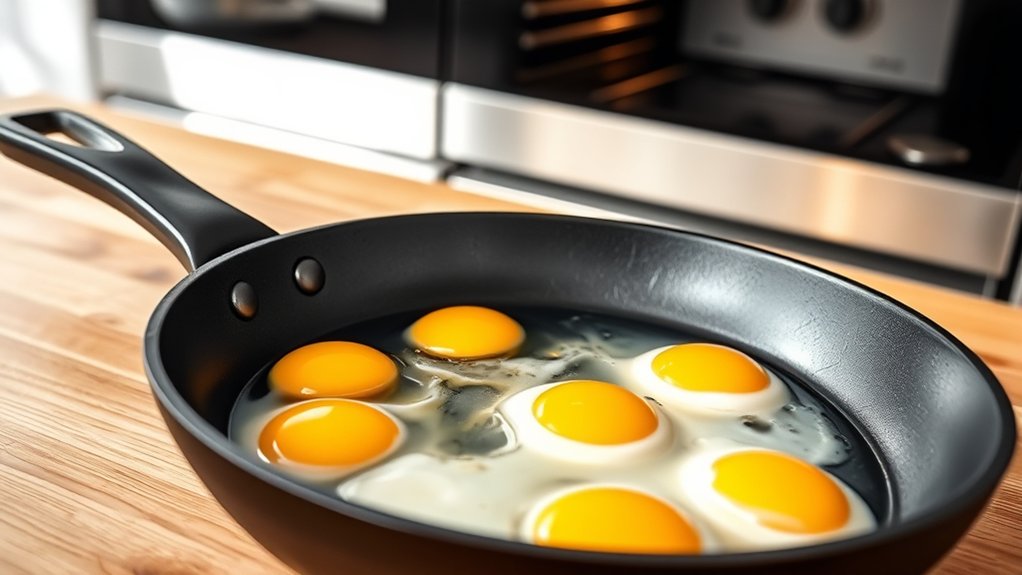
For baked eggs, choose a pan that heats evenly and can go from oven to table without trouble. You’ll get the best results with a small cast-iron skillet, ceramic baking dish, or sturdy metal pan, depending on your serving needs.
Check the pan material first: cast iron and heavy ceramic retain heat well, while thin pans can cook unevenly and make eggs set at different rates. Pick a size that holds the eggs in a shallow layer, so whites cook neatly and yolks stay visible.
Make sure the pan’s handles and finish support oven safety; avoid anything with plastic parts, loose coatings, or damaged enamel. If you want a tidy presentation, choose a pan that looks good enough to serve from directly.
Before you crack in the eggs, lightly grease the surface so they release cleanly. When your pan suits the recipe, you’ll control texture, simplify cleanup, and get a more polished baked egg dish.
Pick the Right Oven Temp and Time
Set your oven to the right temperature first, since that controls how evenly the eggs bake. Then match the time to the style you want, whether you’re cooking soft, set, or fully firm eggs.
Check for doneness early, because the eggs can keep cooking from residual heat after you take them out.
Best Baking Temperature
The best baking temperature for eggs usually falls between 325°F and 375°F, depending on the texture you want. For gentle custards, use 325°F; for firmer results, choose 350°F to 375°F.
You’ll get the most even set when your oven heat stays steady, so preheat fully before you slide in the dish. The best temperature depends on your pan size and egg mixture depth, but lower heat gives you softer curds and fewer browned edges.
| Temp | Result | Use |
|---|---|---|
| 325°F | Silky | Custards |
| 350°F | Balanced | Muffins |
| 375°F | Firm | Deep dishes |
Check your recipe first, then match the oven heat to the finish you want.
Timing By Egg Style
How long should eggs bake? It depends on your egg styles and the timing differences you want. For standard baked eggs in a greased ramekin, bake at 350°F for 12 to 15 minutes if you want set whites and soft yolks.
If you’re making shirred eggs with cream, add 2 to 3 minutes because the richer mixture insulates the eggs. For egg cups or muffin tin portions, start checking at 10 minutes, since smaller amounts cook faster.
If you bake a whole dish of eggs, plan on 18 to 20 minutes. Use the same oven temp, but adjust time by portion size, dish depth, and whether ingredients like cheese or vegetables are present. Keep your setup consistent so you can repeat the result.
Doneness And Carryover
For doneness and carryover, pull eggs when the center still looks slightly soft, because residual heat will keep them cooking after they leave the oven. Set your oven between 325°F and 350°F for steady results, then watch the surface, not the clock alone.
At 325°F, eggs cook more gently and finish with softer whites; at 350°F, they set faster and brown a bit more. Your doneness misconceptions may tempt you to wait until the center looks fully firm, but that usually overshoots the target.
Account for carryover effects by removing dishes a minute early, then rest them on the counter. The eggs should finish in the dish, not after they dry out. Check once, trust the texture, and serve immediately for the best custard-like bite.
How to Make Baked Eggs
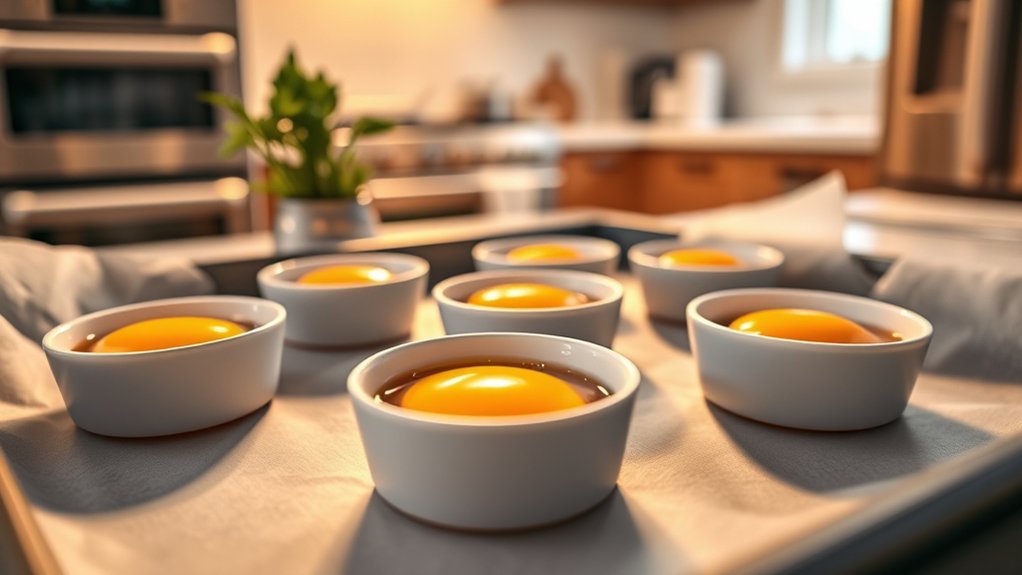
Crack the eggs into a greased ramekin or baking dish, then season them with salt, pepper, and any herbs or cheese you like. Preheat your oven to 375°F and place the dish on a rimmed baking sheet for easier handling and oven safety.
Crack eggs into a greased dish, season well, and bake on a rimmed sheet for easy handling.
Bake the eggs until the whites just set and the yolks still look glossy, usually 10 to 14 minutes, depending on dish size and egg count. If you want firmer yolks, leave them in a minute or two longer.
Watch closely near the end, because eggs keep cooking after you pull them out. Let them rest briefly so the heat settles and the texture firms. Serve immediately with toast, greens, or roasted vegetables.
For two word discussion ideas, try herb options, dairy pairings, or seasoning balance.
Make Baked Egg Muffins
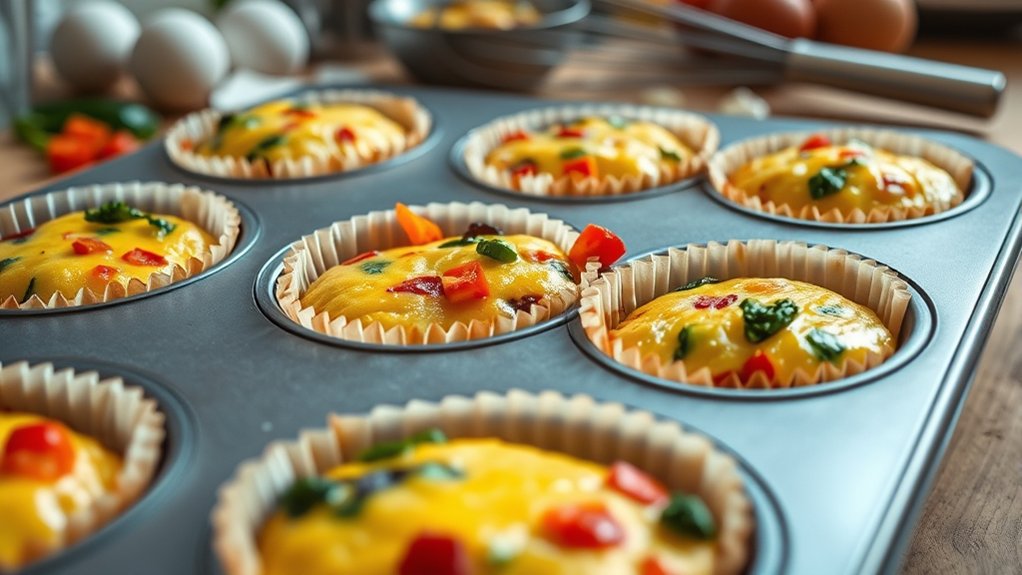
Grease a muffin tin well or line it with cups so the eggs release cleanly after baking. Whisk your eggs, then stir in add-ins like cheese, chopped vegetables, or cooked bacon for even flavor in each muffin.
Pour the mixture into the cups and bake until the centers are just set.
Muffin Tin Prep
Start by prepping a standard muffin tin so each egg muffin cooks evenly and releases cleanly. Lightly coat each cup with oil or nonstick spray, paying attention to the corners; this supports egg safety by preventing sticking and helps preserve pan coatings over time.
If you use paper or silicone liners, set them in place before you pour. Preheat the oven so the tin goes in hot and the eggs set fast. Keep the rack centered for balanced heat.
- Brush away any crumbs or residue.
- Fill cups only about two-thirds full.
- Wipe any drips from the rim.
Handle the tin carefully, since hot metal transfers heat quickly. Once prepped, your muffin tin is ready for smooth, tidy baked egg muffins.
Egg Mix Add-Ins
What can you add to baked egg muffins to make them more flavorful? Start with egg mix ins that cook evenly, such as diced ham, cooked bacon, sautéed onions, spinach, bell peppers, mushrooms, or shredded cheese. Keep pieces small so they distribute well in each cup.
Add about 2 to 3 tablespoons of mix ins per muffin, and don’t overload the batter. Whisk the eggs with salt, pepper, and a splash of milk, then fold in your add-ins just before pouring.
For stronger flavor, try spice pairings like cheddar with chives, feta with dill, or sausage with paprika. If you use watery vegetables, cook them first and drain them well. This helps your baked egg muffins set cleanly and taste balanced.
Try Eggs Baked in a Dish
For a simple baked-egg dish, crack the eggs into a buttered or oiled baking dish, then season them with salt, pepper, and any herbs, cheese, or chopped vegetables you like. Keep the eggs in a single layer so they cook evenly. Use egg basics: each egg needs space, and the whites should spread without crowding.
Crack eggs into a buttered dish, season simply, and bake in a single layer for even cooking.
For kitchen safety, set the dish on a stable pan before moving it to the oven.
Bake at 375°F until the whites set and the yolks reach your preferred doneness. Check the center first; ovens vary, so start testing a few minutes early.
Let the dish rest briefly, then serve it warm with toast or a salad.
This method gives you a clean, flexible egg dish with a tender texture and rich flavor. Choose shallow cookware for faster cooking, and avoid overbaking, which turns the yolks firm and the whites rubbery.
Add Cheese, Veggies, and Meats
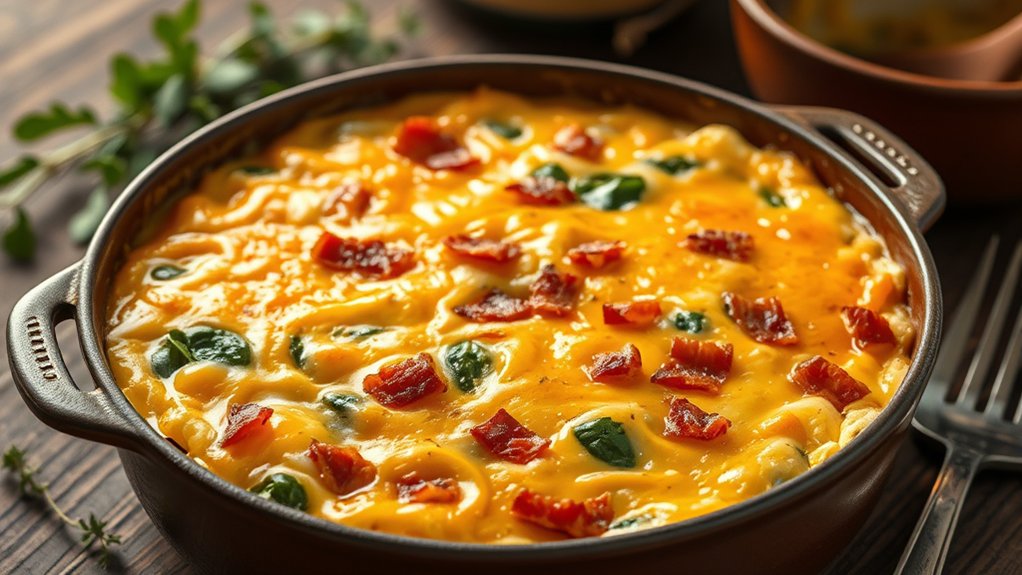
To add more flavor and substance, sprinkle in grated cheese, finely chopped vegetables, or pre-cooked meats before baking. Choose egg cheese that melts smoothly, such as cheddar, Gruyère, or mozzarella, and scatter it over the surface for even coverage.
Add tender vegetables like spinach, bell peppers, mushrooms, or scallions; chop them small so they cook evenly. If you want extra protein, mix in diced ham, cooked bacon, or crumbled sausage.
You can also use veggie proteins like tofu crumbles or black beans for a meatless option. Season lightly with salt, pepper, and herbs, but don’t overload the dish, or it may turn watery.
Keep additions distributed in a single layer so every portion gets the same balance of egg, cheese, and fillings. If you’re using moist vegetables, pat them dry first and sauté them briefly to remove excess liquid before they go into the pan.
How to Tell When They’re Done
You’ll know the eggs are done when the whites are fully set and the center no longer looks wet or jiggly. Use cooking science: heat coagulates the proteins, so a firm surface and opaque color signal doneness. For egg safety, check that the custard-like middle has lost its raw sheen and the dish reaches a stable, just-set texture.
If you insert a knife near the center, it should come out mostly clean, with only a little moisture clinging to it.
- Look for edges that pull slightly from the pan.
- Tap the dish gently; it should wobble lightly, not slosh.
- Trust visual cues more than exact timing, since oven temperatures vary.
Remove the eggs when they’re just set, because carryover heat will finish the job without overcooking. If you wait until they seem dry, you’ve gone too far. Serve them right away for the best texture, flavor, and confidence.
Store and Reheat Baked Eggs
How should you store baked eggs so they keep their best texture? Let them cool for 15 to 20 minutes, then transfer them to an airtight container. If you’ve baked them in a dish, cover the surface tightly with foil or a lid.
Refrigerate them within two hours and keep them for up to four days. For best storage and reheating, portion the eggs before chilling so you can warm only what you need.
Reheat in a 325°F oven until the center reaches 165°F, usually 10 to 15 minutes. Cover the dish with foil to prevent drying, and add a splash of cream or water if the eggs seem firm.
Microwave only individual portions, using short bursts at medium power. If you want longer keeping, use freezing methods with custard-style baked eggs; wrap tightly, freeze up to one month, and thaw overnight in the refrigerator before reheating gently.
Frequently Asked Questions
Can I Bake Eggs Without Greasing the Pan?
Yes, you can bake eggs in an ungreased pan, especially for no fat baking if it’s nonstick or well-seasoned. You’ll want to watch for sticking, then loosen them gently before serving.
Do I Need to Preheat the Oven First?
Yes, you should preheat the oven first. You’ll meet the preheat requirement, control oven timing, and set your eggs up evenly.
Hot oven, steady heat, reliable results. Then you can bake with confidence.
Can I Bake Eggs From Cold Refrigerator Eggs?
Yes, you can bake cold eggs from refrigerator storage. You’ll just need to add a little extra baking time.
Cold eggs may cook unevenly, so check doneness carefully before you serve them.
Are Baked Eggs Safe for Meal Prep?
Yes, baked eggs are safe for meal prep if you chill them promptly, keep them refrigerated, and reheat thoroughly.
You’ll get reliable, protein-rich portions when you bake, cool, store, and label them properly.
Can I Freeze Cooked Baked Eggs?
Yes, you can freeze cooked baked eggs, but they’ll turn into a patch of winter; freeze eggs only for later use, and expect texture changes.
Reheat them gently, though you’ll lose some creaminess.
Conclusion
Now you know how to bake eggs with confidence: choose the right pan, set the right temperature, and watch the right doneness. Bake them until the whites are set, pull them when the yolks still look glossy, and serve them hot.
Add cheese, vegetables, or meat for more flavor, and store leftovers safely for later. With a little practice, you’ll cook tender, delicious baked eggs every time, in muffins, in dishes, and in simple weeknight meals.
By mastering these steps, you can enjoy perfectly cooked eggs in the oven whenever you want.