How to Roast Peppers in the Oven
You may not know that roasting peppers in the oven works best when their skins fully blister before you turn them. You’ll start with firm, glossy peppers, then set them on a lined sheet in a hot oven, about 450°F.
Let them char without crowding, and their flesh will stay tender underneath. Once they soften, you can peel, seed, and use them in ways that change the whole dish.
Key Takeaways
- Choose firm, glossy peppers; wash, dry completely, and cut into even pieces or leave whole if preferred.
- Preheat the oven to 450°F and line a baking sheet for easy cleanup.
- Arrange peppers in a single layer, skin side up or cut side down, and roast without moving them.
- Roast until skins blister, blacken, and flesh softens but still holds its shape.
- Cool briefly, peel off charred skins, remove seeds and stems, then refrigerate or freeze for storage.
Ingredients and Tools You’ll Need
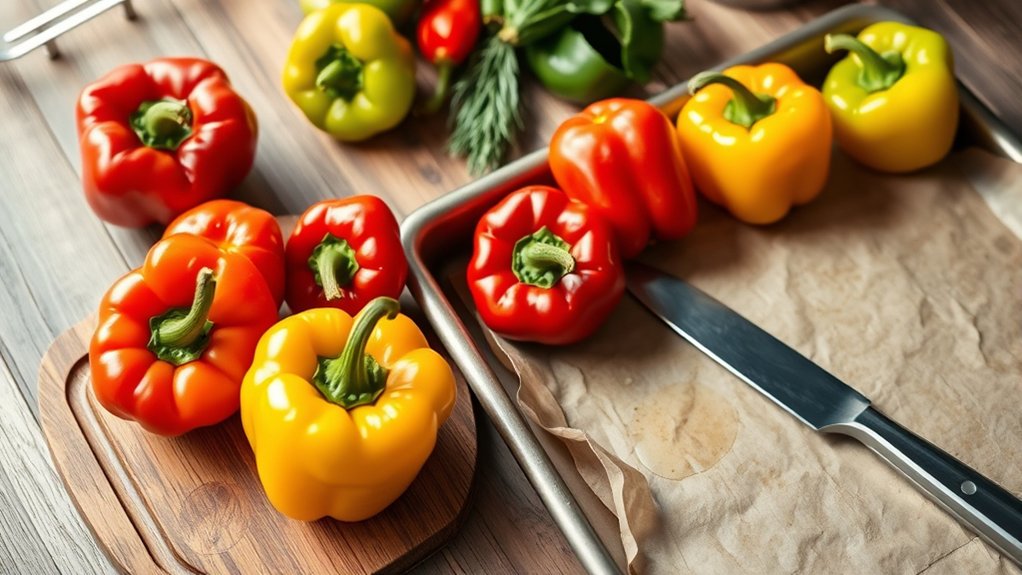
Before you start roasting, gather a few simple ingredients and tools: fresh peppers, a little oil, salt if you like, a baking sheet, and parchment paper or foil. Choose peppers that feel firm, heavy, and blemish-free; their skins should look glossy and taut.
You’ll get the best roasting results with bell peppers, poblanos, or other thick-walled peppers, since they soften evenly and develop sweet flavor. Keep a clean kitchen towel or tongs nearby so you can handle hot peppers safely after roasting.
A sharp knife and cutting board help if you plan to trim or slice them later, but you won’t need many tools. Use just enough oil to coat the skin lightly, which promotes even browning.
If you want, add a pinch of salt after roasting to sharpen the flavor. With these simple ingredients and tools ready, you can focus on controlled roasting and consistent, delicious results.
How to Prep Peppers for Roasting
Start by washing and drying the peppers thoroughly, then leave them whole if you want easier peeling later or cut them in half and remove the stems and seeds for faster roasting. Choose firm, glossy peppers with tight skin and no soft spots, because damaged flesh won’t roast evenly.
Trim away any bruised areas, then pat the surface completely dry so steam doesn’t interfere with caramelization. If you halve them, cut through the stem end, keep the pieces as even as possible, and remove every seed and membrane.
For whole peppers, keep the stems attached so they hold shape. Lightly coat them with oil only if your recipe calls for it, since prep should stay simple. Set the peppers in a single layer and avoid crowding.
Good prep also supports roasted peppers storage, since clean, dry peppers keep better afterward. With proper prep, you’ll get more versatile peppers culinary uses later.
Roast Peppers in the Oven Step by Step
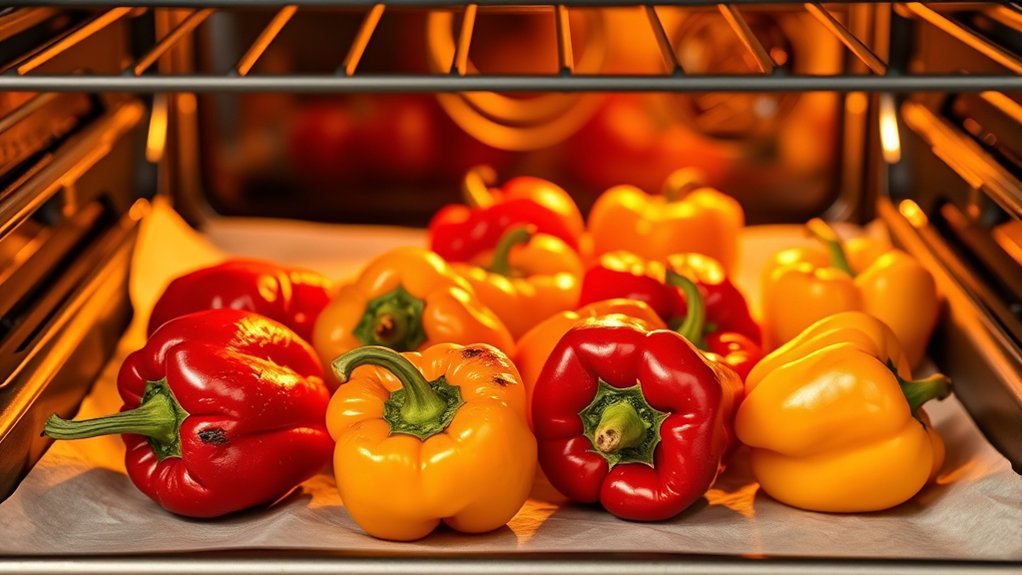
Preheat your oven to 450°F and line a baking sheet with parchment or foil for easy cleanup. Arrange the prepared peppers in a single layer, cut side down or whole if you prefer blistered skins, leaving space between each piece.
Slide the sheet onto the center rack and let the peppers roast without moving them so the heat can work evenly. If you want deeper caramelization, rotate the pan once during roasting peppers.
Keep an eye on kitchen safety by using dry mitts, closing the oven gently, and avoiding steam when you open the door. When the peppers begin to soften and the skins darken, remove the sheet carefully and transfer the peppers to a bowl or covered container.
Let them rest briefly, then handle them as needed for peeling, slicing, or dressing.
How to Tell When Peppers Are Done
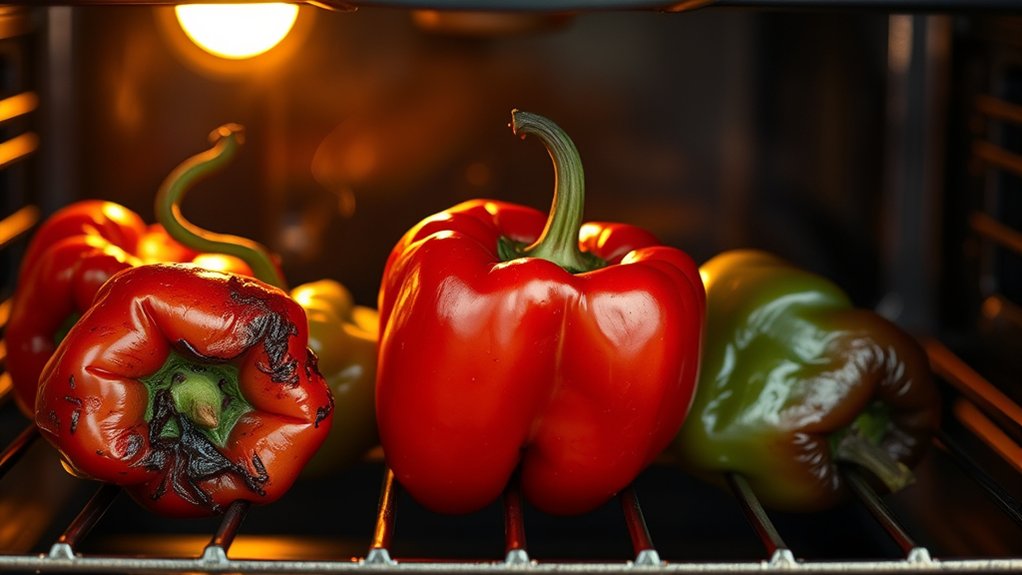
You’ll know your peppers are done when the skins blister and split, with dark charred spots across most of the surface.
Check that they’ve softened and started to collapse slightly, which means the flesh has cooked through. When they look wrinkled, blackened in patches, and tender to the touch, pull them from the oven.
Skin Blistering Signs
When the peppers are done, their skins will be deeply blistered and blackened in spots, with most of the surface softened and collapsed. You should see skin blistering across the sides and tops, while the peppers look relaxed rather than rigid.
The flesh underneath will yield when you press it lightly with tongs or a spoon. If the peppers still feel firm, keep roasting and check again soon. Watch for even softening, because that tells you the heat has penetrated fully.
For pepper skin safety, let the peppers cool briefly on a tray or in a covered bowl before handling them. This short rest helps the skin loosen and makes peeling easier without tearing the flesh.
Charred Spot Check
Look for a balanced pattern of charred spots across the peppers: the skins should be blistered, blackened in patches, and soft enough that the peppers have visibly collapsed. Rotate the tray once during roasting, then do a hot spots check by comparing the sides closest to the oven wall and the center.
You want even charring, not one side fully burnt and the other pale. When the surface shows scattered dark patches and the flesh has loosened from the skin, pull them out. If you’re planning roasted pepper storage, stop before the flesh dries out too much, because gentle roasting preserves better texture and flavor.
Let the peppers rest briefly, then handle them carefully; the char should wipe off cleanly where the skin has fully blistered.
Softness And Collapse
How do you know the peppers are done? You’ll see the skins blistered and blackened, but softness tells the real story. Press a pepper with tongs or a folded towel; it should give easily and feel limber, not firm or springy.
As it roasts, the flesh relaxes, the walls thin, and the pepper’s shape loosens. Those softness dynamics matter more than color alone. Watch for collapse indicators: the pepper should slump slightly, wrinkle, and settle against the pan instead of standing upright.
If it still feels tight, give it a few more minutes and turn it again. Once it yields fully and looks deflated, remove it promptly so it won’t dry out or burn further.
How to Peel and Seed Roasted Peppers
Once the roasted peppers are cool enough to handle, slip off the charred skins with your fingers or a small paring knife, then cut away the stems, cores, and seeds. Keep a bowl nearby for scraps, and work over a cutting board to catch juices.
If the skins cling, use a damp paper towel to loosen them without tearing the flesh. This peeling technique preserves the sweet, silky layers underneath and keeps the peppers neat for later use.
Rinse briefly only if you need to remove loose soot, then pat them dry so they don’t become watery. Slice each pepper open, flatten it, and trim away any remaining seed pockets.
For peppers storage, layer the cleaned pieces between paper towels in an airtight container and refrigerate them for a few days. You can also freeze them after draining well, which helps maintain their texture and flavor.
Easy Ways to Use Roasted Peppers
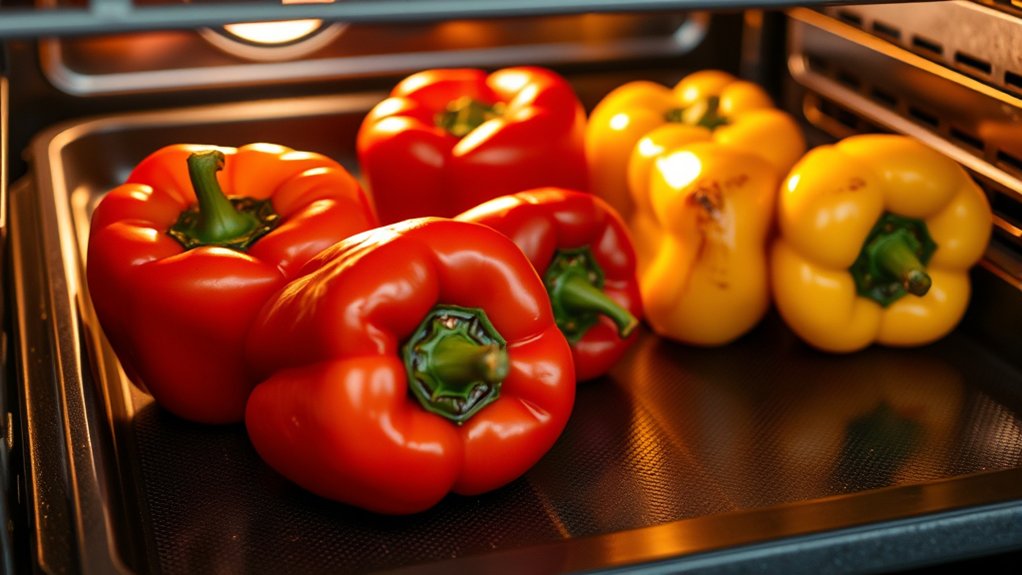
You can toss roasted peppers into salads for sweet, smoky color and a tender bite.
Blend them into sauces to add depth and a smooth, rich finish. Layer them in sandwiches for an easy burst of flavor that lifts every bite.
Toss Into Salads
Roasted peppers bring sweet, smoky depth to salads, and they work well in both simple greens and hearty grain bowls. Slice them into narrow strips so they disperse evenly, then toss them with tender lettuce, arugula, cucumbers, beans, or farro.
If you roast peppers ahead, drain off excess juices before adding them so they don’t water down the dressing. Use them as bright salad additions alongside salty cheese, toasted nuts, olives, or fresh herbs.
Their soft texture contrasts nicely with crisp vegetables, and their sweetness balances sharp vinaigrettes. Keep seasoning light, since roasted peppers already carry concentrated flavor. For best results, add them just before serving so they stay intact and keep their sheen.
Blend Into Sauces
For a smoother, more concentrated use, blend roasted peppers into sauces, dressings, and spreads. First, peel away charred skin, remove seeds, and trim any bitter ribs after your Peppers prep.
Then add the tender flesh to a blender with olive oil, garlic, lemon juice, and salt. Pulse until silky, stopping to scrape the sides so the texture stays even.
For thicker Sauce blends, include yogurt, tahini, or cooked tomato for body. Taste and adjust acidity, heat, and seasoning before serving.
You can strain the sauce for a refined finish, or leave it slightly rustic for more texture. Use it immediately, or chill it in a sealed container and stir before serving.
Layer In Sandwiches
Slide roasted peppers into sandwiches to add sweetness, color, and a soft, smoky bite. Pat them dry first so they don’t soak the bread.
You can tuck strips into turkey, grilled chicken, mozzarella, or hummus sandwiches. Match the pepper variety to the filling: sweet red peppers pair well with mild cheeses, while hotter types add contrast to rich meats. Slice them into even ribbons for tidy layering and balanced bites.
If you roast them just until the skins char and the flesh stays supple, the texture will hold better in lunch sandwiches. Adjust roast timing carefully, because overcooked peppers turn mushy and bleed moisture.
Add them last, then close the sandwich and press lightly so the flavors meld without crushing the bread.
How to Store Roasted Peppers Safely
Once the peppers have cooled, you can store them safely by peeling off the skins, removing the stems and seeds, and placing them in a clean airtight container. For storing safety, keep any juices with the peppers only if they’re clean and well strained.
Refrigeration guidelines suggest chilling them within two hours of roasting, then refrigerating at 40°F or below. Add a thin layer of olive oil if you want to limit air exposure, but don’t submerge warm peppers.
Use a glass container or food-safe bag, and press out excess air before sealing. Label the container with the date so you can track freshness. Refrigerated roasted peppers usually keep for up to five days.
If you need longer storage, freeze them in portions on a tray first, then transfer them to freezer bags. Thaw them in the refrigerator, not on the counter, to keep texture and flavor steady.
Frequently Asked Questions
Can I Roast Peppers Without Oil?
Yes, you can roast peppers without oil. You’ll use oil free methods and manage roasting moisture by dry roasting, broiling, or baking on parchment until skins blister, then steam and peel them.
Which Pepper Varieties Roast Best?
You’ll get the best roasted pepper sweetness and char development from bell peppers, poblanos, and Cubanelles; they roast evenly, soften beautifully, and develop rich flavor.
Choose thick-skinned peppers, and you won’t get watery results.
Should I Roast Peppers Whole or Halved?
You should roast peppers whole for juicier pepper texture, or halve them for faster, more even cooking.
Whole peppers build deeper roast aroma; halved peppers char more quickly. Choose based on your texture and time preference.
Can I Roast Peppers on a Gas Burner?
Yes, you can roast peppers on a gas burner, like a toastier kiss from the flame. You’ll need careful roasting heat control; turn them often until pepper skin blistering blackens evenly, then steam and peel.
Do Roasted Peppers Freeze Well?
Yes, you can freeze roasted peppers well. For best roasted peppers storage, cool, peel, and dry them first.
Freezing peppers quality stays high for about three months in airtight containers.
Conclusion
Roasting peppers in the oven gives you sweet, smoky flesh beneath blistered, blackened skins. You start with firm, glossy peppers, then let heat do the work while the kitchen fills with warmth and the sharp scent of char.
When you peel away the dark skin, you reveal soft color and clean flavor. Use them right away, or store them for later.
With this simple method, you turn plain peppers into something rich and versatile. Roasting peppers in the oven is an easy way to elevate your dishes with depth and complexity.