Why Do They Call It Oven
You might think the name “oven” is just a plain label, but it’s really a softened trace of Old English *ofen*, meaning a heated enclosure. The word “oven” has a long history tied to a box that holds fire and food in place.
As cooking tools changed, English kept the term and gave it new authority. Yet the story doesn’t stop there, because other languages took very different paths.
Key Takeaways
- “Oven” comes from the Old English word *ofen*, meaning a heated chamber for baking or roasting.
- The name fits its purpose: a sealed space that traps heat for controlled cooking.
- English kept the word through gradual changes in spelling and pronunciation over centuries.
- The term also became a metaphor for intense heat, pressure, or confinement.
- “Oven” stayed the standard English word because everyday use made it the natural, practical choice.
Why Is It Called an Oven?
The word oven comes from the Old English ofen, a term used for a heated chamber or enclosed place for baking, roasting, or firing materials. When you ask why it’s called an oven, you trace a name that fits its function: a sealed heat space that transforms raw food through controlled fire.
Over time, you can see how naming origins stayed practical, rooted in utility rather than ornament. As cooking methods changed, the oven remained distinct from open hearths because it enclosed heat, letting you bake with steadier temperatures and more consistent results.
That enclosure shaped taste evolution, too, since breads, meats, and pastries developed deeper crusts, softer interiors, and richer aromas. The term endured because it described both the physical structure and the culinary purpose.
In historical terms, the name reflects a technology you still recognize: a chamber where heat is contained, directed, and made useful for cooking.
Where the Word Oven Came From
- Old English ofen preserved the sense of enclosure.
- Middle English scribes kept the word close to its older sound.
- Modern spelling settled as English orthography regularized.
When you study word origins, you notice that oven never needed a dramatic reinvention; it simply adapted with the language itself.
You’re looking at a term whose history records continuity, not novelty, and that continuity helps explain why the word still feels concrete, domestic, and distinctly English today.
How “Oven” Expanded Beyond Cooking
As you trace the word’s history, you see “oven” move beyond a kitchen tool and into everyday speech, where people use it to describe intense heat, pressure, or confinement.
You can hear this shift in metaphors that liken a crowded room, a sealed car, or a sweltering season to an oven, showing how physical experience shaped language.
Over time, changing cultural habits gave the term wider meaning, turning a concrete object into a flexible symbol for heat and intensity.
Metaphorical Heat Uses
How did “oven” move beyond a cooking box and become a word for intense heat? You can trace that shift through metaphor usage in older English, when people borrowed kitchen language to describe blistering rooms, furnaces, and summer streets.
As industry grew, industrial heat made the term even more useful: factories, kilns, and smelters all resembled enclosed chambers that trapped force and warmth.
You see containment turning into imagery.
You see heat becoming a social description.
You see old domestic language serving new environments.
Oven In Everyday Speech
In everyday speech, “oven” broadened from a literal appliance into a compact way to name any place or situation marked by severe heat, pressure, or confinement. You can trace this shift through oven origins, when speakers borrowed a familiar domestic image to describe harsher environments.
In historical records, people used it for crowded rooms, sun-baked spaces, and enclosed places that felt stifling. That usage reflects language evolution at work: you take a concrete object, then apply it to conditions that share its defining effect.
The word stayed useful because it was vivid, brief, and instantly understood. By the time you hear it in ordinary conversation, it no longer points only to cooking; it signals an environment that traps heat and tests endurance.
Cultural Shifts In Meaning
Across changing cultures, “oven” kept its core sense of enclosed heat while its social meaning widened far beyond the kitchen. You can trace this shift through trade, migration, and media, where culinary borrowings turned a household term into a symbol of intensity, pressure, and transformation.
In many regions, cultural slang used “oven” to describe hot rooms, crowded streets, or tense political moments, because the image felt immediate and physical.
Heat became metaphor.
Enclosure suggested pressure.
Domestic language gained public force.
When you read older sources, you see that speakers didn’t abandon the culinary root; they repurposed it. That layered history shows how language adapts, carrying practical origins into broader cultural use without losing their original heat.
How Ovens Changed Over Time
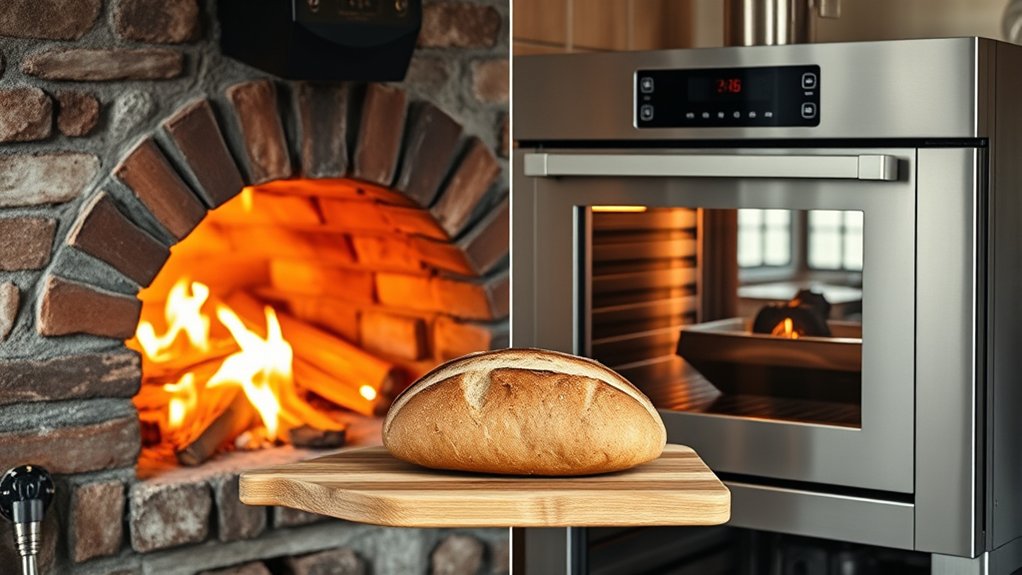
If you trace ovens back to early cooking fires, you see that you once relied on open flames, stone enclosures, and careful heat control to prepare food. Over time, you’ve watched that basic fire pit evolve into enclosed hearths, cast-iron ranges, and eventually insulated electric and gas ovens.
Modern designs now give you steadier temperatures, cleaner operation, and far more precise control than those earliest heating methods ever allowed.
Early Cooking Fires
Long before enclosed ovens became common, people cooked over open fires, using stones, pits, and clay covers to trap heat and smoke. You can trace the earliest kitchen logic here: the fire warmed food directly, while ash and embers insulated it.
In a steam kitchen, moisture would’ve softened grain or roots, but fire still supplied the core energy. Later, builders experimented with fireproof bricks to hold heat more steadily, yet early cooks relied on judgment and proximity.
You watched color to gauge doneness.
You shifted coals to control intensity.
You covered vessels to slow drying.
These methods turned cooking into a skilled, local practice, and they laid the groundwork for enclosed ovens that followed.
Modern Oven Designs
As ovens moved from hearth-side enclosures to dedicated appliances, designers kept refining the same basic problem: how do you trap, direct, and regulate heat more reliably? In modern design, you now see insulated steel shells, sealed doors, and electric or gas elements that answer that question with precision.
You can trace the shift:
| Era | Change | Effect |
|---|---|---|
| 1800s | Cast-iron ranges | Better heat retention |
| 1900s | Thermostats | Stable baking |
| Today | smart ovens | Remote control, sensors |
You’re looking at centuries of engineering compressed into one cabinet. Each improvement reduced waste, shortened cooking times, and gave you finer control. Modern ovens don’t just heat food; they manage airflow, timing, and temperature with historical lessons built into every component.
How Other Cultures Named Ovens
Across cultures, people named the oven by focusing on its function, shape, or heat source, and those choices reveal how each society understood the device in daily life. When you study these terms, you see practical history at work, not ornament.
People named the oven by its function, shape, or heat source, revealing daily life and practical history.
In Latin-derived languages, words often point to baking or enclosing heat; in Greek and Arabic traditions, naming can stress the hearth, the chamber, or the fuel. That variety also reflects taste symbolism, since bread, meat, and ritual foods gave the oven social meaning.
It likewise shows kitchen sociology, because naming tracked who controlled cooking and whose labor mattered.
- Heat-centered names emphasize fuel and fire.
- Shape-based names stress enclosure and containment.
- Function-based names tie the oven to breadmaking and meals.
You can trace a culture’s priorities through these labels: they preserve local technology, culinary habits, and domestic values without needing elaborate explanation.
Why “Oven” Became the Standard English Word
Why did oven win out in English? You can trace its rise to Old English, where *ofn* named a heated chamber for baking and roasting. As English speakers borrowed, blended, and standardized vocabulary after the Norman period, this native term stayed useful because it fit everyday speech and didn’t depend on elite Latin or French forms.
You also see pronunciation shifts at work: the vowel and ending softened over centuries, turning *ofn* into *oven*, a shape that felt natural in Middle English and later print culture. Origin myths sometimes claim one royal decree or one famous text fixed the word, but that’s too simple.
In reality, broad use in homes, markets, and cookery writing made it the default. Because people kept saying it, copying it, and understanding it, oven became the stable English word you use today.
Related Words: Oven, Stove, and More
- Oven: enclosed chamber for baking
- Stove: broader heating or cooking device
- Kiln: purpose-built firing structure
When you compare them, you see that English didn’t invent one perfect word for heat; it assigned distinct labels to distinct jobs. That practical sorting still shapes how you talk about cooking equipment today.
What “Oven” Reveals About Word Change
If you study this edge case etymology, you notice that language often preserves older meanings in related forms, even when everyday usage tightens. Here, cooking terminology helps you map the change: an oven is no longer any hot enclosure, but the dedicated box where you bake with controlled heat.
You learn that word change isn’t random. It follows social habits, tools, and the daily needs of speakers.
Frequently Asked Questions
What Is the Oldest Known Oven Ever Discovered?
You’d say the oldest known ovens are prehistoric clay structures from the Indus Valley, dating to around 2600 BCE. They show ancient baking practices, letting you trace early controlled heating and bread-making in settled communities.
When Did Humans First Start Baking With Ovens?
You’d trace baking’s embered cradle to Neolithic hearths, about 10,000 years ago. Oldest world myths echo that flame; by then, you’d use clay ovens, and later modern temperature control sharpened bread-making across civilizations.
Are Microwave Ovens Considered True Ovens?
Yes, you can call microwave ovens true ovens, though oven history complicates that claim. They heat food differently, and the microwave controversy centers on radiation versus traditional baking, but both appliances cook.
Which Cultures Used Oven-Like Devices Before English?
You’d find oven-like devices, like footprints in ash, among Ancient technologies from Egyptians, Greeks, Romans, Persians, and South Asians.
Culinary linguistics shows these cultures built clay, brick, and pit ovens long before English borrowed terms.
How Do Modern Oven Temperatures Get Controlled?
You control modern temperature with thermostats, sensors, and electronic boards; they compare set points and actual heat, then cycle elements or gas valves.
In electric control, you’d get steadier, safer cooking and finer precision.
Conclusion
So, you can see why people call it an oven: the word grew from Old English *ofen*, naming a heated, enclosed chamber long before modern appliances existed. As cooking tools changed, the term stayed because it fit the purpose, like a sturdy label sewn onto a changing machine.
You now use “oven” as the standard English word because history, everyday speech, and function all kept it alive through centuries of change. The enduring use of the word “oven” shows how language evolves but still holds on to its roots.