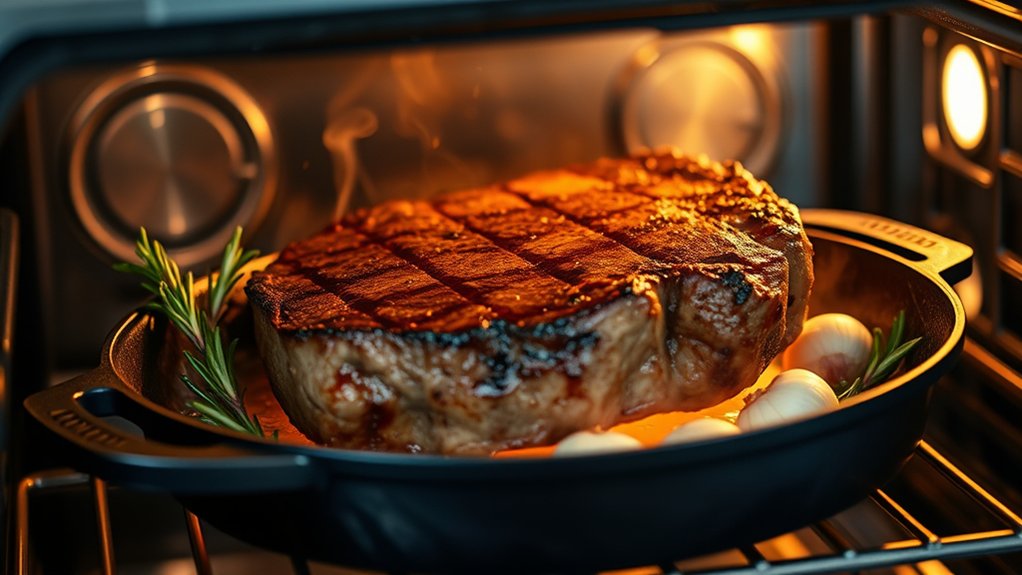
How to Cook Steak in Oven
A steak sizzles in a hot skillet, its crust turning deep brown before it finishes in the oven. Cooking steak in the oven allows you to achieve a perfect balance of a flavorful crust and a juicy interior.
You can cook a juicy steak indoors by choosing a well-marbled cut, seasoning it well, searing it first, then roasting it at a high temperature until it’s just right.
A thermometer keeps you on track, but the final rest matters just as much if you want every slice to stay tender. Letting the steak rest allows the juices to redistribute, ensuring each bite is flavorful and moist.
Follow these steps for a delicious steak cooked in your oven every time.
Key Takeaways
- Choose a 1 to 1 1/2 inch ribeye, strip, filet mignon, or sirloin with good marbling and a heavy oven-safe skillet.
- Bring steak to room temperature for 20 to 45 minutes, then pat dry and season generously with salt and pepper.
- Preheat the oven to 400°F to 450°F. Sear the steak in hot oil until deeply browned, then transfer the skillet to the oven.
- Bake about 4 to 10 minutes, checking with a thermometer for 120–125°F rare, 130–135°F medium-rare, or 140–145°F medium.
- Rest 5 to 15 minutes before slicing against the grain, and optionally finish with a quick pan sauce from the drippings.
Choose the Right Steak Cut
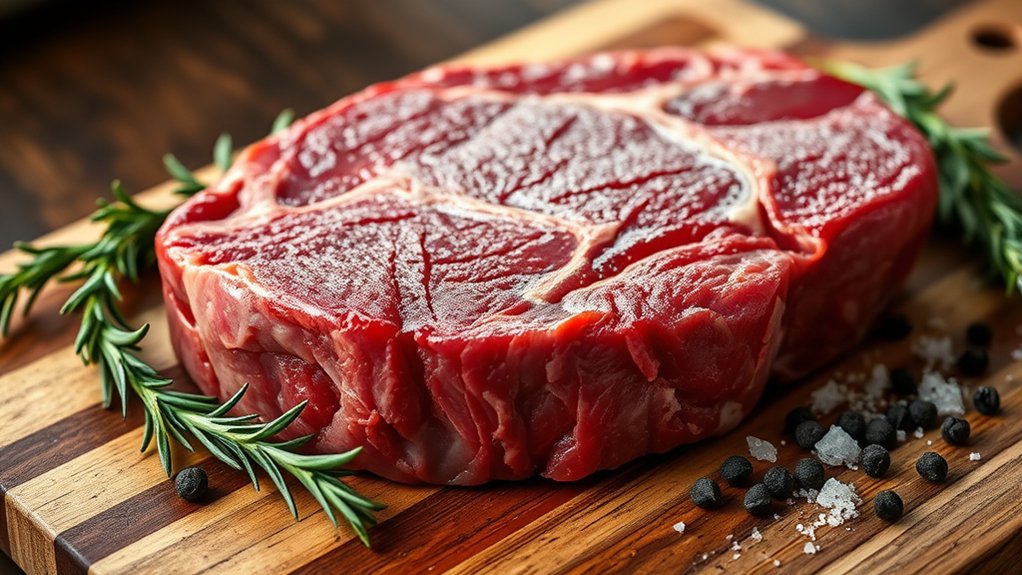
Choose a steak cut that suits high, dry heat and still stays tender in the oven. You should reach for ribeye, strip steak, filet mignon, or sirloin when you want reliable results. These cuts offer enough fat or structure to handle searing and oven finishing without drying out.
Look closely at texture and marbling: fine, even marbling usually means better flavor and juicier meat, while a firm, smooth texture signals good quality. Skip very lean, tough cuts unless you plan to braise them instead. Thickness matters too; choose steaks about 1 to 1 1/2 inches thick so they cook evenly and develop a good crust.
For tool selection, use a heavy skillet or oven-safe pan that holds heat well, because the pan helps build color before the steak goes into the oven. Pick the cut first, and the cooking method will work much more easily.
Bring Steak to Room Temperature
Let your steak sit at room temperature before it goes in the oven so it cooks more evenly from edge to center. A cold steak can sear and finish unevenly, while a tempered steak responds better to the heat.
Rest it on the counter for about 30 to 45 minutes, depending on thickness.
Why Room Temperature Matters
Bringing your steak to room temperature before it goes into the oven helps it cook more evenly from edge to center. When you start with a cold center, the outer layers overcook before the middle catches up.
That’s the core of room temperature science: a smaller temperature gap lets heat move through the meat at a steadier rate. You’ll also get better browning because the surface isn’t fighting a deep chill.
Keep kitchen temperature safety in mind, though; don’t leave steak out for hours. Set it on the counter briefly, uncovered or lightly wrapped, until it loses its fridge chill.
For most cuts, 20 to 30 minutes is enough to improve consistency without risking quality.
How Long to Rest
How long should you rest steak before it goes into the oven? Let it sit at room temperature for 20 to 30 minutes, depending on thickness. This gives the center time to warm slightly, so the steak cooks evenly and develops a better crust.
If you’re working with a very thick cut, you can stretch that to 40 minutes, but don’t leave it out too long. Your goal is a steady resting temperature, not a warm, floppy steak.
To know how to rest it properly, place the steak on a plate, uncovered, and keep it away from direct heat. Pat it dry just before seasoning and roasting. This simple pause improves texture, seasoning absorption, and overall doneness in the oven.
Season Your Steak Well
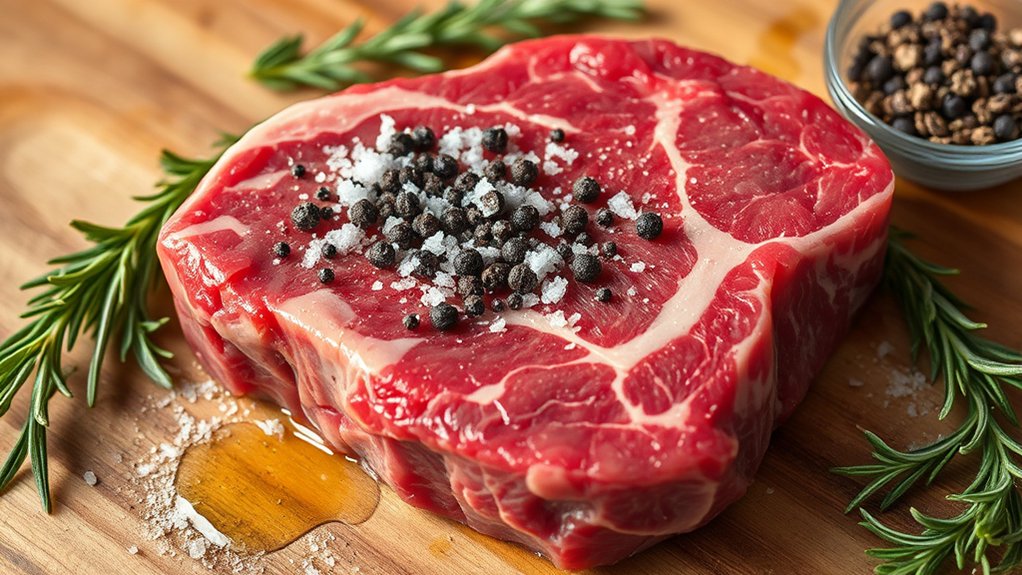
Why rush the flavor? Season your steak generously on all sides so every bite tastes seasoned, not just the crust. Use kosher salt as your base; it draws moisture, then helps it reabsorb for deeper taste. Add black pepper for bite, and keep your hand even so you don’t leave patches bland.
In seasoning science, salt works best when it reaches the meat early enough to penetrate. For flavor pairings, think simply and deliberately.
| Seasoning | Best Use |
|---|---|
| Kosher salt | Builds clean, savory depth |
| Black pepper | Adds sharp warmth |
| Garlic powder | Gives subtle, roasted aroma |
Pat the steak dry first so the seasonings cling well. If you like, add a light pinch of paprika or dried herbs, but don’t bury the beef’s natural flavor.
After seasoning, let the surface sit briefly so the crust starts to develop from the outside in.
Preheat Your Oven for Steak
Set your oven to a high temperature, usually 400°F to 450°F, so the steak can finish cooking quickly and develop a good crust. Preheat oven fully before the steak goes in; waiting until the set point is reached helps the heat stay steady and the meat cook evenly.
Use the center rack unless your recipe says otherwise, and keep the door closed while the oven heats so you don’t lose temperature. If your pan will go in the oven, place it inside during preheating if the cookware can handle the heat. That extra warmth helps the steak respond right away.
Check that your steak seasoning is already on and that the steak is ready to cook as soon as the oven signals it’s hot. A properly preheated oven gives you better control, better browning, and a more reliable final temperature.
Sear the Steak Before Baking
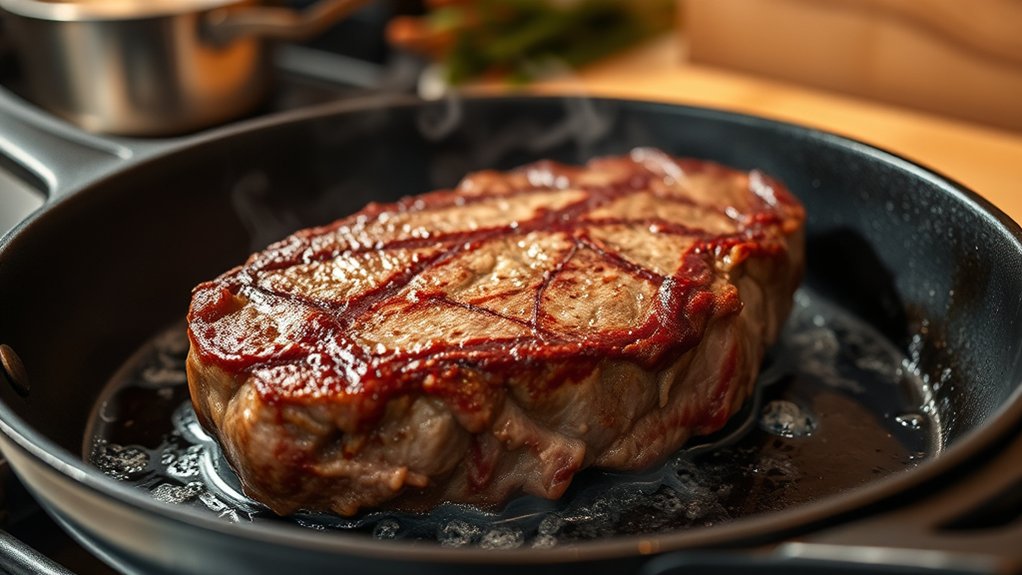
Once your oven is fully heated, sear the steak in a hot skillet on the stovetop before it goes in to bake. Pat the surface dry, season it well, and add a thin film of oil to a screaming-hot pan. You want immediate contact and aggressive browning, which builds flavor through high heat basics and gives you a crust that the oven can finish gently.
- Use a heavy skillet that retains heat.
- Sear each side until deeply browned.
- Transfer the steak straight from pan to oven.
This sear then bake method locks in a savory exterior without overworking the meat. Keep the steak moving only when you flip it, and avoid crowding the pan so the surface browns instead of steams. Once both sides look richly caramelized, move on to the oven while the skillet still holds intense heat.
How Long Should You Cook Steak in the Oven?
How long you cook steak in the oven depends on thickness and doneness, but most steaks need just 4 to 10 minutes after searing. For a 1-inch steak, start with about 4 to 6 minutes for medium-rare, and 6 to 8 minutes for medium.
Most 1-inch steaks need just 4 to 6 minutes in the oven for medium-rare.
Thicker cuts may need 8 to 10 minutes, while thinner steaks finish faster. Keep the oven hot, and let the steak rest briefly after baking so the juices settle.
If you’re cooking ribeye, strip, or filet, use the same basic timing, then adjust by a minute or two for size. Plan your side dishes so they’re ready when the steak comes out, because timing matters in a smooth dinner service.
A quick bake also helps with kitchen cleanup, since you can finish the meal with fewer pans and less stovetop mess. Always remove the steak once it feels nearly done, then plate and serve right away.
Check Steak Doneness With a Thermometer
Use a meat thermometer to take the guesswork out of steak doneness. Insert the probe into the thickest part of the steak, avoiding bone and fat, then read the temperature immediately. A doneness thermometer gives you exact control, so you can match your preferred finish with confidence.
Aim for these temperature targets:
- Rare: 120–125°F
- Medium-rare: 130–135°F
- Medium: 140–145°F
Check the steak a minute or two before you think it’s ready, since oven heat can move fast and carryover cooking will continue the rise. For the most accurate reading, keep the thermometer tip in the center of the meat.
If you’re cooking more than one steak, test each one separately, because thickness and starting temperature can differ. When the steak reaches your target, remove it from the oven and confirm the final reading right away. Precise measurement helps you serve steak exactly how you want it, every time.
Rest the Steak Before Slicing
Why rest a steak before slicing? You let the juices redistribute, so each bite stays moist and tender instead of spilling onto the cutting board. Transfer the steak to a warm plate or rack and give it a rest time of 5 to 10 minutes for thinner cuts, or 10 to 15 minutes for thicker steaks.
Keep it loosely tented with foil if you want to preserve heat, but don’t wrap it tightly, or you’ll soften the crust. During this pause, the internal temperature settles and the meat relaxes, making your slice technique more accurate and cleaner.
When you’re ready, use a sharp carving knife and cut against the grain. Hold the steak steady and slice in smooth strokes, aiming for even pieces about 1/4 inch thick. This approach protects texture, improves tenderness, and gives you a polished finish worthy of an oven-cooked steak.
Make an Easy Pan Sauce
Turn the flavorful drippings left in the skillet into a quick pan sauce. Set the pan over medium heat and add minced shallot if you want a sharper base. Stir in a splash of wine or stock, then scrape the browned bits from the bottom.
Let the liquid reduce by half so the flavor concentrates. For an easy pan sauce, whisk in a small knob of cold butter until the sauce looks glossy and slightly thickened. This butter reduction adds body and rounds out the savory notes.
- Deglaze with 2 to 3 tablespoons of liquid.
- Reduce until the sauce lightly coats a spoon.
- Finish with salt, pepper, and chopped herbs.
Taste and adjust right before serving. Spoon the sauce over the sliced steak, or serve it alongside the meat in a warm dish. Keep the sauce simple so it complements the steak’s crust and natural juices without overpowering them.
How to Avoid Overcooking Steak
Want your steak to stay juicy? Pull it from the oven early and trust a thermometer. You’ll overcook meat fast if you rely on time alone, because thickness, starting temperature, and oven accuracy all vary.
Target 125°F for rare, 130°F for medium-rare, and 140°F for medium, then let carryover heat finish the job. Rest the steak on a warm plate so juices settle instead of running out.
| Cue | What You Do | Result |
|---|---|---|
| Thin cut | Check sooner | Prevents dryness |
| Thick cut | Use probe | Better control |
| Near target | Remove now | Protects texture |
Keep the steak off the pan once it’s done, and don’t slice it immediately. If you want two word discussion ideas, think “doneness guide” or “rest timing.” Ignore unrelated topics and focus on internal temperature, because precision keeps the crust crisp and the center tender.
Frequently Asked Questions
Can I Cook Steak in the Oven Without a Cast-Iron Skillet?
Yes, you can; use a baking sheet or ovenproof dish. You’ll still want searing heat first, then finish with a garlic herb cheese topping or roasted pepper garnish for flavor and browning.
What Herbs Pair Best With Oven-Baked Steak?
Rosemary pairs best with oven-baked steak; in your weeknight test, you’ll notice its herb fragrance lifting the beef.
You can also add thyme or oregano, then finish with cracked pepper for better pepper balance.
Should I Marinate Steak Before Oven Cooking?
You can marinate steak before oven cooking, but it isn’t required. For tender cuts, season simply. For tougher cuts, marinate 30 minutes to overnight.
Adjust oven cooking timing if marinade adds surface moisture.
Can I Cook Frozen Steak Directly in the Oven?
Yes, you can, but you’ll get better browning if you thaw safely first; differences between cuts matter, too.
You’ll cook more evenly, so pat it dry, season boldly, and use a hotter oven.
What Side Dishes Go Well With Oven-Cooked Steak?
You’ll pair oven-cooked steak with mashed potatoes, roasted asparagus, creamed spinach, or a crisp salad; these side dish ideas work well.
Add beef-friendly herb pairings like rosemary, thyme, parsley, and chives for balance.
Conclusion
With these simple steps, you can cook a tender, juicy steak in your oven with confidence. Choose a good cut, season it well, sear it hard, and let the heat finish the job. Use a thermometer to ensure the perfect doneness.
Rest the meat before slicing to keep it juicy and flavorful. Slice only when ready to serve. Remember, patience pays off in the kitchen.
Serve your steak with a pan sauce if you like, and enjoy every bite. Mastering how to cook steak in oven guarantees a delicious meal cooked just the way you want.