How to Dry Herbs in the Oven
Can you really dry herbs in the oven without ruining their flavor? Yes, you can dry herbs in the oven if you follow the right steps. Start by rinsing and patting them dry to remove any moisture.
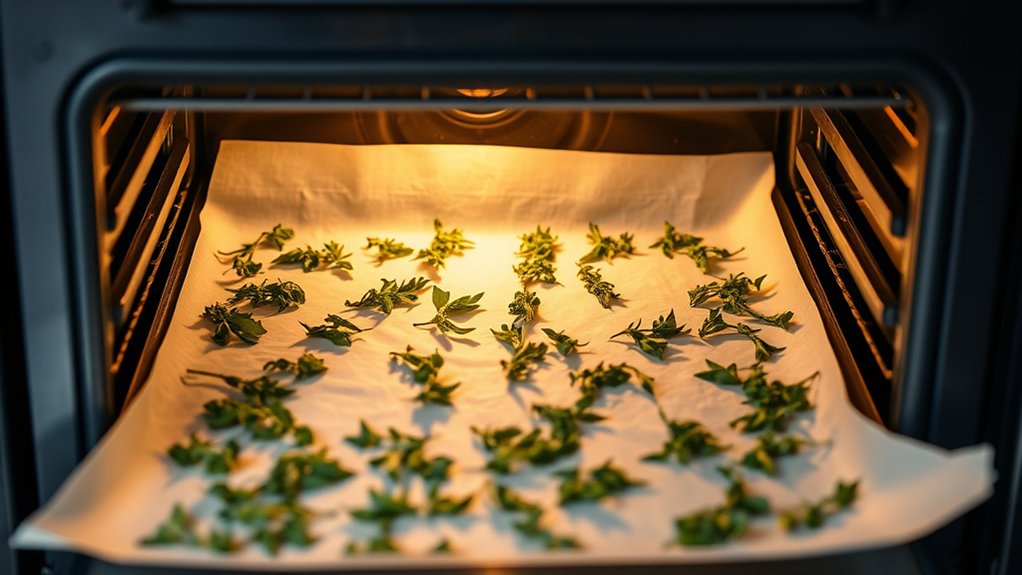
Next, trim thick stems and spread the leaves in a single layer on a parchment-lined baking sheet. Set your oven to its lowest heat setting, and if needed, crack the door slightly to allow moisture to escape.
Watch closely as the herbs turn crisp. This last step matters more than most people think and ensures the best flavor retention.
Key Takeaways
- Rinse herbs gently, pat them completely dry, and remove wilted or bruised leaves before drying.
- Place herbs in a single layer on a parchment-lined baking sheet, leaving space for air circulation.
- Set the oven to its lowest temperature, usually 140°F to 170°F, and crack the door slightly if needed.
- Dry herbs slowly, rotating the tray occasionally, until leaves are crisp and stems snap cleanly.
- Cool herbs completely, then store them in airtight containers away from light and heat.
Prepare Herbs for Oven Drying
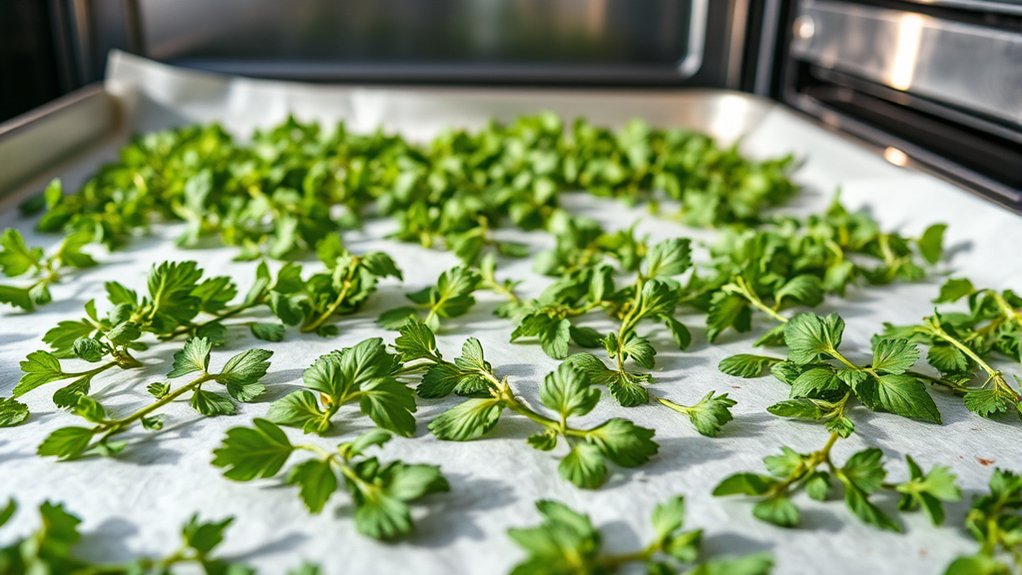
Before you dry herbs in the oven, rinse them gently under cool water to remove dirt and debris, then pat them completely dry with a clean towel or paper towels. Next, inspect each stem and leaf, and discard anything wilted, bruised, or yellowed.
Rinse herbs gently, pat them completely dry, and discard any wilted, bruised, or yellowed leaves.
Trim away thick stems so the leaves can dry evenly, and separate the herbs into small, manageable sprigs. If you’re working with mint, basil, parsley, or similar delicate herbs, keep the leaves intact; if you’re drying rosemary or thyme, leave the sprigs whole.
Spread the herbs in a single layer on a clean, dry baking sheet, and avoid crowding them so air can move around each piece. This careful prep helps preserve the herbal aroma and supports a light, crisp ground texture once the herbs cool.
Handle them gently at every step, because crushed leaves lose flavor faster and can dry unevenly.
Set Your Oven to the Lowest Heat
Set your oven to its lowest possible temperature, usually between 140°F and 170°F, so the herbs dry slowly without scorching. You want gentle heat, not high heat, because delicate leaves can brown or lose their flavor fast.
If your oven has a warm or convection setting, use it to keep the temperature steady and promote even airflow. That helps moisture escape without cooking the herbs. If the lowest setting still feels too hot, crack the oven door slightly to let excess heat out, but keep the temperature controlled.
Check your oven dial carefully, since some models run hotter than the number shows. A small oven thermometer can help you confirm the actual heat. Once you’ve set the temperature, give the oven a few minutes to stabilize before you place in the herbs. Consistent, low heat makes the drying process more reliable and protects the color, scent, and taste you want to preserve.
Dry Herbs in the Oven
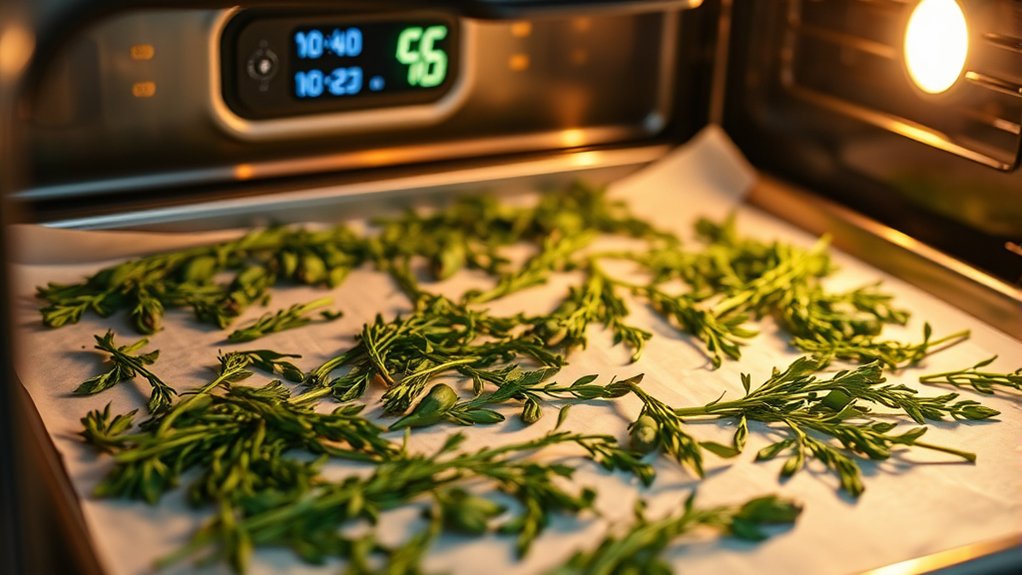
Arrange the herbs in a single layer on a baking sheet lined with parchment paper or a clean cooling rack so they dry evenly. Your herb preparation matters here: pat leaves dry, strip stems, and remove bruised pieces before they go in.
Use oven techniques that keep heat gentle and steady, and leave the door slightly open if your oven runs hot.
| Task | Why it helps |
|---|---|
| Spread herbs out | Promotes even drying |
| Keep layer thin | Prevents steaming |
| Use parchment or rack | Improves airflow |
| Rotate the tray | Balances heat exposure |
| Group similar herbs | Matches drying times |
Check the herbs often and move the tray if one side browns faster. Handle them lightly so you don’t crush fragile leaves.
When they feel crisp enough, you can turn off the oven and let them cool inside briefly. This method keeps flavor bright and gives you consistent results.
Check When Herbs Are Fully Dry
How do you know when herbs are fully dry? Check them by touch and look closely at the leaves. They should feel crisp, brittle, and light, not soft or leathery. When you rub a leaf between your fingers, it should crumble easily instead of bending. Stems should snap cleanly, too.
If the herbs still feel cool, damp, or flexible, give them more time in the oven and check again in a few minutes. Watch for clear drying indicators like faded color, loose texture, and a sharp herbal scent that still lingers.
Don’t rely on appearance alone, because larger leaves can look dry before the centers are ready. Good harvesting timing also helps; herbs picked at their peak usually dry more evenly and keep better flavor.
Test several pieces from different spots on the tray so you catch any uneven drying before you stop.
Store Oven-Dried Herbs
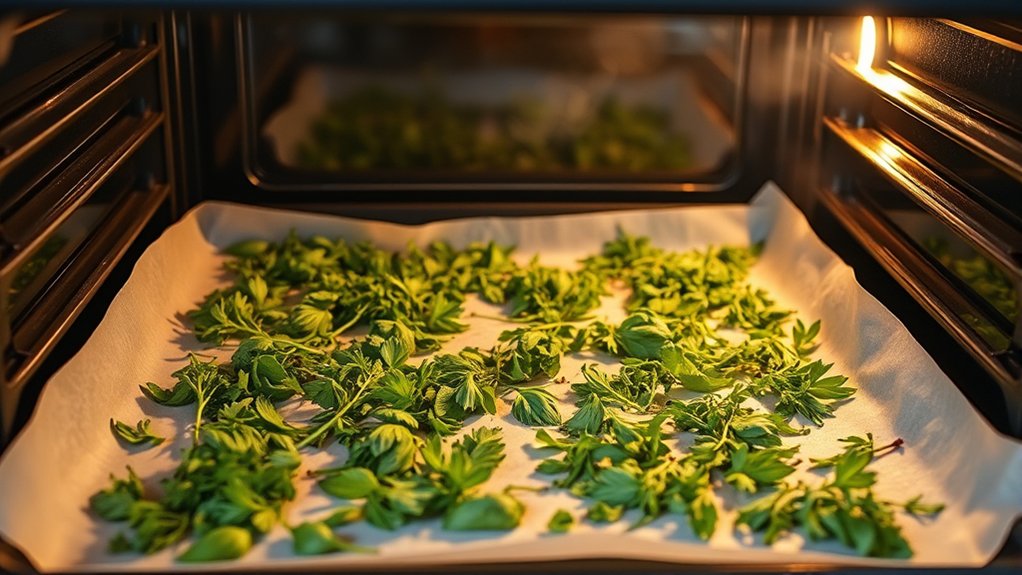
Once your herbs are fully dry, let them cool completely before storing them so trapped heat won’t create condensation. Then, you can discuss storage by choosing airtight glass jars, metal tins, or resealable bags kept away from light, heat, and humidity.
Label each container with the herb name and date so you can track freshness. Keep whole leaves whenever possible; they hold flavor and preserve aroma longer than crushed herbs. If you want a stronger scent later, rub the leaves between your fingers just before use.
Check stored herbs every few weeks for any sign of moisture, fading color, or loss of fragrance. If they feel soft or smell dull, replace them. For best results, store small batches separately so you only open what you need.
Proper storage helps your oven-dried herbs stay bright, fragrant, and ready for soups, sauces, marinades, and teas.
Frequently Asked Questions
Can I Dry Herbs With Stems Attached?
Yes, you can leave stems on if they’re thin and flexible; they help hold herbs together. You’ll keep better flavor while drying by stripping leaves later, but thick stems may dry unevenly and taste woody.
Which Herbs Dry Fastest in the Oven?
Which herbs dry fastest? You’ll usually dry delicate herbs like parsley, dill, cilantro, and basil quickest. Use low oven temperature and make timing adjustments, since thin leaves need less heat than woody herbs.
Can I Use a Convection Oven for Herbs?
Yes, you can use a convection oven for herbs. Why not let that gentle airflow help?
You’ll enjoy convection oven benefits like faster, more even drying, but watch herb drying timing closely so they don’t crisp too quickly.
How Do I Keep Herbs From Losing Color?
You’ll keep herbs greener by drying them fast at low heat, and you should avoid overcrowding. Use keep color tips like brief drying and shade, plus color retaining methods such as paper towels and quick cooling.
Can Oven-Dried Herbs Be Used in Tea?
Yes, you can use oven-dried herbs for tea use if they’re fully dried and clean. You’ll get a stronger flavor, so start small.
Steep them gently, and avoid herbs that taste bitter or overly woody.
Conclusion
By drying herbs in your oven, you can turn fresh sprigs into a crisp, flavorful pantry staple with very little effort. Keep the heat low, watch them closely, and let them cool before storing.
When the leaves crumble easily and the stems snap, you know they’re ready. Use airtight, labeled containers to protect their color and aroma.
With this simple method, you’ll preserve herbs that stay useful long after harvest. Drying herbs in the oven is an easy way to extend their freshness and enjoy their flavors year-round.