How to Cook Pot Roast in Oven
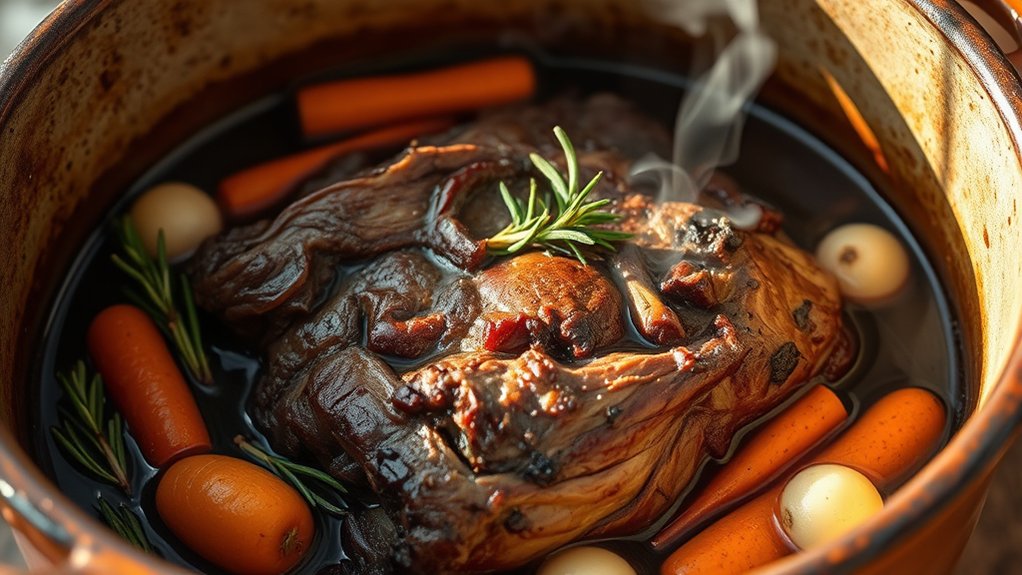
If you choose a well-marbled chuck roast, seasoning it heavily with salt, pepper, and herbs is essential for a delicious pot roast in oven. Start by searing the meat in a hot Dutch oven until it is browned on every side to develop deep flavor.
Next, add sturdy vegetables and enough beef broth to partially submerge the meat. The key to a perfect pot roast in oven is what happens after this step, as the slow cooking allows the flavors to meld and the meat to become tender.
Key Takeaways
- Choose a well-marbled chuck roast, about 3 to 4 pounds, for the best flavor and tenderness.
- Season generously with salt, pepper, and herbs, pressing the rub into all sides of the meat.
- Sear the roast in a hot, oven-safe Dutch oven until deeply browned on every side.
- Add onions, carrots, celery, potatoes, and beef broth, then cover and cook at 300°F.
- Roast until fork-tender, then rest the meat 15 to 20 minutes before slicing or serving.
How to Choose the Best Pot Roast Cut?
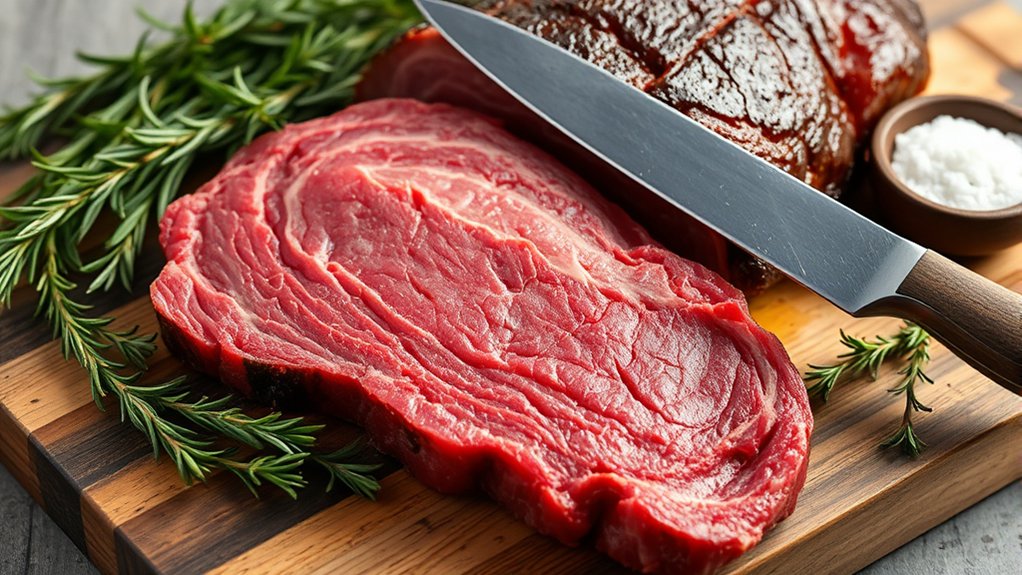
Choosing the best pot roast cut starts with knowing which cuts turn tender after long, slow cooking. When choosing cuts, look for well-marbled beef with connective tissue, because heat breaks it down and gives you a silky texture.
Chuck roast is your best all-around choice; it’s flavorful, forgiving, and usually easy to find. Brisket also works well if you want a meatier slice with rich beef flavor. Round roast can be leaner, but it won’t stay as moist unless you cook it carefully.
For budget options, pick chuck shoulder, arm roast, or blade roast, since they deliver strong flavor without a high price. Choose a piece that’s evenly thick so it cooks at the same rate throughout.
Avoid cuts that look very lean or heavily trimmed, because they can dry out before they become tender. Aim for 3 to 4 pounds for steady oven roasting and reliable results.
How to Season Pot Roast for Oven Roasting?
To season your pot roast for oven roasting, start with a simple rub that suits beef, then coat the meat evenly so every surface gets flavor. Use plenty of salt and black pepper to build a strong base, and add herbs like rosemary, thyme, or parsley for depth.
Press the seasoning into the roast before it goes into the oven so it sticks and forms a well-balanced crust.
Choosing The Right Rub
What should you rub on a pot roast before it goes into the oven? Use a dry seasoning blend that matches the cut’s size and fat content. You want enough surface coverage to form a light crust without masking the meat.
For better tenderization techniques, choose a rub with coarse particles that help you massage the roast and press flavor into crevices. Check the rub texture and aroma before applying it; it should feel slightly gritty and smell fresh, not dusty or stale.
Coat the roast evenly, then pat it firmly so the seasoning adheres. Focus on all exposed surfaces, including the sides and ends, so the oven heat can build a balanced crust. A well-chosen rub sets up deeper flavor and a better exterior during roasting.
Salt, Pepper, And Herbs
Salt, pepper, and herbs give pot roast its foundational flavor, so season it generously and evenly before it goes into the oven. Pat the roast dry first, then coat every surface with kosher salt to build salt flavor throughout the meat.
Add freshly ground black pepper for a sharp pepper aroma, pressing it in so it sticks. Use dried thyme, rosemary, and oregano, or minced fresh herbs if you prefer a brighter finish.
Rub the seasonings into the crevices and along the edges, then let the roast rest briefly so the spices adhere. If you’re using garlic powder or onion powder, apply them lightly; they should support, not overpower, the beef.
Consistent seasoning ensures each slice tastes balanced, savory, and deeply aromatic.
How to Sear Pot Roast for Rich Flavor?
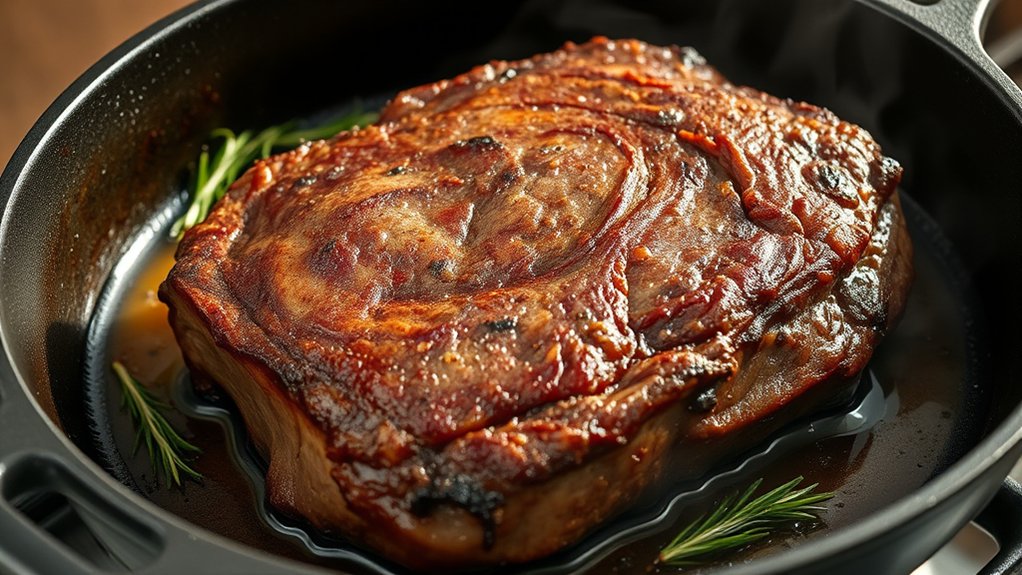
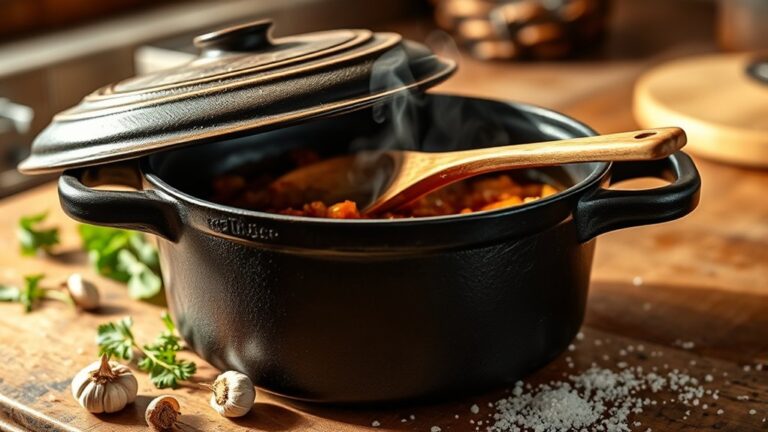
Use a heavy, oven-safe pan or Dutch oven so the roast browns evenly and the heat stays steady. Heat a thin layer of oil until it shimmers, then set the roast in the pan without crowding it.
Sear all sides, including the ends, until each surface turns deep brown to build rich flavor for the oven.
Choose The Right Pan
For the best sear, choose a heavy oven-safe pan that spreads heat evenly, like a Dutch oven, cast-iron skillet, or deep roasting pan with a sturdy base. When you’re choosing cookware, favor thick walls and a flat bottom so the meat contacts steady heat and browns without scorching.
A pan with low, wide sides helps you maneuver the roast and lets moisture escape, which supports better color. Make sure the handles feel secure, because you’ll move the pan from stovetop to oven.
Before heating, let the pan sit at room temperature if it’s cold from storage; sudden shifts can warp thin metal. Keep your kitchen temperature steady while you work, and avoid overcrowding the pan, since trapped steam weakens the sear and dulls flavor.
Sear All Sides
Heat the pan over medium-high until it’s hot enough that the roast sizzles on contact, then set the meat in and let each side brown undisturbed.
Pat the roast dry first, then season it so moisture doesn’t block crust formation. Use tongs to turn it, searing the top, bottom, and ends for deep color.
Don’t crowd the pan, or you’ll steam the meat instead of building flavor. These browning techniques create the fond you’ll use later in the braise.
| Side | Time | Goal |
|---|---|---|
| First | 3-4 min | Deep crust |
| Second | 3-4 min | Even color |
| Ends | 1-2 min | Seal edges |
Watch for searing mistakes like moving the roast too soon or using low heat.
What Vegetables and Broth Should You Add?
Which vegetables and broth you add can shape the roast’s flavor just as much as the meat itself. For what vegetables, choose sturdy pieces that hold their texture and taste: carrots, onions, celery, and potatoes all work well. Cut them into large, even chunks so they cook evenly and don’t turn mushy.
Your broth should bring depth without overpowering the beef, so use low-sodium beef broth or a mix of broth and water if you want a lighter finish.
Add onions under and around the roast for sweetness. Place carrots and potatoes beside the meat for balanced flavor. Add garlic and celery for a savory base.
When deciding how to choose spices, herb blends, keep it simple. Thyme, rosemary, bay leaves, and black pepper complement pot roast without crowding it. Stir the seasonings into the broth, or rub them on the roast before adding liquid, so every bite picks up steady, clean flavor.
How to Cook Pot Roast in Oven Low and Slow?
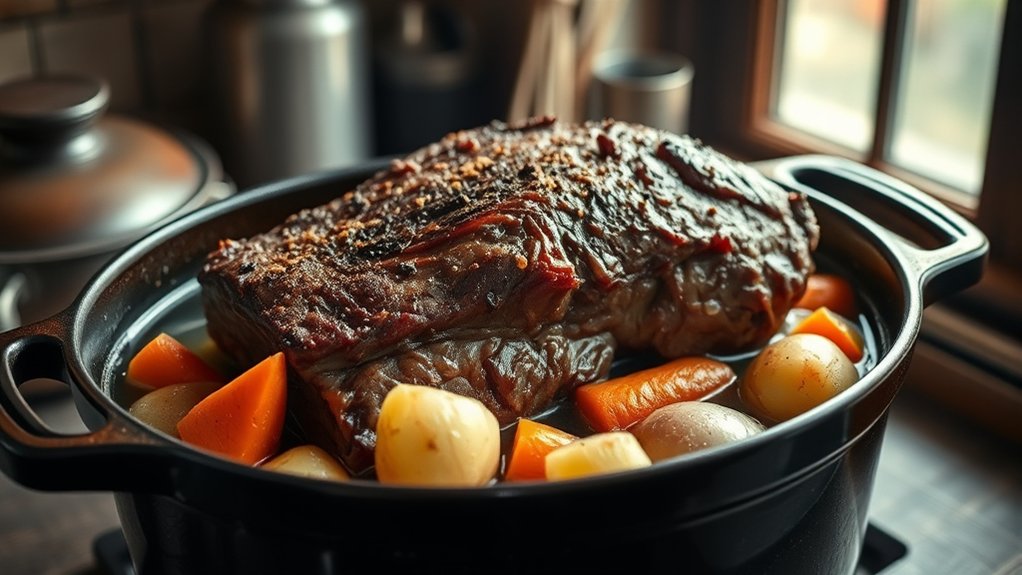
Set your oven to 300°F and let the roast cook low and slow so the tough connective tissue breaks down without drying out the meat. Place the covered pot on the center rack, and keep the heat steady for even results. Use this method for two word discussion idea one and two word discussion idea two, because gentle heat rewards patience.
| Step | Action | Why it helps |
|---|---|---|
| 1 | Sear the roast first | Builds flavor |
| 2 | Add liquid and cover | Traps moisture |
| 3 | Roast for several hours | Softens the meat |
Check the oven only when you need to, since heat loss slows cooking. If the liquid level drops, add a small splash of broth. Rotate the pot once midway if your oven heats unevenly.
Keep the lid snug, and let the roast rest briefly before slicing so juices stay inside.
How to Tell When Pot Roast Is Done?
When your pot roast has spent hours in the oven, the best way to tell it’s done is to check for tenderness, not just time. Slide a fork into the thickest part; if it twists easily and the meat begins to fall apart, you’re there.
You can also insert a thermometer, but the real sign is that the connective tissue has softened, especially after you’ve followed how to thaw roast safely before cooking.
- The roast should feel yielding, not tight or springy.
- The juices should look rich, not watery or pink.
- A knife should pass through with little resistance.
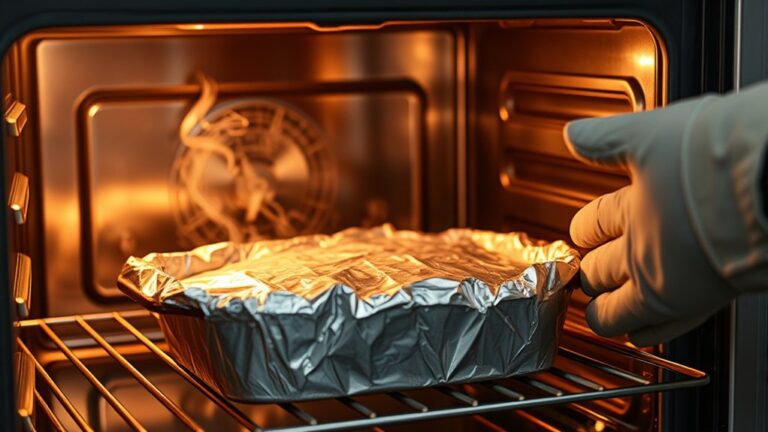
If the center still feels firm, keep roasting and check again every 20 minutes. Once it’s done, turn off the oven and let how to rest meat guide your next step: tent it loosely with foil for 15 to 20 minutes.
That pause lets juices settle, so every slice stays moist and flavorful when you carve it.
Frequently Asked Questions
Can I Cook Pot Roast Without a Dutch Oven?
Yes, you can cook pot roast without a Dutch oven. Use oven-safe vessels like a covered roasting pan or deep casserole; these pot roast alternatives keep moisture in and let you braise evenly.
Should I Cover the Pot Roast While Baking?
Yes, cover it; it’s the difference between a whisper and a thunderstorm of moisture. You’ll trap steam, like a lid technique, keeping the roast tender.
Uncovered, you’d dry it out while baking, unlike simmer vs. simmering.
Can I Make Pot Roast Ahead of Time?
Yes, you can make pot roast ahead of time. You’ll cook it, cool it quickly, refrigerate it, then reheat gently.
Make sure you’re storing the juices separately so it stays moist and flavorful.
How Do I Thicken the Pot Roast Gravy?
You can thicken it by simmering longer, whisking in a cornstarch slurry, or mashing vegetables into the liquid. These thickening methods let you control gravy textures, so you’ll get rich, glossy gravy fast.
Can I Freeze Leftover Pot Roast?
Yes, you can freeze leftover pot roast. Cool it quickly, portion it, and seal it airtight.
Label and freeze for up to 3 months. Thaw leftover pot roast in the fridge before reheating.
Conclusion
Now you know how to cook pot roast in the oven with confidence. Choose a well-marbled chuck roast, season it well, sear it hard, then slow-roast it with vegetables and broth until tender.
Did you know chuck roast is one of the most popular cuts for braising because its fat and connective tissue break down beautifully? Let it rest before slicing, and you’ll serve a juicy, flavorful pot roast every time.
With these steps, mastering how to cook pot roast in the oven becomes easy and rewarding.