How to Use a Convection Oven
Using a convection oven is like giving your food a tailwind—it moves heat more efficiently and changes how you cook. Convection ovens use a fan to circulate hot air, which results in faster and more even cooking.
You’ll get better results once you know when to use the fan, how much to lower the temperature, and which pans let air move freely. A few small adjustments can improve baking, roasting, and timing, but the details matter more than you might think.
Key Takeaways
- Turn on convection mode so the fan circulates hot air for faster, more even cooking.
- Lower the recipe temperature by about 25°F, then check food a few minutes early.
- Use shallow, sturdy metal pans and leave space between items for proper airflow.
- Roast meats and vegetables, bake cookies, and crisp casseroles for best convection results.
- Avoid crowding, deep dishes, and frequent door opening, which block airflow and reduce efficiency.
What Is Convection Oven Cooking?
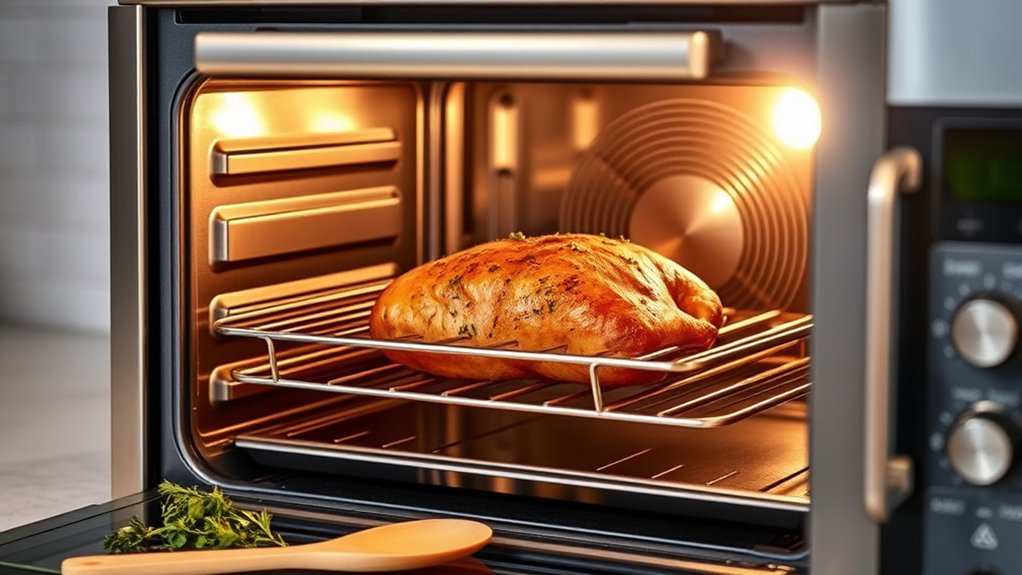
Convection oven cooking uses a fan to circulate hot air around your food, helping it cook more evenly and often more quickly than in a standard oven. You get steadier heat distribution, so surfaces brown more uniformly and centers cook with fewer hot spots.
A fan circulates hot air for more even cooking, better browning, and fewer hot spots.
The fan keeps air moving, which improves convection efficiency and helps your oven maintain a more consistent temperature around the food. You’ll usually see this setup in ovens with a convection setting you can turn on or off.
It doesn’t change the basic function of baking, roasting, or reheating; it changes how heat reaches the food. Because the air moves continuously, you can rely on more even results across racks and across the pan.
When you understand this airflow, you can better judge how the oven behaves and why certain foods may finish differently than in a conventional oven.
When to Use Convection Oven Mode
You’ll get the most out of convection mode when you want faster, more even cooking, especially for roasting meats, baking cookies, or crisping vegetables. Use it when you need steady browning and less hot-spot trouble across the pan.
It’s also a smart choice when you’re cooking multiple trays and want consistent results. If you care about presentation, convection helps keep food looking sharp enough to match your kitchen aesthetics.
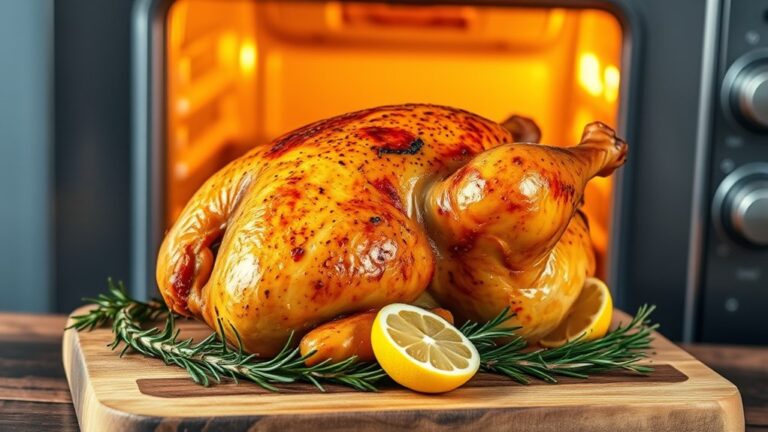
- Roast chicken, pork, or potatoes for deeper color
- Bake pastries or cookies when you want even edges
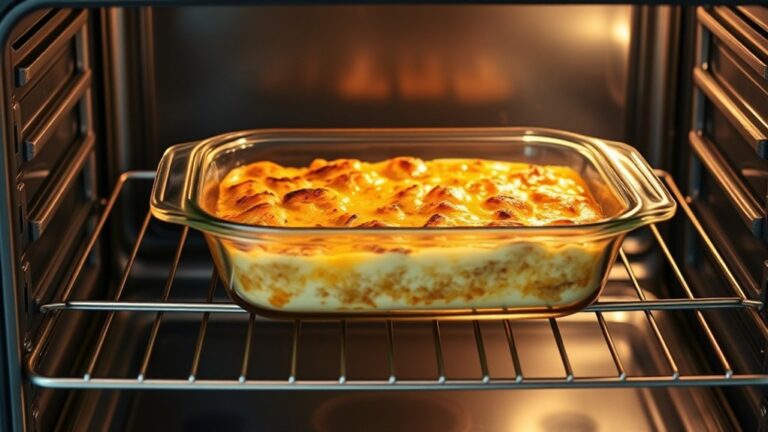
- Crisp casseroles, fries, or vegetables without sogginess
- Cook a surprise ingredient, like chickpeas, for extra crunch
Skip convection for delicate dishes that need very gentle heat, like custards or soufflés. You’ll usually get the best results when you choose foods that benefit from airflow and browning. Think practical: if texture matters, convection mode often gives you a better finish with less guesswork.
How to Adjust Temperature and Time
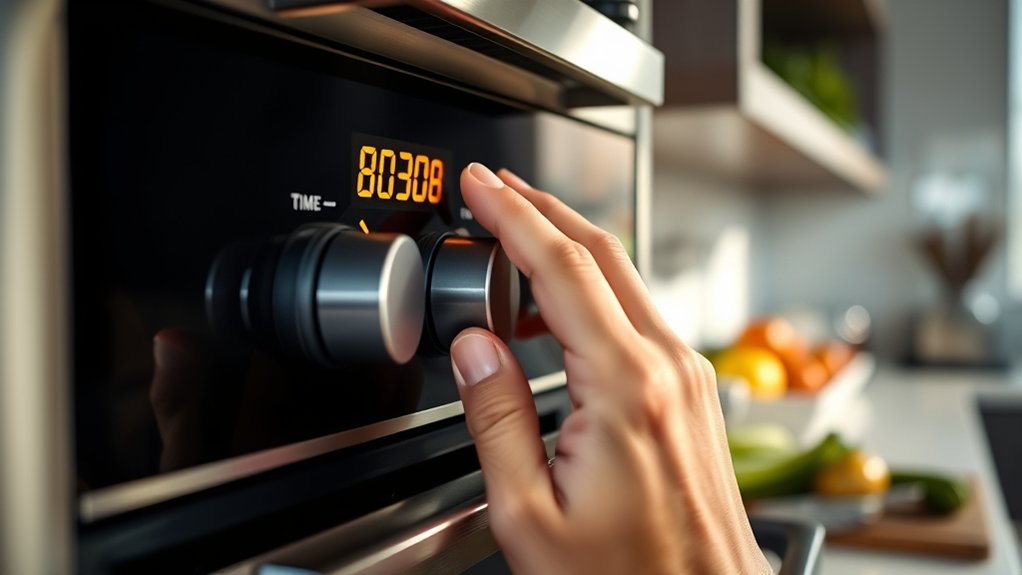
When you use a convection oven, lower the temperature by about 25°F from a standard recipe to keep food from overbrowning. You’ll usually need less cooking time too, so start checking your food a few minutes early.
Adjust both settings as needed based on the size, type, and doneness of the dish.
Temperature Reduction Tips
To keep convection cooking from running too hot, lower your recipe temperature by about 25°F and start checking for doneness a little early. This simple shift improves temperature management and helps you match your oven’s stronger airflow. It also supports humidity control, since drier circulating air can brown food faster.
Use these quick tips:
- Reduce heat for most baked goods and roasts.
- Watch color, not just the clock.
- Trust the oven’s even airflow.
- Make small changes, then note results.
If a dish has a delicate surface, keep the lower setting and watch closely. For denser foods, the same reduction usually gives you better control without sacrificing texture. With practice, you’ll adjust recipes confidently and avoid overbrowning.
Time Adjustment Guidelines
How long should you bake in a convection oven? Start by reducing the recipe time about 25%, then check early. You’ll often finish faster, so watch color and texture instead of relying only on the clock.
Good time management helps you avoid overbaking and keeps meals on schedule. Convection heat moves efficiently, giving you better energy savings too.
| Food | Time Change |
|---|---|
| Cookies | Reduce 20%-25% |
| Roasts | Reduce 15%-20% |
| Casseroles | Reduce 20%-25% |
Use the same oven temperature unless the recipe says otherwise. For smaller items, begin checking several minutes before the adjusted time ends. If a dish browns too quickly, tent it with foil.
Keep notes after each bake so you can fine-tune future batches.
How to Use a Convection Oven for Baking
Baking in a convection oven can give you more even browning and faster results if you make a few simple adjustments. You’ll get the best results when you understand the baking science behind moving air and verify your oven calibration before you start.
- Lower the temperature by 25°F from your regular recipe.
- Check baked goods a few minutes early to avoid overbaking.
- Use shallow pans so air can circulate around the food.
- Rotate pans only if your oven has hot spots.
Keep trays spaced apart so airflow stays steady. Choose light-colored pans when you want gentler browning, and avoid crowding the rack.
For cakes, cookies, and quick breads, rely on visual cues like color and springiness instead of the clock alone. If a recipe already specifies convection settings, follow those directions.
When you adjust carefully, you’ll preserve texture, improve consistency, and bake with more confidence every time.
How to Use a Convection Oven for Roasting
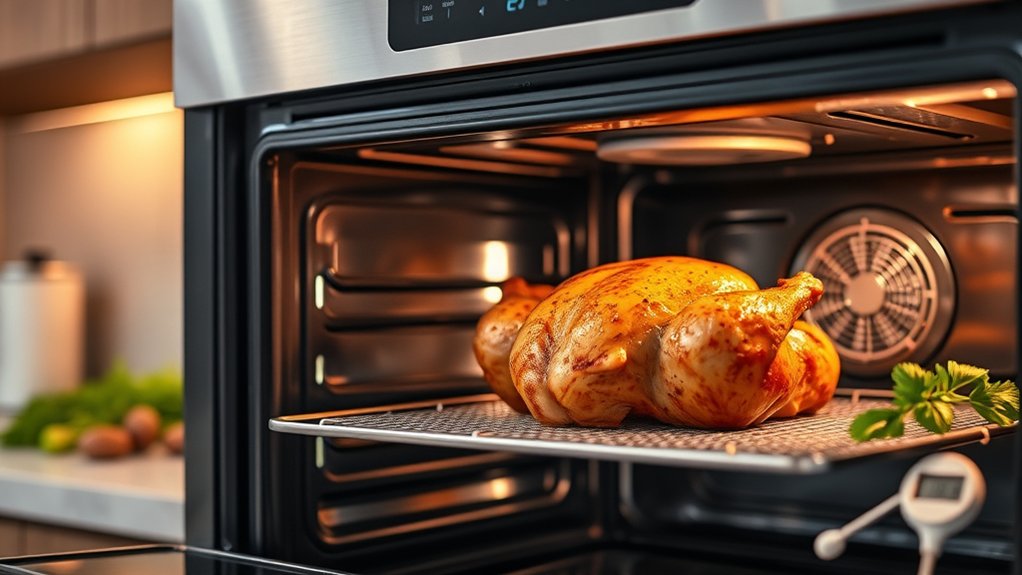
Roasting in a convection oven works well because the moving air helps meat and vegetables brown faster and cook more evenly. You should lower the set temperature by about 25°F from a standard recipe, then start checking early.
Roast timing depends on size, thickness, and how crowded the oven is, so use a thermometer instead of guessing. Place food in the center of the oven so air can circulate around it, and avoid covering it unless the recipe says to.
For vegetables, cut pieces evenly and toss them lightly with oil so they caramelize instead of steam. For meat, let it rest after cooking so juices settle.
Pan material also matters: use a sturdy pan that handles high heat and won’t warp. Darker pans usually brown food faster, so watch closely.
Best Pans and Racks for Convection Ovens
For a convection oven, you’ll get the best results with shallow rimmed pans, wire cooling racks, and perforated baking sheets. These tools let hot air move around your food more evenly, so you can roast and bake with better browning and crispier results.
Choose pans and racks that leave space for airflow, and you’ll help your oven work more efficiently.
Shallow Rimmed Pans
Shallow rimmed pans give you the best control in a convection oven because they let hot air move freely around your food. You should use them for roasted vegetables, cookies, and sheet-pan meals when even browning matters.
Choose pans with low sides, sturdy edges, and a light-colored finish so you can monitor color without overbaking. Pay attention to shelf placement: center rack positioning usually helps food cook evenly and reduces hot spots.
Keep your pans in good shape with simple cleaning methods that remove grease without scratching the surface.
Use one pan layer only
Leave space around the edges
Match pan size to the recipe
Rotate the pan only if needed
Wire Cooling Racks
Wire cooling racks are another smart tool for convection cooking because they lift food off the pan and let hot air circulate all around it. You’ll get more even heat distribution when you set meats, vegetables, or baked items on a sturdy wire rack inside a rimmed pan.
This setup helps drippings fall away while air reaches every side, so you don’t need to turn food as often. Pay attention to rack placement: keep the rack centered in the oven and leave space around the pan for airflow.
Choose a rack that fits snugly without touching the oven walls. A heavy-gauge, oven-safe rack works best because it stays stable and supports weight well. Use it anytime you want crisp exteriors and consistent results without extra fuss.
Perforated Baking Sheets
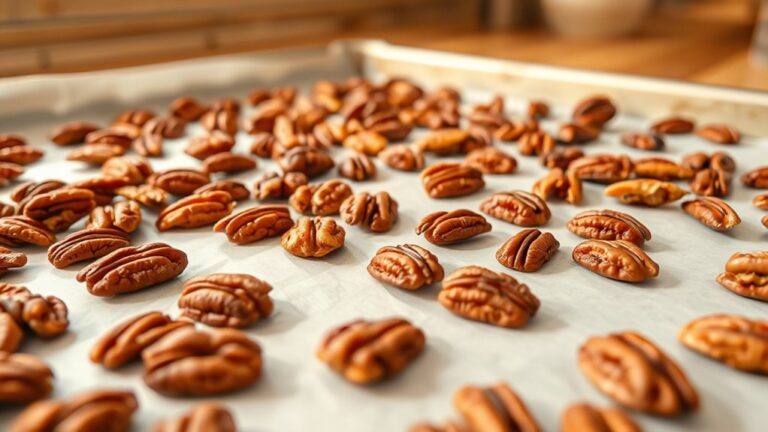
Perforated baking sheets are a great choice when you want maximum airflow in a convection oven. You let hot air move through the holes, which helps with even air distribution and browning. Use them for cookies, fries, roasted vegetables, and thin pastries when you want crisp edges without soggy bottoms.
- Choose sturdy metal so the sheet won’t warp.
- Leave space between items for better airflow.
- Line lightly only if the recipe allows it.
- Place the sheet on the center rack for balanced heat.
You’ll get faster, more consistent results than with solid pans. If your food drips, set the sheet on a solid pan below it to catch messes.
Common Convection Oven Mistakes
One of the most common convection oven mistakes is using the same temperature and timing you’d use in a regular oven. You also shouldn’t crowd the rack, because hot air needs space to move around food evenly. If you block airflow, you’ll get uneven browning and longer cooking times.
Another mistake is skipping the fan setting or forgetting that convection ovens work best with shallow pans and low sides. Deep dishes can trap heat and slow results. Avoid opening the door too often, since every peek drops the temperature and wastes energy.
You should also watch delicate baked goods closely, because they can dry out faster than in a standard oven. For best results, check food early, rotate pans if needed, and keep airflow clear. Used well, convection ovens improve browning, shorten cooking, and support energy conservation.
How to Convert Regular Oven Recipes
To convert regular oven recipes for convection, start by lowering the temperature and checking the food earlier than the recipe says. Use your oven’s equipment basics: convection moves air, so heat reaches food faster and more evenly. When you convert recipes, reduce the temperature by 25°F, or cut the bake time by about 25%. If a dish browns too quickly, cover it loosely with foil and keep watching it.
- Lower heat first, then adjust time.
- Begin checking doneness sooner.
- Use shallow pans for better airflow.
- Keep space around pans so air can move.
These simple changes help you adapt baked goods, roasts, and casseroles without rewriting every recipe. For best results, note your changes so you can use them next time. If a recipe already calls for convection, follow it as written. With practice, you’ll convert recipes quickly and confidently, while getting reliable results from your oven.
Pro Tips for Better Convection Results
For better convection results, you’ll want to use pans and placement that let air flow freely. Choose shallow, light-colored baking sheets and avoid crowding the oven rack. Leave space around each pan so hot air can circulate and brown food evenly.
If you’re roasting meat or vegetables, use a rack inside the pan to lift the food above drippings. That helps crisp surfaces and prevents sogginess.
Check food a few minutes early, since convection cooks faster than standard ovens. Use flipping techniques for items like cookies, fries, or cut vegetables to promote even browning. Rotate pans only if your oven has hot spots, but don’t open the door too often. You’ll lose heat and reduce energy efficiency.
Keep an eye on smaller portions, because they can finish quickly. Use the fan setting for roasting, baking, and reheating when you want faster results and better texture.
Frequently Asked Questions
Can I Use Foil in a Convection Oven?
Yes, you can use foil in a convection oven if you keep it away from heating elements, ensure foil safety, and maintain tray spacing so air still circulates.
Don’t block vents or cover racks completely.
Do Convection Ovens Smoke More Than Regular Ovens?
Yes, convection ovens can seem smokier, because convection efficiency moves hot air fast and can expose drippings sooner.
You’ll lower smoke risk by using lower temperatures, clean pans, and avoiding overfilled trays.
Can I Bake Multiple Trays at Once?
Yes, you can bake multiple trays at once if you leave good tray spacing and rotate them.
You’ll usually need to reduce convection timing slightly, since hot air circulates faster and bakes more evenly.
How Do I Clean a Convection Oven Safely?
You can freshen your oven safely by cooling it, unplugging it, and wiping spills with mild soap. Use nonabrasive cleaners, wear gloves, and avoid sprays near the fan; these cleaning safety maintenance tips help.
Is Convection Mode Good for Reheating Leftovers?
Yes, convection mode’s great for leftovers reheating because you get better convection efficiency and crispier results. You’ll warm food faster, so use lower heat, check often, and cover moist dishes to prevent drying out.
Conclusion
Now you know how to use a convection oven to get faster, more even results. For example, if you’re roasting chicken, lower the recipe temperature by 25°F, use a shallow metal pan, and check early for a crisp, golden finish.
That simple adjustment can turn a soggy dinner into a reliable weeknight win. Keep airflow clear, avoid crowding, and trust what you see, not just the timer, for better cooking every time.
By following these tips, you can make the most of your convection oven and enjoy delicious meals with consistent results.