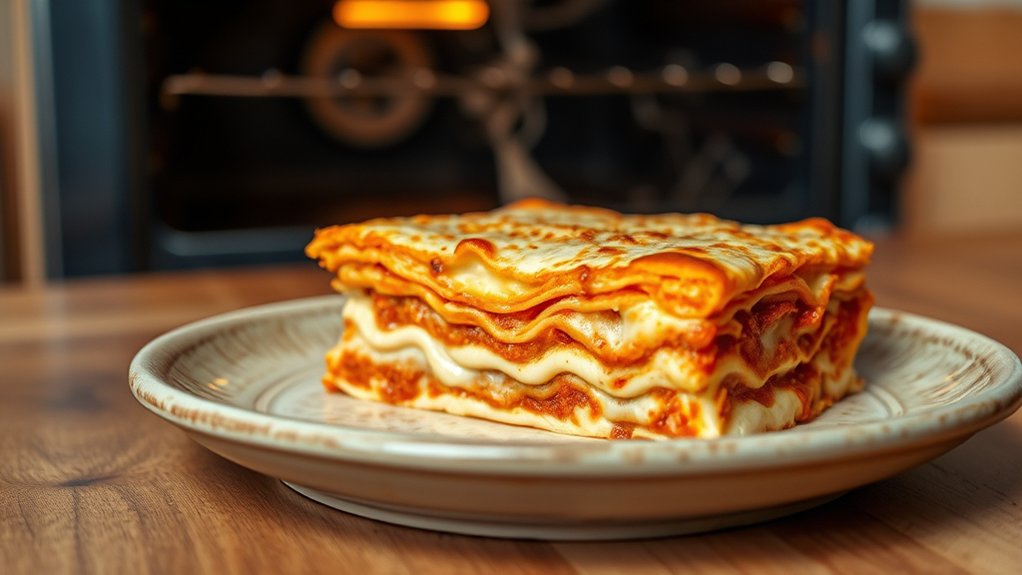
How to Reheat Lasagna in the Oven
You might not know that lasagna reheats best when you warm it more gently than most baked pasta.
To reheat lasagna properly, slice it into portions, add a little sauce or water on top, and cover the dish tightly before placing it in a 350°F oven.
That small step helps the cheese melt evenly and keeps the edges from drying out.
However, the timing changes more than you’d expect when reheating lasagna this way.
Following these tips will ensure your leftovers taste just as delicious as when freshly baked.
Key Takeaways
- Cool lasagna until steaming stops, then cut into portions for even reheating and less waste.
- Add a thin layer of sauce, broth, or water on top and around dry edges to keep it moist.
- Cover tightly with foil to trap steam, but leave it resting uncovered 5–10 minutes before reheating.
- Reheat in a preheated 350°F oven for 20–30 minutes, adding extra time for thick, chilled, or frozen portions.
- Check for bubbling cheese and a hot center, then rest 5 minutes before serving for cleaner slices.
How to Reheat Lasagna in the Oven
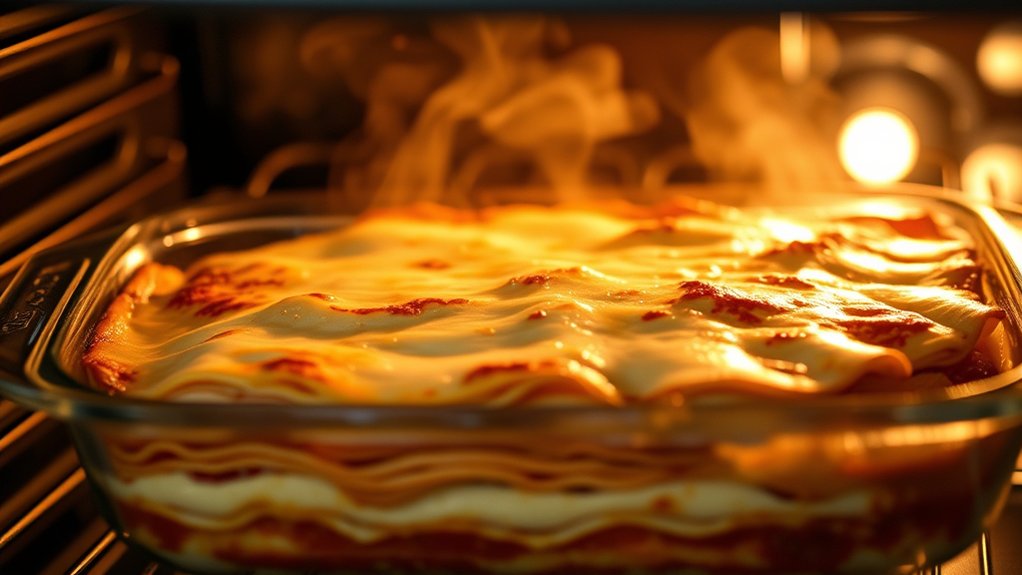
Wondering how to bring lasagna back to life without drying it out? You can reheat leftovers in the oven for the best texture and flavor. Start by preheating your oven so the heat stays steady and even, then place the lasagna in an oven-safe dish that fits securely.
Cover it tightly with foil to trap steam and protect the top from scorching. For oven safety, use mitts, keep the rack centered, and avoid sudden temperature swings with glass cookware. Heat the lasagna until the middle feels hot and the sauce bubbles at the edges.
If you want a crisp finish, uncover it near the end and let the cheese brown slightly. Check the center before serving, since thick layers warm slowly. When you do it carefully, the noodles stay tender, the filling stays moist, and the whole pan tastes like it just came out of the kitchen, not yesterday’s fridge.
Prepare Lasagna for Reheating
Before you store the lasagna, let it cool until it’s no longer steaming so moisture doesn’t turn the layers soggy. If you can, portion it into servings so it reheats evenly and only what you need goes into the oven.
Add a thin moisture layer, like sauce or a light splash of water, to help the noodles and cheese warm up without drying out.
Cool Before Storing
Let the lasagna cool at room temperature until it’s no longer steaming, then cover and store it once the heat has mostly dissipated. You want the surface warm, not hot, so trapped moisture won’t turn the top soggy in cool storage.
Place it in a shallow dish or leave it in the baking pan, then wrap it tightly to lock in flavor and protect the cheese. Keeping it properly cooled also helps reheating timing later because the casserole will warm more evenly and predictably in the oven.
Don’t rush it into the refrigerator while it’s still piping hot; that can raise the fridge temperature and dull the texture. Once settled, chill it promptly so the sauce stays rich, the noodles stay tender, and the dish is ready for a smooth reheat.
Portion Into Servings
Once the lasagna has cooled and set, cut it into portions that match how you plan to reheat and serve it. Use a sharp knife or spatula to slice cleanly, then lift each piece with care so the layers stay intact.
If you’re reheating for one or two people, portion into smaller squares; for family meals, keep generous slices. Arrange the pieces in a shallow, oven-safe dish with a little space between them for even warming.
Good servings tips: make each piece similar in size so they heat at the same rate, and separate extra portions with parchment if you’ll store them. This prep makes reheating quicker, easier, and more consistent, while helping you avoid overcooking edges before the center is hot.
Add Moisture Layer
How do you keep reheated lasagna from drying out? Add a thin moisture layer before it goes into the oven. Spoon a few tablespoons of sauce, broth, or water over the top, letting it seep into the edges and corners. If you kept extra marinara, use that first for the best flavor.
Then cover the dish tightly with foil so the steam stays inside and warms each layer evenly. These reheat guidance steps help protect the noodles and cheese from becoming tough. For thicker slices, drizzle a little liquid between the cut sides too.
Simple moisture strategies like this make a noticeable difference, giving you lasagna that comes out tender, saucy, and close to freshly baked.
Set the Oven Temperature and Time
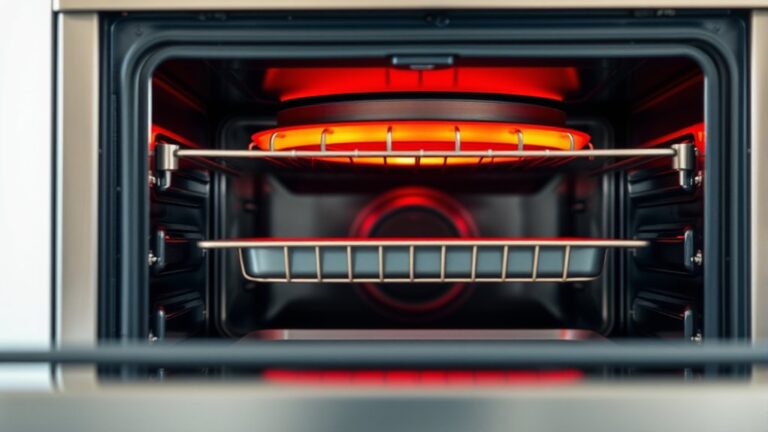
Set your oven to 350°F and give it a few minutes to fully preheat before you slide the lasagna in. This temperature lets you reheat the center without drying out the edges, and it works well for most reheating techniques.
If your lasagna is thick or chilled straight from the fridge, plan on a longer bake; if it’s a smaller portion, it’ll heat faster and still keep its flavor enhancements intact.
- Bake for 20 to 30 minutes if the lasagna is refrigerated.
- Check the center with a knife; it should feel hot all the way through.
- For frozen lasagna, add 15 to 20 extra minutes.
- Let it rest 5 minutes after heating so the layers settle.
You’ll know it’s ready when the cheese is bubbling and the middle is steaming. If the top starts to brown too quickly, reduce the heat slightly and continue warming until it’s evenly hot.
Cover Lasagna to Keep It Moist
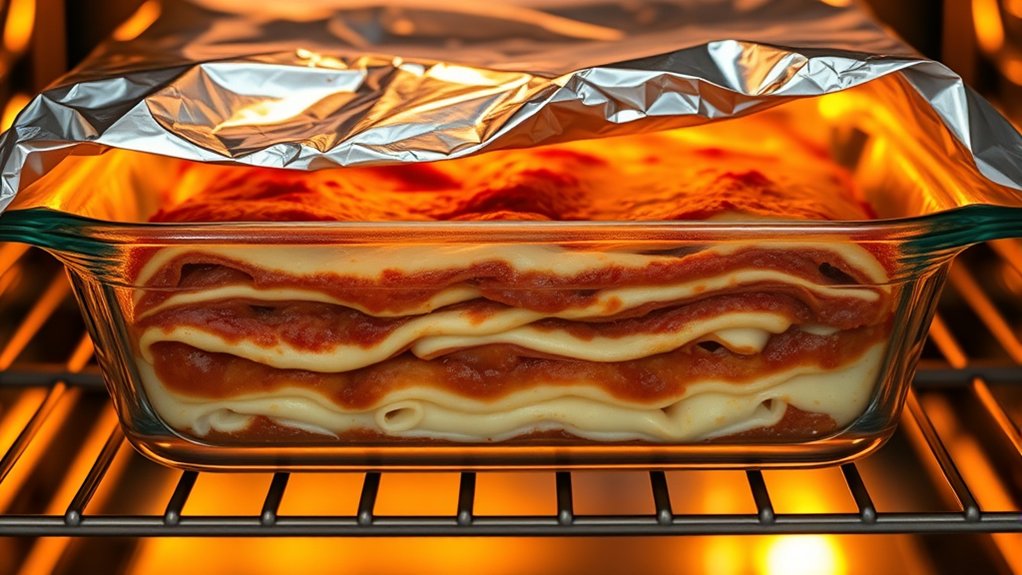
Cover the lasagna tightly with foil before it goes into the oven so it holds in steam as it reheats. That trapped moisture helps warm the layers evenly and keeps the pasta from drying out at the edges.
If you want a softer, saucier result, leave the foil on for most of the bake and uncover it only at the end.
Use Foil Cover
To keep lasagna from drying out in the oven, lay a sheet of aluminum foil loosely over the top before reheating it. You’ll shield the noodles, sauce, and cheese from direct heat, so each layer warms evenly without toughening.
If you don’t have foil, try oven-safe lids or parchment as foil alternatives, but watch crisp vs soggy results carefully.
- Tent the foil, don’t press it onto the cheese.
- Crimp the edges lightly around the dish to hold it in place.
- Remove it near the end if you want the top browned.
- Keep an eye on the baking dish so the edges don’t overcook.
Trap Steam Inside
Keeping the lasagna covered also traps steam inside the dish, which helps the noodles stay tender and the sauce stay moist while it reheats. You create a gentle, humid pocket that supports even warming without letting the top dry out.
If you used foil, seal it snugly around the pan, but leave a small steam vent so pressure can escape safely. That slight opening still protects moisture retention while preventing the cover from puffing up too much.
As the lasagna heats, the trapped steam circulates through the layers, softening the pasta and keeping the cheese from toughening. You’ll get a richer texture and a more cohesive slice when you uncover it at the end.
Prevent Pasta Drying
Why let your lasagna turn leathery in the oven? Cover it tightly with foil so the pasta stays tender and the top doesn’t dry out. You’re trapping just enough moisture to warm the layers evenly without stripping the sauce.
If you want extra protection, add a tablespoon of water or sauce around the edges before sealing, but don’t overdo it or you’ll invite sauce separation.
- Use foil, not a loose lid, for a snug seal.
- Reheat at 350°F so the heat stays gentle.
- Keep excess cheese covered until the last few minutes.
- Uncover briefly at the end if you want a lightly browned top.
This method keeps every bite supple, rich, and ready to serve.
Check When the Lasagna Is Hot
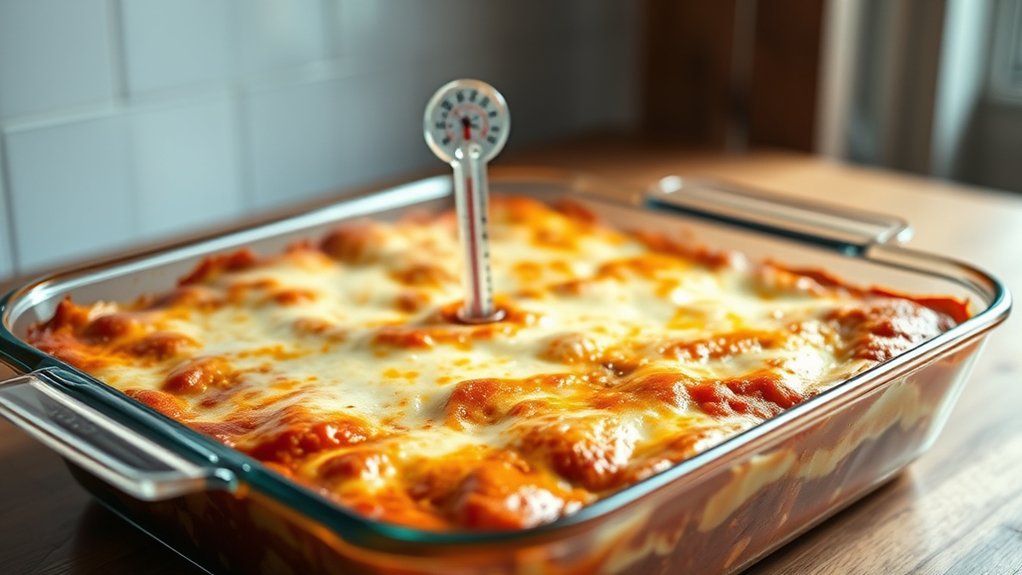
How do you know when your lasagna’s ready? Insert a knife or metal skewer into the center and leave it there for a few seconds, then pull it out and feel the heat. If the tip comes out hot, your lasagna is likely warmed through.
You can also press the top gently with a spoon; it should feel hot and supple, not cold in the middle. Watch for steam rising steadily when you cut into it. That’s a good sign of even heating from edge to center.
Check more than one spot, especially the thickest part, since lasagna can have a different texture on top than in the middle. If the center still feels cool, return it to the oven for a few more minutes and check again.
When every layer feels hot and the cheese looks glossy, you’re ready to serve it.
Fix Dry Edges and Soggy Layers
If the edges of your lasagna look dry while the center still seems a little loose, you can usually fix both problems with a simple adjustment. Pull the dish from the oven, then cover the top loosely with foil so the heat stays in without scorching the cheese.
If you see dry edges, brush them lightly with a spoonful of sauce or a little water before re-covering. For soggy layers, let the lasagna rest uncovered for 5 to 10 minutes so excess steam can escape and the pasta firms up.
- Add foil to trap moisture without sealing tightly.
- Moisten dry edges with sauce, broth, or water.
- Rest briefly to reduce soggy layers.
- Return to the oven for a short finish at low heat.
Check again after a few minutes. You want hot, set slices with tender noodles, not wet ones.
Frequently Asked Questions
Can I Reheat Lasagna From Frozen in the Oven?
Yes, you can reheat lasagna from frozen in the oven. Cover it tightly, bake at 375°F, and add time for frozen reheating.
Check the center temperature for oven safety and heat until it’s bubbling.
What Type of Dish Is Best for Reheating Lasagna?
A shallow, oven-safe glass or ceramic dish works best. You’ll balance foil vs dish by covering it loosely to guard moisture vs dryness, so your lasagna reheats evenly, stays saucy, and doesn’t turn into a brick.
Should I Add Extra Sauce Before Reheating Lasagna?
Yes, you should add a little sauce if the lasagna looks dry; it helps add moisture and prevents scorching.
Cover the cheese topping loosely, then reheat until it’s hot, saucy, and evenly warmed.
Can I Reheat Lasagna Without Using Foil?
Yes, you can reheat lasagna without foil. Try reheating methods like a covered oven-safe dish or parchment with a lid.
Foil alternatives help retain moisture while you warm it evenly and avoid drying out.
How Long Can Leftover Lasagna Stay in the Fridge?
You can keep leftover lasagna in the fridge for 3 to 4 days, a ticking clock for leftovers storage. For refrigeration safety, chill it promptly, cover it tightly, and reheat only if it smells fresh.
Conclusion
To reheat lasagna in the oven, you can count on steady results: at 350°F, a refrigerated slice usually needs 20–30 minutes, while a frozen or extra-thick portion may need 15–20 minutes more.
That matters because nearly 60% of home cooks report leftovers dry out when reheated uncovered. So slice, add a little sauce or water, cover tightly with foil, and check for a bubbling center before you serve it.
Following these steps will help you achieve the best texture and flavor when you reheat lasagna in the oven.