How Long to Cook Stuffing in Oven
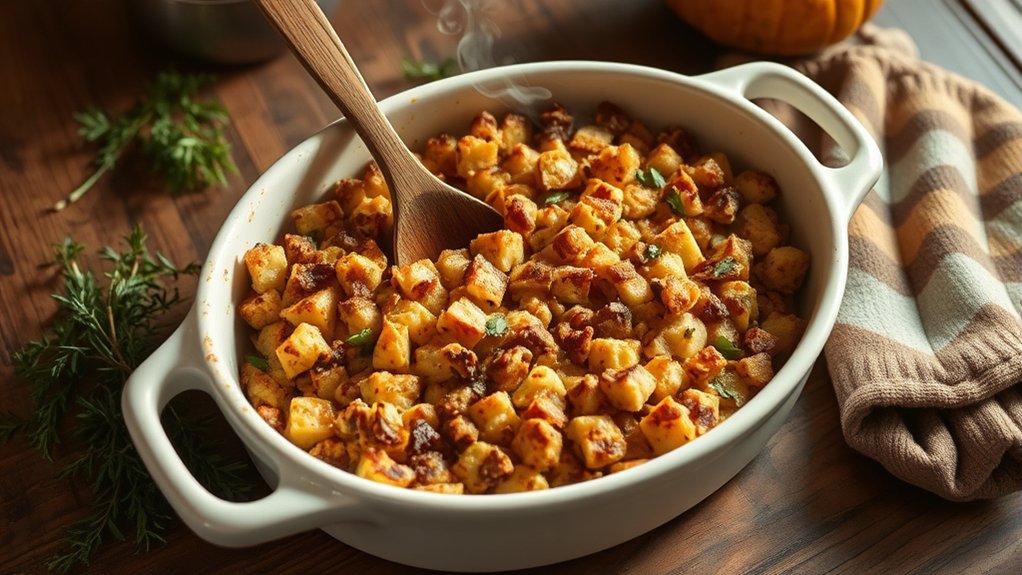
If you’re baking stuffing in a casserole dish, the general guideline for how long to cook stuffing in the oven is about 25 to 35 minutes at 350°F. For a deeper pan, you’ll usually need closer to 40 minutes.
You should check the center, not just the top, and aim for 165°F for safe doneness. The way you cover it, the amount of liquid, and whether you’re browning it at the end can all change the timing more than you might expect.
Key Takeaways
- Bake stuffing at 350°F for 25 to 35 minutes in a casserole dish.
- A deeper pan may need closer to 40 minutes.
- Cover most of the bake, then uncover for the last 10 to 15 minutes to brown the top.
- The center is done when it reaches 165°F on a thermometer.
- Hot broth, pre-cooked ingredients, and pan depth can shorten or extend baking time.
How Long to Cook Stuffing in the Oven?
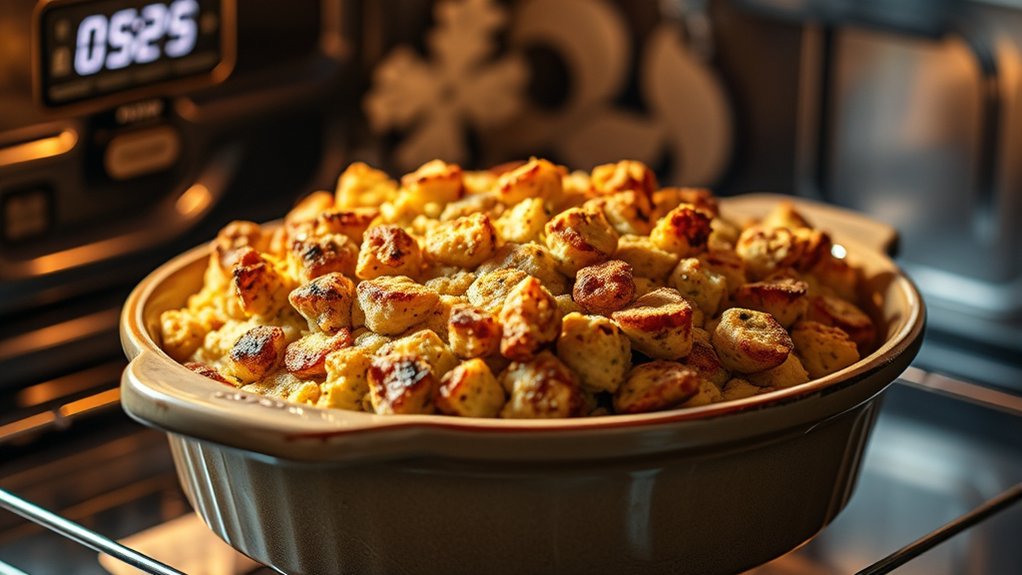
How long should you bake stuffing in the oven? You usually need 25 to 35 minutes at 350°F for fully cooked stuffing in a casserole dish. If you’re using a deeper pan, expect closer to 40 minutes.
For food safety, the center should reach 165°F, so use a thermometer rather than guessing. You can shorten oven time by using hot broth and pre-cooked aromatics, which help the stuffing heat evenly.
Stirring once halfway through can also improve consistency if your recipe allows it. Before baking, organize your kitchen logistics so the stuffing goes into the oven promptly and doesn’t sit too long.
Keep cleansing surfaces in mind as you prep raw ingredients, especially if you’ve handled poultry or eggs. Once the stuffing is hot, remove it right away and let it rest briefly so the texture settles and the flavors finish blending.
Should You Bake Stuffing Covered or Uncovered?
Bake stuffing covered for most of the cooking time if you want to trap steam and keep the center moist, then uncover it near the end to let the top turn golden and crisp. You’ll protect the bread texture while still getting better browning techniques on the surface.
Covering works especially well when your stuffing includes eggs, broth, or vegetables that release moisture. Uncovered baking dries the top faster, so use it only when you want a firmer crust.
| Method | Best result | Use when |
|---|---|---|
| Covered | Soft center | You want even moisture |
| Uncovered | Crisp top | You want more browning |
| Half covered | Balanced finish | You want both |
| Foil tent | Gentle drying | The top browns too fast |
| Final uncover | Golden finish | You’re nearly done |
If you’re unsure, start covered and check the edges. Then remove the cover for the last stretch. That approach gives you control without sacrificing moisture or structure.
What Oven Temperature Works Best for Stuffing?
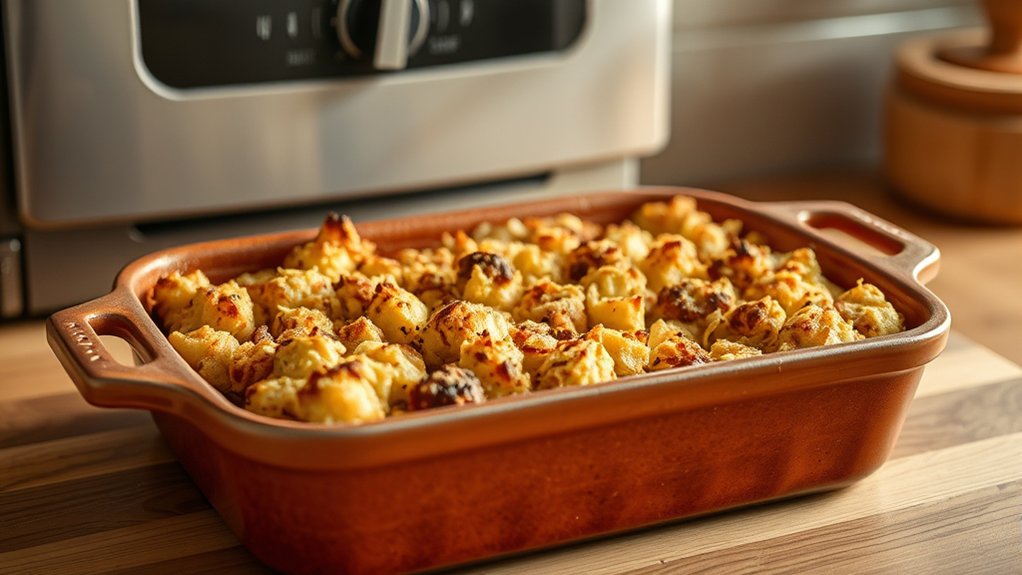
You’ll usually get the best stuffing at 350°F, which bakes it evenly without drying it out too fast. That temperature helps you balance a crisp top with a moist center, so you can control texture more easily.
If you use a convection oven, you may need to lower the heat a bit to keep the stuffing from overbrowning.
Optimal Baking Temperature
For the best stuffing texture, set your oven to 350°F; this temperature gives the center enough time to heat through while the top turns golden and crisp without drying out. You can use 325°F for a gentler bake, but 350°F usually offers the best balance in oven physics.
For two word discussion ideas, think heat transfer and browning control. Follow these steps:
- Preheat fully before baking.
- Place stuffing in a shallow dish.
- Check the center near the end.
At 350°F, you get steady, even heat that supports consistent results in a standard home oven. If your stuffing is in a deep pan, this setting helps it cook predictably without forcing you to overbake the edges.
For most recipes, it’s the most practical target.
Texture And Moisture
Getting the right temperature is mostly about balancing moisture and texture: around 350°F, stuffing has enough heat to cook through while the top dries just enough to turn crisp and appealing. You keep the center tender by protecting its moisture balance, while the surface develops a firm, golden layer.
If you bake hotter, the edges can dry out before the middle sets. If you go lower, you may lose that pleasant contrast and end up with soft, dense stuffing. For the best crumb texture, spread the mixture in an even layer so heat moves through it steadily.
You should also avoid packing it too tightly, because compact stuffing traps steam and turns gummy. This temperature gives you a reliable balance of moist interior and lightly crisp top.
Oven Type Differences
That 350°F target works well in most home ovens, but oven type can change how stuffing bakes. In a conventional oven, you’ll usually get even browning at 350°F; in a convection oven, drop to 325°F because moving air speeds surface drying.
Watch material differences, too: a metal pan heats fast and crisps edges, while a glass or ceramic dish holds heat longer and may need a few extra minutes.
- Conventional oven: 350°F
- Convection oven: 325°F
- Dark metal pan: check early
No matter the oven types, bake until the center reaches 165°F and the top looks golden. If the stuffing seems dry, cover it loosely with foil, then uncover near the end for better color.
Stuffing in a Dish or in the Turkey
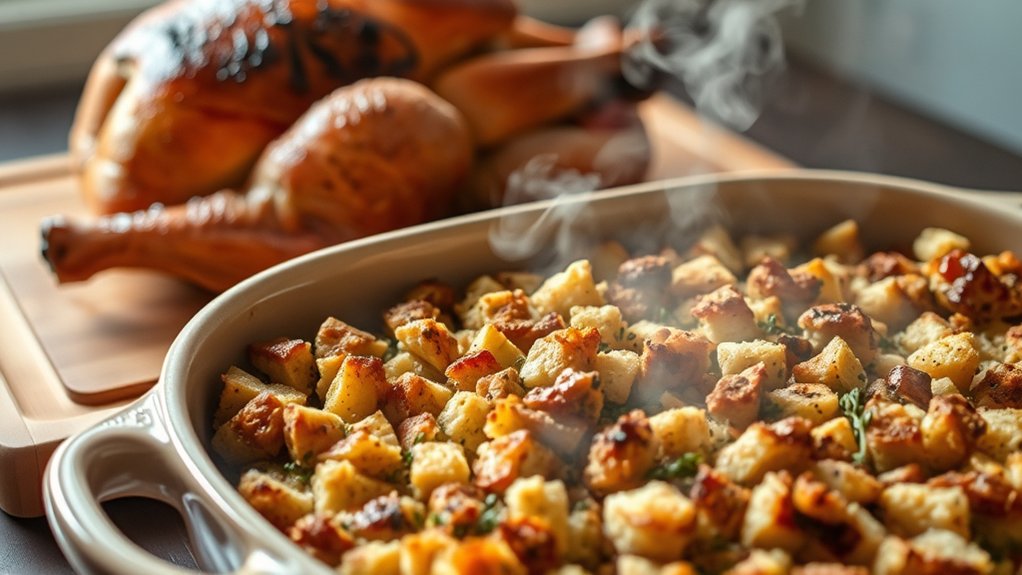
If you’re deciding whether to bake stuffing in a dish or inside the turkey, the method changes both the timing and the food-safety approach. In a baking dish, you can spread the stuffing in an even layer, so it cooks faster and more predictably. This method usually gives you better control over stuffing flavor, since the surface browns more evenly, and better stuffing texture, because the center won’t get compressed by the bird.
Inside the turkey, stuffing absorbs drippings and tastes richer, but it needs longer oven time because the cavity slows heat flow. You should pack it loosely, not tightly, so hot air can move through it. If you choose the turkey method, plan for the stuffing to follow the bird’s pace, which can extend the total cook time.
For convenience and consistency, a dish is usually the safer, simpler choice.
How to Tell When Stuffing Is Done
You’ll know stuffing is done when its center reaches 165°F on a food thermometer, whether it’s baked in a dish or cooked inside the turkey. Check the thickest part, not just the top, because surface color can mislead you. Then use these cues to confirm doneness:
- The middle feels hot and steamy, not cool or dense.
- The edges pull away slightly from the pan and show light crust formation.
- The texture looks set, with no wet pockets when you cut into it.
If you want extra confidence, insert the thermometer in two spots. This helps you catch uneven heating, especially in deeper pans.
For tips for stuffing flavor, taste the mixture before baking and season it well; proper seasoning won’t tell you it’s done, but it does improve the finished dish.
Don’t keep cooking just to darken the top. Once the center hits 165°F, pull it from the oven and let it rest briefly before serving.
How to Keep Stuffing Moist, Not Soggy
You can keep stuffing moist by starting with bread that’s dried enough to absorb liquid without turning mushy. Add just enough broth to coat the cubes evenly, then mix until the bread feels damp but not wet.
Bake it covered first to trap steam, then uncover it near the end so the top dries slightly without losing tenderness.
Proper Bread Texture
Dry bread is the secret to stuffing that turns tender in the oven without going mushy. You want cubes that feel firm, not crumbly-soft, so they can absorb flavor while holding shape. Cut bread into even pieces and dry them thoroughly before mixing; this gives you control over texture and helps holiday leftovers reheat well.
For best results:
- Use stale sandwich bread or country loaf.
- Toast cubes until they’re dry at the center.
- Let them cool completely before combining.
When you handle stuffing leftovers, the bread should still have structure after baking, with crisp edges and a moist interior. If the bread starts too soft, it’ll collapse in the oven and lose that light, savory bite you’re after.
Balanced Liquid Ratio
The right amount of liquid keeps stuffing moist without turning it dense or soggy. Start with stuffing ratios of about 1 cup liquid for every 4 cups dried bread, then adjust by feel. You want the bread to look evenly damp, not flooded.
Pour in broth gradually, tossing after each addition so every cube absorbs evenly. If you squeeze a handful and it holds together without dripping, you’ve hit a good moisture balance. Dry bread needs a bit more; stale, airy bread may need less.
Season the liquid before mixing so the flavor spreads through the stuffing instead of sitting on top. Stop adding once the mixture feels plush and cohesive. That balanced texture helps the stuffing cook evenly and stay tender inside.
Covered Baking Method
Cover the stuffing for most of the bake to trap steam and keep the center moist without overbrowning the top. You’ll preserve flavor and still control the crust texture by removing the cover near the end. Use a tight foil seal or a fitted lid, then bake until the stuffing is hot throughout.
For best results:
- Keep the dish covered for about three-quarters of the bake.
- Uncover it for the final 10 to 15 minutes.
- Check the center with a thermometer; it should reach 165°F.
This method keeps the stuffing aroma rich, prevents dry edges, and lets excess moisture escape before serving. If the top looks pale, give it a short uncovered finish until it turns golden and crisp.
How Ingredients Affect Stuffing Cook Time
Ingredient choices can change stuffing’s oven time more than you might expect, because moisture, density, and size all affect how quickly heat moves through the dish. If you use fresh bread, extra broth, sausage, apples, or mushrooms, you increase moisture and mass, so you’ll usually need a longer bake than with drier, lighter mixtures.
Dense cubes pack tightly and slow heat flow, while coarse, airy bread bakes faster. Your stuffing variables also matter: a deep casserole holds heat differently than a shallow pan, and a larger batch needs more time in the center.
When you make ingredient substitutions, adjust for their water content and texture instead of following the recipe blindly. Herbs and seasonings won’t change timing much, but vegetables and meats will. To keep cook time predictable, cut ingredients into similar sizes and mix them evenly so the center and edges finish at about the same time.
How to Brown Stuffing Without Drying It Out
To brown stuffing without drying it out, bake it uncovered for the last 10 to 15 minutes so the top can crisp while the interior stays moist. Before that, keep it covered or loosely tented, then remove the cover near the end and watch the surface closely. You can also boost color with a little brown butter, which adds depth and helps the crumbs turn golden.
Bake uncovered for the last 10 minutes so stuffing turns golden, crisping the top without drying the center.
- Use a shallow baking dish so heat reaches the top evenly.
- Moisten the stuffing with broth before browning, then stop adding liquid.
- Finish at 400°F for a short burst, checking every few minutes.
If you want stronger contrast, drizzle a small amount of melted butter over the top before baking. This encourages even browning and preserves a pleasant herb aroma. When the edges look crisp and the center still feels tender, pull it from the oven and let it rest briefly.
Common Stuffing Mistakes to Avoid
You can ruin stuffing by overmixing it, which breaks down the bread and makes the texture dense. You also need to balance moisture carefully, since too little leaves it dry and too much turns it soggy.
Finally, watch the oven timing closely, because even a few extra minutes can push it from perfectly cooked to overdone.
Overmixing The Stuffing
Overmixing can turn stuffing dense and gummy, so stir just until the bread cubes are evenly moistened and the seasonings are distributed. When you keep mixing, you crush the bread and lose the light stuffing texture you want.
Watch for stuffing overmixing by using these checks:
- Stop as soon as no dry spots remain.
- Fold gently with a spatula instead of beating the mixture.
- Let the bread hold its shape in the bowl.
You’ll get better results if you handle the mixture with a light touch from the start. Aim for even coating, not a paste. That approach helps your stuffing bake up tender, not compact, and lets the oven do the final work without extra stirring.
Incorrect Moisture Balance
Too much or too little liquid can ruin stuffing before it even hits the oven. You need a steady moisture balance so the bread absorbs flavor without collapsing. Aim for bread texture that feels damp, not soggy, and holds its shape when you squeeze it lightly.
Add stock gradually, then pause so the cubes can absorb it evenly. If the mix looks dry, it’ll bake up crumbly; if it looks wet, it may turn dense. Use this quick guide:
| Texture | What You See | Fix |
|---|---|---|
| Dry | Crumbs stay separate | Add a little stock |
| Balanced | Clumps hold lightly | Stop adding liquid |
| Wet | Pooled liquid | Fold in more bread |
Check before baking; the mixture should feel cohesive, not saturated.
Wrong Oven Timing
Timing matters just as much as moisture: if stuffing goes into the oven too early, it can dry out before the center heats through, and if it goes in too late, the flavors won’t meld or the texture won’t set. Use oven timing to match your bird or casserole schedule, not guesswork.
For practical two word discussion ideas, think “center temperature,” “crisp top,” and “rest time.”
- Bake stuffing after the base has absorbed liquid but before it loses steam.
- Cover it first, then uncover near the end for color.
- Check for 165°F in the middle, not just browned edges.
If you pull it at the right moment, you’ll get moist stuffing with a firm, flavorful structure, not a soggy or stale side.
How to Reheat Stuffing Leftovers
How do you bring leftover stuffing back to life without drying it out? Use gentle heat, added moisture, and a covered dish. For reheating leftovers, place stuffing in microwave-safe containers with a splash of broth, then cover loosely. Stir once so the heat spreads evenly.
In the oven, reheat at 325°F until the center reaches 165°F.
| Method | Best For | Tip |
|---|---|---|
| Microwave | Small portions | Heat in short bursts |
| Oven | Larger batches | Cover with foil |
| Skillet | Crisp edges | Add butter |
| Steam | Very dry stuffing | Use broth |
| Air fryer | Texture | Watch closely |
If the stuffing feels dense, fluff it before heating. Add more liquid only if needed; too much makes it soggy. Check the temperature, then serve right away for the best texture and flavor.
Frequently Asked Questions
Can I Prepare Stuffing a Day Ahead?
Yes, you can prepare stuffing a day ahead. You’ll want proper stuffing storage in the fridge, tightly covered.
Expect some texture changes, so add a little broth before baking to keep it moist and tender.
Can Stuffing Be Frozen Before Baking?
Yes, you can freeze stuffing before baking. For best frozen prep, chill it first, then freeze airtight.
Your freezing timing matters: bake it within one month, thaw overnight, and add extra liquid if needed.
What Baking Dish Works Best for Stuffing?
You’ll do best with a shallow, 9-by-13-inch baking dish; it promotes even heat, preserves stuffing texture, and fits the oven temp well. In a Victorian parlor, you’d call it a proper heat conductor.
Can I Add Eggs to Stuffing?
Yes, you can add eggs to stuffing; they act as a binder. If you’re worried about texture concerns, use eggs substitution cautiously, since too much can make stuffing dense, while too little leaves it crumbly.
How Much Stuffing Should I Make per Person?
You should make about 3/4 cup stuffing per person; if you’re feeding the famously ravenous, bump it to 1 cup. That keeps stuffing texture pleasant and flavor balance sane, unlike holiday math.
Conclusion
So, when you bake stuffing, you’re really balancing time, temperature, and moisture like a tightrope walk. At 350°F, plan on about 25 to 35 minutes in a casserole dish, or closer to 40 minutes if it’s deep. Always check the center for 165°F, then brown the top uncovered at the end.
If you watch the thermometer and not the clock, you’ll serve stuffing that’s safe, tender, and perfectly cooked. Understanding how long to cook stuffing in the oven ensures your dish comes out just right every time.