How Long to Cook Shrimp in Oven
When you bake shrimp in the oven, the timing depends on their size, but most shrimp cook in 6 to 8 minutes at 400°F.
Small shrimp may finish in about 5 to 6 minutes, while jumbo shrimp can need 8 to 10 minutes.
You want them opaque, pink, and just curled into a loose C shape.
Miss that window, and they turn tough fast.
The next step makes all the difference.
Key Takeaways
- Bake shrimp at 400°F for about 6–8 minutes.
- Small shrimp usually need 5–6 minutes; jumbo shrimp need about 8–10 minutes.
- Shrimp are done when opaque, pink, slightly firm, and curled into a loose C shape.
- Check the thickest shrimp first and remove them as soon as they turn pink and opaque.
- Avoid overcooking; tight O-shaped shrimp become rubbery.
How Long to Cook Shrimp in the Oven
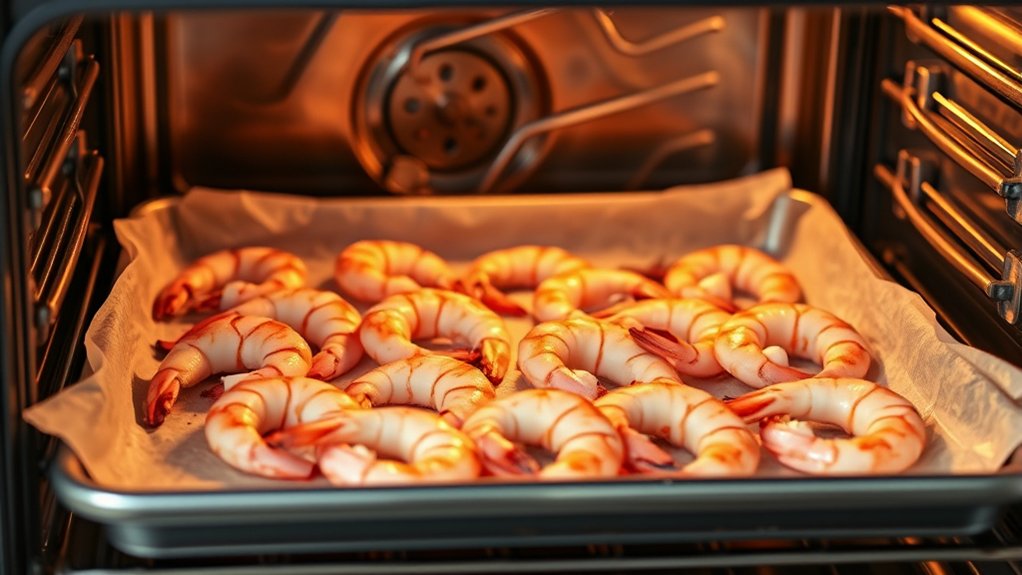
How long should you cook shrimp in the oven? You should usually bake shrimp for 6 to 8 minutes, depending on size and thickness. Small shrimp can finish in about 5 to 6 minutes, while jumbo shrimp may need 8 to 10 minutes.
Watch the shrimp texture closely: they should turn opaque, pink, and slightly firm, not rubbery. Oven timing matters more than a fixed clock, so check them early and avoid overcooking.
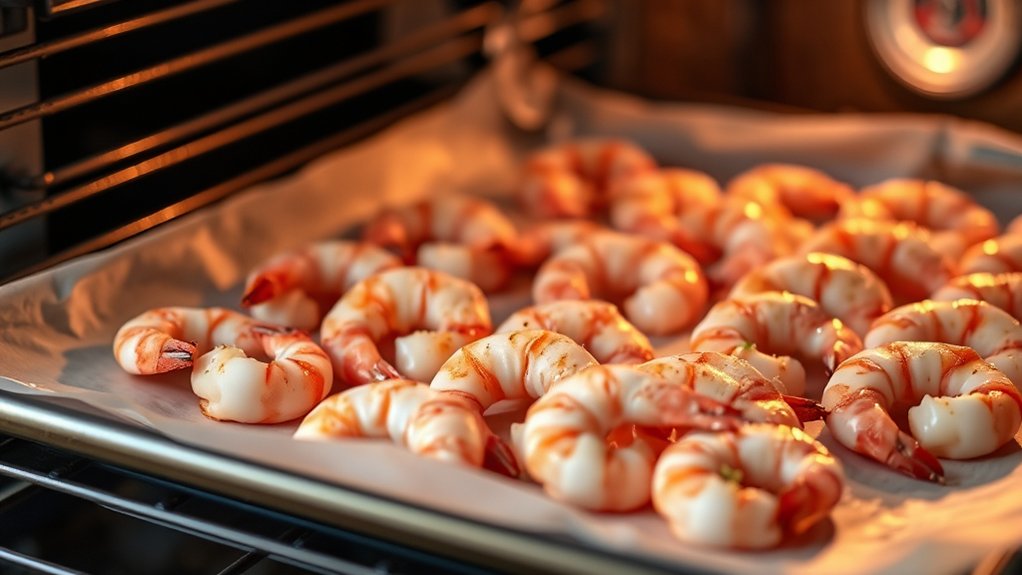
If you’re baking shrimp on a sheet pan, arrange them in a single layer so they cook evenly. You can tell they’re done when they curl into a loose C shape and feel springy when touched.
If they form a tight O, they’re probably overcooked. Remove them right away and serve immediately for the best texture and flavor.
Set the Right Oven Temperature
Set your oven to 400°F for even roasting, which helps shrimp cook quickly without drying out. If you want faster browning, you can broil the shrimp for a short time, but watch them closely.
Always preheat the oven first so the heat stays steady and your shrimp cook evenly.
Ideal Roast Temperature
For the best roasted shrimp, preheat your oven to 400°F and let it fully come to temperature before the shrimp go in. This steady heat helps you keep a juicy texture and supports flavor lock, so the shrimp cook evenly instead of drying out.
Use this quick guide:
| Oven temp | Result |
|---|---|
| 375°F | Gentle roast, slower browning |
| 400°F | Balanced roast, best overall |
| 425°F | Faster cooking, firmer edge |
At 400°F, shrimp usually roast quickly and stay tender. You don’t need to push the heat higher for good results; consistent temperature matters more than intensity.
Keep your oven calibrated, and use the center rack for the most even roast.
Broil For Quick Cooking
Want shrimp done in a flash? Use the broiler and set your oven rack 4 to 6 inches from the heat source. High heat cooks shrimp fast, so you’ll want to watch closely.
For tips on broiling, coat the shrimp lightly with oil, season simply, and spread them in a single layer on a broiler-safe pan. Keep the temperature on broil or the highest setting your oven allows.
Shrimp cook quickly, often in 2 to 4 minutes per side, depending on size. Check shrimp color as they cook; they should turn opaque and pink with no gray centers.
Pull them out as soon as they curl into a loose C shape. Overcooking makes them tough, so stay nearby and use the color change as your cue.
Preheat For Even Heat
Preheat your oven before the shrimp go in so the heat stays steady from the start. This preheat importance matters because shrimp cook fast, and a cold oven can leave you with uneven texture. Set the temperature first, then wait until the oven fully signals ready.
You want even heat across the tray, not hot spots that overcook one side.
- Set the oven to the recipe’s exact temperature.
- Let it hold that temperature for several minutes.
- Use the center rack for balanced airflow.
- Slide in the shrimp only after full preheating.
When you control the heat from the beginning, you help the shrimp cook evenly, stay tender, and finish on time.
Choose the Best Shrimp Size
Shrimp size changes both cooking time and texture, so choosing the right one matters. Use large or jumbo shrimp if you want a meaty bite and a little more margin in the oven. Smaller shrimp cook faster, so they’re better when you need speed, but they can dry out if you leave them in too long.
Count shrimp per pound to compare sizes: fewer shrimp usually means a bigger piece. If you buy shrimp with the shrimp shell on, they may stay a bit juicier and can handle baking well, though you’ll need to peel them later.
For even cooking and easier eating, consider tail removal before baking, especially for appetizers or pasta. Match the size to your recipe, pan spacing, and serving style, and you’ll get better results with less guesswork.
How to Tell When Shrimp Is Done
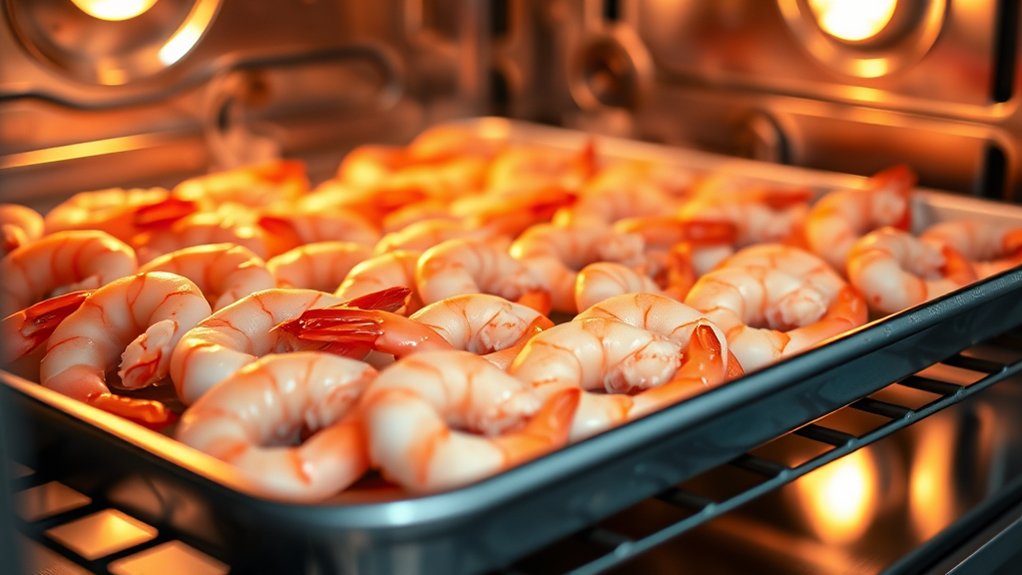
You’ll know shrimp is done when it turns opaque, curls into a loose “C” shape, and feels firm but still slightly springy to the touch. Check the thickest piece first, because it tells you the most about doneness and helps you avoid overcooking. For oven timing, start checking near the end of the expected cook window so you can pull the shrimp at the right moment.
- Look for a pink, opaque color from edge to center.
- Press one shrimp gently; it should resist, not squish.
- Cut the thickest shrimp open if you need a visual check.
- Remove them as soon as they’re done for best texture and seafood safety.
If the shrimp has curled tightly into an “O,” it’s likely gone too far. Keep in mind that carryover heat can finish the last bit after you take the pan out, so act quickly when the signs line up.
Season Shrimp Before Baking
Before you bake shrimp, season it with simple, bold flavors like garlic, paprika, lemon, salt, and pepper. If you marinate it, keep the time short so the shrimp don’t turn mushy.
Toss everything well so each piece gets an even coating and bakes evenly.
Best Seasonings For Shrimp
For the best flavor, season shrimp before baking with a simple mix of salt, pepper, garlic powder, and a little paprika. You can also build clean, balanced flavor with a few smart additions that won’t overwhelm the shrimp. Keep it light, so the seasoning enhances the natural sweetness.
- Lemon zest: adds bright, fresh acidity.
- Old Bay: gives a classic savory kick.
- Chili flakes: bring gentle heat.
- Herbs: parsley or dill add freshness.
Use one or two word idea pairings, not every option at once. Pat the shrimp dry first, then coat them evenly with oil and seasoning. This helps the spices stick and bake into a crisp, flavorful finish.
Marinating Time Tips
Seasoning shrimp works best when you give the flavors a short head start before baking. Keep your marinating time short, usually 15 to 30 minutes, so the shrimp absorb seasoning without turning mushy.
If you use lemon juice, vinegar, or other acidic ingredients, stay closer to 15 minutes. For oil-based blends, you can let them sit a little longer and still keep good texture. Always refrigerate while the shrimp marinate, and bake them soon after removing them from the fridge.
Taste the marinade before you add the shrimp, because a strong mix can overpower delicate seafood. Your goal is a clean flavors balance that enhances sweetness, not hides it. When you time it well, you’ll get shrimp that taste seasoned, fresh, and tender.
Even Coating Techniques
How do you make sure every shrimp gets the same flavor? Pat the shrimp dry, then toss them with oil and seasonings in a bowl large enough to move freely. Use your hands or a spatula to coat each piece, turning until the spice mix clings evenly. This even coating helps the shrimp cook consistently and promotes a uniform sear.
- Dry the shrimp first.
- Add oil before spices.
- Toss in small batches.
- Spread them out once coated.
If you see dry spots, add a little more oil and toss again. Keep the layer thin, and don’t let seasonings clump. When you season shrimp before baking this way, you’ll get balanced flavor and better browning.
Bake Shrimp on a Sheet Pan or in Foil
Whether you spread shrimp on a sheet pan or seal them in foil, both methods cook quickly and keep cleanup simple. On an oven sheet-pan, arrange shrimp in one layer so heat reaches each piece evenly. Give them a little space, and you’ll see the edges turn opaque faster.
Use foil when you want the shrimp to steam gently in their own juices and seasonings; just crimp the packet tightly so it traps heat and moisture. For two word discussion ideas, think “sheet pan” for direct roasting and “foil packet” for enclosed cooking.
Both options work well for weeknight meals because you can slide them into a hot oven without much fuss. Check the shrimp near the end of the bake time, since small pieces finish sooner than large ones. When they turn pink and curl into a loose C shape, pull them out promptly and serve right away.
How to Keep Shrimp Tender in the Oven
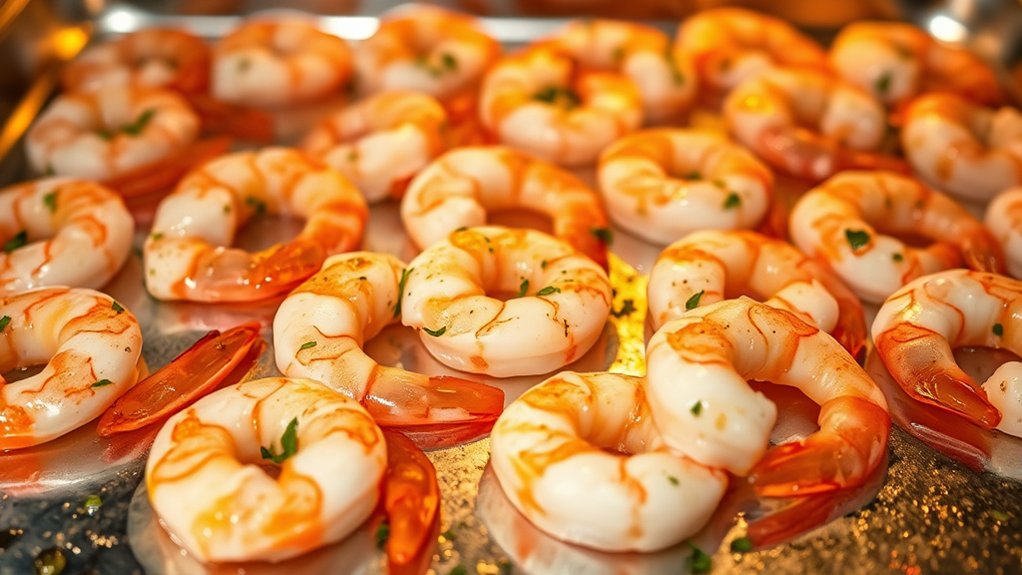
To keep shrimp tender in the oven, pull them out as soon as they turn pink and opaque, because even a minute too long can make them tough. You should also watch for firm, curled bodies that still feel springy; that’s your cue for a tender texture. Use even heat so the shrimp cook quickly and don’t dry out at the edges.
Pull shrimp as soon as they turn pink and opaque for tender, juicy results.
- Preheat the oven fully before you add the shrimp.
- Spread them in a single layer for steady cooking.
- Check them early, especially if they’re small.
- Remove them right away and let carryover heat finish the job.
You can also pat the shrimp dry before baking, since excess moisture slows browning and softens the surface. Keep the seasoning light, and don’t overcrowd the pan. When you focus on timing, spacing, and even heat, you’ll get shrimp that stay juicy instead of rubbery.
Oven-Baked Shrimp Variations
Want to switch up oven-baked shrimp? You can keep the same base method and change flavor fast. For garlic butter shrimp, toss the shrimp with melted butter, minced garlic, lemon zest, and parsley, then bake until opaque.
For spicy shrimp, add paprika, cayenne, and a little oil for a bold crust. If you want shrimp comfort, mix breadcrumbs, parmesan, and herbs, then broil briefly for a crisp top.
For Mediterranean style, use olive oil, oregano, cherry tomatoes, and olives. For a citrus version, add orange or lime juice after baking so the shrimp stay firm.
You should still watch oven timing closely, since seasoning won’t change doneness. Large shrimp usually need a little longer than medium shrimp, but don’t rely on color alone.
Use the same sheet pan, spread the shrimp in one layer, and check early. That way, you get variety without losing texture, balance, or control.
Store and Reheat Shrimp Safely
Store cooked shrimp in an airtight container in the refrigerator within 2 hours of baking, and use them within 3 to 4 days. This storage safety step keeps texture better and lowers risk.
- Cool shrimp quickly before you chill them.
- Keep them on the middle shelf, not the door.
- Reheat only the portion you’ll eat.
- Use reheating tips that warm shrimp gently.
When you reheat, use low heat in the oven at 300°F or on the stovetop over medium-low. Add a splash of water or broth, then cover the shrimp so they steam instead of dry out. Heat just until they’re hot throughout; overcooking makes them rubbery.
Don’t reheat shrimp more than once, and toss any leftovers that smell sour, feel slimy, or sat too long at room temperature. If you froze cooked shrimp, thaw them in the refrigerator first, then reheat promptly for the best quality and safety.
Frequently Asked Questions
Can I Bake Frozen Shrimp Without Thawing?
Yes, you can bake frozen shrimp without thawing, but you’ll need extra time. If you want better results, use how to thaw shrimp first; you’ll get better shrimp texture tips and more even cooking.
Should I Peel Shrimp Before Baking?
You should peel shrimp before baking if you want easy eating; leave the shell on for juicier flavor.
Choose peel vs. shell based on presentation, and devein vs. un devein for cleanliness.
Do I Need to Devein Shrimp First?
No, you don’t need to devein shrimp first, but you should if you want cleaner presentation and a milder taste.
For shrimp prep, rinse and pat dry, then use flavor pairing that suits your seasoning.
Can I Use an Air Fryer Instead of an Oven?
Yes, you can use an air fryer instead. It’s a speedboat versus a sailboat in the oven vs air fryer debate.
You’ll get a crispy air fryer alternative; just cook shrimp in a single layer.
What Sauce Goes Best With Baked Shrimp?
What sauce works best? You’ll love garlic butter, lemon aioli, or cocktail sauce. For shrimp pairings, try rice or asparagus.
Use these baking tips: don’t overcook, season well, and serve hot.
Conclusion
So when you bake shrimp, keep the pan hot, the pieces spaced out, and your eyes on the clock. You’ll know they’re ready when they turn pink, go opaque, and curl into a gentle C, like little commas ending the sentence of dinner.
Pull them from the oven right away so they stay juicy and sweet. With a few careful minutes, you can turn a simple sheet pan into a bright, tender meal.
Mastering how long to cook shrimp in oven ensures they come out perfectly every time—tender, flavorful, and ready to enjoy.