Can Pans Be Put in the Oven
You can turn a simple pan into a kitchen disaster in seconds if you ignore oven limits.
Can pans be put in the oven? It depends on the pan’s material, handle, lid, and coating, so you need to check these before exposing it to heat. The weakest part sets the safe temperature.
Stainless steel, cast iron, and some enamel pans usually work well in the oven.
However, plastic, wood, and unknown coatings don’t withstand oven heat. One label can save you from a costly mistake.
Key Takeaways
- Yes, many pans are oven-safe if the pan, handles, lids, and coatings are rated for oven temperatures.
- Common oven-safe materials include stainless steel, cast iron, carbon steel, and manufacturer-rated glass or ceramic bakeware.
- Avoid pans with plastic, wooden, or glued parts, unless the manufacturer clearly states they are oven-safe.
- Nonstick pans can go in the oven only within the maker’s maximum temperature rating.
- If any component’s rating is unclear, use a fully metal pan and check the manufacturer’s instructions first.
What Makes a Pan Safe for the Oven?
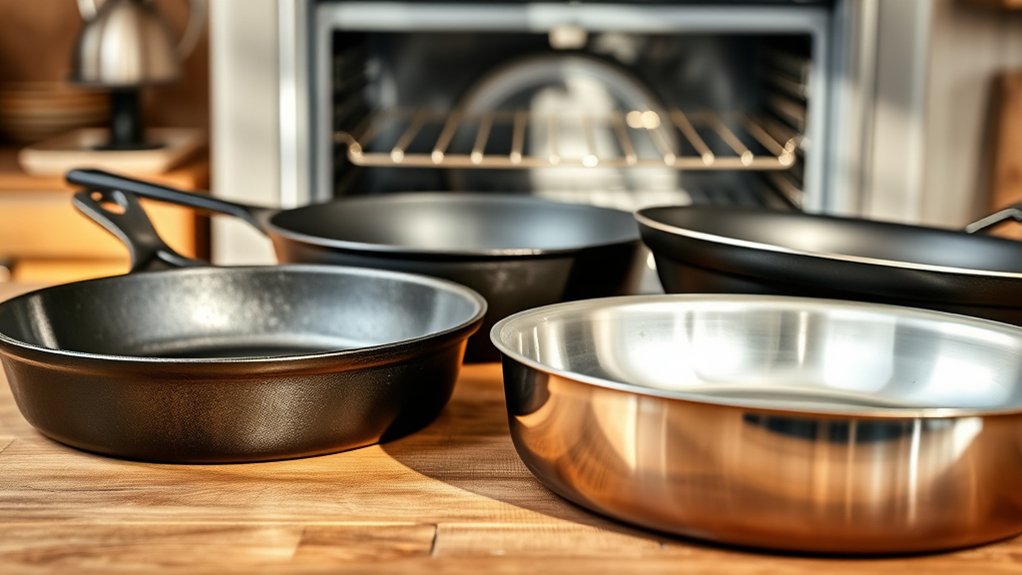
A pan is oven-safe when its materials, handles, and construction can withstand oven temperatures without warping, melting, or releasing harmful compounds. You should check whether the body uses stainless steel, cast iron, carbon steel, or oven-rated glass, since each tolerates heat differently.
Metal vs glass matters because metal usually transfers and endures heat more evenly, while glass can crack from thermal shock if you change temperature too fast. You also need hardware that survives heat: welded metal handles, oven-rated rivets, and lids without plastic knobs.
Metal and glass behave differently in heat: metal spreads it evenly, while glass can crack from thermal shock.
Coatings matter too; some nonstick finishes and painted exteriors can fail at high temperatures. Don’t trust oven safe myths that treat all cookware the same or assume weight alone proves durability. The real test is the manufacturer’s stated temperature limit plus the weakest component in the pan’s design.
If any part can’t handle your oven setting, the pan isn’t safe.
How to Tell If Your Pan Is Oven-Safe?
To tell whether your pan is oven-safe, check the manufacturer’s label, packaging, or product page for a specific maximum temperature, then compare that rating with every part of the pan, not just the base. If you can’t find a rating, look for symbols, care instructions, or a model number and verify it on the maker’s site.
Inspect the handle, rivets, lid, and any nonstick coating, because one weak component can limit the whole pan. You should also evaluate pan design: long handles, plastic grips, and decorative parts often reduce heat tolerance.
If the pan has a warped rim, loose fasteners, or worn coating, its material durability may be compromised, so don’t assume it’s safe. When in doubt, use a lower oven setting and avoid broilers, which raise temperatures fast. This quick check helps you prevent damage, preserve performance, and keep your cooking predictable.
Which Pan Materials Can Go in the Oven?
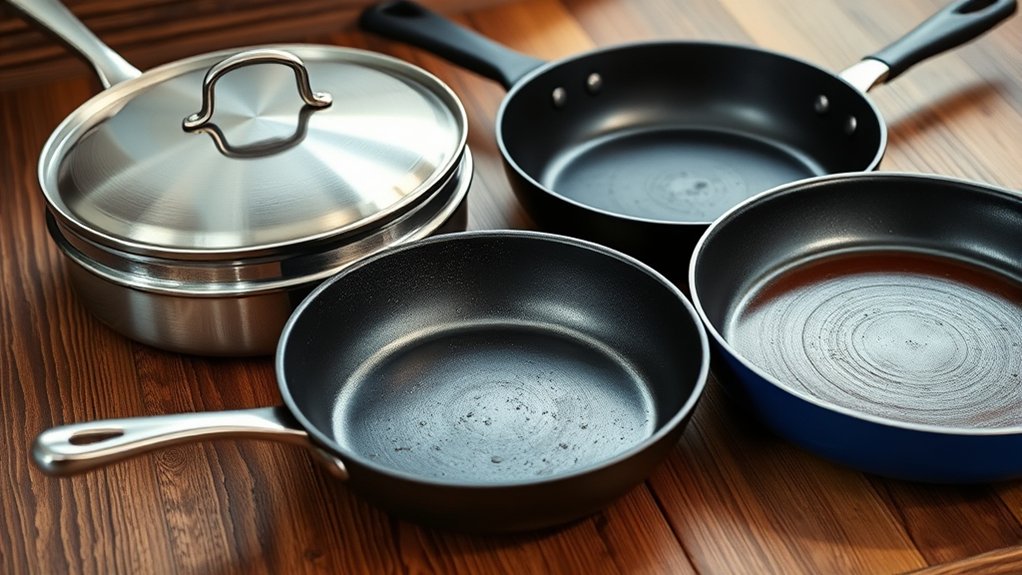
You can usually put stainless steel, cast iron, and many fully metal pans in the oven because they handle high heat well.
Glass, ceramic, and enameled pans can also be oven-safe if their temperature rating fits your recipe. Avoid pans with plastic handles, wooden parts, or nonstick coatings that exceed their heat limit, since those materials can warp, melt, or release fumes.
Oven-Safe Pan Materials
Oven safety depends on the pan’s material, because only heat-resistant metals and a few nonmetal options can handle oven temperatures without warping, melting, or releasing harmful fumes. You can usually trust cast iron, carbon steel, stainless steel, and most enamel-coated metal pans, since they tolerate high heat and distribute it predictably.
Many glass and ceramic bakeware pieces also work if the manufacturer rates them for oven use. Check for riveted handles, silicone grips, or wooden parts, because those accessories can limit temperature. You should confirm the stamped maximum temperature before cooking.
For long-term use, inspect each pan after oven cleaning, and keep your pan storage dry to prevent corrosion or chipping.
Materials To Avoid
Not every pan belongs in the oven, even if it looks sturdy enough for stovetop use. You should avoid pans with plastic handles, silicone grips, glued knobs, or decorative finishes that can warp, melt, or off-gas.
Check the oven safe label before you bake; if it’s missing, assume the pan’s limits are unclear. Nonstick coating concerns matter too, because some coatings degrade at high heat and release fumes or lose performance. Use this quick guide:
| Material | Risk |
|---|---|
| Plastic handles | Melt |
| Silicone grips | Deform |
| Wood components | Crack |
| Decorative coatings | Burn |
| Unknown nonstick | Fail |
If you’re unsure, keep the pan on the stovetop and choose a fully metal alternative rated for oven use.
Can Nonstick Pans Go in the Oven?
Nonstick pans can go in the oven only if the manufacturer rates them for oven use, since the pan’s coating, handle, and overall construction determine the maximum safe temperature. You should verify the oven safe labeling before you cook, because many nonstick pans tolerate only moderate heat. Exceeding that limit can weaken nonstick durability, discolor the coating, or damage plastic, silicone, or glued handles.
If the label doesn’t specify a temperature, don’t guess; check the product manual or the maker’s website. Use the pan within the stated range and preheat only when the instructions allow it.
Keep broiler settings and empty-pan overheating off-limits unless the manufacturer explicitly approves them. You’ll get the best results by matching the recipe’s heat demand to the pan’s rating. For frequent high-heat oven use, choose cookware designed for that purpose instead of stretching a standard nonstick pan past its limit.
Can Cast Iron Pans Go in the Oven?
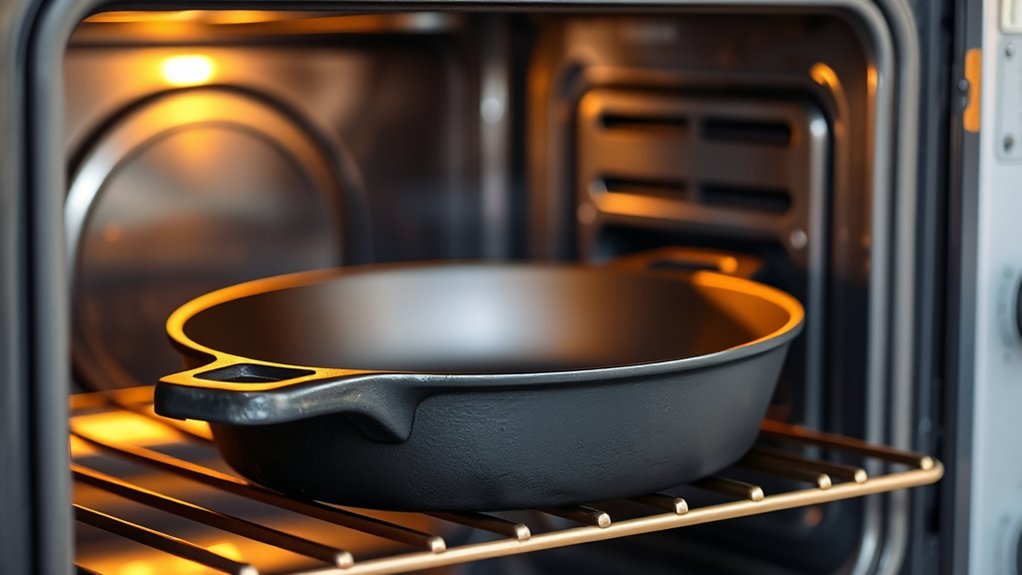
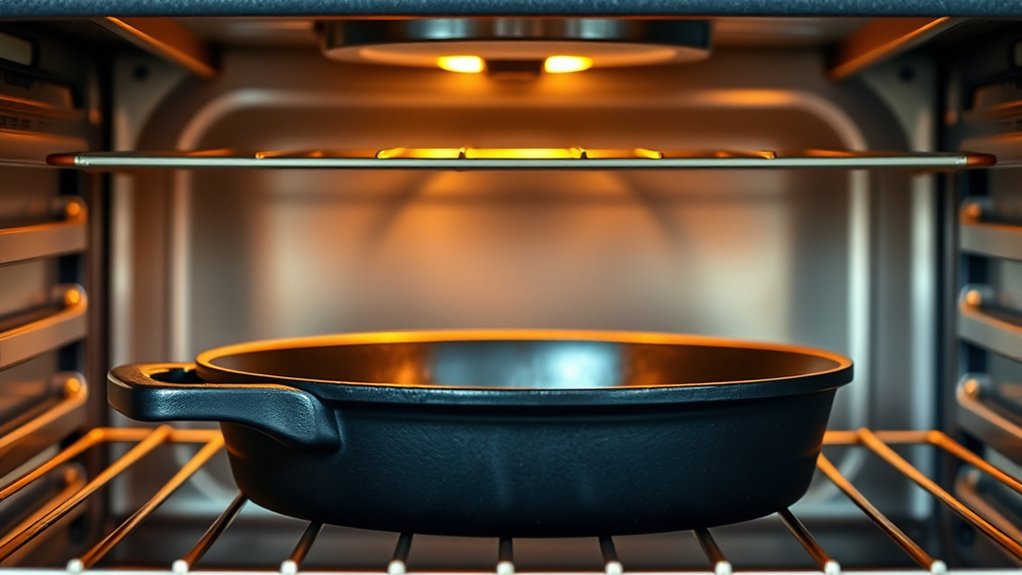
Yes, cast iron pans can usually go in the oven, and they’re often among the best cookware for it because the pan itself can handle very high heat. You can rely on cast iron for oven safety when you use it within the manufacturer’s temperature guidance and keep the pan dry and seasoned. Cast iron transfers heat evenly, so it’s useful for searing, baking, roasting, and finishing dishes in one vessel.
Cast iron pans can usually go in the oven, offering excellent heat retention for searing, baking, and roasting.
- Verify the pan is true cast iron and not a coated imitation.
- Preheat the oven if your recipe depends on stable heat.
- Use dry mitts and stable placement when moving the pan.
You should also inspect the pan for cracks or severe rust before use. If the surface has food residue or flaking seasoning, clean it first to maintain performance. In most cases, cast iron gives you dependable oven safety and excellent thermal retention, making it a practical choice for high-heat cooking.
How Handles and Lids Affect Oven Safety
Handles and lids can make or break oven safety because they’re often the parts that limit a pan’s heat tolerance. You should inspect cookware handles before you slide the pan onto oven racks. Metal handles usually tolerate heat, but silicone, wood, plastic, and glued-on grips can soften, warp, or fail.
If the handle is removable, take it off before baking. If it’s riveted or integrated, confirm the manufacturer rates it for oven use.
Lids matter just as much. Glass lids, plastic knobs, and steam vents can crack or melt if they aren’t oven-safe. Metal lids are usually safer, but any gasket or decorative piece may change that rating.
You should also check that lids fit securely; a loose lid can shift when you move the pan, creating spill risk. When in doubt, use the pan without the lid or replace nonrated parts with oven-safe components.
What Oven Temperature Is Safe for Pans?
You should check the pan’s rated oven limit before heating it, because safe temperatures vary by material and construction. Many stainless steel and cast-iron pans tolerate higher heat, while nonstick, anodized, or pans with plastic parts often need lower limits.
If you exceed the manufacturer’s heat rating, you can warp the pan, damage the coating, or weaken the handle attachment.
Safe Temperature Limits
What temperature can your pan safely handle in the oven? Check the manufacturer’s limit before you set heat; don’t assume every pan meets the same threshold. For practical pan compatibility, treat 350°F to 400°F as a common safe range unless the label states otherwise.
Follow oven safety guidelines by avoiding temperatures above the handle, coating, or fastener rating, since excessive heat can warp metal or degrade joins.
- Verify the maximum oven temperature printed on the pan or packaging.
- Preheat only after confirming the pan’s rated limit.
- Use mitts and avoid sudden temperature changes.
If your pan lacks a clear rating, use conservative heat and test only with short exposures.
Material-Specific Heat Ratings
Different pan materials tolerate heat differently, so the safe oven temperature depends on the pan’s construction, coating, and any attached parts. You should match the limit to the weakest component, because handles, rivets, and lids often fail before the body.
| Material | Typical safe limit |
|---|---|
| Stainless steel | 500°F |
| Cast iron | 600°F |
| Nonstick aluminum | 400°F |
| Carbon steel | 550°F |
For nonstick pans, check the coating rating and protect nonstick durability by staying below its ceiling. With aluminum and steel, watch thermal expansion; rapid heating can warp thin pans.
If a pan includes plastic, silicone, or wood, assume a lower limit unless the maker states otherwise. Always verify the manufacturer’s label before you preheat.
What Happens If You Use the Wrong Pan?
Using the wrong pan in the oven can cause warping, coating failure, or dangerous overheating, especially if the material isn’t rated for high temperatures. You can also trigger smoke, discoloration, or off-gassing when finishes break down.
Using the wrong pan in the oven can cause warping, smoke, or coating failure when materials overheat.
In many cases, the pan won’t fail instantly; it degrades under load, then distorts and transfers heat unevenly, which affects cooking accuracy and can stress oven racks. These outcomes also expose oven safety misconceptions and lead to poor two word discussion ideas about material limits.
- Thin metal can bend and lose contact with the rack.
- Nonstick coatings can blister, flake, or emit fumes.
- Glass or ceramic can crack from thermal shock or mismatch.
If you choose an incompatible pan, you’re accepting a predictable mechanical and chemical risk. The safest assumption is that temperature rating, coating chemistry, and construction all matter equally.
Tips for Using Pans in the Oven Safely
Before you put any pan in the oven, check the manufacturer’s temperature rating and make sure the handle, coating, and any attached parts are oven-safe. Preheat the oven first, then place the pan on the center rack to promote even heat exposure and reduce warping.
Use dry oven mitts, because moisture can transfer heat fast and weaken your grip. If your pan has oven safe coatings, avoid broilers unless the label explicitly allows high radiant heat.
Don’t stack pans or place them against the oven wall, since contact can damage finishes and affect pan durability. For nonstick pans, keep temperatures within the stated limit and never use aerosol sprays that can leave residue.
After baking, let the pan cool gradually on a heat-resistant surface. Sudden temperature changes can stress metal and shorten service life.
Clean the pan with nonabrasive tools so you preserve the coating and maintain reliable performance over time.
Frequently Asked Questions
Can Disposable Aluminum Pans Go in the Oven?
Yes, you can use disposable aluminum pans in the oven if you check the temperature limit and support them on a baking sheet. You’ll improve oven safety and reduce spills, especially with disposable pans.
Do Oven-Safe Pans Work on Induction Cooktops?
Yes, if your oven-safe pan is induction compatible, you can use it on an induction cooktop. You’ll need a magnetic base, and the pan must stay heat resistant under high stovetop temperatures.
Should I Grease a Pan Before Oven Use?
Usually, you should grease the pan only if your recipe needs it. Grease considerations depend on food release.
Pan material safety means you’ll avoid excess oil on nonstick or seasoned pans that can smoke.
Can Cold Pans Go Directly Into a Hot Oven?
Usually, no you shouldn’t move cold pans straight into a hot oven. You risk cracking them.
Check cooling safety and material timing first; preheat gradually, and use cookware rated for sudden temperature changes.
How Do I Clean Pans After Oven Use?
You clean pans after oven use by letting them cool, then soaking and scrubbing with warm water, mild detergent, and a nonabrasive pad.
For cleaning tips, target stain removal with baking soda paste, rinse, and dry.
Conclusion
So, yes, you can put pans in the oven, but only if every part of the pan is oven-safe at your target temperature. Check the material, handle, lid, and coating, since the weakest link sets the limit.
Cast iron, stainless steel, and some enamel-coated pans usually work well; plastic and unknown parts don’t. Treat oven safety like a chain: it’s only as strong as its weakest link, so inspect before you bake.
Remember, when deciding if pans can be put in the oven, always confirm that every component can safely withstand the heat to avoid damage or accidents.