How Long to Cook Ribs in Oven
About 70% of oven-baked rib success comes down to the cut and the clock when learning how long to cook ribs in the oven. You’ll get baby backs tender in about 2.5 to 3 hours at 275°F, or faster at 300°F, while spare, St. Louis, and country-style ribs need a bit longer.
Wrap them to hold moisture, then uncover near the end—but the real test isn’t time alone, and that’s where things get interesting.
Key Takeaways
- Bake ribs low and slow for tenderness: 275°F for about 2.5 to 3.5 hours, or 300°F for 2 to 3 hours.
- Baby back ribs usually finish faster, often tender after 2.5 to 3 hours at 275°F.
- Spare, St. Louis-style, and country-style ribs generally need longer; plan on about 2.5 to 3 hours at 300°F.
- Wrap ribs tightly in foil for most of the bake, then uncover near the end to develop a sticky glaze.
- Ribs are done when a fork slides between bones easily, the meat bends readily, and the bone starts to show.
How Long to Cook Ribs in the Oven
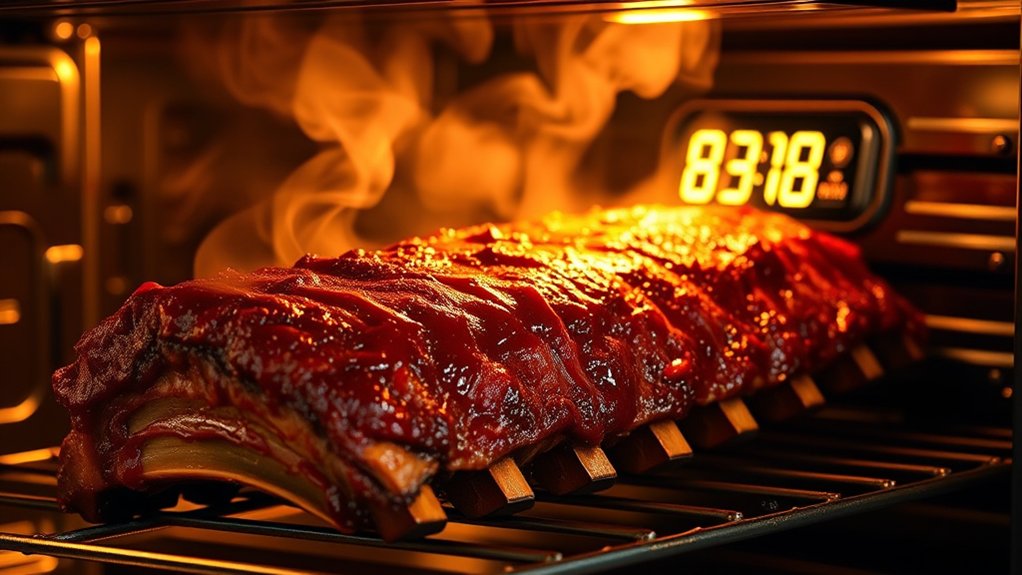
How long you cook ribs in the oven depends on the cut, the temperature, and how tender you want them. For most ribs, plan on low and slow baking so the meat loosens without drying out.
Low and slow oven baking keeps ribs tender, juicy, and easy to pull from the bone.
At 275°F, you’ll usually need 2.5 to 3.5 hours; at 300°F, expect closer to 2 to 3 hours. Wrap the ribs tightly in foil for part of the bake if you want more moisture, then uncover them near the end to set the surface.
In rental kitchens, use a calibrated oven and a sheet pan with a rack for even heat circulation. Season generously before cooking, and use spice blends that include salt, paprika, garlic, and pepper for balanced flavor.
Check doneness by probing between the bones; the meat should feel tender and pull back slightly from the ends. Let the ribs rest 10 to 15 minutes before slicing so juices redistribute evenly.
Choose the Right Rib Cut and Temperature
Baby back ribs cook faster than spare ribs, so choose your oven temperature based on the cut you buy and the texture you want. When you choose rib cut, match it to your schedule: baby backs suit quicker roasting, while spare ribs need a lower oven temperature for even cooking.
Use this guide:
| Rib cut | Best oven temperature |
|---|---|
| Baby back | 300°F |
| Spare ribs | 275°F |
| St. Louis-style | 275°F |
| Country-style | 300°F |
Set a moderate oven temperature so the fat renders without scorching the surface. If you want a firmer bite, lean slightly higher; if you want gentler cooking, go lower.
Check the rack thickness, too, because thicker slabs need steadier heat. Always preheat fully before you slide the ribs in, and keep the temperature consistent once they’re in the oven.
Cook Baby Back Ribs Until Tender
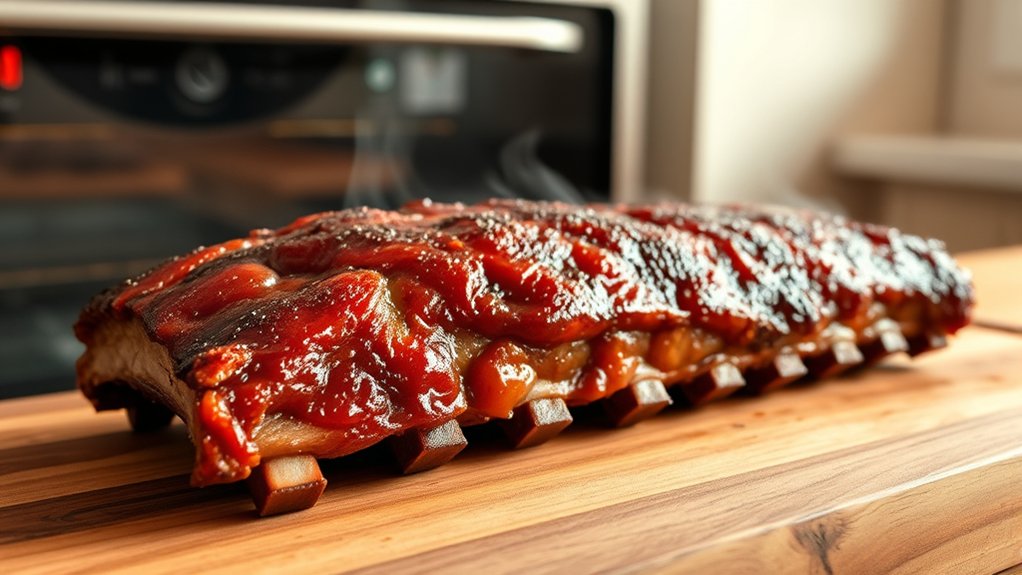
For baby back ribs, you’ll usually reach ideal tenderness after about 2.5 to 3 hours in a low oven, depending on their size and your wrapping method. Test them by sliding a fork or toothpick between the bones; it should meet little resistance and go in easily.
You can also lift the rack with tongs. If it bends readily and the surface starts to crack, the ribs are tender enough.
Ideal Tenderness Timing
You’ll know baby back ribs are ready when the meat has pulled back from the bones and a probe slides in with little resistance, usually after about 2½ to 3 hours in a 275°F oven. For ideal tenderness timing, keep the oven low and slow so the collagen softens without drying the meat.
Check at the 2½-hour mark if your rack is thin; larger racks may need the full 3 hours. Watch for even color, slight bone exposure, and a surface that looks set but not crusty. If the ribs still feel tight, give them 15-minute intervals and recheck.
Don’t rush this stage, because steady heat delivers the best texture and keeps the meat juicy, supple, and easy to bite cleanly.
How To Test Tenderness
Test the ribs by sliding a thin probe or toothpick between the bones into the thickest part of the meat; it should glide in with little resistance when they’re done. Use tenderness testing at the center and near the bone ends, since edges soften first.
If the probe meets tight pull or squeaks, keep cooking. If it slips in easily but the meat still holds together, you’re close. Check for slight bone exposure and a gentle bend when you lift one end.
| Check | Good Sign | Action |
|---|---|---|
| Probe | Smooth glide | Rest briefly |
| Bend | Light crack | Slice soon |
| Pull | Meat clings | Cook longer |
You want tender, not mushy, unless you’re chasing fall off the bone texture.
Cook Spare Ribs for a Longer Bake
Spare ribs need more time in the oven than baby back ribs because they’re larger, meatier, and have more connective tissue to break down. Set your oven to 300°F and plan on a longer bake, usually 2½ to 3 hours for a full rack.
Place the ribs on a rimmed sheet pan or roasting pan so drips stay contained and oven safety stays high. Cover the pan tightly with foil for most of the cook to keep the heat steady and help the meat relax into a tender texture.
Check the ribs near the end by looking for meat that pulls back from the bones and bends easily when lifted with tongs. If they still feel firm, give them 15 to 20 more minutes, then test again. Keep the heat moderate, because higher temperatures can dry the surface before the inside softens fully.
How to Wrap Ribs for Juicier Results
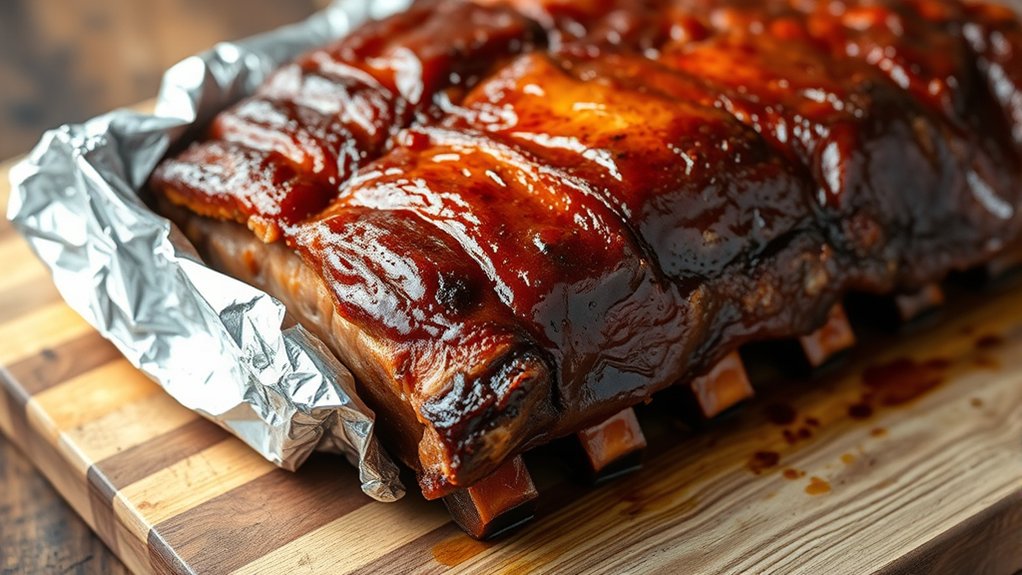
For juicier ribs, wrap them once they’ve developed some color and the surface starts to look set. Use heavy-duty foil or butcher paper, and keep your wrap technique tight but not crushing. Add a small splash of liquid, like apple juice or broth, to support moisture retention without making the meat soggy.
Place the ribs meat-side down, seal the packet well, and return it to the oven so steam stays trapped around the meat. This helps the ribs cook in their own juices and keeps the surface from drying out.
- Wrap only after the exterior has set.
- Use two layers of foil for a secure seal.
- Fold edges inward to prevent leaks.
- Add just enough liquid to create steam.
- Unwrap carefully so you don’t lose collected juices.
How to Tell When Ribs Are Done
How do you know when ribs are ready? Start with tenderness testing. Lift the rack with tongs; if it bends easily and the center sags, the meat is close. Next, check rib doneness by inserting a toothpick or probe between the bones. It should slide in with little resistance, like softened butter.
You can also twist a bone gently; if it turns slightly and the meat begins to separate, the ribs are done. Look for exposed bone ends and a surface that has pulled back from the tips by about a quarter inch. Avoid guessing from color alone, since oven heat can brown the exterior before the interior is fully tender.
If the rack still feels stiff or resists bending, keep cooking and test again in short intervals. When the ribs pass these checks, pull them from the oven and let them rest briefly so the juices settle and the texture stays tender.
Finish Ribs With Sauce or Broil
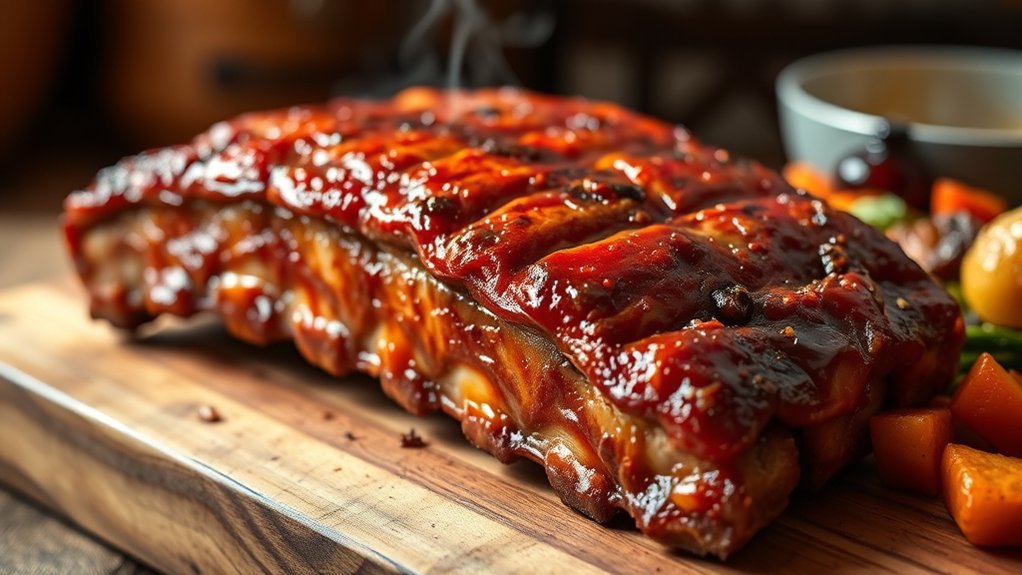
Once your ribs are tender, brush on a thin layer of sauce or glaze so it can coat the meat evenly without burning. You can return them to the oven for a few minutes to let the sauce set, or use the broiler to finish with deeper color and flavor.
Watch them closely under the broiler, since the sugars in the glaze can caramelize quickly and turn from browned to burnt fast.
Sauce And Glaze
Want a glossy, flavorful finish on your ribs? Brush on a thin sauce glaze during the last 15 minutes, so you don’t drown the meat or soften rib tenderness. Warm the sauce first, then apply it evenly with a pastry brush.
Use light coats, letting each layer cling before adding more. This keeps the seasoning balanced and the surface attractive. You can also reserve some sauce for serving, which gives you control over sweetness and acidity at the table.
Keep these points in mind:
- Use a thin, even layer
- Warm the glaze before applying
- Brush gently to avoid tearing
- Taste for balance before saucing
- Serve extra sauce on the side
Broil For Caramelization
To finish your ribs with a caramelized surface, switch the oven to broil after the sauce goes on and move the pan to the upper rack. This allows the heat to quickly tighten the glaze. Keep the door cracked if your oven needs it, and watch closely; broil caramelization happens fast.
In 1 to 3 minutes, the sauce should bubble, darken, and cling to the meat.
| Cue | What You See | What You Do |
|---|---|---|
| Glossy | Sauce shines | Keep broiling |
| Amber | Edges brown | Check every 30 seconds |
| Charred | Spots blacken | Pull the ribs now |
| Frightened | You smell burn | Stop oven broiling immediately |
Let the ribs rest briefly, then slice. You’ll get sticky edges, deeper flavor, and a finish that looks as bold as it tastes.
Frequently Asked Questions
Can I Cook Frozen Ribs Directly in the Oven?
Yes, you can cook frozen ribs directly in the oven, but you should expect longer oven-safe timing.
Start with frozen rib prep: unwrap, season, cover tightly, then bake until they thaw and cook through.
Should I Remove the Membrane Before Baking Ribs?
Yes, you should remove the membrane before baking ribs; it’s like peeling off a rubber shield. You’ll improve rib texture, help spice pairing cling, and let cooking methods penetrate evenly for tender, flavorful results.
What Rack Position Is Best for Oven-Baked Ribs?
Use the middle rack for oven-baked ribs; it gives you even heat without scorching.
If you’re cooking two trays, use rack positioning that leaves space above and below, and keep your rack setup centered for consistent browning.
Do I Need to Marinate Ribs Before Cooking?
No, you don’t need to marinate ribs; test the idea against your flavor goals. A dry rub often works better.
If you do marinate, keep marinade timing to 2 to 12 hours and balance rub ingredients accordingly.
Can I Reheat Leftover Ribs Without Drying Them Out?
Yes, you can reheat leftovers without drying them out. You should wrap ribs tightly in foil, add a splash of broth, and warm them low and slow. This improves moisture retention and keeps them tender.
Conclusion
So, does a hotter oven always mean better ribs? Not quite. You’ll get the best results when you match the cut to the right time and temperature: baby backs usually need about 2.5 to 3 hours at 275°F, while spare and St. Louis ribs often need a similar or slightly longer bake.
Wrap them to lock in moisture, then uncover to sauce or broil until they’re tender and lightly caramelized. Paying attention to these details ensures your ribs come out juicy and flavorful.
For perfectly cooked ribs, understanding how long to cook ribs in oven is key to achieving that tender, mouth-watering finish.