How Long to Cook Bacon in Oven
If you’re cooking bacon in the oven, the exact time depends on thickness, temperature, and how crisp you want it. Cooking bacon in the oven at 400°F is a popular method because it allows for even cooking and easy cleanup.
Thin slices can finish in about 12 to 15 minutes, while thick-cut bacon may need 18 to 22 minutes. You’ll want to keep an eye on the last few minutes, because the line between perfectly crisp and overdone is thinner than it looks.
Key Takeaways
- Bake bacon at 400°F for most cuts; it usually takes 15 to 20 minutes.
- Thin bacon often finishes in 12 to 15 minutes, while thick-cut bacon takes 18 to 22 minutes.
- Turkey bacon cooks faster, usually in 8 to 12 minutes.
- Arrange bacon in a single layer on a lined sheet pan and rotate once for even cooking.
- Bacon is done when edges are crisp, the color is deep golden-brown, and the fat is rendered.
How Long to Cook Bacon in the Oven?
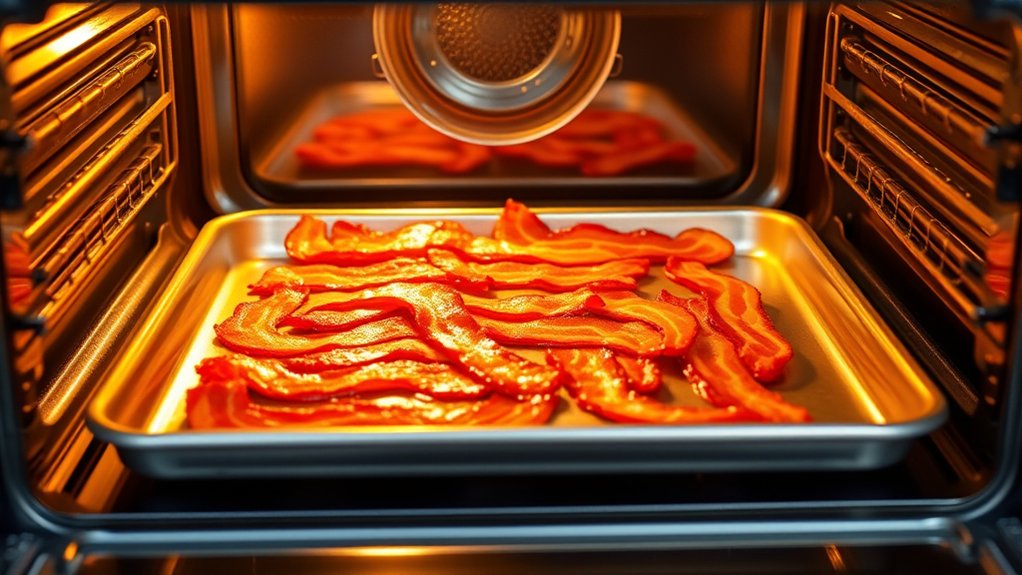
How long should you cook bacon in the oven? You usually need 15 to 20 minutes, depending on thickness and how crisp you want it.
Bake bacon in the oven for 15 to 20 minutes, depending on thickness and desired crispness.
Lay the strips in a single layer on a rimmed sheet pan, and turn them once halfway through for even bacon crisping.
Thin bacon often finishes closer to 12 minutes, while thick-cut bacon may need 20 minutes or a little more. Watch the edges closely during the last few minutes, because bacon can go from browned to overdone quickly.
If you’re cooking a large batch, use two pans instead of crowding one, so the heat reaches each strip.
Let the bacon drain on paper towels before serving.
For bacon storage, cool it completely, then refrigerate it in an airtight container for up to four days. Reheat briefly in the oven or skillet to restore texture.
What Is the Best Oven Temperature for Bacon?
The best oven temperature for bacon is usually 400°F, since it cooks evenly and gets crisp without drying out too fast. At this oven temp, you get a good balance between rendering fat and preserving bacon flavor, so each strip turns out browned and satisfying.
If you prefer softer bacon, you can lower the heat a bit, but 400°F remains the most reliable choice for consistent results. A hotter setting may crisp the edges faster, yet it can also make the bacon cook unevenly and lose more moisture.
A cooler setting gives you more control, but it usually takes longer and may leave the bacon less crisp. For most batches, keep your oven temp steady and watch for deep golden color. That way, you’ll pull the bacon at the right moment and keep the flavor rich.
How Do You Bake Bacon on a Sheet Pan?
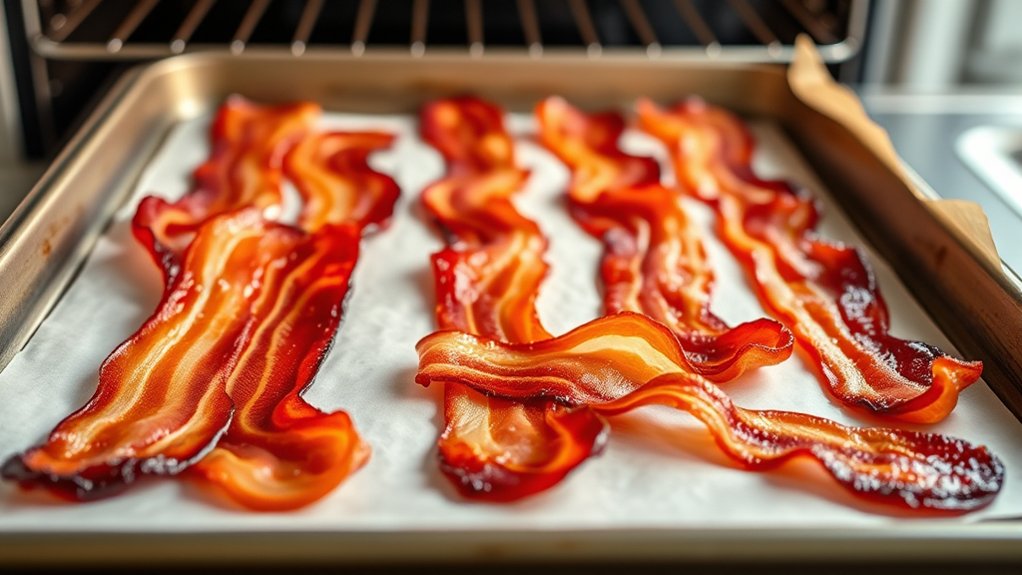
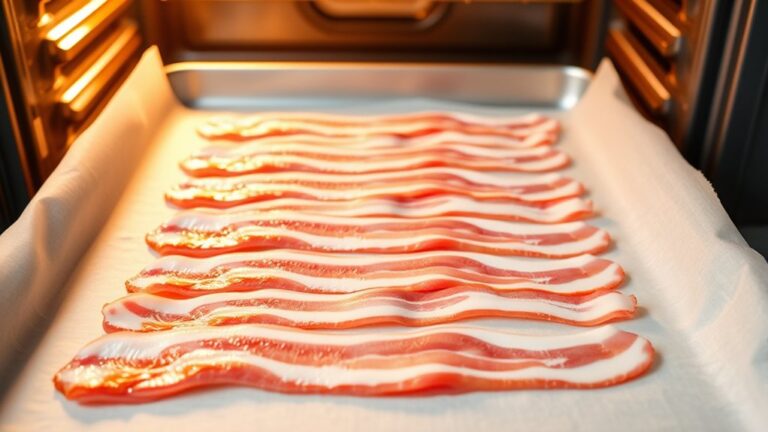
You’ll bake bacon on a sheet pan by lining it with foil or parchment and arranging the strips in a single layer without overlapping.
Set your oven to the right temperature, then place the pan on the middle rack so the bacon cooks evenly. Check it near the end of the baking time so you can pull it when it reaches your preferred crispness.
Sheet Pan Setup
For easy oven-baked bacon, line a rimmed sheet pan with aluminum foil or parchment paper, then arrange the bacon strips in a single layer without overlapping. This setup helps the fat render evenly and keeps the strips from steaming.
If your pan is small, use two pans instead of crowding the bacon. Leave a little space between pieces so air can circulate and the slices can crisp consistently.
After you place the bacon, you can lift the foil or parchment away for quick pan cleanup once the pan cools. If you’re prepping ahead, keep your bacon storage simple: refrigerate the strips in a sealed container or bag until you’re ready to use them.
A well-prepared sheet pan makes the whole process cleaner, faster, and easier.
Baking Time And Temp
Bake bacon on a sheet pan at 400°F, and expect most slices to be done in 15 to 20 minutes. You’ll get crisp edges, steady browning, and strong bacon flavor without constant flipping. Check thinner slices at 12 minutes; thick-cut bacon may need a few extra minutes. Rotate the pan once for even cooking.
- Line the pan for easier kitchen cleanup.
- Leave space between slices so they crisp.
- Watch closely near the end.
- Remove bacon when it looks just shy of done.
- Drain on paper towels for best texture.
If you want softer bacon, pull it sooner. If you want extra crunch, bake it a bit longer, but don’t let it burn.
How Long Do Thin, Thick, and Turkey Bacon Take?
Thin bacon usually cooks fastest, so you’ll want to start checking it early to keep it crisp.
Thick-cut bacon takes longer and needs more time to render properly, while turkey bacon often cooks a bit faster and can dry out if you leave it too long.
Adjust your timing based on the cut, and watch for color and crispness rather than the clock alone.
Thin Bacon Timing
How long should thin bacon stay in the oven? You should bake it for 12 to 15 minutes at 400°F, and check it early for even browning. Thin slices cook fast, so watch closely if you want a crispy texture and a smoky flavor without burning.
Line a sheet pan with foil. Arrange bacon in a single layer. Keep slices from overlapping. Rotate the pan once if needed. Lift bacon out when edges curl.
Let it rest for a minute on paper towels, then serve it right away. If you like firmer bacon, leave it in just a bit longer, but don’t walk away. Thin bacon can go from perfect to overdone quickly, so your attention makes the difference.
Thick And Turkey Timing
Thick bacon usually needs about 18 to 22 minutes in a 400°F oven, while turkey bacon often finishes in 8 to 12 minutes, depending on the brand and thickness. You’ll get the best results when you flip once halfway through and watch for crisp edges.
| Bacon type | Oven time |
|---|---|
| Thin | 10–14 min |
| Thick | 18–22 min |
| Turkey | 8–12 min |
Bacon science explains the difference: thicker slices hold more fat and moisture, so they need longer to render. Turkey bacon cooks faster because it contains less fat. For flavor pairings, try thick bacon with eggs or burgers, and turkey bacon with breakfast sandwiches or salads.
Check doneness early, since ovens vary and bacon can go from crisp to burnt fast.
How Do You Tell When Bacon Is Done?
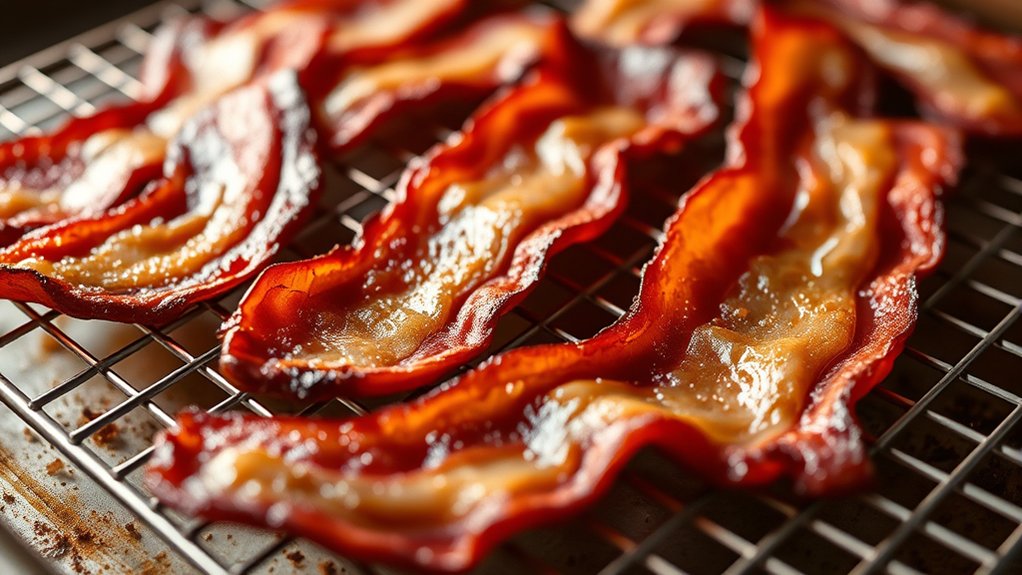
You’ll know bacon is done when it looks crisp around the edges, has a deep golden-brown color, and the fat has rendered enough that the slices no longer look pale or rubbery. Watch for even color and steady aroma development as it cooks. Your crispness expectations should match the cut: thinner slices finish sooner, while thicker ones need a little more time.
- Edges curl slightly and darken
- Centers turn opaque, not translucent
- Fat looks glossy, not white
- Slices feel firm when lifted
- The smell turns rich and savory
Use a spatula to lift one piece and check the underside if needed. If the bacon bends sharply without breaking, give it more time. If it shatters when moved, it’s likely gone too far. Pull it when it matches the texture you like, because carryover heat keeps cooking it briefly after you remove it.
How Do You Make Oven Bacon Crispy?
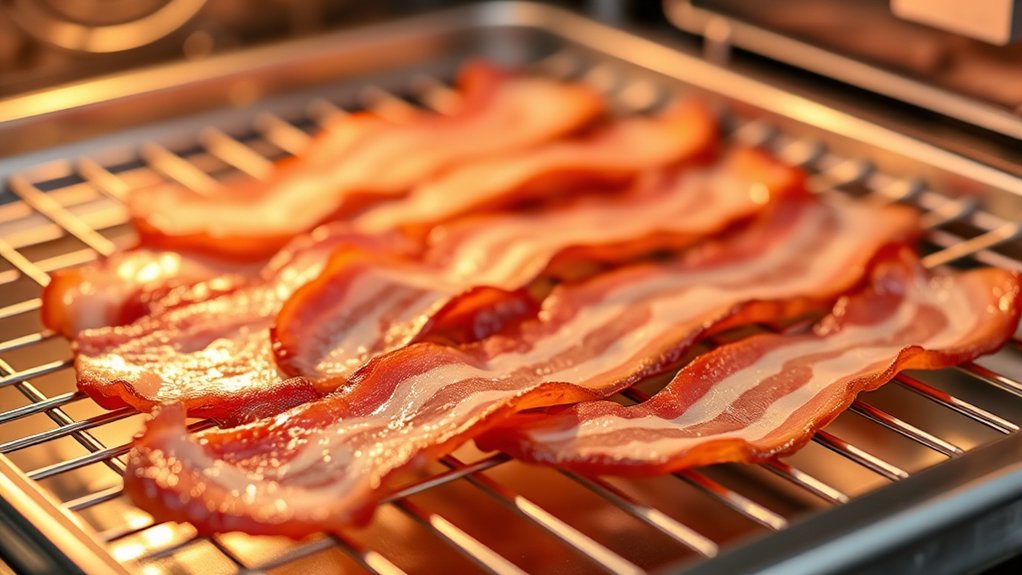
For crisp oven bacon, start with a cold oven and a single layer of slices on a rack set over a rimmed baking sheet so the fat can drip away as it renders. Set the rack in the upper-middle position, then heat the oven to 400°F.
The gradual warm-up helps the fat melt evenly and gives you a better crispy texture. Don’t overlap the slices, or they’ll steam instead of crisp. Bake until the edges brown and the centers look firm, usually 15 to 20 minutes, depending on thickness.
If you want extra crunch, keep watching during the last few minutes and pull the bacon when it’s just past your preferred doneness; it’ll crisp a bit more as it rests. Thick-cut bacon may need a few extra minutes.
You’ll know you’re close when the savory aromas grow stronger and the surface looks deeply golden.
How Do You Store and Reheat Oven-Baked Bacon?
Store cooled oven-baked bacon in an airtight container lined with paper towels, then refrigerate it for up to 4 to 5 days. To store and reheat it well, keep slices flat so they stay crisp and don’t stick together. When you’re ready to serve, warm them in a skillet over low heat, in a 350°F oven for 5 minutes, or in the microwave for 10 to 15 seconds.
Pat off any excess grease before storing. Separate layers with paper towels. Reheat only what you need. Check for crispness after heating. Add it last to sandwiches or salads.
If you want flavor variations, season the bacon before baking with black pepper, maple, or paprika, then store leftovers the same way. Use them quickly, and you’ll keep the texture and taste as close to fresh as possible.
Frequently Asked Questions
Can You Cook Bacon on a Wire Rack?
Yes, you can cook bacon on a wire rack; you’ll promote bacon crispness and better fat rendering as hot air circulates around each strip. This lets drips fall away for cleaner, evenly cooked results.
Should You Line the Pan With Foil or Parchment?
You’ll want a foil lined pan for bacon; it catches drips like a net and makes cleanup easy.
Use parchment lined pan only if your oven allows it, since parchment can brown or scorch.
Does Oven Bacon Splatter Less Than Stovetop Bacon?
Yes, oven bacon splatters less than stovetop bacon because you’re cooking it in a contained space.
In this stovetop comparison, you’ll still get some grease, but you can reduce splatter by using a rimmed pan.
Can You Bake Bacon From Frozen?
Yes, you can bake bacon from frozen, but you’ll need to separate slices first. Can you cook bacon on a wire rack? Yes; should you line pan with foil? It does oven bacon splatter less. Also, what seasonings work well?
What Seasonings Work Well on Oven Bacon?
You’ll love black pepper and maple: nearly 70% of home cooks season bacon simply, yet seasoning ideas like brown sugar, smoked paprika, cayenne, or rosemary create bold flavor pairings.
Sprinkle lightly before baking.
Conclusion
Now you know how long to cook bacon in the oven: thin slices finish fastest, thick-cut needs more time, and turkey bacon lands in the middle. Set it on a lined sheet pan, keep it in a single layer, and watch for that crisp, golden finish. When the kitchen smells rich and the fat has rendered, you’re almost there.
Cook with care, and bacon doesn’t just sizzle—it sings. Store leftovers well, reheat gently, and enjoy every bite. Mastering how long to cook bacon in the oven ensures perfect results every time.