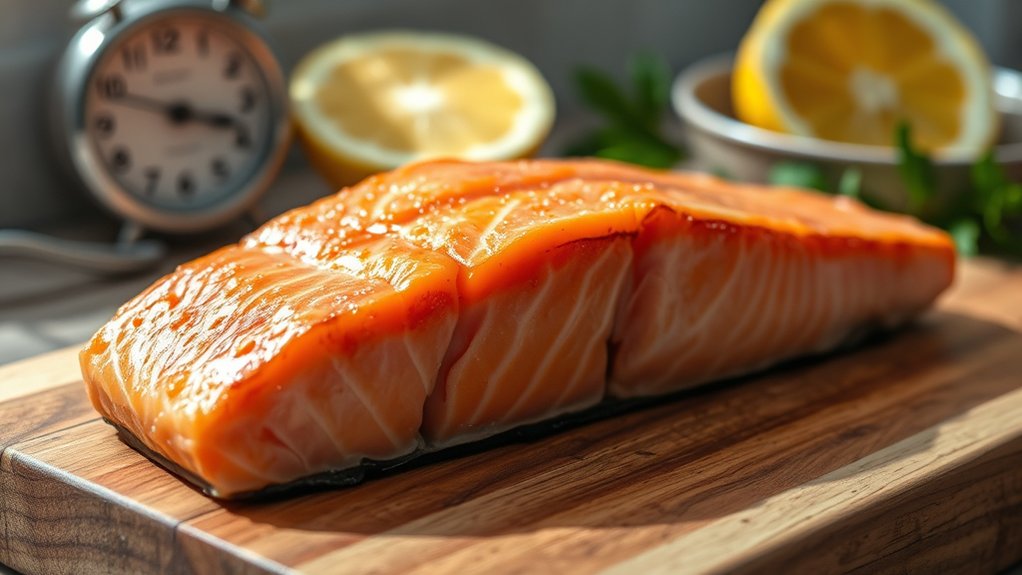
How Long to Cook Salmon in Oven
Wondering how long to cook salmon in the oven? You’ll get the best results by adjusting for thickness, oven temperature, and whether the fillet’s fresh or frozen.
A 1-inch piece usually needs about 12 to 15 minutes at 375°F, while thicker cuts may need a few minutes more. The real key is knowing when it’s just right, because a minute too long can change everything.
Key Takeaways
- Bake salmon by thickness: about 10 minutes per inch at 400°F, measured at the thickest point.
- At 375°F, a 1-inch fillet usually takes 12–15 minutes for moist, flaky results.
- At 400°F, a 1-inch fillet usually takes 12–15 minutes and browns lightly.
- Frozen salmon at 425°F takes about 15–20 minutes total, depending on thickness.
- Salmon is done when it flakes easily and reaches 125–130°F for medium or 145°F fully cooked.
How Long to Bake Salmon by Thickness
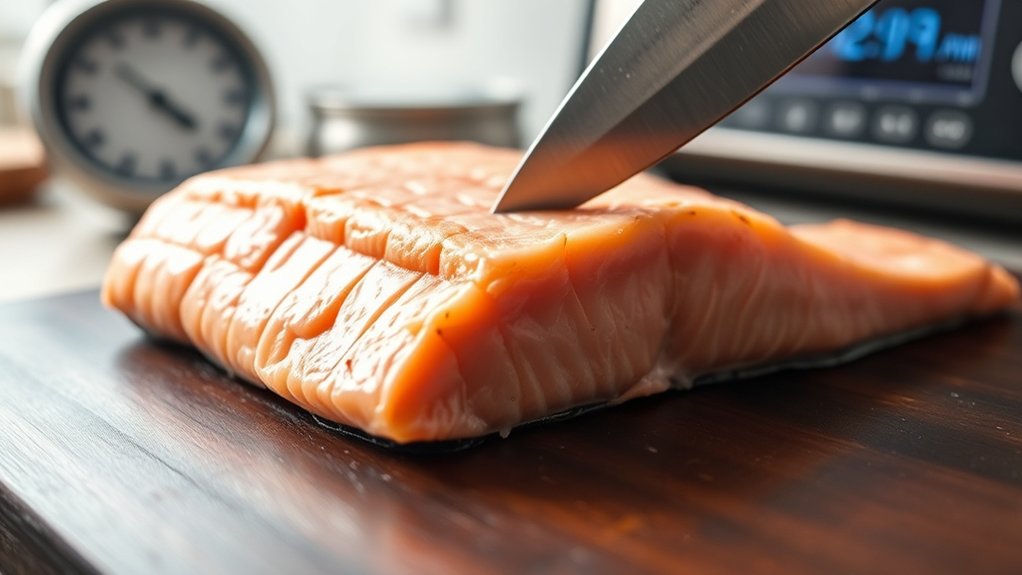
The thicker your salmon fillet, the longer it needs in the oven, and a good rule of thumb is to bake it at 400°F for about 10 minutes per inch of thickness. You can measure the thickest point with a ruler or the side of a knife, then use that number to estimate cooking times accurately.
A 1-inch fillet usually needs about 10 minutes, while a 1.5-inch piece often takes 15 minutes or a bit more. For thinner portions, check early so you don’t overcook the center. For thicker cuts, add a couple of minutes and test for doneness near the bone or center.
These tips for thickness help you match the heat to the fish, so the texture stays moist and flaky. If your fillet is uneven, tuck thin ends under to reduce overbaking. Always remember that exact cooking times can vary slightly with shape, starting temperature, and how closely your oven holds heat.
Bake Salmon at 375°F
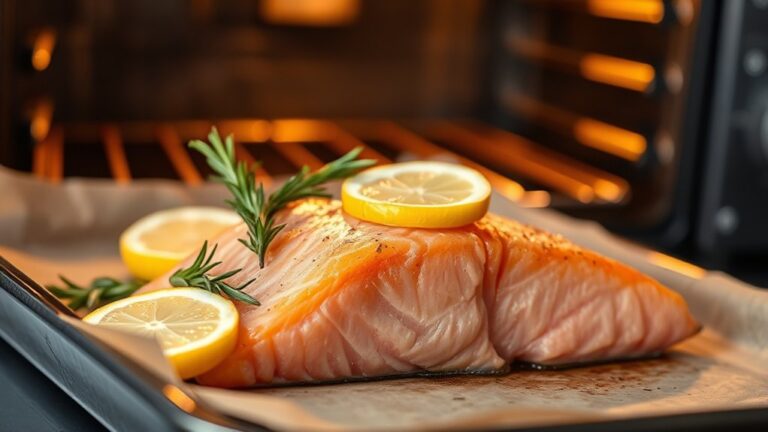
Bake salmon at 375°F when you want a slightly gentler oven temperature that still gives you moist, flaky fish. At this heat, you usually need 12 to 15 minutes for a 1-inch fillet, but thinner pieces finish sooner and thicker cuts need a few extra minutes.
Bake salmon at 375°F for a gentle roast that keeps it moist, flaky, and tender.
You should check for doneness when the center turns opaque and flakes easily with a fork. If you use skin-on salmon, place it skin-side down on a lined baking sheet so the flesh stays protected from direct oven heat.
Light seasoning, lemon, herbs, or olive oil all work well, because 375°F preserves salmon flavor without drying the surface. For the best texture, pull the fish when it’s just cooked through; carryover heat will finish the center.
If you prefer a more delicate result, tent it loosely after baking. Keep an eye on the fillet near the end, since overbaking quickly dulls both moisture and flavor.
Bake Salmon at 400°F
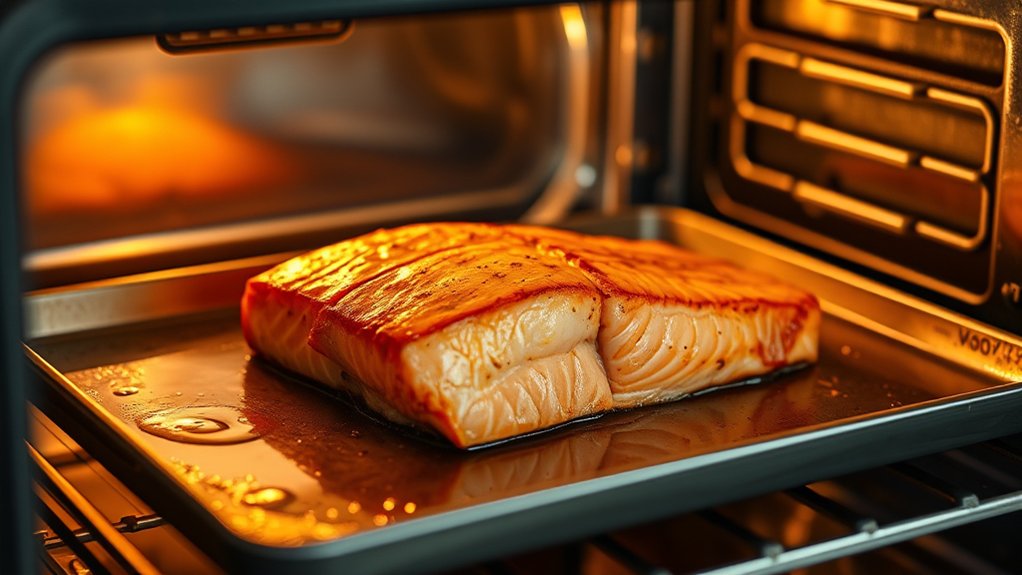
At 400°F, salmon cooks a little faster and develops a lightly browned exterior while staying tender inside. For a 1-inch fillet, you’ll usually need 12 to 15 minutes in the salmon oven, depending on thickness and starting temperature. Check for opaque flesh that flakes easily with a fork, but don’t wait until it looks dry.
If you want sharper ideas about Subtopic, this hotter setting works well when you need dinner fast without losing moisture. Brush the fillet with oil, season it well, and place it on a lined sheet pan for even heat.
- You’ll smell rich, savory aroma quickly.
- You’ll get crisp edges with juicy centers.
- You’ll feel confident serving a polished meal.
- You’ll avoid bland, overcooked results.
Pull it from the oven at 125°F to 130°F for medium doneness, then let it rest briefly so carryover heat finishes the job.
Bake Frozen Salmon
If your salmon is still frozen, you can still get it into the oven without thawing first. Set your oven to 425°F and line a baking sheet with parchment for easy cleanup. Place the frozen salmon skin-side down, brush it with oil, and season the top.
Frozen salmon can go straight into a hot oven—no thawing needed.
Bake it for 5 to 7 minutes to start, then remove the tray and add salt, pepper, herbs, or lemon if you like. Return it to the oven and keep baking until the thickest part reaches 145°F. For most fillets, that means 15 to 20 minutes total, depending on thickness.
Use a thermometer for accuracy, because frozen salmon cooks unevenly at first. Keep oven safety in mind: handle the hot pan with mitts, and don’t crowd the tray.
You’ll get moist, flaky fish with a clean flavor, even straight from the freezer, when you cook it patiently and monitor doneness closely.
Bake Salmon in Foil
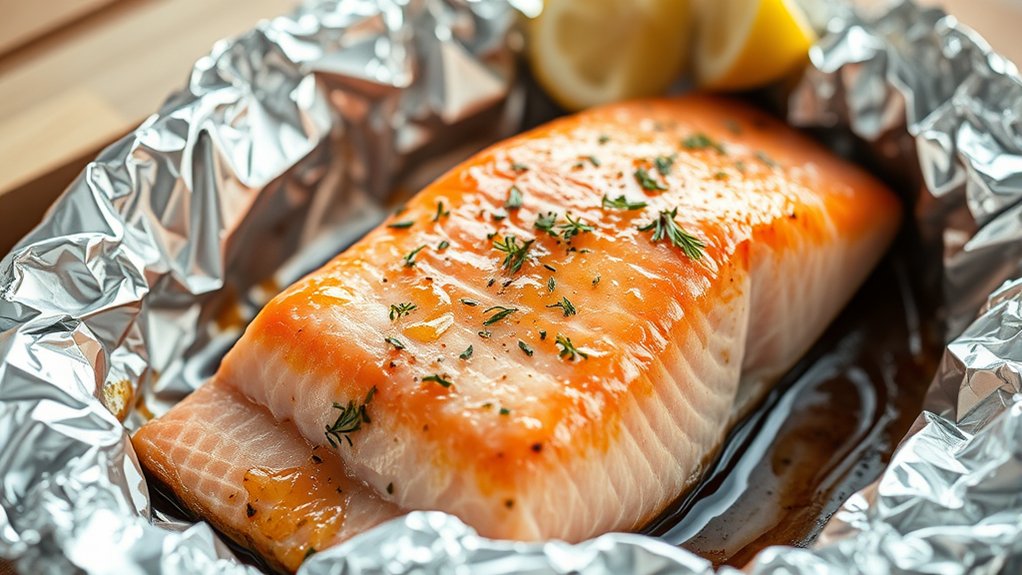
For a simple, moist result, you can cook salmon in foil at 400°F on a lined baking sheet. Place each fillet on a sheet of foil, then add a little olive oil, salt, pepper, and lemon butter for clean, bright flavor.
Fold the foil packets tightly, leaving a little air space so steam can circulate, and crimp the edges well to keep juices inside. This method helps the salmon cook evenly and keeps cleanup easy, so you can focus on the meal, not the mess.
You’ll feel confident opening a neat packet.
You’ll love the fragrant burst of citrus.
You’ll appreciate the tender, silky texture.
You’ll enjoy dinner that feels effortless.
Check for Doneness
How can you tell when salmon is done? Start by checking doneness at the thickest part with a fork: the flesh should separate into moist flakes, not look translucent in the center.
Check the thickest part with a fork; salmon is done when it flakes and loses its translucent center.
If you use a thermometer, aim for 125°F to 130°F for medium, or 145°F if you prefer it fully cooked. Watch oven timing closely, but rely on visual cues and temperature rather than minutes alone, since fillet thickness and oven performance vary.
The surface should appear opaque and slightly glossy, and the center should still feel tender when pressed gently. If the fish resists flaking, give it a brief check again after a minute or two.
Pull it from the oven when it’s just shy of your target, because carryover heat continues cooking it. This approach helps you check doneness accurately and match the result to your preferred texture every time.
Prevent Dry Salmon
To keep salmon moist in the oven, start with even, well-oiled fillets and don’t overcook them. Pat the surface dry, then brush it with olive oil or melted butter so heat moves gently and the flesh seals before it loses moisture.
Season with salt, pepper, dry thyme, and lemon zest for flavor that feels bright, not heavy. Bake at a moderate temperature, usually 375°F to 400°F, and pull the fish when it flakes easily but still looks slightly translucent at the center. Rest it for a few minutes so juices settle.
You’ll feel relieved when the flesh stays tender.
You’ll avoid the disappointment of chalky, stringy salmon.
You’ll taste clean, rich flavor instead of dryness.
You’ll serve a fillet that looks glossy and inviting.
Frequently Asked Questions
Should Salmon Skin Be on or off Before Baking?
You should leave salmon skin on before baking; it protects the flesh, helps retain moisture, and makes handling easier.
If you don’t want it, you can remove it after cooking, but oven skin on works best.
What Oven Rack Position Is Best for Baking Salmon?
You’d think the lowest rack wins, but the middle oven rack usually works best for salmon placement. You’ll get even heat, tender flesh, and less scorching.
Keep it centered for reliable baking results.
Can I Bake Salmon With Marinades or Sauces?
Yes, you can bake salmon with marinades or sauces; you’ll just watch sauce compatibility, choose the right fish type, keep skin on baking, set rack position carefully, and allow resting time before serving.
Which Salmon Type Tastes Best When Oven-Baked?
King salmon usually tastes best when oven-baked because you get rich flavor and buttery salmon texture. You’ll keep it moist at a moderate baking temperature, while sockeye and coho cook leaner and firmer.
Should Salmon Rest After Coming Out of the Oven?
Yes, you should rest salmon after it comes out of the oven. Resting timing matters: let it sit 3 to 5 minutes; your resting methods can be simple, and you’ll keep juices from fleeing like a tidal wave.
Conclusion
Now you know how long to cook salmon in the oven, so you can skip the guesswork and serve it at its best. Match the time to the thickness of the fillet, use 375°F for gentler baking or 400°F for faster results, and always check the center with a thermometer.
Whether you bake it fresh, frozen, or wrapped in foil, you’ll keep the salmon moist and flaky—like a culinary knight armed with a meat thermometer. Let it rest after cooking, and you’ll nail it every time.
With these tips, mastering how long to cook salmon in the oven becomes simple and foolproof.