How to Cook Shrimp in the Oven
The first time you cook shrimp in the oven, you might accidentally overcook them. Shrimp can go from tender to rubbery in under two minutes, like a simple plan going sideways.
You can avoid that by setting the oven to 400°F, drying the shrimp well, and giving them a light seasoning before they bake. The timing is short, the signs are clear, and one small adjustment can make all the difference—especially when you want them done just right.
Key Takeaways
- Preheat the oven to 400°F and place the rack in the center for even cooking.
- Rinse shrimp, pat dry, and season with olive oil, salt, pepper, garlic powder, and paprika.
- Spread shrimp in a single layer on a baking sheet to ensure they cook evenly.
- Bake medium shrimp for 8 to 10 minutes, checking sooner for smaller shrimp and later for larger ones.
- Remove shrimp when pink, opaque, and slightly curled, then rest 1 minute before serving.
How Long to Bake Shrimp in the Oven
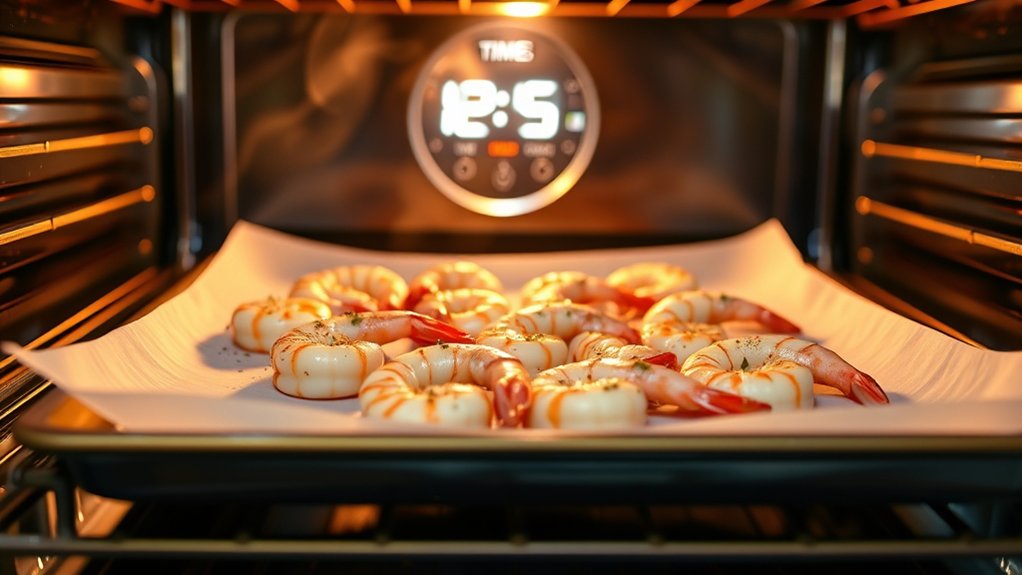
How long should you bake shrimp in the oven? You should bake standard medium shrimp for 8 to 10 minutes, just until they turn pink, opaque, and slightly curled. If you’re working with large shrimp, check them at 10 minutes; extra-large shrimp may need 11 to 12 minutes.
Bake medium shrimp for 8 to 10 minutes, until pink, opaque, and slightly curled.
Don’t let size guesswork become an irrelevant distraction from the goal: even doneness. You can use an instant-read thermometer, but timing and appearance usually give you enough guidance. Remove the shrimp as soon as they’re done, because they’ll keep cooking from residual heat.
Avoid any unrelated technique that suggests overbaking for firmness; that only makes shrimp tough and dry. For best results, arrange the shrimp in a single layer so they cook evenly, and test one piece before serving the whole batch.
If the center still looks translucent, give them one more minute, then check again quickly.
Set the Right Oven Temperature
Set your oven to 400°F for shrimp that cook quickly and stay tender. Preheat it fully before baking so the shrimp start cooking immediately and evenly. This step helps you avoid undercooked centers and overdone edges.
Optimal Oven Heat
For the best baked shrimp, preheat your oven to 400°F so the shrimp cook quickly and stay tender. This optimal heat gives you control and helps you follow timing tips without drying the shrimp.
Keep the temperature steady, and avoid lowering it mid-bake, since uneven heat can toughen the texture.
- Use 400°F for standard medium shrimp.
- Choose 425°F only when a recipe calls for faster browning.
- Reduce heat to 375°F if your shrimp are very large.
- Check doneness early to keep the center juicy.
You’ll know the oven heat is right when the shrimp turn opaque and pink with curled shapes. At that point, remove them immediately and serve.
Preheat Before Baking
Before you add the shrimp, preheat your oven to the target temperature so the pan goes in hot and the shrimp start cooking immediately. Set the rack in the center, then wait for the full preheat cycle, not just the indicator light.
You should look for clear preheat cues, such as the thermostat signal or steady heat from the vent, before you slide in the shrimp. If your oven has uneven heating, give it an extra five minutes after the oven humming settles.
A properly heated oven helps the shrimp cook quickly, stay tender, and develop light browning without drying out. Don’t rush this step; accurate temperature control matters more than a few saved minutes.
Prep Shrimp for Baking
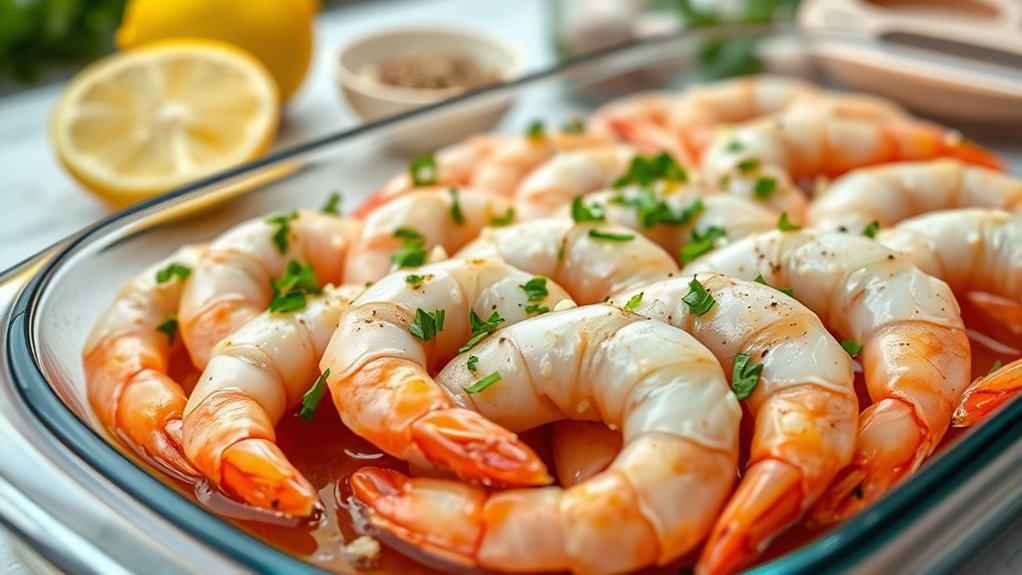
Rinse the shrimp under cold water, then pat them dry with paper towels so they bake evenly instead of steaming. While preparing shrimp, inspect each piece and discard any with a strong odor or damaged shell. Keep raw shrimp separate from ready-to-eat foods to support kitchen safety and prevent cross-contamination.
If the shrimp are frozen, thaw them in the refrigerator or under cold running water, not on the counter. Use a clean cutting board and trim any sharp tail tips if needed.
Remove shells if you want easier serving. Devein shrimp with a small knife or clean tool. Sort shrimp by size for even baking. Place them in a single layer on your baking sheet.
Handle the shrimp gently so you don’t tear the flesh. Once they’re clean, dry, and organized, they’re ready for the next step in the baking process.
Season Shrimp for Big Flavor
Now that your shrimp are clean and dry, season them right before baking so the flavors stick well. For reliable shrimp prep, toss them in a bowl with olive oil first, then add salt, black pepper, garlic powder, and paprika. This simple base gives you balanced flavor without masking the shrimp.
If you want bolder seasoning ideas, add lemon zest, crushed red pepper, cumin, or dried herbs like parsley or oregano. Use just enough oil to coat each piece evenly; excess oil can dilute the seasoning.
Mix gently so you don’t break the shrimp, and keep the coating light and even. Taste your seasoning blend before adding the shrimp if you’re unsure about salt levels. You can also combine a little melted butter with garlic and herbs for richer flavor.
Once seasoned, spread the shrimp in a single layer so every piece gets the same attention and stays ready for the oven.
Bake Shrimp Until Just Done
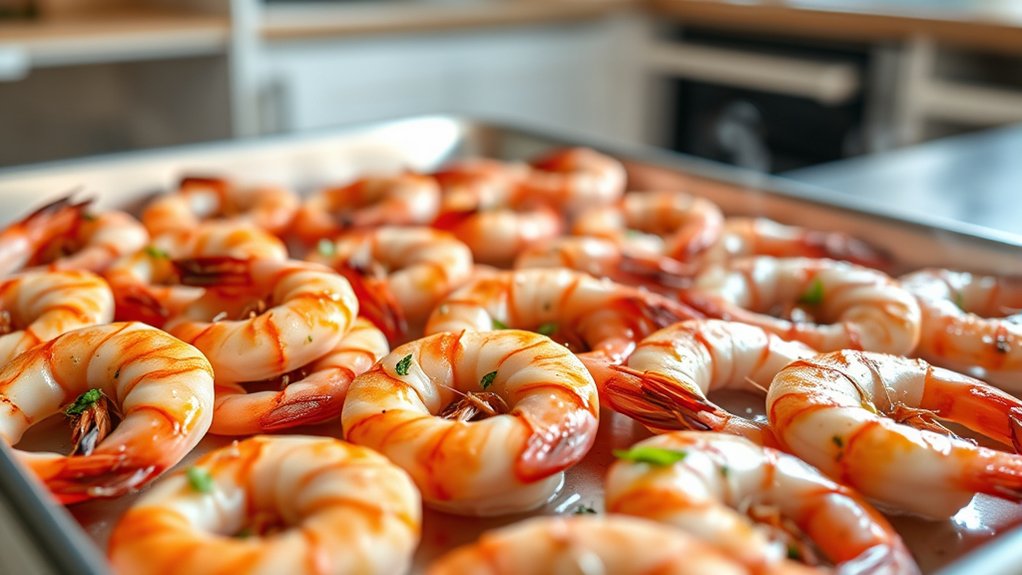
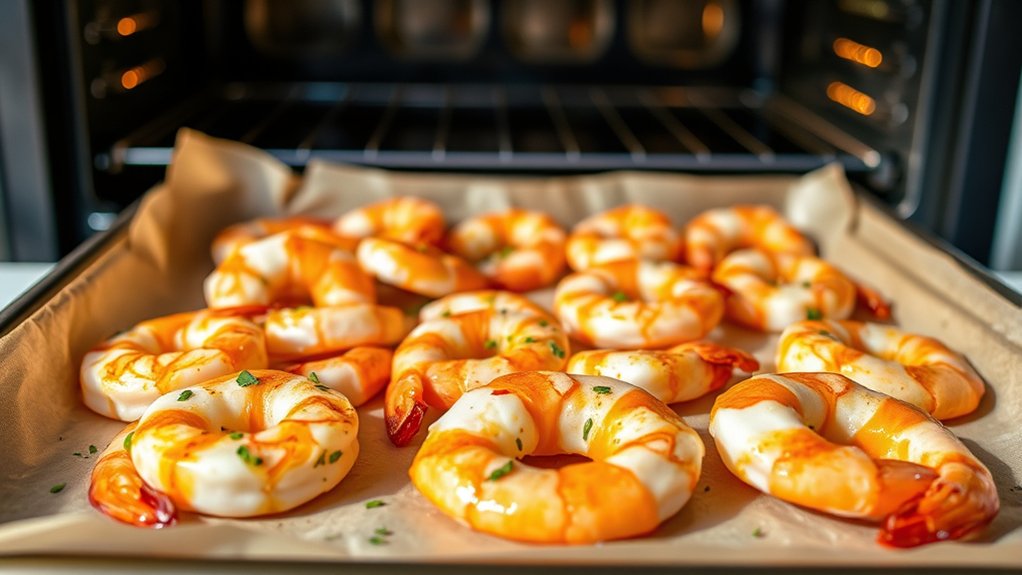
Slide the seasoned shrimp onto a rimmed baking sheet and bake them in a hot oven, usually 400°F to 425°F, until they turn pink, opaque, and slightly firm. You’ll get the best results when you watch them closely, because shrimp cook fast and overbake easily.
Bake shrimp hot and fast until pink and opaque, then pull them before they overcook.
For reliable tips for shrimp texture, pull the tray as soon as the thickest pieces curl into loose C shapes.
- Check at 6 minutes, then every minute.
- Rotate the pan if your oven heats unevenly.
- Use oven mitts and keep the rack stable for oven safety.
- Rest the shrimp 1 minute before serving.
If you leave them in too long, they’ll turn rubbery and dry. A quick visual check beats guessing, and an instant-read thermometer can help if you want extra precision.
Keep the baking sheet in a single layer so the heat reaches each shrimp evenly.
Try Easy Shrimp Flavor Variations
Once you’ve mastered the basic bake, you can switch up the flavor with a few easy seasoning blends. For garlic-herb easy shrimp, toss the shrimp with olive oil, minced garlic, parsley, and a pinch of salt before baking.
If you want warm flavor variations, add smoked paprika, cumin, and black pepper for a subtle smoky finish. For a bright option, mix lemon zest, lemon juice, and dill, then coat the shrimp evenly so every piece tastes balanced.
You can also try a chili-lime blend with chili powder, lime juice, and a little honey for gentle heat and acidity. Keep the seasoning light so you don’t mask the shrimp’s natural sweetness.
Use about one tablespoon of oil and one to two teaspoons of dry spices per pound. After seasoning, bake until the shrimp turn opaque and curl slightly.
Taste the result, then adjust the seasoning next time for your preferred flavor profile.
Serve Baked Shrimp With Simple Sides
What should you serve with oven-baked shrimp? You should choose simple side dishes that let the shrimp stay the focus while adding balance, texture, and color. Keep portions modest and flavors clean, so the meal feels complete without overpowering the seafood.
Pair your shrimp with starches, vegetables, and bright sauce pairings that complement garlic, lemon, or paprika seasoning.
- Steamed rice for a neutral base
- Roasted asparagus for crisp, fresh contrast
- Garlic bread for soaking up pan juices
- Mixed greens with lemon vinaigrette
You can also serve couscous, quinoa, or a small pasta salad if you want a heartier plate. For sauce pairings, use lemon butter, tartar sauce, cocktail sauce, or a light herb aioli. These options add moisture and flavor while keeping the dish easy to assemble.
Focus on balance, and your baked shrimp meal will feel polished and satisfying.
Frequently Asked Questions
Can I Bake Frozen Shrimp Without Thawing First?
Yes, you can bake frozen shrimp without thawing first. You’ll need slightly longer oven timing, and frozen thawing isn’t required.
Pat them dry, season, and bake until they’re opaque and firm.
Should I Use Peeled or Shell-On Shrimp?
Use peeled shrimp for convenience; choose shell-on for juicier results. If you’re serving tacos, peeled shrimp saves time, while shell-on adds flavor.
You’ll peel later, but shell-on protects moisture during baking.
How Do I Know if Shrimp Are Overcooked?
You’ll spot overcooking signs when shrimp turn opaque, curl tightly, and feel rubbery.
Watch for texture changes from tender to firm, then tough. Remove them as soon as they’re pink and just opaque.
Can I Bake Shrimp on Parchment Paper?
Yes, you can bake shrimp on parchment paper. You’ll want to place it on oven safe trays, then spread shrimp in a single layer. This helps you cook evenly and prevents sticking.
What Size Shrimp Works Best for Oven Baking?
Large or extra-large shrimp work best for oven baking because you’ll get juicy texture without overcooking. For size selection, choose 16/20 or 21/25 count.
Match flavor pairings to garlic, lemon, paprika, or herbs.
Conclusion
Now you’ve got the power to turn plain shrimp into a sizzling, oven-baked showstopper in minutes. Set your oven, season boldly, and bake just until the shrimp turn pink and perfectly tender—any longer, and you’ll miss that sweet spot.
Keep an eye on them, pull them out fast, and finish with lemon butter or your favorite sauce. With this method, you can make shrimp so good, they’ll vanish from the plate in a flash.
Mastering how to cook shrimp in the oven will elevate your seafood game and impress everyone at the table.