How to Bake Crab Legs in Oven
To bake crab legs in the oven, you’ll want to start with thawed legs and a hot oven, but the real trick is keeping them tender instead of dry. You arrange them in a single layer, add a little moisture, and seal the pan so steam works its magic.
With the right timing, the shells turn bright and the meat becomes sweet, juicy, and ready for a buttery finish. This method ensures your crab legs come out perfectly every time, making for a delicious and satisfying meal.
Key Takeaways
- Use already cooked, frozen crab legs like king, snow, or Dungeness; thaw overnight in the refrigerator.
- Preheat oven to 375°F, arrange legs in a single layer, and add a splash of water or melted butter.
- Cover tightly with foil and bake until heated through, usually 15–20 minutes for thawed legs or longer for frozen.
- Crab is done when shells are bright red/orange and meat is opaque, plump, and flakes easily.
- Serve on a warmed platter with melted butter, lemon wedges, crackers, and seafood picks.
Best Crab Legs for Baking
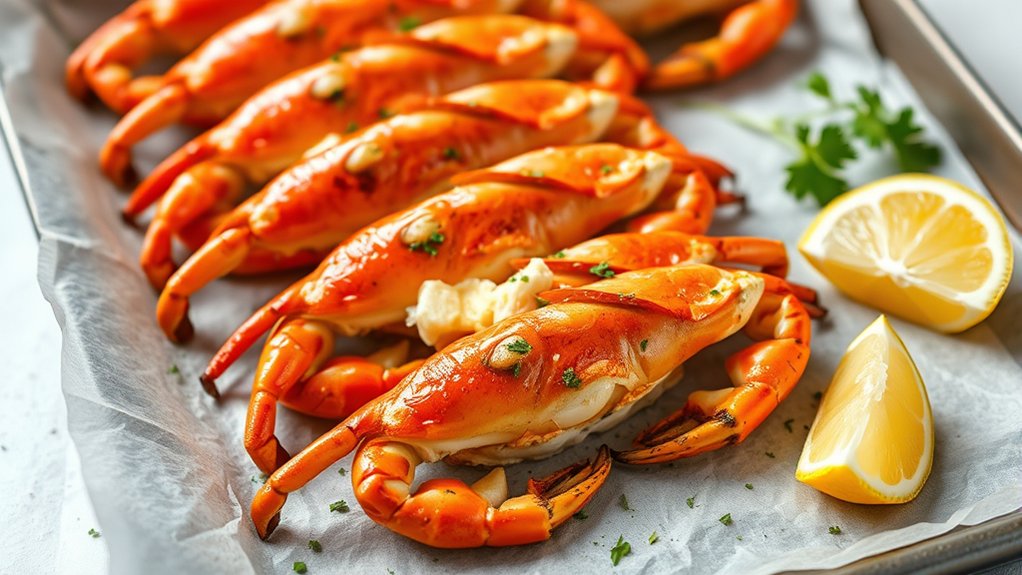
For the best results, start with king crab, snow crab, or Dungeness crab legs that are already cooked and frozen, since they bake up juicy, tender, and easy to season. You’ll get the best crab flavor from legs with intact shells, a clean ocean scent, and plenty of meat in each section.
Choose king crab when you want thick, meaty pieces; pick snow crab for sweet, delicate bites; or go with Dungeness for a softer texture and rich taste. Look for clusters that feel solid, not icy or freezer-burned, because quality matters when you’re baking legs.
If you’re serving a crowd, match the crab to your menu: king crab feels luxurious, snow crab stays light, and Dungeness brings a classic coastal flavor. Once you choose well, oven heat does the rest, turning simple crab legs into a fragrant, buttery dish.
How to Thaw and Prep Crab Legs
Thaw your crab legs in the refrigerator overnight so they heat evenly and stay tender, then give them a quick rinse under cold water if there’s any ice or salt on the shells. Pat them dry with paper towels so the seasoning sticks better and the shell handles cleanly.
These tips for thawing crab legs help keep the meat sweet, juicy, and ready for the oven. Next, inspect each cluster for broken shells or stray ice crystals, and trim away any sharp bits that could snag your hands.
If the legs are especially thick, separate them at the joints to make prepping crab legs easier and more even. Place them in a single layer on a tray or board while you work. Keep everything cold until you’re ready to cook, and don’t let the crab sit out too long.
Proper thawing and prep make the final bite taste fresh, delicate, and naturally briny.
How to Bake Crab Legs in the Oven
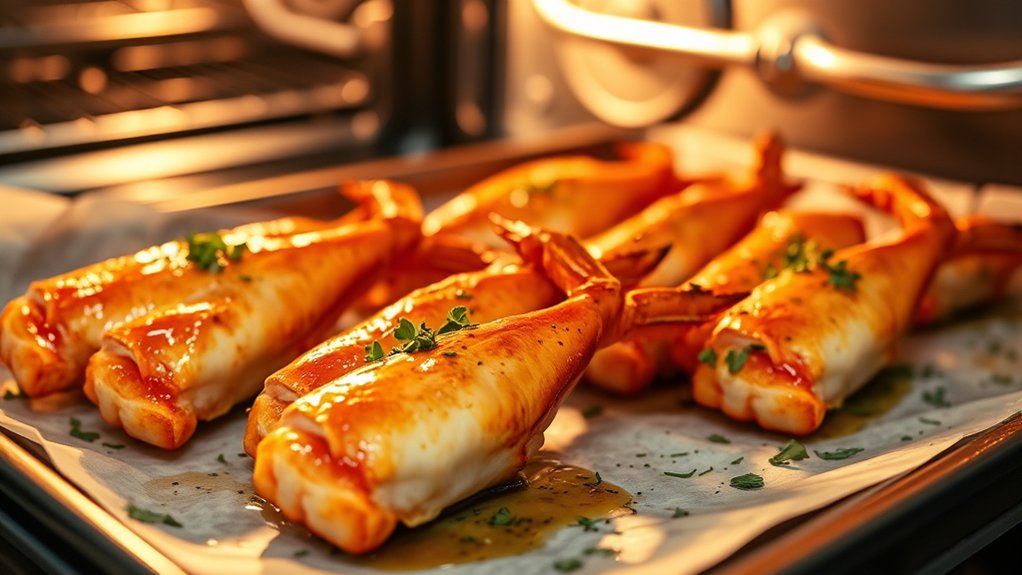
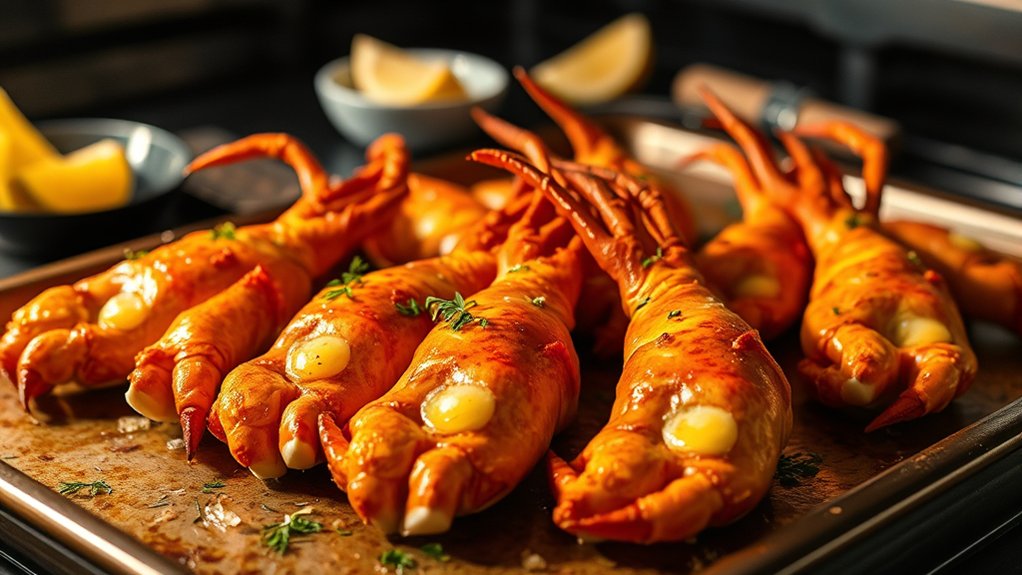
Preheat your oven to 375°F and arrange the crab legs in a single layer on a rimmed baking sheet or shallow baking dish. Splash a little water or melted butter over them, then cover the pan tightly with foil to trap steam and keep the meat tender.
Bake until the legs turn hot and fragrant, and the shells feel warm to the touch. If you want extra flavor, tuck in lemon slices, garlic, or herbs before sealing the foil.
When you open the packet, watch for escaping steam. Use tongs to transfer the legs to a platter, then crack the shells and serve with drawn butter, lemon, or a light seasoning.
Baked crab offers lean protein and appealing crab leg nutrition, so it fits a satisfying meal without heaviness. For seafood safety, don’t leave cooked crab at room temperature too long, and discard any legs that smell off or seem slimy.
Best Oven Temps for Crab Legs
When you’re deciding how hot to set the oven, 350°F to 375°F works best for most crab legs, giving you a gentle heat that warms the meat through without drying it out. At this range, the shells stay glossy and the meat keeps its sweet, briny aroma.
If you’re working with frozen legs, stay near 375°F; if they’re already thawed, 350°F is usually enough. These temperatures follow the best practices for even heating and help preserve that tender, buttery texture you want on the plate.
Keep the legs covered with foil or placed in a baking dish with a little moisture, and avoid high heat, which can make them stringy. You don’t need aggressive drying techniques here; crab legs do better with a humid bake.
For the most appealing finish, heat them just long enough to feel hot, fragrant, and ready to serve with melted butter.
How to Tell Crab Legs Are Done
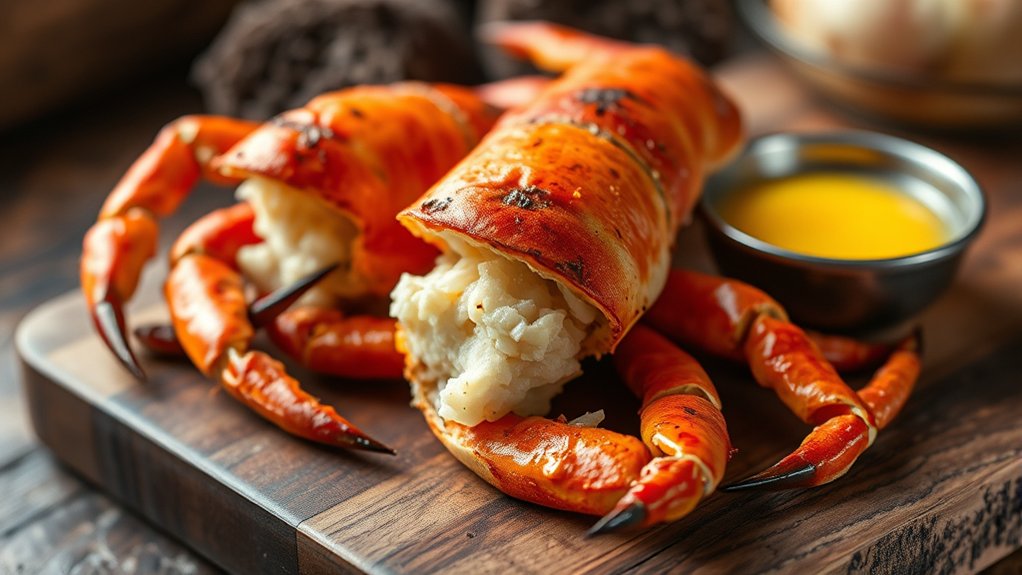
You’ll know your crab legs are done when the shells turn a bright, vivid red and the meat looks opaque, plump, and flaky instead of translucent. Gently check the texture too. When the meat pulls away easily and feels tender but firm, it’s ready to eat.
For the surest result, use a thermometer and look for an internal temperature of 145°F.
Color And Texture Changes
A perfectly baked crab leg turns bright red or orange and the flesh inside becomes opaque and firm, with a tender, juicy texture that flakes easily from the shell. You’ll notice the shell looks glossy, not dull, and the meat pulls away in clean, meaty strands when you split it open.
Watch for visual cues like steady color change and a plump, springy feel, because these show the crab’s done without drying out. For a quick two word discussion idea 1, think “color shift”; for a quick two word discussion idea 2, think “firm texture.”
When you press the meat lightly with a fork, it should resist a little, then separate easily. If it still looks translucent or soft, give it a bit more time in the oven.
Internal Temperature Check
Use a food thermometer to check the thickest part of the crab leg, and pull it from the oven when it reaches 145°F. That reading tells you the meat is hot, tender, and safe to enjoy.
If you don’t have a thermometer, press the shell gently; the meat should feel firm and release fragrant steam. Still, the thermometer wins in any techniques comparison because it removes guesswork and protects texture.
Your equipment needs stay simple: a probe thermometer, oven mitts, and tongs. Check one leg, then another if they’re large or unevenly heated.
When the internal temperature is right, the sweet meat will glisten and separate easily from the shell, so you can serve it with melted butter and lemon right away.
Butter and Seasoning Ideas
You can brush your crab legs with a rich garlic butter blend to add a warm, savory finish that seeps into every crevice. If you want a little heat, sprinkle on Cajun spice mix before baking so the shells perfume the meat with bold, smoky flavor.
For a bright finish, squeeze on lemon and scatter fresh herbs right before serving to lift the sweetness of the crab.
Garlic Butter Blend
Whisk melted butter with minced garlic, a pinch of salt, black pepper, and a squeeze of lemon for a simple garlic butter blend that soaks into crab legs beautifully. As you stir, the garlic aroma blooms and the butter texture turns silky and glossy, ready to cling to every shell crack.
Brush the mixture generously over the crab legs before baking, then let a little pool in the pan so the meat stays moist. You can also tuck in chopped parsley for a fresh finish.
Keep the seasoning balanced; you want rich, savory flavor without masking the crab’s sweetness. If you prefer extra brightness, add a few drops more lemon right before serving, then spoon the warm butter over each cluster.
Cajun Spice Mix
Cajun spice gives baked crab legs a lively, savory kick, and it works best when you stir it into melted butter with a little paprika, garlic powder, onion powder, cayenne, and black pepper. You can brush this bold mix over the shells before baking so the heat seeps into every crevice.
Keep the coating even, but don’t drown the meat; you want a glossy finish, not a greasy one. If you like extra depth, add a pinch of thyme or a touch of smoked paprika for a richer spice pairing.
The aroma turns buttery and warm, almost like cajun popcorn, while the crab stays sweet and tender. Taste as you go so you can balance heat, salt, and savoriness exactly right.
Lemon Herb Finish
For a brighter finish, stir melted butter with lemon zest, a squeeze of juice, minced garlic, chopped parsley, and a little dill or chives if you want extra freshness. Brush the mixture over your hot crab legs right after baking so the aroma blooms and the meat stays glossy.
Add a pinch of black pepper or flaky salt if you like a sharper edge. If you want a lighter coating, whisk in a teaspoon of herb oil and drizzle it over the shells before serving. The citrus lifts the sweetness of the crab, while the herbs add a clean, garden-fresh note.
Serve with extra lemon wedges, and let each bite taste bright, buttery, and carefully seasoned.
How to Serve Crab Legs
Once the crab legs come out of the oven, serve them right away while they’re hot and fragrant. Arrange them on a warmed platter so the shells stay steamy and easy to handle.
If you’re hosting, give everyone sturdy crackers, seafood picks, and plenty of napkins before you bring the tray to the table. Good crab legs etiquette means you crack, pull, and dip neatly, keeping the table tidy and the focus on the sweet meat.
Offer small bowls of dipping sauces like melted butter, lemon-garlic butter, or a bright herb aioli so each bite tastes richer. You can split the shells slightly before serving to make the meat easier to remove, but leave enough shell for that classic presentation.
Serve with lemon wedges for a fresh squeeze, and remind everyone to work slowly so they enjoy every tender, juicy bite.
Easy Side Dishes for Crab Legs
After you set out the crab legs with warm butter and lemon wedges, round out the meal with a few easy side dishes that won’t overpower the sweet, delicate meat. Crisp steamed asparagus, roasted baby potatoes, or a simple green salad add color and balance.
Round out crab legs with crisp asparagus, roasted baby potatoes, or a simple green salad for balance.
Toss the salad with cucumbers, cherry tomatoes, and a light vinaigrette so you keep the plate fresh and bright. If you want something comforting, serve garlic bread or buttered corn on the cob, but keep seasonings mild.
These sides also help you highlight crab leg nutrition, since crab offers lean protein and pairs well with vegetables. For budgeting tips, choose seasonal produce, pantry staples, and one starchy side instead of several expensive dishes.
You can also make a quick rice pilaf with herbs for an affordable base. Keep portions modest, and let the crab stay the star while the sides support each savory, satisfying bite.
How to Store and Reheat Leftovers
To keep leftover crab legs tender and sweet, refrigerate them as soon as they cool, then seal them in an airtight container or wrap them tightly in foil and plastic wrap. For best leftover storage, place them on the coldest shelf and enjoy them within two days so the meat stays juicy and clean-tasting.
When you’re ready, choose gentle reheating methods that warm the crab without drying it out. Steam the legs for 4 to 5 minutes, or bake them at 350°F in a covered dish with a splash of water or melted butter. You can also microwave them in short bursts, but cover them and check often.
Reheat just until they’re hot, fragrant, and easy to crack. Finish with lemon, butter, or a pinch of Old Bay, and you’ll bring back that sweet, ocean-fresh flavor with almost no effort.
Frequently Asked Questions
Can I Bake Crab Legs Straight From Frozen?
Yes, you can bake crab legs straight from frozen. You’ll need to add a few extra minutes, cover them with foil, and brush with butter so they steam, heat evenly, and taste tender.
Do I Need to Crack Crab Legs Before Baking?
No, you don’t need to crack crab legs before baking; let the oven do the heavy lifting. For easier crab cracking after baking, score shells lightly.
Keep oven timing tight, so the meat stays tender and sweet.
Should I Rinse Crab Legs Before Cooking?
Yes, you should rinse crab legs briefly under cold water to remove surface salt and debris. Don’t soak them; pat them dry, then cook soon after for better freshness timing and sweeter flavor.
Can I Use Aluminum Foil for Baking Crab Legs?
Yes, you can use aluminum foil for baking crab legs. You’ll get easy cleanup, foil options for steaming or sealing in butter, and better texture preservation.
This keeps the meat tender, juicy, and flavorful.
How Long Do Crab Legs Stay Fresh in the Fridge?
You’ve got a tiny freshness timeline: cooked crab legs stay fresh in your fridge 3 to 4 days.
Keep them sealed, chilled, and away from odors with smart storage tips, so they’re delicious, not disastrous.
Conclusion
Now you’ve got the basics for baking crab legs in the oven: thaw them, add a little moisture, wrap them tightly, and bake at 375°F until they’re hot, bright red, and flaky.
For example, a pound of thawed legs might go from freezer to table in under 15 minutes, perfect with melted garlic butter and lemon. Serve them right away, and you’ll have tender, sweet crab that feels restaurant-worthy at home.
With these simple steps, baking crab legs in the oven ensures a delicious, easy meal that highlights the crab’s natural flavor.