How Long Chicken Thighs in Oven
You might not know that chicken thighs stay juicier at 400°F than at lower baking temps. When figuring out how long chicken thighs in oven take, temperature plays a key role in the final texture and flavor.
For bone-in, skin-on thighs, you’ll usually need 35 to 45 minutes; boneless thighs often finish in 20 to 30 minutes. You should use a thermometer and pull them at 165°F in the thickest part, then let them rest.
The right timing gets easier once you know what to watch for…
Key Takeaways
- Bone-in, skin-on chicken thighs usually bake 35 to 45 minutes at 400°F.
- Boneless chicken thighs usually bake 20 to 30 minutes at 400°F.
- Check doneness with a thermometer in the thickest part; aim for 165°F away from the bone.
- Smaller thighs may finish sooner, while larger thighs need a few extra minutes.
- Rest chicken thighs 5 to 10 minutes after baking to keep them juicy.
How Long to Bake Chicken Thighs
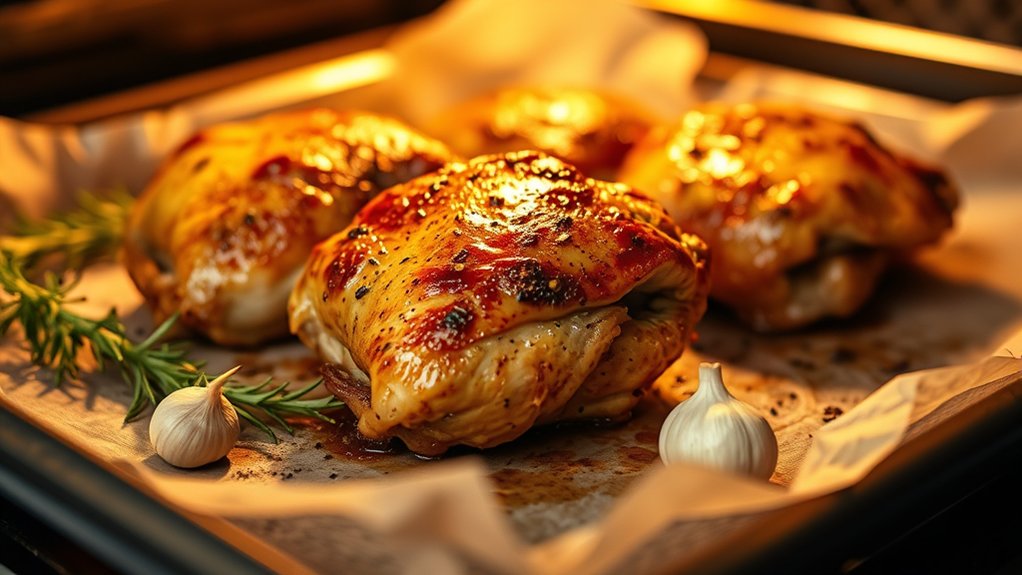
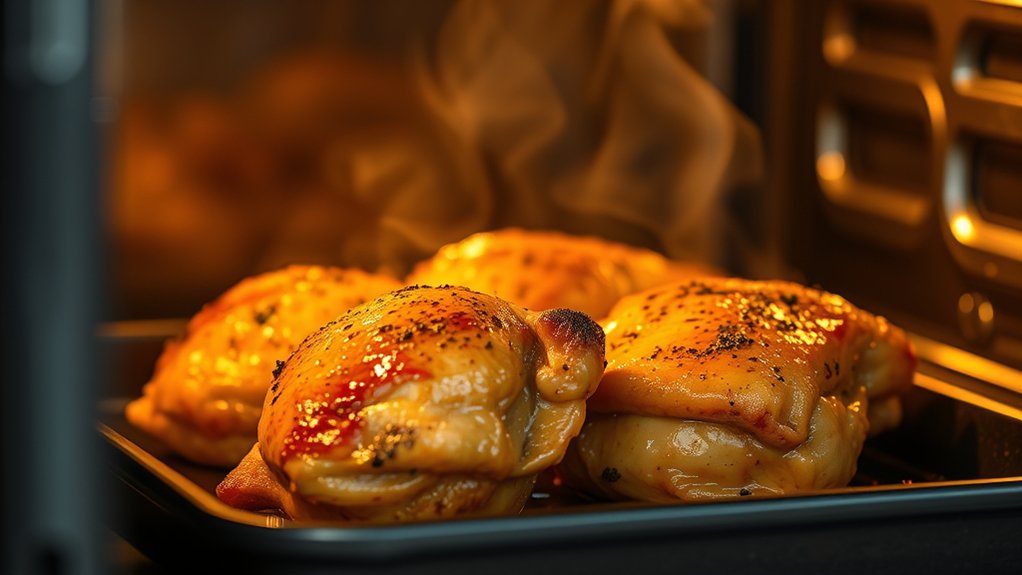
How long should you bake chicken thighs? Bake bone-in, skin-on thighs for 35 to 45 minutes, and boneless thighs for 20 to 30 minutes. Check doneness with a thermometer, not guesswork; you want a safe internal temp of 165°F in the thickest part, away from bone.
Bake until chicken thighs reach 165°F in the thickest part for safe, juicy results.
If your thighs are small, start checking early. If they’re large, give them a few extra minutes. Let the chicken rest for 5 to 10 minutes after baking so the juices settle and the meat stays moist.
For tips for crisp skin, pat the skin dry before baking and avoid overcrowding the pan, since trapped steam softens it. You can also finish by broiling briefly, watching closely so the skin doesn’t burn.
When the juices run clear and the thermometer reads 165°F, your chicken thighs are ready to serve.
Best Oven Temperature for Chicken Thighs
For the best balance of juicy meat and crisp skin, bake chicken thighs at 400°F. You’ll get steady heat that cooks the meat through without drying it out, and the skin browns well before the juices escape.
If your oven runs hot, check early; if it runs cool, give the thighs a few extra minutes. Keep the rack in the center so the heat circulates evenly and you avoid unnecessary overlap in the pan, which can trap steam and soften the surface.
Choose one temperature and stick with it instead of adjusting constantly. That makes timing simpler, supports kitchen decluttering by reducing extra tools and guesswork, and helps you repeat results. Use a preheated oven, and don’t open the door often, because each peek drops the temperature.
If you want a little more browning, finish with a short broil, but watch closely so the skin doesn’t burn.
Bone-In vs. Boneless Chicken Thighs
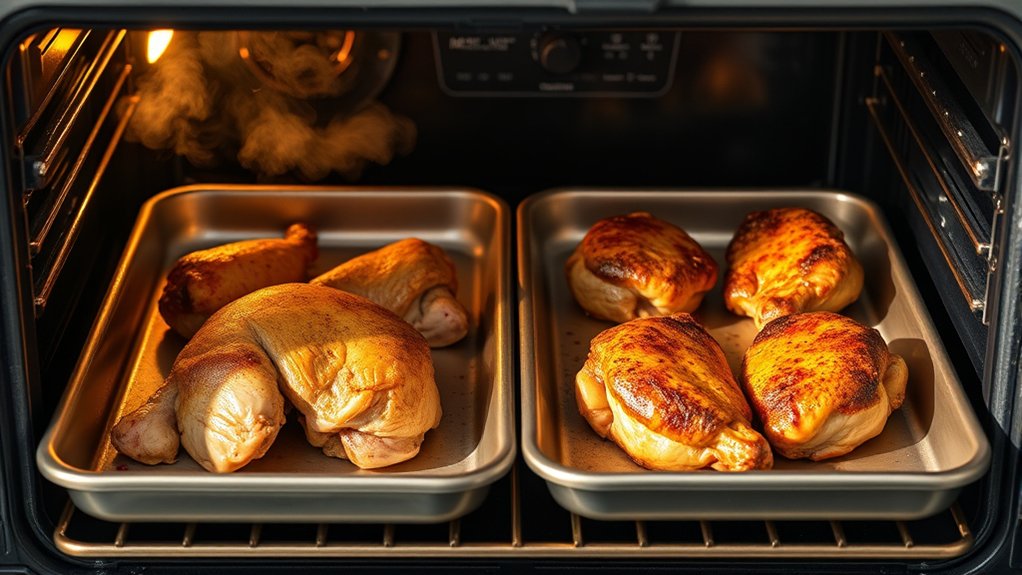
Bone-in chicken thighs usually take longer than boneless thighs because the bone slows heat transfer and the meat is thicker. If you want even cooking, plan extra oven time for bone-in pieces and shorter time for boneless cuts.
Boneless thighs cook faster and are easier to portion, but they can dry out if you overdo them. Bone-in thighs stay juicier and handle higher heat better, which makes them a strong choice for roasting.
| Cut | Oven time |
|---|---|
| Bone in, skin-on | Longer |
| Bone in, skinless | Longer |
| Boneless, skin-on | Shorter |
| Boneless, skinless | Shorter |
| Smaller pieces | Shorter |
Choose bone in when you want richer flavor and more forgiving results. Choose boneless when you need speed and uniform size. Keep your pan spacing even so heat moves around each thigh efficiently.
How to Tell When They’re Done
You’ll know chicken thighs are done when the thickest part reaches 165°F on an instant-read thermometer and the juices run clear. Check the temperature in the center, away from bone, for the most accurate reading. If you don’t have a thermometer, use tenderness testing: pierce the meat with a fork or knife and see whether it feels very soft and the juices look clear, not pink.
Use color cues as a backup, not your only guide. Fully cooked thighs usually look opaque throughout, with no translucent spots near the bone. The skin, if present, should be browned and crisp, while the meat should pull back slightly from the bone on bone-in pieces.
If the temperature is a few degrees low, keep baking and check again in short intervals. Once the thighs hit 165°F, remove them and let them rest briefly so the juices settle and the texture stays moist and tender.
Seasoning and Prep Tips for More Flavor

Now that you know how to check doneness, focus on seasoning and prep to make your chicken thighs taste better before they ever hit the oven. Pat the thighs dry first so the skin browns, then coat them lightly with oil. This helps salt, pepper, and spices cling evenly and supports better seasoning balance.
Salt both sides, then add garlic powder, paprika, and a little black pepper for a clean base. If you want bolder flavor, use herb combinations like thyme and rosemary or parsley and oregano.
- Dry the skin well for crisp edges and a more satisfying bite.
- Season under and over the skin when possible for deeper flavor.
- Let the thighs rest 15 minutes after seasoning so the salt starts working.
- Arrange them in a single layer so every piece roasts evenly and smells irresistible.
Keep your prep simple, and you’ll taste the difference in every juicy bite.
Frequently Asked Questions
Can I Bake Chicken Thighs From Frozen?
Yes, you can bake frozen thighs, but you’ll need extra time and a safe internal temperature.
Skip an overnight marinade; thaw first for better seasoning, even cooking, and juicier results, always.
Should I Cover Chicken Thighs While Baking?
Yes, covering thighs traps steam and can cut surface browning by about 30%. You’ll get juicier meat if you start covered, then uncover for the last 10 minutes.
Keep thawing safely before baking.
Can I Use an Air Fryer Instead of the Oven?
Yes, you can use an air fryer instead of the oven. You’ll get a faster air fryer swap, but adjust time for frozen vs fresh thighs, and cook until they reach 165°F internally.
How Do I Keep Chicken Thighs From Drying Out?
You’ll keep them tender by salting first, cooking at moderate heat, and pulling them when they’re just done.
Baste with pan juices for juicy moisture, then rest them briefly for skin perfection.
Can I Marinate Chicken Thighs Overnight?
Yes, you can marinate chicken thighs overnight; that marinating timing boosts flavor infusion and tenderness. Keep them refrigerated, use a nonreactive container, and avoid acidic marinades longer than 12 to 24 hours for best texture.
Conclusion
So, whether you’re baking bone-in thighs for 35–45 minutes or boneless ones for 20–30, the oven does the heavy lifting—but you still need to watch the clock. Use 400°F, check for 165°F in the thickest part, and let them rest a few minutes.
Juicy meat and crisp skin can happen together, if you balance patience with attention. Season well, broil briefly if you want, and you’ll get dinner that’s simple but satisfying.
Knowing how long chicken thighs in oven take will help you achieve perfect results every time.