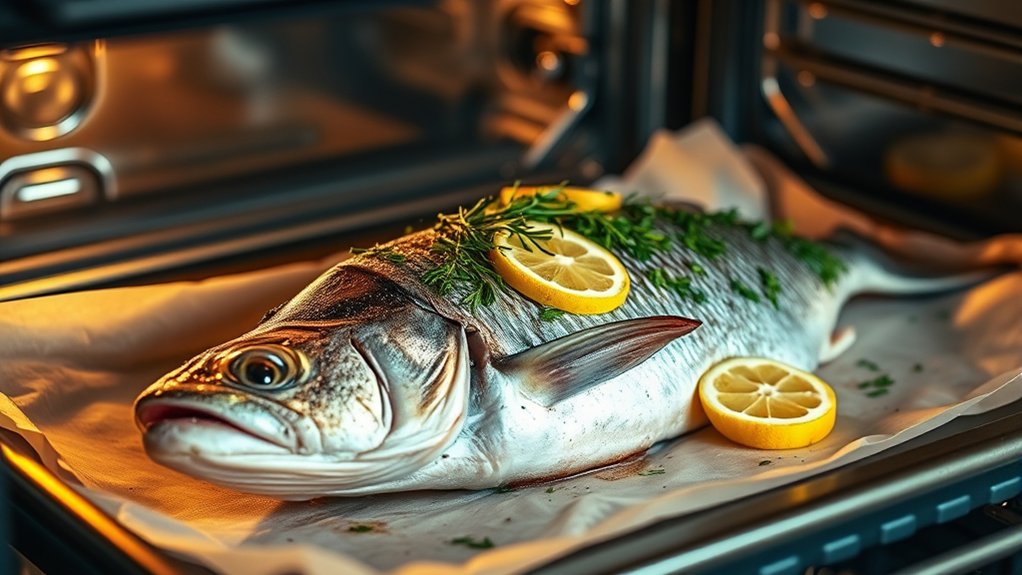
How to Bake Fish in the Oven
When you bake fish in the oven, you want to start with the right fillet, the right heat, and the right timing, or the result can turn dry fast. Baking fish in the oven requires attention to detail to get a moist and flavorful result.
You’ll pat it dry, season it simply, and set it in a lightly oiled dish so it cooks evenly. From there, a few small choices—thickness, temperature, and doneness—make all the difference, and that’s where the real technique begins.
Key Takeaways
- Choose firm, fresh fish with a mild smell, springy flesh, and clear eyes or even-colored fillets.
- Match fish size to the baking dish, and pair it with sides like asparagus, rice, or potatoes.
- Refrigerate fish promptly and cook it within one to two days for best quality.
- Pat fish dry, season lightly with salt, pepper, herbs, citrus, or mild spices, and keep marinades short.
- Bake in a preheated oven on a lightly oiled or lined pan until opaque, flaky, and 145°F in the center.
How to Choose Fish for Baking
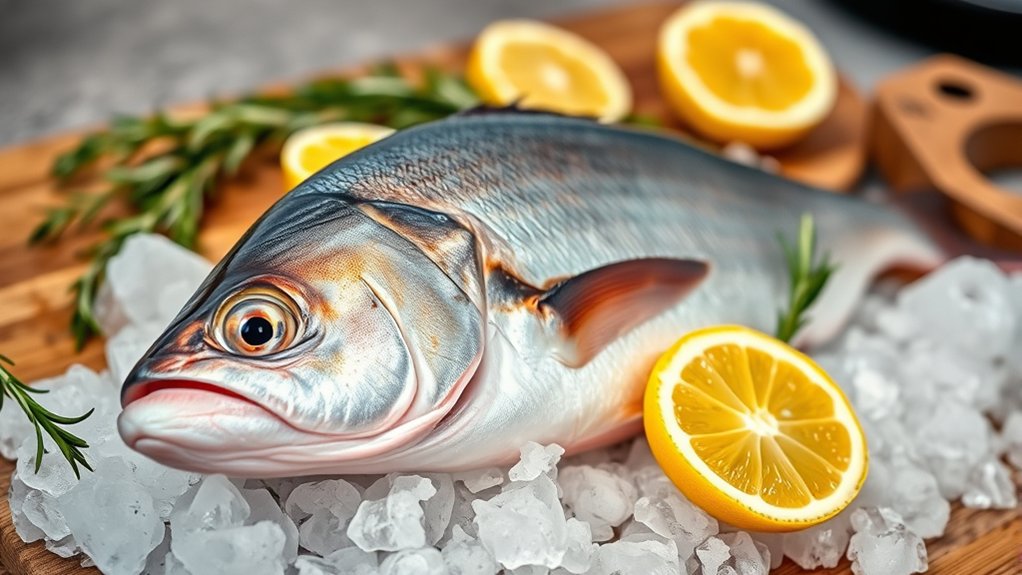
When you choose fish for baking, look for firm, moist fillets or whole fish with a mild, clean smell and clear eyes if they’re whole. Press the flesh gently; it should spring back, not leave an indentation.
Choose fresh, sustainable options such as cod, halibut, salmon, trout, or tilapia, depending on what’s local and in season. Ask your fishmonger when it was caught or delivered, and buy from sources that list harvest methods or certification.
Check that fillets have even color and no browning along the edges. If you’re buying frozen fish, pick packages without ice crystals or freezer burn.
Match the size of the fish to your baking dish so it cooks evenly. For pairing sides, select vegetables or grains that complement the fish’s texture and moisture, like roasted asparagus, rice, or potatoes.
Refrigerate your purchase promptly and use it within a day or two for best quality.
How to Season Fish for the Oven
Once you’ve picked a fresh fillet or whole fish, season it lightly so the flavor enhances the fish instead of masking it. Pat the surface dry, then sprinkle salt evenly and add black pepper for clean heat.
Use herbs and aromatics that match the fish’s richness; lean white fish likes dill, parsley, lemon zest, while oily fish welcomes paprika, garlic, and thyme. For deeper flavor, try seasoning toasting by briefly warming whole spices in a dry pan before crushing them. That step releases oils and sharpens aroma.
Keep these flavor pairings simple:
- A thin rain of salt and cracked pepper.
- Citrus zest rubbed over the flesh.
- Chopped herbs pressed onto the top.
- A light dusting of toasted spices.
Taste balance matters: you want brightness, not heaviness. If you use a marinade, keep it short so the fish stays firm and the seasoning stays clear.
How to Bake Fish in the Oven
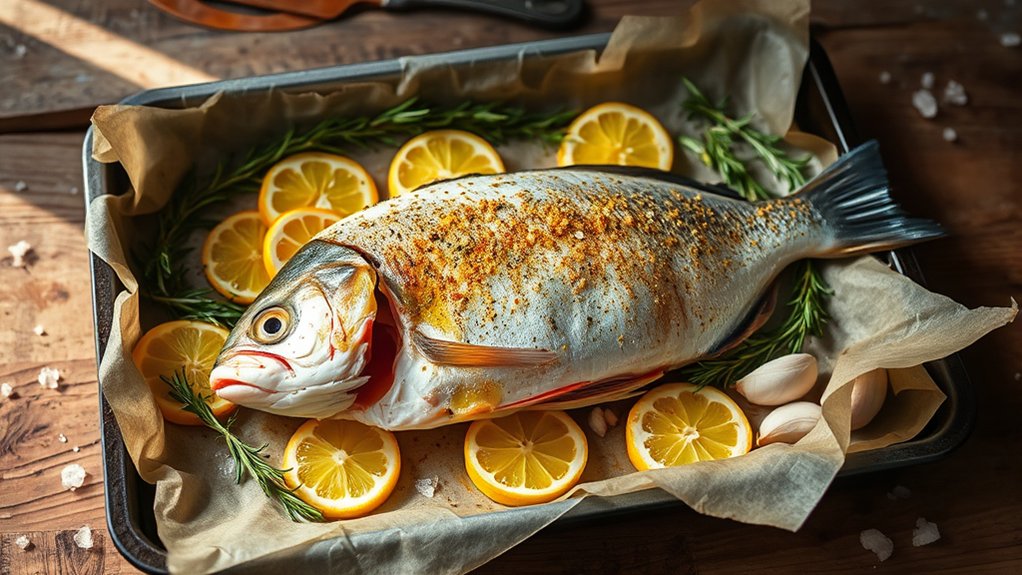
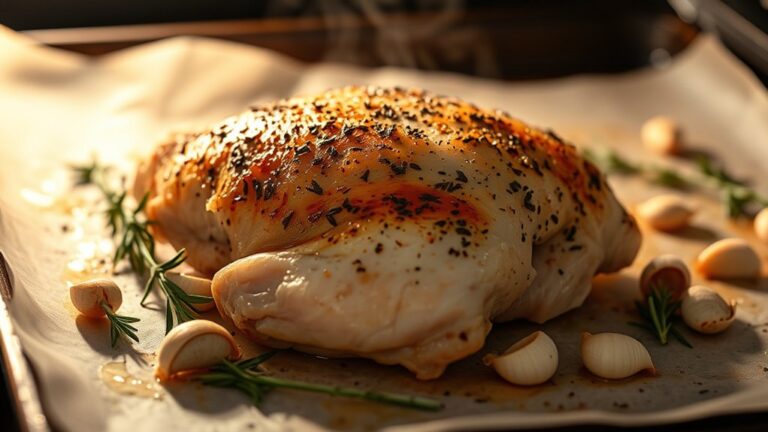
Preheat your oven to the right temperature, then set the seasoned fish in a lightly oiled baking dish or on a lined sheet pan so it cooks evenly without sticking. Choose shallow, oven-safe cookware, because deep pans trap steam and soften the surface.
If you want crisp edges, leave space around each piece and avoid crowding. Place thicker fillets toward the pan center and thinner ones near the edge for steadier heat exposure.
| Step | Purpose |
|---|---|
| Use even thickness | Promotes uniform cooking |
| Oil the surface lightly | Prevents sticking |
| Line the pan | Simplifies cleanup |
| Space fillets apart | Improves browning |
| Cover loosely only if needed | Limits drying |
Don’t trust quick seafood myths that say fish must be complicated to bake well. You only need accurate heat, proper pan choice, and a careful setup. Slide the pan onto the middle rack, then watch for flesh that turns opaque and separates cleanly.
How Long to Bake Fish at Different Temperatures
How long you bake fish depends on both the oven temperature and the thickness of the fillet, so you’ll want to match time to heat rather than guess. For how to bake fish, use these temperature tips: hotter ovens cook faster, while moderate heat gives you more control.
Bake thin fillets at 425°F for 8 to 10 minutes; at 400°F, plan on 10 to 12 minutes; at 375°F, expect 12 to 15 minutes; and at 350°F, allow 15 to 18 minutes.
- 425°F: a quick roast for delicate, thin cuts.
- 400°F: balanced heat for most fillets.
- 375°F: steady baking for medium thickness.
- 350°F: gentle cooking for thicker pieces.
If your fish is especially thick, add a few extra minutes. If it’s very thin, check earlier. Keep the fillet in a single layer on the tray so heat reaches it evenly and the timing stays reliable.
How to Tell When Baked Fish Is Done
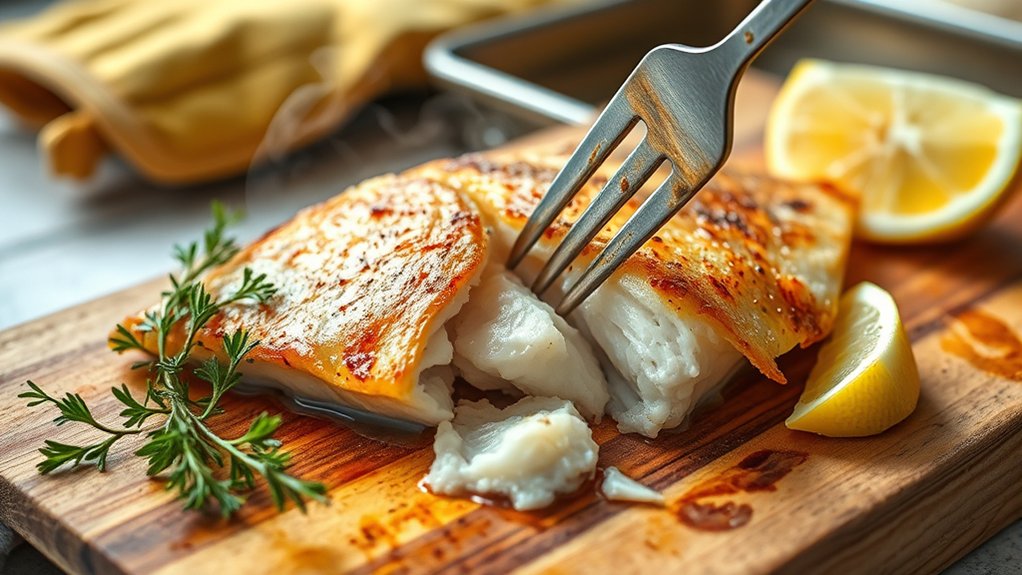
You’ll know baked fish is done when it turns opaque and flakes easily with a fork at the thickest part. Insert the fork gently and twist; if the flesh separates into moist, distinct flakes, it’s ready.
For the most reliable result, use an instant-read thermometer and check the center: most fish are done at 145°F. If you’re learning how to test doneness without a thermometer, watch for the flesh to lose its translucent look and the juices to turn clear, not milky.
Don’t overbake, because carryover heat keeps cooking the fish after you remove it from the oven. This is why you should know how to rest fish: transfer it to a plate, tent it loosely with foil, and let it sit for 2 to 3 minutes.
Resting helps the juices redistribute, improves texture, and makes serving cleaner and easier.
Frequently Asked Questions
Can I Bake Fish From Frozen?
Yes, you can bake frozen fish; just add extra time. You should skip quick thawing methods unless needed, pat it dry, season it, and bake until it flakes and reaches 145°F internally.
Should I Cover Fish While Baking?
Yes, you should cover fish if you want it moist; use covering techniques like foil for thicker fillets, then uncover briefly.
Adjust timing methods carefully, because covered fish cooks faster and browns less.
What Side Dishes Go With Baked Fish?
You can serve baked fish with roasted potatoes, rice, asparagus, green beans, or a crisp salad. These side dish ideas create balanced flavor pairings, and you’ll want lemon, herbs, or garlic to complement the fish.
Can I Use Parchment Paper for Baking Fish?
Yes, you can use parchment paper for baking fish; it’s a gentle cocoon that keeps moisture in. Line your pan with parchment lining, or use foil alternatives. You’ll prevent sticking and make cleanup easy.
How Do I Store Leftover Baked Fish?
Store leftover baked fish in an airtight container, refrigerate within two hours, and eat it within three days. For storage tips, keep it cold and dry.
For reheat methods, warm it gently to avoid drying it out.
Conclusion
Baking fish in the oven is one of the quickest ways to get a healthy, flavorful meal on the table. In fact, the FDA recommends cooking fish to 145°F, so a simple thermometer takes out the guesswork. Choose a fresh fillet, season it well, and bake it just until it turns opaque and flakes easily.
When you follow these steps, you’ll serve tender, perfectly cooked fish every time—without drying it out. Mastering how to bake fish in the oven ensures a delicious and nutritious dish with minimal effort.