How to Ripen Bananas in Oven
You can ripen bananas in the oven to turn green, hard bananas soft and sweet without waiting days. The oven works differently than time alone, so it’s important to follow specific steps for the best results.
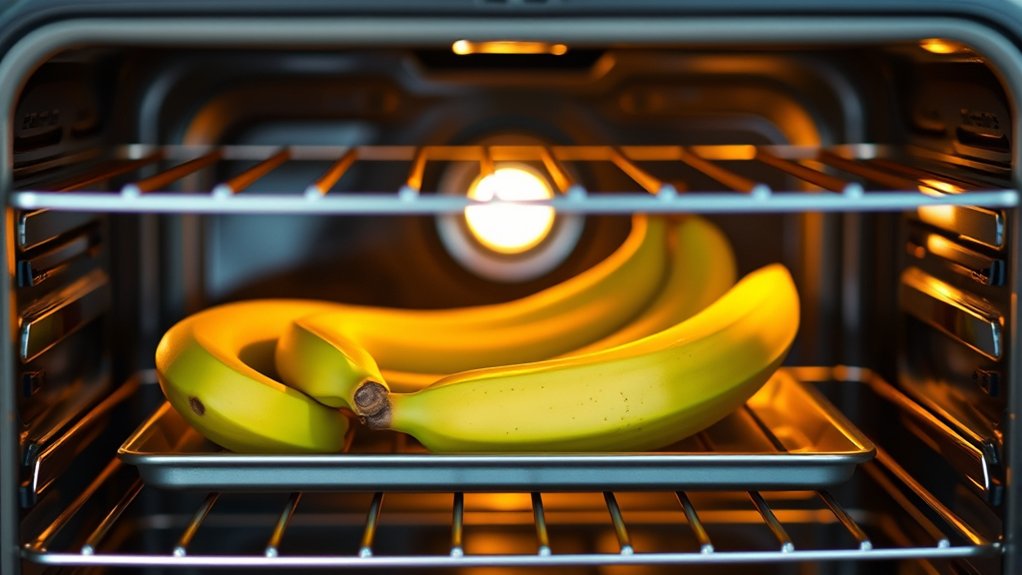
Preheat the oven to about 300°F, keep the skins on, and space the bananas in a single layer. You’ll watch for deep browning and a softened center, then cool them before peeling.
The exact bake time shifts more than you might expect, and that’s where the details matter. Paying attention to these nuances ensures perfectly ripened bananas every time.
Key Takeaways
- Preheat the oven to 300°F and line a baking sheet with parchment or foil.
- Place unripe bananas in a single layer on the center rack for even heating.
- Bake yellow bananas 15–18 minutes, firmer green-tinged bananas 22–25 minutes.
- Remove them when skins darken and fruit feels soft, then cool before peeling.
- Use oven-ripened bananas for baking, smoothies, or mashing, and store leftovers airtight.
What You Need
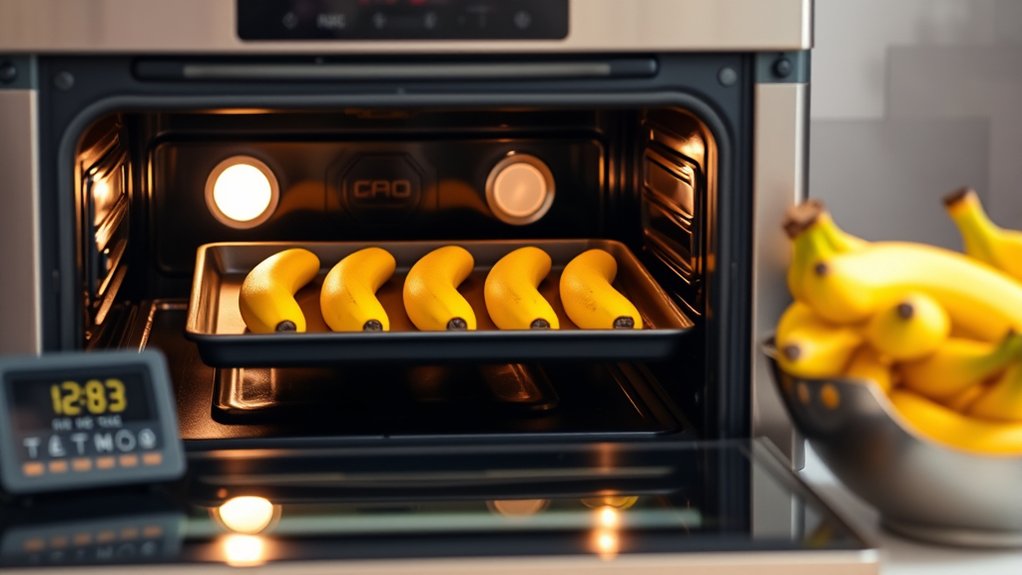
To ripen bananas in the oven, you need just a few basic items: unripe bananas, a baking sheet, and aluminum foil or parchment paper. Choose bananas with firm peels and minimal bruising; that unripe selection gives you the most predictable result.
To ripen bananas in the oven, gather unripe bananas, a baking sheet, and foil or parchment for consistent results.
Arrange them in a single layer so heat reaches each fruit evenly. Use foil if you want faster cleanup, or parchment if you prefer less surface contact. You should also have an oven mitt and a timer, since controlled handling improves safety and consistency.
A fork or knife helps you check softness afterward without compressing the fruit. If you’re evaluating oven alternatives, this method still offers the most direct control over texture.
Keep your setup simple and efficient, because excess tools don’t improve ripening performance. With these items ready, you can execute the process cleanly and avoid unnecessary variables.
Preheat the Oven
Set the oven to a low temperature, typically around 300°F, so the bananas soften without cooking too quickly. You should let the oven fully reach the target temperature before inserting anything, because stable heat distribution improves ripening consistency.
Use the center rack to promote even thermal exposure, and avoid opening the door repeatedly, since each drop in temperature slows the process. These preheating tips help you control moisture loss and reduce the risk of scorching the peel.
For oven safety, confirm that racks are secure, the interior is clear, and the appliance has no lingering grease or foil hazards. If your oven runs hot, reduce the setting slightly and verify calibration with an oven thermometer.
Once the indicator shows readiness, you’re set to move forward with the next step. Precise preheating creates a predictable environment, which helps the bananas soften uniformly without turning overly dark or mushy.
Prepare the Bananas
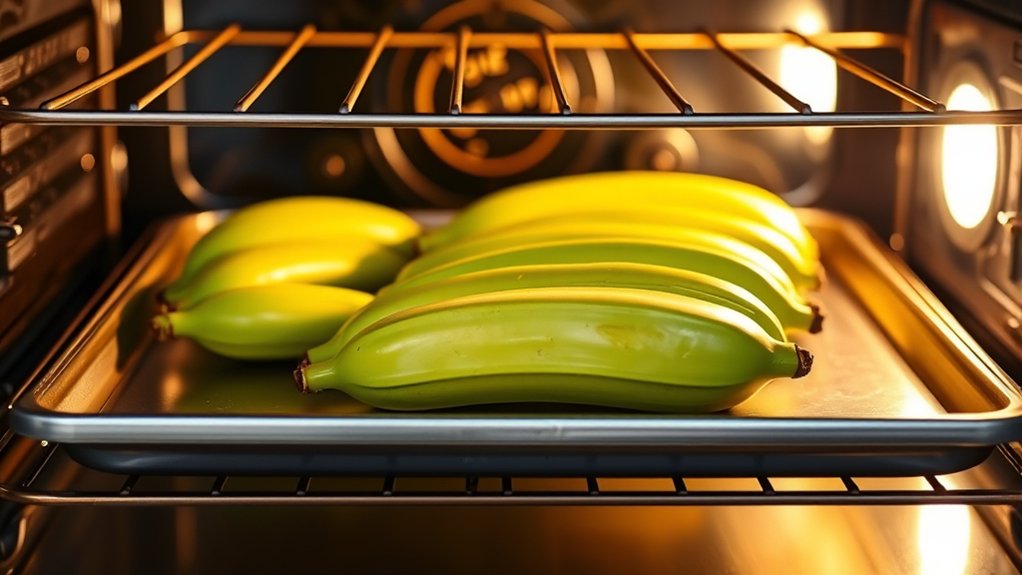
Choose bananas that are already ripe but still firm, since they’ll soften and sweeten more evenly in the oven. You should wipe off any dirt or residue and make sure they’re completely dry to prevent excess moisture during heating.
Then arrange them on a tray in a single layer so heat can circulate uniformly around each banana.
Choose Ripe Bananas
Look for bananas that are ripe but not overripe, since oven ripening works best when the fruit already has mostly yellow skins with a few brown spots. You want fruit that’s firm enough to hold shape yet mature enough to develop deeper sweetness under heat.
If you choose greener bananas, the oven won’t fully correct their starchiness; if you choose very soft bananas, they can collapse and darken too fast. Select specimens with even coloration, minimal bruising, and no splits, because these indicators support predictable ripening.
For better ripe banana flavor, prioritize bananas at the yellow stage with light freckling. These banana browning tips help you estimate how much oven time you’ll need and improve consistency batch to batch.
Clean And Dry
Before baking, rinse the bananas briefly under cool running water to remove surface dirt, then dry them thoroughly with a clean towel. This step reduces contaminants that can transfer to the peel during heating.
You should inspect each banana for clinging debris, sap, or residue, then wipe the surface until no visible moisture remains. Keeping the peel clean helps the oven heat distribute predictably and limits unwanted steaming.
Don’t soak the fruit, because excess water can raise surface humidity and slow browning. If you need a short delay before use, place the bananas in a dry area at room temperature; avoid moisture during storage so the skins stay intact and receptive to heat.
Once the fruit is completely dry, it’s ready for the next preparation step.
Arrange On Tray
Line the bananas on a baking tray in a single layer, leaving small gaps between each piece so hot air can circulate evenly. You should arrange on tray with the stem ends aligned and the skins intact, because this improves heat distribution and reduces uneven softening.
Keep even spacing between bananas so no piece touches another; contact points trap moisture and can slow browning. If you’re using very ripe bananas, handle them gently to avoid bruising, which can affect texture during heating.
Place the tray on a flat oven rack to maintain stable airflow and consistent exposure. Check that the tray fits without crowding the oven cavity, since restricted circulation can create hot spots and inconsistent ripening.
How Long to Bake Bananas
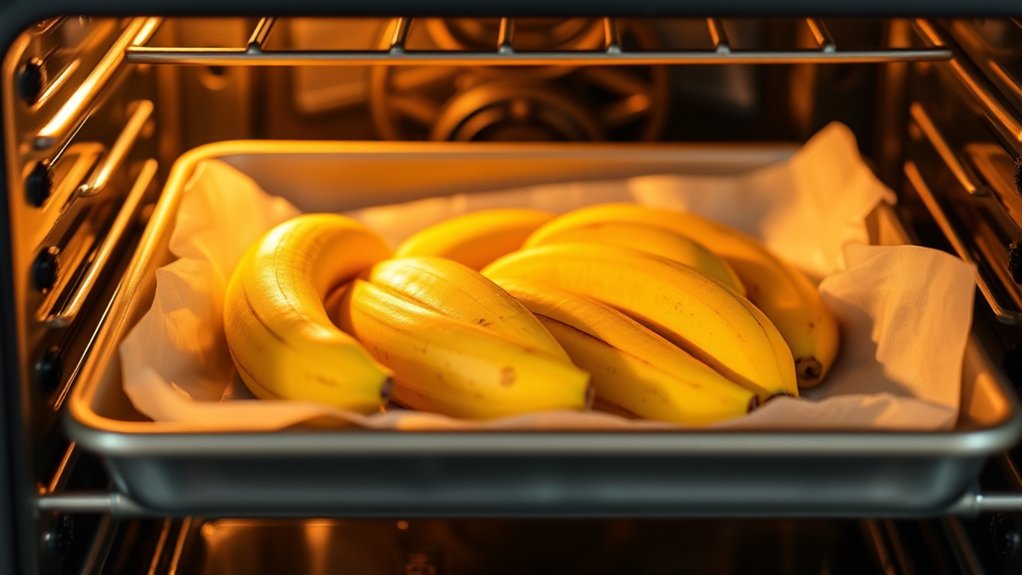
How long should you bake bananas depends on their ripeness and your oven’s actual heat, but most bananas need about 15 to 25 minutes at 300°F to 350°F. Use the lower end for lightly speckled fruit and the upper end for firmer bananas.
If you manage banana storage correctly, you can slow excess softening before baking; if you need banana substitutes, adjust timing because different fruits soften at different rates.
| Banana state | Typical bake time |
|---|---|
| Yellow with spots | 15–18 minutes |
| Mostly yellow, firm | 18–22 minutes |
| Green-tinged, firm | 22–25 minutes |
| Extra-firm, cold | 25 minutes |
Keep your pan on the center rack so heat surrounds the fruit evenly. Your oven may run hot or cool, so a small time shift is normal. Set a timer for the earliest estimate, then add time in short intervals if needed.
Check for Doneness
Once your bananas have baked for the estimated time, check them for doneness by looking for deep browning, a softened center, and skins that have split or turned glossy. These visual cues indicate the starches have converted and the fruit’s structure has loosened enough for mashing or baking use.
Press a banana lightly through the skin; it should yield easily without feeling rigid or raw. If you see pale patches, continue with short intervals and recheck, since uneven heat can slow ripening.
Your oven techniques matter here: use consistent temperature and avoid overcrowding, which can create uneven doneness. For accurate ripeness tips, judge each banana individually, because size, initial ripeness, and oven calibration all affect timing.
Don’t rely on color alone; a fully dark peel can still hide a firm core. When the bananas feel uniformly soft and aromatic, they’re ready for the next step.
Cool and Peel the Bananas
Let the bananas cool completely before you handle them, since hot fruit tears easily and can distort the softened flesh.
Peel them gently by lifting the skin from a seam rather than pulling hard, which helps preserve the texture. Remove any loose skins with minimal pressure so you don’t damage the ripened banana underneath.
Cool Before Peeling
After you remove the bananas from the oven, let them cool on the baking sheet for several minutes so the skins set and the fruit is easier to handle. During this interval, the softened flesh firms slightly, which helps you preserve a consistent ripe texture when you peel them.
Cooling also stabilizes the internal starch-to-sugar conversion, so the flavor profile stays balanced instead of seeming overly hot or diluted. You should wait until the bananas feel warm, not scorching, because excess heat can make the peel tear and release juice.
Place them on a heat-safe surface, monitor the temperature, and proceed only when the surface heat has dropped enough for controlled handling. This brief pause improves efficiency and reduces waste.
Peel Gently
Gently peel the bananas while they’re still warm, supporting each fruit at the base so the softened flesh doesn’t split or collapse. You should peel gently, lifting the skin in controlled sections rather than pulling hard, because heat lowers structural resistance and increases tear risk.
If the peel adheres, pause for a few seconds and let residual steam dissipate; this reduces localized pressure and helps preserve the fruit’s shape. Handle each banana individually, keeping contact minimal to avoid compressing the surface.
At this stage, banana aromas are strongest, so you’ll notice a pronounced sweet scent as the skins release trapped volatiles. Once the fruit is fully exposed, transfer it carefully to a clean plate for the next step, maintaining its soft, oven-ripened texture and integrity throughout.
Remove Loose Skins
When the bananas have cooled enough to handle, strip away any loose skins with short, controlled pulls, starting at the split seams where the peel has already separated from the flesh. You should not force sections that cling, because overbaked flesh tears easily.
Instead, support each banana with one hand and peel with the other, exposing the softened interior in measured increments. If the skin resists, let it cool a few more minutes; the oven method works best when heat has fully loosened the outer layer.
Inspect the fruit for even softening and discard any browned, fibrous peel fragments. At this stage, the ripe bananas should release cleanly, with minimal resistance and a smooth, jamlike texture suitable for mashing, baking, or immediate use.
Use Oven-Ripened Bananas
Oven-ripened bananas work best in recipes where a softer texture and deeper sweetness improve the final result. You can mash them into quick breads, muffins, pancakes, or smoothies because heat converts starches in unripe bananas into simpler sugars.
Use them when you need consistent sweetness without extra added sugar. Their softened structure also blends more evenly, which improves batter uniformity and reduces visible fiber.
If you’re baking, match the bananas to your baking temps carefully; lower temperatures suit delicate batters, while moderate heat preserves moisture in denser mixtures. You can also freeze peeled portions for later use, then thaw and drain them before mixing.
For best control, weigh the fruit after roasting so you know how much moisture you’re adding. Keep the puree covered and refrigerated if you won’t use it immediately. This gives you a ready ingredient with predictable flavor, texture, and performance in recipes.
Fix Common Problems
If the bananas don’t soften evenly, shift the tray’s position and rotate the fruit halfway through baking so heat distributes more uniformly. You should verify banana selection first: choose fruit with mostly yellow skins and limited green, because underripe bananas need longer exposure and can stay firm at the center.
If the peels darken too quickly while the flesh remains resistant, lower the oven settings by 25°F and extend the cycle in short increments. For bananas that feel overly soft or leak juice, your heat was too high, so reduce time on the next batch and use a lined tray to limit direct contact with metal.
If the skins split early, you likely overbaked them; stop when the fruit yields slightly under pressure. Consistent results depend on matching ripeness, size, and heat load. Test one batch, note the timing, then adjust methodically for the next run.
Store Them Properly
Once the bananas reach the softness you want, remove them from the oven and let them cool at room temperature until the peels are safe to handle. After cooling, transfer them to a clean, airtight container or sealable bag if you won’t use them immediately. This limits moisture loss and slows further enzymatic breakdown.
If you need only one or two bananas, separate them from the cluster to reduce bruising. For short storage, keep them at room temperature for up to 24 hours. For longer holding, refrigerate them; the peel will darken, but the flesh stays usable for baking, smoothies, or puree.
If you want to extend storage further, freeze the peeled bananas in a single layer, then move them to a freezer-safe bag. Label the container with the date so you can track freshness. Idea one: minimize air exposure. Idea two: control temperature consistently.
Frequently Asked Questions
Can I Ripen Bananas With the Peel On?
Yes, you can ripen bananas with the peel on. You’ll use peel on ripening to trap heat, but you should expect a ripe banana aroma only after the flesh softens and sugars develop.
Does Oven Ripening Change Banana Flavor?
Yes, oven ripening does alter flavor. You’ll notice a baked, caramelized note, not fresh banana aroma.
The effect on sweetness is modest; heat can intensify perceived sugar, but it won’t develop full ripeness complexity.
Can Underripe Green Bananas Be Oven-Ripened?
Yes, you can oven-ripen underripe bananas, but you’ll mainly soften them and promote sugar conversion, not fully mimic natural ripening. Use low heat, monitor closely, and expect slight flavor changes from oven ripening.
Is Oven-Ripened Banana Safe for Babies?
Yes, it’s generally safe if you cool it and mash it smoothly. You’ll follow oven safety by avoiding scorching, and for baby feeding, choose soft, plain banana; about 1 in 5 infants accept it easily.
Can I Ripen Bananas Without Aluminum Foil?
Yes, you can ripen bananas without aluminum foil. You’ll need to trap oven humidity with a covered baking dish or parchment, then heat gently.
You’ll notice a stronger ripe banana aroma as starches convert.
Conclusion
Now you know the grand culinary scandal: you can “ripen” bananas in an oven by heating them until their skins darken and their flesh softens. Preheat to 300°F, bake them in a single layer, and stop when they look gloriously overachieved.
Cool them, peel them, and use them fast. If they seem underdone, patience—or another few minutes—usually fixes your masterpiece. Store any extra puree promptly, because banana bureaucracy doesn’t preserve itself.
With this simple trick, you can enjoy perfectly ripe bananas anytime by using the oven to ripen bananas quickly and effectively.