Can Stainless Steel Go in the Oven
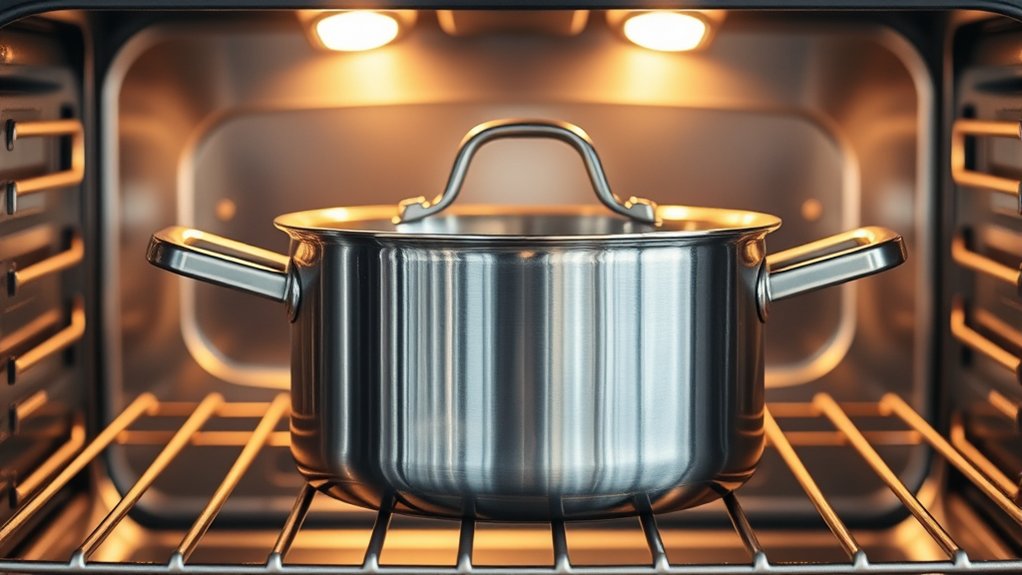
You slide a stainless steel skillet into a 400°F oven, but can stainless steel go in the oven safely? The handle feels fine only if every part of the pan is rated for that heat.
You need to check the pan body, lid, rivets, and any plastic or silicone parts, because the lowest-rated component sets the limit. The answer isn’t always obvious, and one weak link can change safe oven use fast.
Key Takeaways
- Yes, stainless steel cookware can go in the oven if the entire piece is oven-safe.
- Check the pan, handles, lids, rivets, and attachments for their maximum temperature ratings.
- Use the lowest rated component as the safety limit, especially with plastic, silicone, or glued parts.
- Avoid broilers and high heat unless the manufacturer explicitly allows that temperature.
- If no oven-safe rating is listed, treat the cookware as not safe for your target oven temperature.
Can Stainless Steel Go in the Oven?
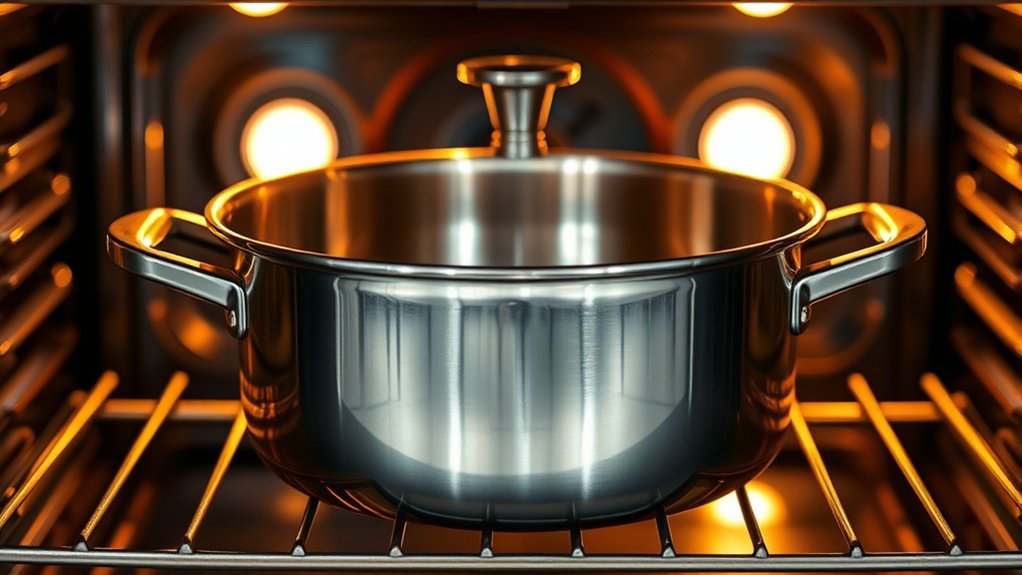
Yes, stainless steel can usually go in the oven, but only if the cookware has oven-safe construction. You can use it for roasting, baking, and finishing dishes because stainless steel durability helps it resist warping, staining, and corrosion under heat. The key is that the pan, handles, lids, and any fasteners must tolerate elevated temperatures without degrading.
If your cookware includes plastic, silicone, or glued parts, those components may fail before the metal does. You should treat oven safety limits as the controlling factor, not the metal alone. Stainless steel itself handles heat well, but composite designs vary widely.
Thin pans can hot-spot, and lightweight handles may transfer excessive heat, so you need proper oven mitts and stable placement. For reliable results, use cookware that’s clearly built for high-heat use and avoid guessing based on appearance alone. If you stay within the pan’s construction limits, stainless steel is a dependable oven option.
Check Manufacturer Oven-Safe Temperatures
Check the manufacturer’s oven-safe temperature limit before you put stainless steel in the oven, because that rating defines the maximum safe exposure for the pan body.
You should also verify the handle and rivet ratings, since those parts can fail or deform at a lower temperature than the cooking surface. If the product doesn’t list a specific limit, don’t assume it’s oven-safe for your target temperature.
Manufacturer Temperature Limits
Before you put stainless steel cookware in the oven, you need to verify the manufacturer’s oven-safe temperature rating, because not all stainless steel pans, lids, handles, and inserts tolerate the same heat. Check the product manual and packaging for clear safety labeling, then compare it with your oven’s maximum setting.
Use these temperature limits to avoid warping, discoloration, or adhesive failure in bonded components. If the rating is missing, assume the item isn’t approved for oven use.
- Read the exact temperature limit.
- Confirm whether the limit applies to the whole piece.
- Note any differences between bake and broil settings.
- Follow the lowest listed limit.
Handle and Rivet Ratings
How hot can the handles and rivets safely get? You should check the manufacturer’s oven-safe rating for each part, not just the pan body. Handles can be welded, riveted, or wrapped in silicone, and each design affects oven compatibility.
Rivets often stay secure at high heat, but plastic inserts, adhesive seals, or low-grade finishes can fail.
| Component | Rating Check |
|---|---|
| Handle | Verify max temperature |
| Rivet | Confirm metal-only construction |
If the listed limit is below your target temperature, reduce oven heat or remove the item. This protects stainless steel durability and prevents warped grips, loose joints, or smoke. Always read the product manual before baking or broiling.
Watch Handles and Lids for Heat Limits
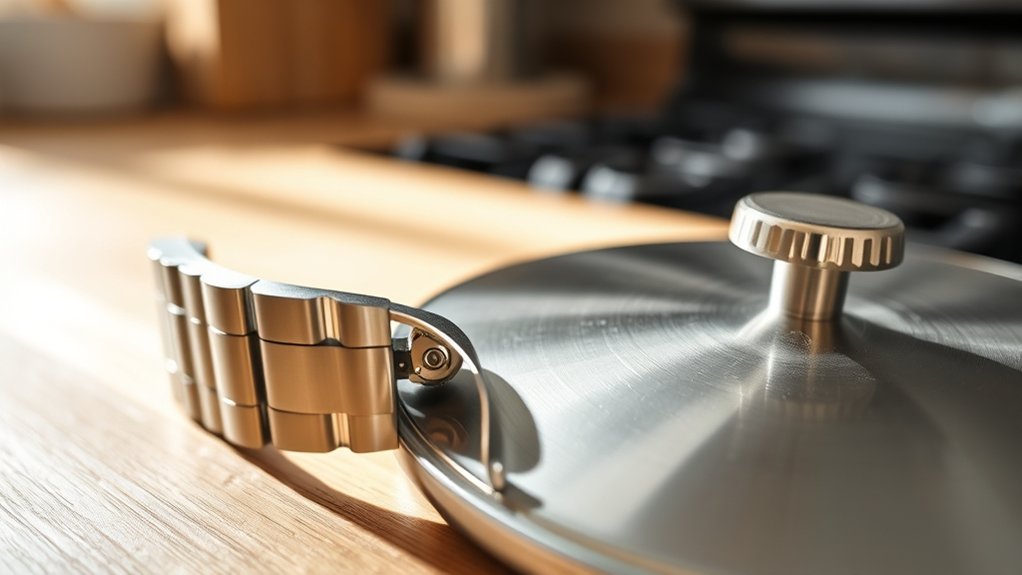
You need to check the handle material’s heat limit before placing stainless steel cookware in the oven, because plastic, wood, and silicone components can fail at different temperatures.
You should also verify that the lid knob stays within its rated range, since some knobs soften or loosen under oven heat. Confirm that all attachments, including screws, rivets, and seals, are ovenproof so they don’t warp, detach, or create a safety hazard.
Handle Material Limits
Not all stainless-steel cookware can take the same oven heat, because the handle and lid materials often set the real limit. You need to check Stainless safety and Oven compatibility before you preheat. Metal handles usually tolerate higher temperatures than silicone, rubber, or wood, which can degrade, soften, or discolor.
Riveted stainless handles often perform better than bonded ones, but you should still verify the manufacturer’s rating.
- Read the max oven temperature.
- Identify handle material.
- Confirm lid-frame construction.
- Remove nonmetal accessories.
If the handle wraps in an insulating sleeve, that sleeve may fail before the pan does. Use the lowest rated component as your ceiling, and you’ll avoid damage, warping, and unsafe heat transfer during baking or roasting.
Lid Knob Safety
Lid knobs can limit oven safety just as much as handles, so check their material and attachment before baking or roasting. You should treat the lid knob as a heat-sensitive component, because it often sits closest to direct radiant energy inside the oven.
Metal knobs usually tolerate higher temperatures than plastic or hollow decorative parts, but you still need to confirm the maker’s rating. If the knob shares hardware with a lid handle, compare its limit to the cookware’s handle heat tolerance.
Avoid settings that exceed the knob’s specified maximum, since softening can cause loosening or surface damage. When you use glass lids, verify that the knob won’t trap heat or interfere with safe lifting.
Keep your focus on temperature exposure, not just the pan body.
Ovenproof Attachment Checks
Before you slide stainless steel into the oven, inspect every attachment point, because handles, knobs, and lid hardware often set the real heat limit. You can’t assume the vessel matches the pan body; many attachments use lower-grade ovenproof materials or adhesives that fail early.
Check stamped ratings, molded symbols, and fastener design before heating.
- Verify handle and knob maximum temperature.
- Confirm screws, rivets, and gaskets won’t loosen.
- Ensure lid stays sealed without plastic trim.
- Run compatibility testing if the maker lists mixed materials.
If any attachment lacks a clear rating, treat the pan as non-oven-safe. When in doubt, remove detachable parts or use cookware with fully metal hardware. This avoids warping, smoke, and sudden failure.
Avoid Stainless Steel With Plastic Parts
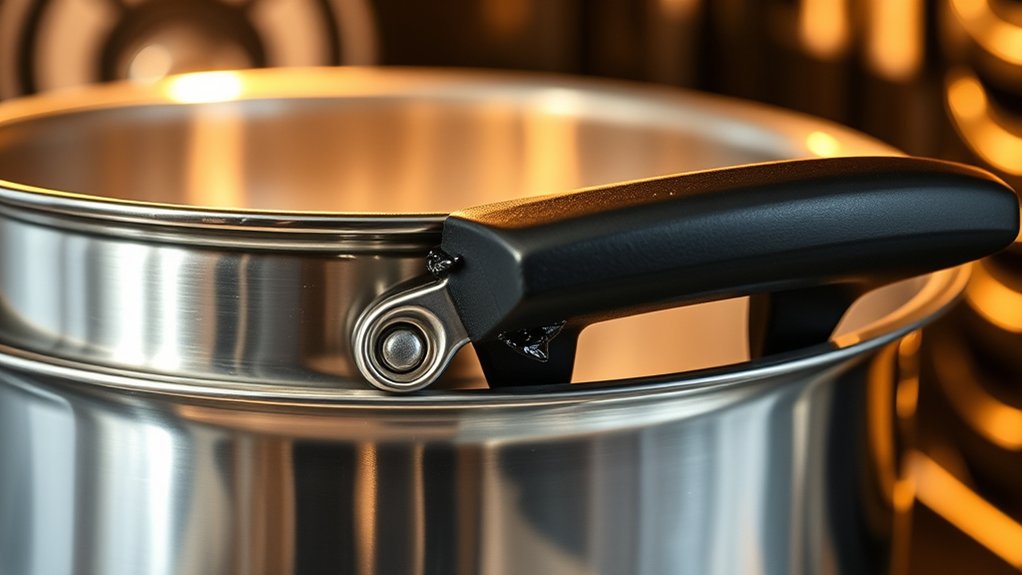
Watch for plastic handles, knobs, or trim on stainless steel cookware, because these parts can melt, warp, or release fumes in the oven. You should inspect every contact point before use, including lid grips, decorative inserts, and detachable parts.
For reliable stainless steel compatibility, choose cookware built with all-metal, plastic free components from rim to base. Check product labels, manufacturer specs, and any oven-safe marking; if the handle material isn’t listed, assume it isn’t suitable.
Even small plastic sections can soften and compromise grip, cause odors, or damage your oven interior. If you need a quick test, look for riveted metal handles and absence of polymer accents.
When in doubt, move the dish to a fully metal alternative. Careful selection prevents avoidable failure and keeps your cookware functioning as intended in the oven.
Stay Within Common Stainless Steel Heat Limits
Stainless steel can usually handle oven temperatures well, but you still need to stay within the manufacturer’s rated heat limit, which often falls around 500°F to 600°F depending on the cookware design. You should check the product manual before heating it, because alloy composition, handles, and attachment methods affect oven safety.
If you exceed the limit, you can warp the pan, weaken joints, or create hot spots that reduce performance.
- Verify the stamped or listed maximum temperature.
- Match that rating to your oven setting.
- Use a lower rack if the pan sits near the top element.
- Remove the cookware promptly after cooking.
For two word discussion ideas, focus on temperature rating, material strength, and heat exposure. These points help you choose cookware that fits your cooking method and keeps results predictable.
When you respect the limit, you protect the pan and get consistent heating without unnecessary risk.
Be Careful With Nonstick Coated Stainless Steel
Nonstick-coated stainless steel needs extra caution in the oven because the coating often has a lower heat tolerance than the metal underneath. You should check the manufacturer’s temperature rating before you expose it to high heat, since many nonstick coating systems begin to break down well below the limits of the stainless steel itself.
Once overheated, the surface can discolor, lose release performance, or emit fumes from the polymer layer. The base pan may still be sound, but the coating damage can make the cookware unreliable. You also need to remember that some stainless steel pans use different metal alloys, and those alloys don’t protect the coating from thermal failure.
If the label doesn’t clearly state oven-safe temperatures, treat the pan as restricted-use cookware. Keep it away from broilers unless the product specifically allows that exposure. In practice, your safest approach is to follow the lowest rated component, not the strongest one.
Move Pans From Stove to Oven Safely
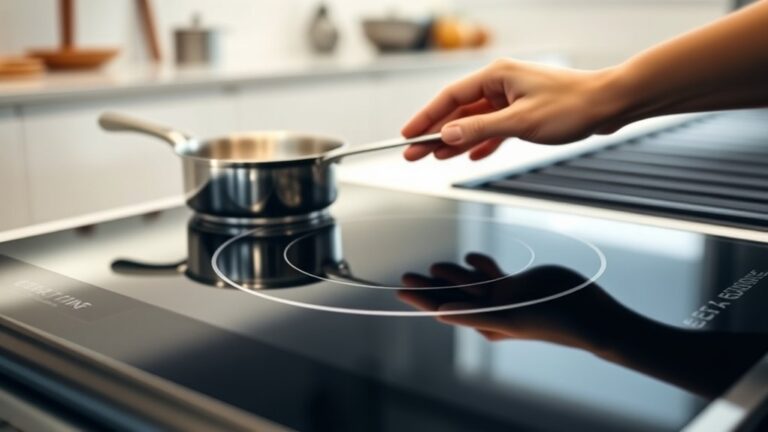
When you move a pan from the stovetop to the oven, grab it with a dry oven mitt and keep the handle turned so you can set it down without twisting your wrist. Check that the pan has no plastic grip, loose rivets, or heat-sensitive parts before you start. Use these transfer safety steps:
- Preheat the oven first so you don’t hold the pan longer than needed.
- Clear a direct path and open the door fully to reduce bumps.
- Lift with both hands if the pan is heavy, supporting the base.
- Slide the pan onto the rack slowly, then release the mitt after the rim is stable.
These isolation tips keep your hands away from the hottest zones and prevent contact with surrounding cookware. Keep your elbows close and avoid sudden turns. If the handle feels slick, use a folded dry towel as backup insulation, but never substitute wet cloth. Stable movement matters more than speed.
Clean Stainless Steel After Oven Use
After oven use, let the pan cool until it’s warm, not hot, before you wash it or wipe it down. This prevents thermal shock and reduces staining. For routine oven care, use hot water, a mild dish soap, and a nonabrasive sponge.
Wipe along the grain to remove grease and baked-on residue without scratching the finish. If food has hardened, soak the pan briefly, then lift debris with a silicone scraper or nylon pad. Avoid steel wool, chlorine bleach, and harsh oven cleaners, because they can damage stainless steel and weaken stainless maintenance over time.
Rinse thoroughly, then dry immediately with a soft cloth to prevent water spots and mineral deposits. If discoloration remains, apply a paste of baking soda and water, rub gently, and rinse again. Finish by inspecting rivets, handles, and edges so you can catch residue early and keep the pan ready for its next use.
Frequently Asked Questions
Can Stainless Steel Warp at High Oven Temperatures?
Yes, you can warp stainless steel at high oven temperatures if you exceed its stainless steel heat tolerance or the cookware’s oven temperature limits.
You should follow manufacturer specs, especially with thin pans or rapid temperature changes.
Does Stainless Steel React With Acidic Foods in the Oven?
Usually, you won’t see much reaction, but acidic foods can leach nickel or chromium from a stainless steel alloy at high oven temperature.
You should use high-grade cookware and avoid prolonged exposure.
Is All-Clad Stainless Steel Safe for Broiler Use?
Yes, you can use All-Clad stainless steel under the broiler if you follow the manufacturer’s limits. You’ll want to keep handles, lids, and nonstick inserts away from direct heat for broiler use.
Can I Use Stainless Steel Bakeware for Bread?
Yes, you can use stainless steel bakeware for bread baking if it’s oven-safe and sturdy. You’ll get reliable heat conduction, but watch for oven safety: thin pans can warp, and loaves may brown faster.
How Do I Tell if My Stainless Steel Pan Is Oven-Safe?
Check the oven safe indicators: you’ll find them on the base, handle, or packaging. Verify brand limitations, since some pans have riveted handles or coatings that cap heat tolerance.
If unsure, contact the manufacturer.
Conclusion
Yes, stainless steel can go in the oven, but only when every component is rated for the same heat. Don’t assume the metal alone makes it safe; check handles, lids, rivets, coatings, and any plastic or silicone parts.
If one part has no clear temperature rating, treat the pan as oven-restricted. You might think “it’s just stainless,” but the weakest link still determines safety, performance, and durability.
Always ensure all parts are oven-safe to avoid damage or accidents. In conclusion, stainless steel can go in the oven, but only when all components meet the necessary heat requirements.