How Do You Oven-Roast a Turkey
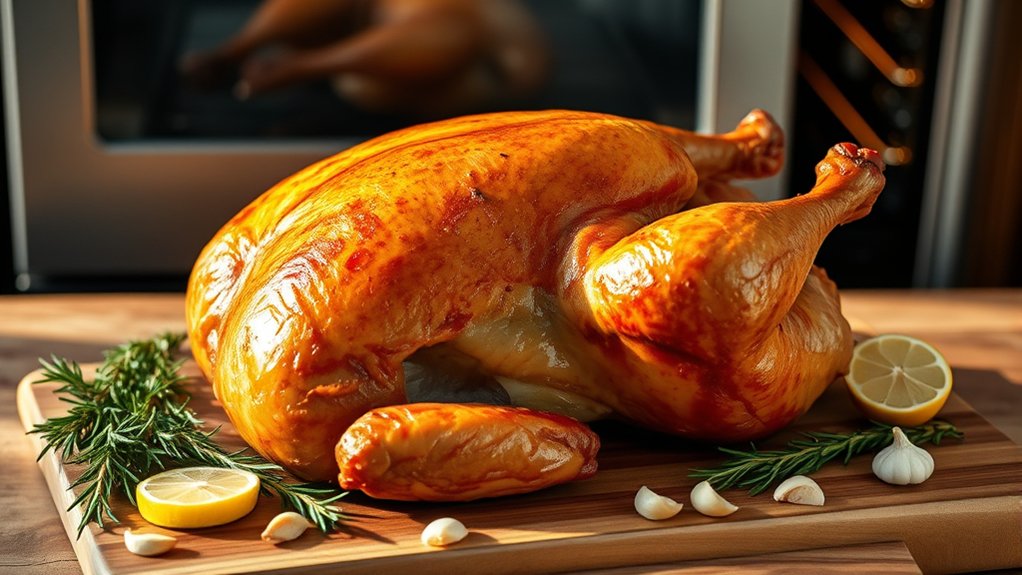
To oven-roast a turkey, you need to start with a fully thawed bird, a hot oven, and a simple seasoning plan.
Oven-roasting a turkey involves drying the skin, rubbing on butter or oil, and setting the turkey breast-side up on a rack so heat can circulate evenly.
From there, timing and temperature do the real work.
A few small choices can make the difference between dry meat and a clean, juicy finish.
Key Takeaways
- Thaw turkey in the refrigerator, remove giblets, pat dry, and keep it below 40°F until roasting.
- Season with salt, pepper, butter or oil, and herbs or spices for flavor and browning.
- Roast on a rack in a preheated 350°F oven, about 13 minutes per pound for an unstuffed turkey.
- Baste every 30 to 45 minutes if desired, and tent the breast with foil if it browns too quickly.
- Roast until the breast reaches 165°F and thigh 175°F, then rest 20 to 30 minutes before carving.
Turkey Roasting Tools and Ingredients
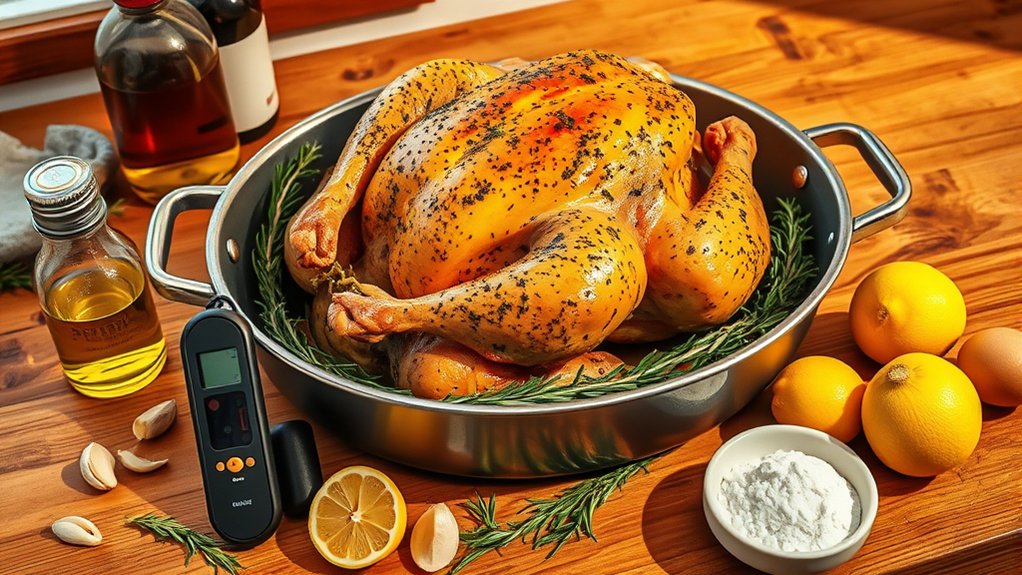
Before you start roasting, gather the right tools and ingredients so the process goes smoothly: you’ll need a large roasting pan with a rack, a reliable meat thermometer, kitchen twine, a basting spoon or brush, and a sharp carving knife. These turkey roasting tools help you control heat, support even browning, and check doneness accurately.
Keep your ingredients list simple: turkey, kosher salt, black pepper, softened butter or oil, and any herbs or aromatics you plan to use later. Measure everything before you heat the oven, so you don’t interrupt the roast.
Choose a pan that fits the bird without crowding, and make sure the rack lifts the turkey so air can circulate underneath. Keep twine nearby to secure the legs if needed, and use the thermometer from the start so you can track progress confidently.
Thaw and Prep Your Turkey
Start by thawing your turkey safely in the refrigerator, allowing about 24 hours for every 4 to 5 pounds; never thaw it at room temperature. Track thawing timelines so you can plan ahead and keep the bird below 40°F. Use safe thaw methods only, and keep the package on a tray to catch drips.
| Turkey weight | Refrigerator time | Action |
|---|---|---|
| 8–12 lb | 1–2 days | Keep chilled |
| 12–16 lb | 3–4 days | Check progress |
| 16–20 lb | 4–5 days | Ready for prep |
When the turkey’s thawed, remove the giblet package and neck from the cavity. Pat the skin dry with paper towels so excess moisture doesn’t slow roasting.
Inspect the bird for ice crystals; if you find any, give it more time in the fridge. Set the turkey on a clean tray, then wash your hands, tools, and work surface thoroughly. Keep the bird refrigerated until you’re ready to cook.
Season Your Turkey for Flavor
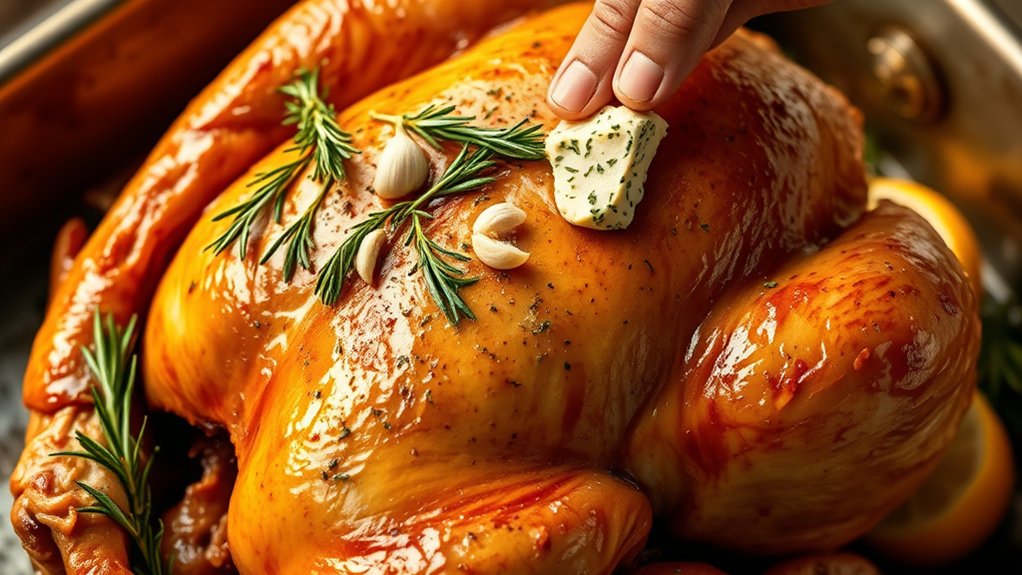
Now that your turkey is thawed and dry, season it well so the meat and skin taste balanced all the way through. Start with salt, then add black pepper, garlic powder, onion powder, and paprika for reliable seasoning options.
If you want deeper aroma, mix in dried thyme, rosemary, sage, or parsley. Rub the blend over the breast, legs, and thighs, then work it gently under the skin where you can without tearing it. This helps the seasoning reach the meat instead of sitting only on top.
For flavor boosters, add softened butter or olive oil to carry the spices and promote even browning. Use a light hand with strong spices so they support the turkey’s natural flavor instead of masking it. Taste your seasoning blend before applying it, and adjust the salt level now, because proper seasoning makes every later bite more satisfying and keeps the bird savory from skin to center.
Prepare the Pan, Rack, and Oven
Set a sturdy roasting rack inside a heavy roasting pan so the turkey sits above its drippings and heat can circulate evenly. Clear any roast pan clutter, including loose utensils, foil scraps, and extra inserts, so you can move the bird in and out without fuss.
Position the pan in the center of the oven, and check oven racks placement before you preheat; you want enough clearance above the turkey for steady browning and below for air flow. If the top rack sits too low, remove it or shift the lower rack down to avoid scorching.
Preheat the oven fully before loading the pan, and let the walls and rack reach target temperature. Wipe away spills, close the door firmly, and keep the rack stable. A clean, well-arranged setup helps you roast efficiently and avoids unnecessary handling once the turkey goes in.
Calculate Turkey Roasting Time
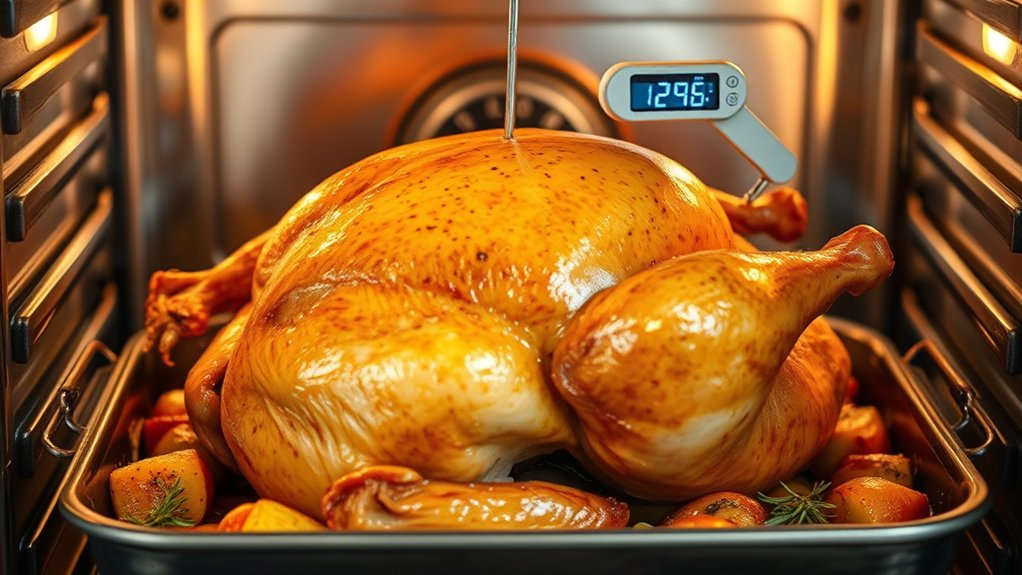
How long should you roast the turkey? Start with weight estimation, then plan by the bird’s size and whether it’s stuffed. For an unstuffed turkey, you can estimate about 13 minutes per pound at 350°F; for a stuffed bird, allow a bit more.
Estimate roast time by weight: about 13 minutes per pound at 350°F for an unstuffed turkey.
A 12-pound turkey often needs around 2.5 to 3 hours, while a 16-pound turkey may take 3 to 4 hours. Use timing precision by building in a little extra time, since ovens vary and cold turkeys roast slower.
If you’ve fully thawed the bird, your estimate stays more reliable. Calculate your start time by counting backward from when you want to serve dinner, then add a buffer for resting and carving.
Don’t rush the schedule, and don’t rely on guesswork. Careful planning keeps your roast on track and helps you move through the rest of the meal with confidence.
Check the Turkey’s Internal Temperature
Use a meat thermometer to check the turkey’s internal temperature, and aim for 165°F in the thickest part of the breast and 175°F in the innermost part of the thigh.
Insert the probe without touching bone, since bone can give you a false reading. Check both spots so you know the turkey’s cooked evenly and safely.
Safe Internal Temperature
Where should you check the turkey for doneness? You should confirm a safe internal temperature with a dependable instant-read thermometer. For proper safety, keep your focus on disciplined meat handling: wash hands, sanitize the probe, and avoid cross-contamination.
The turkey is ready when the thickest part of the meat reaches 165°F. If the reading falls short, return it to the oven and check again after a few minutes.
| Target | What to do |
|---|---|
| 165°F | Serve with confidence |
| Below 165°F | Continue roasting |
| After resting | Recheck if needed |
Insert the thermometer cleanly, read quickly, and trust the number, not the clock. A correct temperature protects texture and safety.
Temperature Check Spots
Check the turkey’s temperature in the right spots so you don’t miss a cold center or overcook the meat. Insert an instant-read thermometer into the thickest part of the breast, then test the innermost thigh near the bone, and finally the deepest part of the stuffing if you used any.
Keep the probe away from bone, fat, and the roasting pan, since each can give a false reading. You want 165°F in the breast and stuffing, and 175°F in the thigh for reliable doneness.
Let the bird rest before you carve; the carryover heat finishes the job. This habit sharpens your carving techniques and helps you time turkey pairings, from pan gravy to roasted vegetables, with confidence.
Baste and Cover the Turkey
Use a baster or spoon to moisten the turkey with its own pan juices every 30 to 45 minutes, keeping the skin from drying out.
If the breast starts browning too fast, lay a loose sheet of foil over it to shield it from direct heat. Keep the foil tented lightly so the bird can keep roasting evenly.
Basting The Turkey
Once the turkey has started to brown, baste it with the pan juices every 30 to 45 minutes to help keep the meat moist and encourage even color. Keep your basting frequency steady, but don’t overdo it; each time you open the oven, you lose heat and slow cooking.
Use a spoon or baster to coat the breast, thighs, and exposed skin, letting the juices run back into the pan. If the drippings are sparse, add a little melted butter or neutral oil to the pan before roasting; choose butter vs oil based on the flavor you want and how quickly you want browning.
Work quickly, close the door promptly, and return the bird to the oven so it continues roasting evenly and develops a well-balanced finish.
Covering With Foil
If the turkey’s breast or wings are browning too quickly, loosely tent them with foil after basting to shield the skin from direct heat while the rest of the bird finishes roasting. Keep the foil off the skin where possible so steam can escape and the surface stays crisp.
Use clean foil handling: crimp the edges loosely, then lift it away for the last 20 to 30 minutes if you want deeper color. Watch kitchen timing closely, because covering too early can slow browning and soften the skin.
- Place foil over exposed wing tips
- Fold it gently, never sealing tight
- Recheck color after each baste
- Remove foil when the skin looks golden
- Let heat circulate around the pan
Rest and Carve the Turkey
After you pull the turkey from the oven, let it rest for 20 to 30 minutes so the juices redistribute and the meat stays moist when you carve it. Transfer it to a cutting board with a moat or rim to catch drippings. Tent it loosely with foil; don’t seal it tight, or you’ll soften the skin.
While it rests, gather a sharp carving knife, a sturdy fork, and a platter. Slice by separating the legs, then the thighs, then the breast meat, cutting across the grain for cleaner, tender slices. Keep each cut deliberate and even.
If you want neat portions, remove the breast from the bone before slicing. Arrange the meat on the platter and spoon a little resting juice over it for shine. Save the carcass, pan drippings, and any scraps for turkey leftovers, stock, or sandwiches. Serve right away for the best texture and flavor.
Fix Common Turkey Roasting Problems
When the turkey roasts unevenly, the fix usually starts with heat control: shield the breast with foil if it browns too fast, rotate the pan halfway through cooking, and keep the oven door closed so the temperature stays steady. If the thighs lag behind, move the bird one rack lower for stronger bottom heat.
Use a probe thermometer, and pull the turkey when the breast reaches 160°F and the thigh 175°F. If the skin softens, increase heat briefly at the end for skin crisping. Avoid basting; every opening drops oven heat and slows browning.
If the pan drips and smokes, add a little water to the roasting pan, not over the turkey.
- Foil tent on pale breast
- Pan turned at midpoint
- Thermometer in thickest meat
- Short blast for crisping
- Rest before carving
Frequently Asked Questions
What Wine Pairs Best With Roast Turkey?
You’ll like a dry Pinot Noir; it complements roast turkey’s mild flavor. For richer sides, try Chardonnay with citrus pairing to echo brightness, and keep skin crisping in mind when serving.
Can I Roast a Turkey Without a Roasting Pan?
Yes, you can roast a turkey without one. Test turkey roasting alternatives: use improvised roasting setups like a sturdy rack over a sheet pan, oven-safe skillet, or vegetables for lift, airflow, and even browning.
How Do I Make Turkey Gravy From Drippings?
You whisk drippings with flour, then simmer with stock until smooth. Strain out solids, adjust gravy consistency, and season to taste.
If drippings smoke flavor is strong, add more stock or butter to mellow it.
Should I Stuff the Turkey or Bake Stuffing Separately?
You should bake stuffing separately; you’ll get better stuffing timing, safer cooking, and more crisp texture. If you stuff the bird, it’ll need longer roasting, risking dry meat.
Separate baking also improves flavor balance.
How Do I Store Leftover Turkey Safely?
You should refrigerate leftover turkey within two hours in shallow, airtight containers for leftover safety and proper storage. Freeze portions if you won’t eat them within four days, and reheat thoroughly to 165°F.
Conclusion
You’ve got this. Once you thaw, season, and roast the turkey at 350°F, the real key is patience: trust your thermometer, not the clock. If the breast starts browning too fast, just tent it with foil like a shield and let the heat work gently.
When the juices run clear and the bird rests under foil, you’ll carve into tender, fragrant slices that make the whole table pause. Save the drippings—you’ll want them.
Mastering these steps will ensure your oven-roast a turkey turns out perfectly every time.