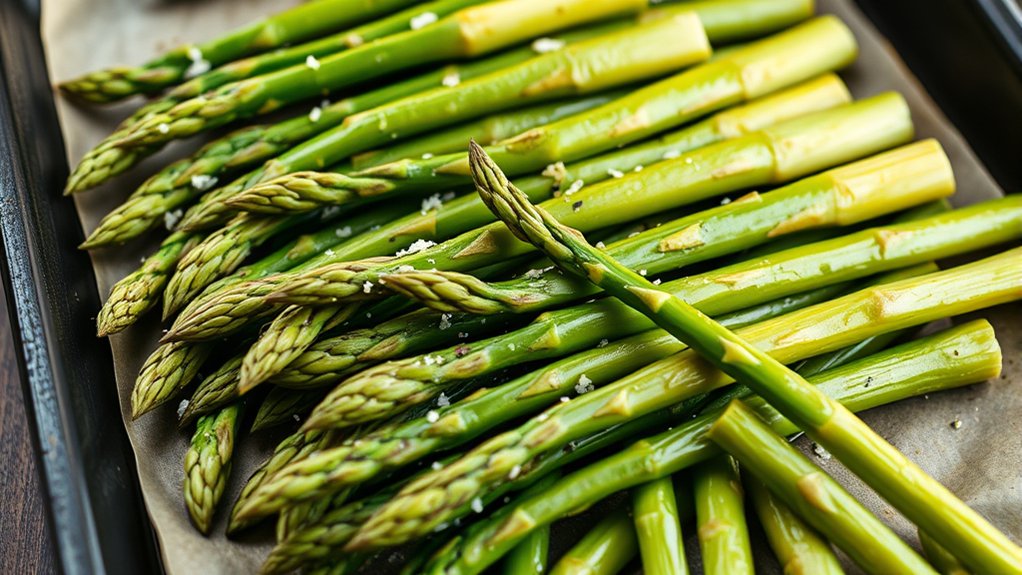
How to Cook Asparagus in the Oven
To cook asparagus in the oven, you start with a hot pan and simple prep, but the difference between crisp-tender spears and limp ones comes down to a few key details.
Cooking asparagus in the oven requires trimming the tough ends, seasoning with restraint, and roasting at the right temperature for just long enough.
The method is straightforward, yet the finish can change everything.
Paying attention to these steps ensures perfectly roasted asparagus every time.
Key Takeaways
- Choose fresh, firm asparagus with tight tips, then trim the woody ends and rinse well.
- Pat the spears dry, then toss lightly with olive oil, salt, and pepper.
- Spread asparagus in a single layer on a sheet pan to prevent steaming.
- Roast in a preheated 425°F oven for 10 to 15 minutes, checking thinner spears earlier.
- Remove when bright green and fork-tender, then serve immediately or finish with Parmesan and lemon.
Ingredients and Tools for Roasted Asparagus
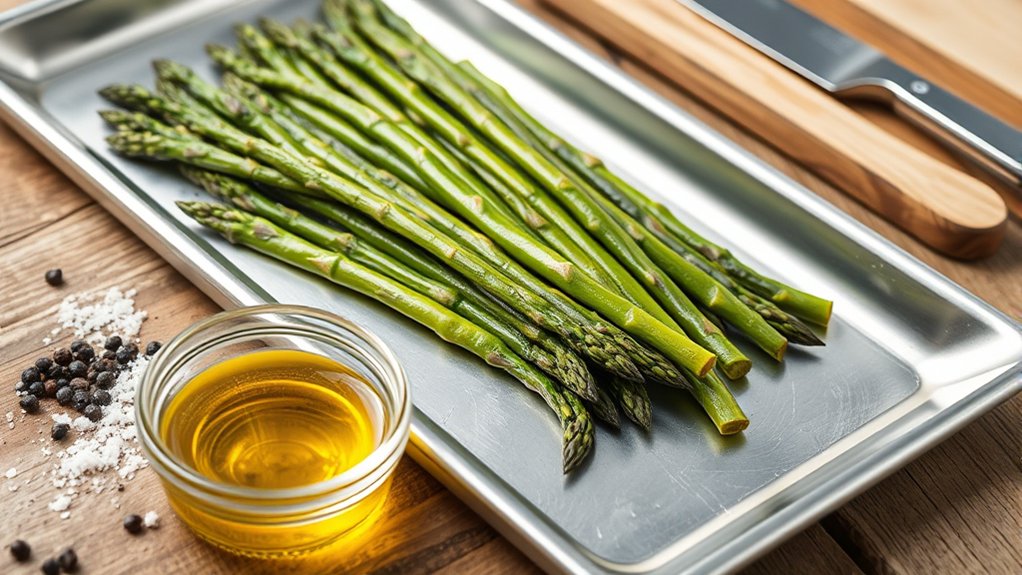
Before you start roasting, gather a few simple ingredients and tools: fresh asparagus, olive oil, salt, pepper, and a baking sheet. Choose firm, bright green spears with tight tips; they’ll roast evenly and taste clean. You don’t need much else.
Fresh asparagus, olive oil, salt, and pepper are all you need for simple, even roasting.
A small bowl helps you coat the spears, and tongs let you move them without bending. Use enough olive oil to lightly cover each stalk, then season with salt and pepper so the flavor stays balanced.
If you’re comparing produce quality for greenhouse economics, select asparagus with consistent thickness, because uniform spears cook at the same rate and reduce waste.
Keep your setup simple and efficient. You won’t need marinades or complicated tools, and microbial fermentation has no role here. The goal is direct heat, clean seasoning, and a surface that browns well in the oven.
With these ingredients and tools ready, you’re set for precise roasting.
How to Prep Asparagus for the Oven
Start by trimming off the woody ends so you’re left with tender spears. Wash the asparagus well, then dry it completely so it roasts instead of steams.
Toss it with oil and seasonings evenly so every stalk gets good flavor.
Trim Woody Ends
Snap or trim off the woody ends of the asparagus before it goes into the oven. Hold each spear near the base and bend it until it naturally breaks, or cut just above the tough section with a sharp knife. This helps you trim woody ends cleanly and keeps the spears tender after roasting.
Place the prepared asparagus on a sheet pan or other oven-safe pans for even cooking.
| Step | Action |
|---|---|
| 1 | Grip the spear near the bottom |
| 2 | Bend until it snaps naturally |
| 3 | Cut multiple spears at once |
| 4 | Discard the tough ends |
When you prep the stalks this way, you get better texture, simpler roasting, and a polished final dish every time.
Wash And Dry
Once you’ve trimmed off the woody ends, rinse the asparagus under cool running water to remove any grit or dirt trapped near the tips and stalks. Gently rub each spear with your fingers, especially where soil hides between the tight buds.
Don’t soak the asparagus; a quick rinse keeps the flavor clean and the texture crisp. After washing, lay the spears in a single layer on a clean kitchen towel or paper towels and pat them completely dry.
This wash dry step matters because excess water can steam the asparagus instead of letting it roast properly. Dry spears also help with easier handling and less kitchen cleanup. When the stalks feel dry to the touch, they’re ready for the next step in your oven preparation.
Season Evenly
Now that your asparagus is dry, arrange the spears in a single layer on a baking sheet and drizzle them lightly with olive oil. Use your hands or tongs to coat each spear, then season evenly with salt and black pepper.
If you want more flavor, add garlic powder, lemon zest, or grated Parmesan, but keep the amount modest so the asparagus still shines. Toss the spears gently, then spread them out again so they don’t steam.
This step helps every piece roast at the same oven temperature, which gives you tender stalks and lightly crisp tips. Avoid piling the asparagus together or overloading it with oil, because that can make the texture soggy.
Once seasoned, it’s ready for the oven.
What Oven Temperature Works Best?
For perfectly roasted asparagus, set your oven to 425°F, which gives the spears enough heat to brown quickly while keeping the centers tender. This temperature works best for most bundles because it encourages caramelization without drying out the stalks.
If you drop lower, you’ll soften the asparagus before it develops color; if you go much higher, you risk scorched tips and uneven results. Use oven safety: preheat fully, keep racks centered, and handle hot pans with care.
You should also consider asparagus ethics by choosing fresh, responsibly sourced spears so your cooking starts with quality ingredients. A steady 425°F helps you cook confidently and repeatably, whether you’re roasting thin or thick spears.
If your oven runs hot or cold, trust an oven thermometer rather than the dial. That small check keeps your temperature accurate and your asparagus consistently crisp-tender.
How Long to Roast Asparagus
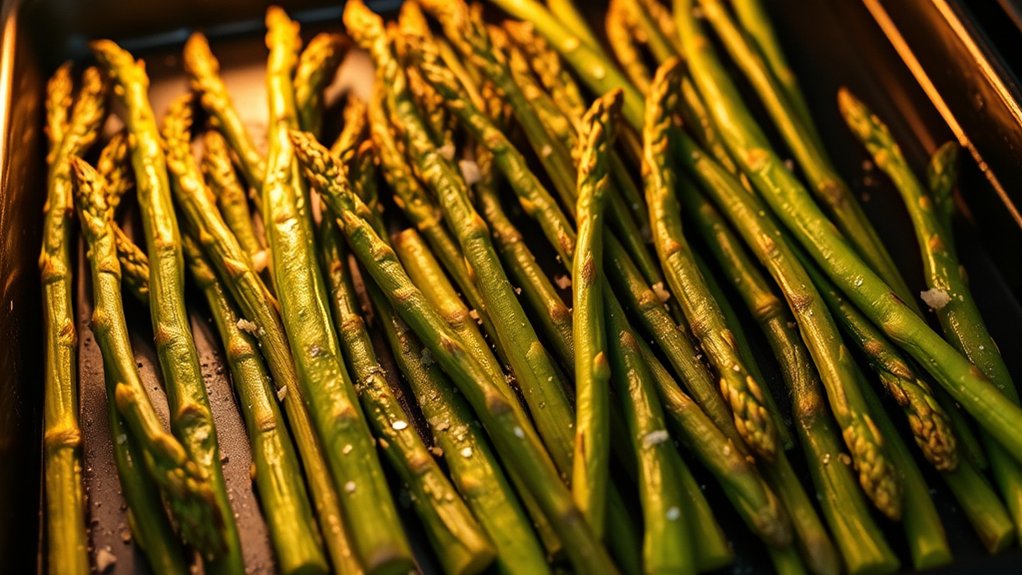
At 425°F, asparagus usually roasts in 10 to 15 minutes, depending on spear thickness. You should start checking at 10 minutes so you can match roasting timing to your texture goals. Thin spears turn tender fast, while thick spears need more time to lose their raw bite without going limp.
At 425°F, asparagus roasts in 10 to 15 minutes, so start checking at 10.
Pull the tray when the stalks are bright green, lightly browned, and just fork-tender.
You’ll get crisp-tender spears that still snap with confidence. You’ll avoid soggy asparagus that feels dull and overdone. You’ll serve a side that looks fresh and tastes clean.
For even results, spread the spears in a single layer and give them space. If some pieces are smaller, remove them early.
Don’t wait for full softness; asparagus keeps cooking briefly after you take it out. Trust the clock, then trust the color and tenderness.
Best Seasonings for Roasted Asparagus
What seasonings make asparagus taste best in the oven? Start with olive oil, kosher salt, and black pepper; they sharpen the vegetable’s natural flavor and build a clean roasted flavor. Add minced garlic or garlic powder if you want more depth, then finish with lemon zest for brightness.
Parmesan adds a savory edge, while red pepper flakes bring gentle heat. If you like herbs, use thyme, rosemary, or dill sparingly so they don’t overpower the spears.
You can also rely on pantry substitutions. Swap garlic powder for fresh garlic, dried oregano for thyme, or onion powder for a sweeter savory note. A pinch of smoked paprika gives color and complexity when you want a bolder profile.
Keep the seasoning light and even, then toss the asparagus well before it hits the pan. That balance helps every spear taste deliberate, crisp, and well seasoned.
How to Roast Asparagus Until Crispy
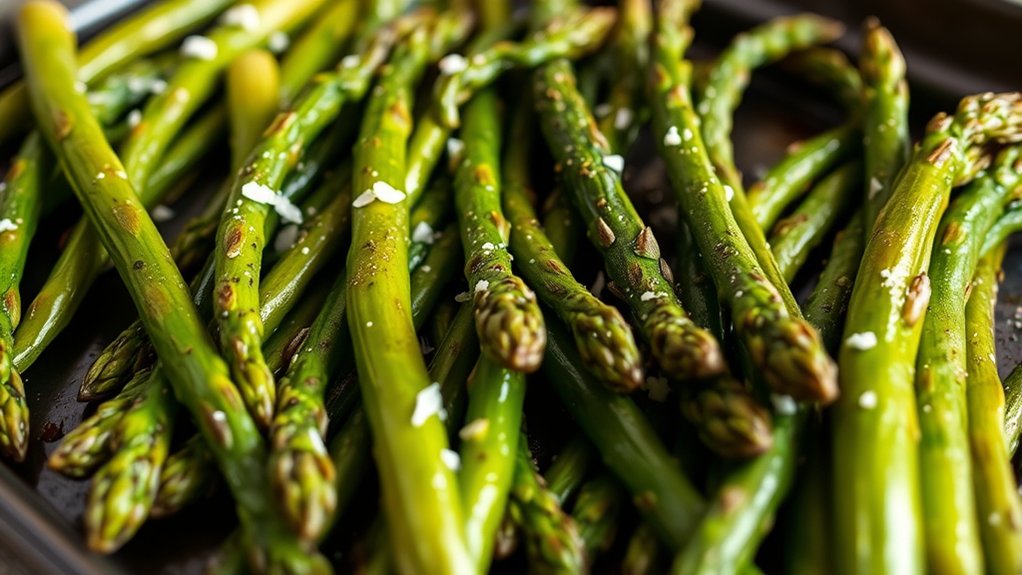
To roast asparagus until it turns crisp, spread the spears in a single layer on a preheated baking sheet and give them enough space to breathe. You’ll get better browning when you coat them lightly with oil, then roast them hot and fast. Turn once if you want even color, but don’t overhandle them; every extra minute softens the edges.
Roasting science is simple: dry heat drives off moisture, concentrates flavor, and sharpens the snap. For a strong texture contrast, aim for tender stems and blistered tips.
You’ll smell the sweetness deepen. You’ll see the edges curl and darken. You’ll taste a crisp bite that feels rewarding.
Watch closely near the end, because asparagus goes from crisp to limp quickly. Pull it when the stalks are just tender and the tips look charred in spots. Serve them right away for the best crunch.
Parmesan Roasted Asparagus
Choose firm, bright-green asparagus spears with tight tips so your Parmesan topping bakes onto the freshest stalks. Coat them lightly with oil first, then sprinkle grated Parmesan evenly so it clings without clumping.
Roast them in a hot oven just until the spears turn tender and the cheese melts into a crisp, golden layer.
Choosing Fresh Asparagus
How do you pick asparagus that’ll roast up tender and flavorful? Start with firm, bright green spears that stand straight and snap cleanly. Tight tips signal freshness, while dry, woody ends warn you to pass.
When you’re choosing freshness, look for spears about the same thickness so they cook evenly in the oven. Thin stalks roast fast; thicker ones stay juicy if you trim them well. Smell matters too—fresh asparagus should smell clean, not sour.
- You’ll taste the difference in every bite.
- You’ll avoid limp, tired spears.
- You’ll feel confident before you even preheat the oven.
For storage tips, wrap the ends in a damp paper towel and refrigerate the spears in a bag. Use them soon for the best Parmesan Roasted Asparagus.
Parmesan Coating Tips
For the best Parmesan Roasted Asparagus, coat the spears lightly so the cheese adds flavor without turning heavy or soggy. Start by tossing the asparagus with just enough oil to help the Parmesan adhere.
Then sprinkle finely grated cheese over the spears, not thick shreds, so you get an even parmesan crust. Press the cheese gently with your hands or tongs to improve contact without crushing the stalks.
Keep the coating technique consistent across the pan; uneven coverage leads to patchy browning. If you want extra seasoning, add black pepper, garlic powder, or a pinch of salt before the cheese.
Avoid piling on too much Parmesan, because excess moisture can steam the vegetables instead of helping them roast cleanly and develop a crisp, savory finish.
Oven Roasting Time
Once your asparagus is evenly coated, roast it in a preheated 400°F oven for about 10 to 15 minutes. Check thin spears at 8 minutes and thicker ones at 12 minutes so you don’t lose their snap. You want tender stalks with lightly browned Parmesan, not limp asparagus.
For reliable oven roasting, spread the spears in a single layer and avoid crowding; heat needs space to work. Keep asparagus freshness in mind: fresher stalks roast faster and taste brighter.
- Crisp edges make each bite satisfying.
- Golden cheese adds rich, savory depth.
- Perfect timing protects that fresh, grassy flavor.
Pull the pan when the tips are just crisp and the centers still feel firm. Serve immediately for the best texture and flavor.
Garlic and Lemon Variations
Garlic and lemon give oven-roasted asparagus a brighter, more savory finish. Toss the spears with olive oil, minced garlic, lemon juice, and a little salt before roasting.
If you prefer a softer garlic note, use garlic substitutions like garlic powder or roasted garlic paste. For a sharper citrus lift, try lemon zest alternatives such as lime zest, orange zest, or a splash of white wine vinegar.
| Add-In | Flavor | Use |
|---|---|---|
| Minced garlic | Bold | Mix with oil |
| Garlic powder | Mild | Dust lightly |
| Lemon juice | Bright | Add before roasting |
| Lemon zest alternatives | Fresh | Finish after roasting |
You can also add red pepper flakes for heat or grated Parmesan for a salty edge. Keep the seasoning balanced so the asparagus stays crisp-tender and the garlic doesn’t overpower the vegetable.
How to Tell When Asparagus Is Done
You’ll know asparagus is done when the spears turn tender yet still keep a slight crispness. Gently pierce the thickest part with a fork or knife; it should slide in easily without the asparagus falling apart.
Pull it from the oven as soon as it hits that point so you don’t lose the fresh texture.
Tender Yet Crisp Texture
When asparagus is done, the spears should be tender enough to pierce easily with a fork but still have a slight snap at the thickest part. You want a tender texture with a crisp bite, not mushy softness or limp edges.
Watch the color: bright green tells you the center stayed lively. Judge the spears by feel and look, then pull them from the oven before they collapse.
- You’ll taste freshness in every bite.
- You’ll keep the spears vibrant and elegant.
- You’ll serve asparagus that feels restaurant-worthy.
If the tips look dry or the stalks bend too far, you’ve gone too long. Remove them promptly, rest them briefly, and serve while they’re hot. This balance gives you the best result every time.
Easy Pierce Test
To check asparagus for doneness, slide the tip of a fork or knife into the thickest part of a spear. If it meets slight resistance, the asparagus is ready; if it feels hard, give it another minute or two.
Use this easy pierce test after the asparagus has roasted long enough to caramelize the tips and turn the stalks bright green. Move the pan carefully when you test, and keep oven rack safety in mind so you don’t burn yourself on the hot metal or let the pan shift.
You want the spear to stay firm enough to hold its shape, yet tender enough to bite through cleanly. Once it passes the test, take it out immediately and serve it hot.
What to Serve With Roasted Asparagus
Roasted asparagus pairs well with simple proteins, bright sauces, and starches that soak up its flavor. You can build a balanced plate by pairing it with grilled chicken, salmon, or eggs, then adding lemon butter, aioli, or vinaigrette for contrast.
Roasted asparagus shines alongside simple proteins and bright sauces that bring out its fresh, tender flavor.
If you’re weighing creativity vs practicality, choose what you already have and make smart budget friendly substitutions without losing freshness.
- Crispy roasted potatoes for comfort
- Herbed rice or quinoa for a light base
- Parmesan and toasted almonds for crunch
Keep the flavors clean so the asparagus stays the star. Serve it beside steak for a hearty dinner, or fold it into pasta for an easy weeknight meal.
You’ll get the best result when you match its tender, slightly sweet bite with something rich, acidic, or creamy. That balance makes your meal feel complete, satisfying, and easy to repeat.
Frequently Asked Questions
Can I Roast Frozen Asparagus?
Yes, you can roast frozen asparagus, but you’ll get softer spears. Skip thawing, toss with oil, roast hot, and watch closely.
If it smells like rotten asparagus, discard it; microwave reheating won’t fix that.
Do I Need to Peel Asparagus Before Roasting?
No, you usually don’t need peeling asparagus before roasting; just trim the woody ends. Use a hot roasting technique so spears cook fast and stay crisp-tender.
Peel only thick stalks if their skins seem tough.
Can I Use an Air Fryer Instead?
Yes, you can, ironically, skip the oven and still get crisp asparagus. You’ll make an easy air fryer substitution: toss spears with oil, then air-fry 7–10 minutes.
For frozen asparagus roasting, add 2–3 minutes.
Should I Blanch Asparagus First?
No, you usually don’t need to blanch asparagus first. You’ll get better blanching benefits only if you want extra tenderness and brighter color, but skip it for roasting.
Too much blanching causes texture changes and mushiness.
How Do I Store Leftover Roasted Asparagus?
Store leftovers in a shallow airtight container, then tuck them into your refrigerator promptly.
For better refrigerator tips, cool them first, add a paper towel to absorb moisture, and eat within 3 days.
Conclusion
With just a hot oven, a little oil, and a few simple seasonings, you can turn asparagus into a side worthy of the spotlight. Roast it until the spears are tender, lightly browned, and just shy of crisp—think of it as spring’s own green gold.
Whether you finish with Parmesan, garlic, or lemon, you’ve got a fast, elegant dish that pairs with almost anything. Serve it right away, and enjoy every bite.
For a delicious and easy vegetable side, cooking asparagus in the oven is the perfect method to bring out its natural flavor and texture.