How Long to Cook Turkey in Oven
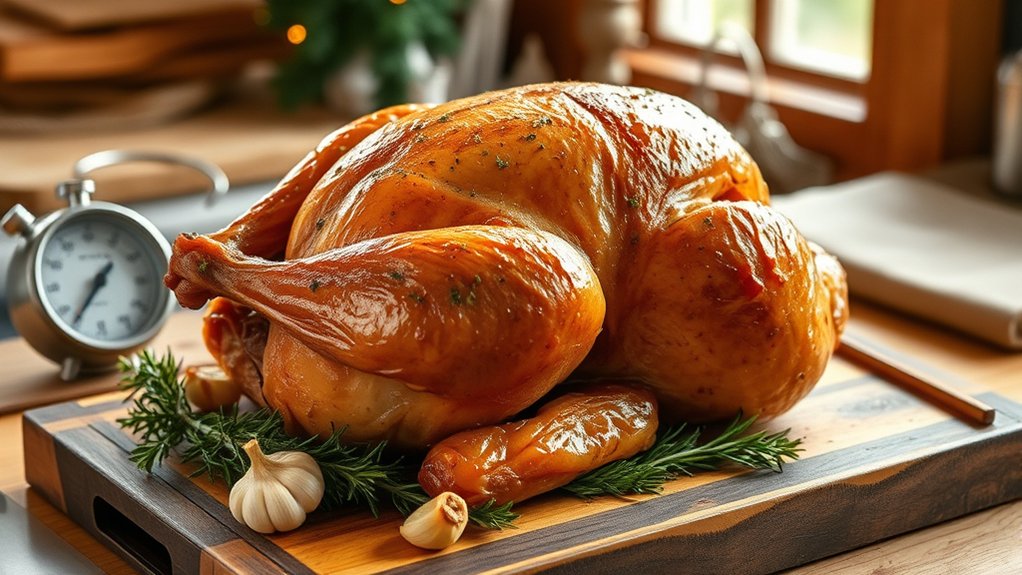
A 16-pound turkey can take about 3.5 to 4 hours in the oven, so knowing how long to cook turkey in the oven matters more than guesswork.
You’ll get the best results by matching weight to oven temperature, then checking the bird’s internal temperature instead of relying on the clock alone.
Stuffed or boneless turkeys change the math, and a few simple steps can help you avoid dry meat or a raw center.
Paying attention to these details ensures a perfectly cooked turkey every time.
Key Takeaways
- Unstuffed turkey needs about 13–15 minutes per pound in a 325°F oven.
- At 350°F, plan for about 11–13 minutes per pound; at 375°F, about 10–12 minutes per pound.
- A 10-pound turkey takes about 2–2.5 hours; a 16-pound turkey takes about 3.5–4 hours.
- Whole turkeys at 325°F take about 2.5–5 hours, depending on whether they weigh 8–20 pounds.
- Cook until the thickest thigh reaches 165°F, then rest the turkey 20–30 minutes before carving.
Turkey Cooking Times by Weight
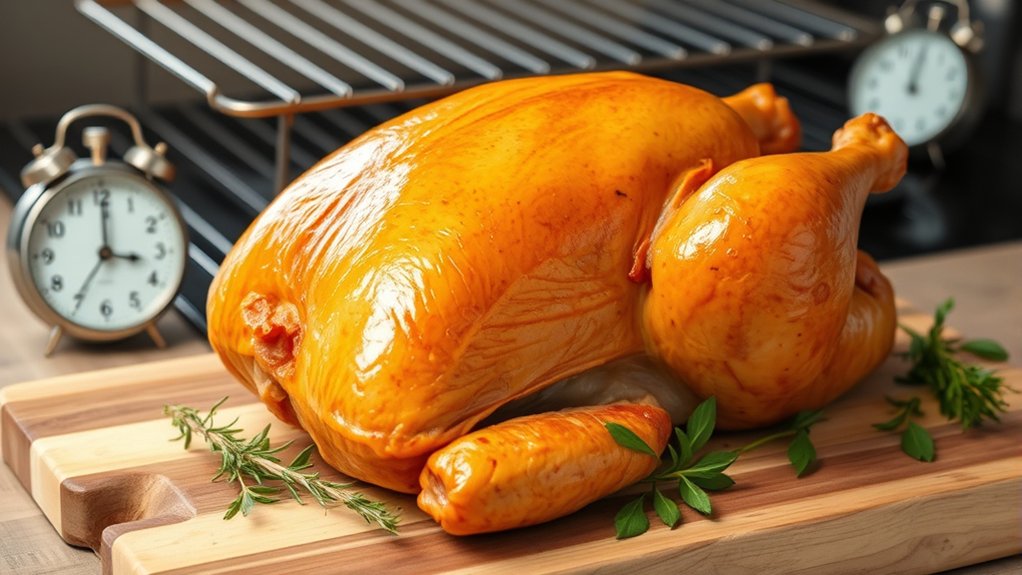
How long you cook a turkey in the oven depends mainly on its weight, so you’ll want to plan ahead before you even preheat. For an unstuffed bird, figure roughly 13 to 15 minutes per pound. That means a 10-pound turkey may need about 2 to 2.5 hours, while a 16-pound bird can take around 3.5 to 4 hours.
If you’re seasoning, rub the skin with turkey spice before roasting so the flavor has time to settle. Always place the turkey on a rack in a roasting pan, and check the thickest part of the thigh with a kitchen thermometer. Pull it when the thermometer reads 165°F, then let it rest so the juices redistribute.
If your bird is larger or smaller, use its weight as your guide, not guesswork, and start checking early near the end of the estimated time.
Roast Turkey Time by Oven Temperature
Oven temperature changes your roast time, so match the heat to the size of your turkey and watch it closely. At 325°F, expect about 13 to 15 minutes per pound for an unstuffed bird; at 350°F, you’ll usually need 11 to 13 minutes per pound.
If you choose 375°F, plan for 10 to 12 minutes per pound, but check sooner, since the skin browns faster. Use a reliable thermometer, and pull the turkey when the thickest part of the thigh reaches 165°F.
Letting it rest helps the juices settle, which is one of the best juicy techniques. Dry brining, buttering the skin, and using simple spice rubs can boost flavor without changing the cook time much.
Keep the oven closed as much as possible, and baste only if you want to, because opening the door slows roasting and can dry the surface.
How to Cook a Stuffed Turkey Safely
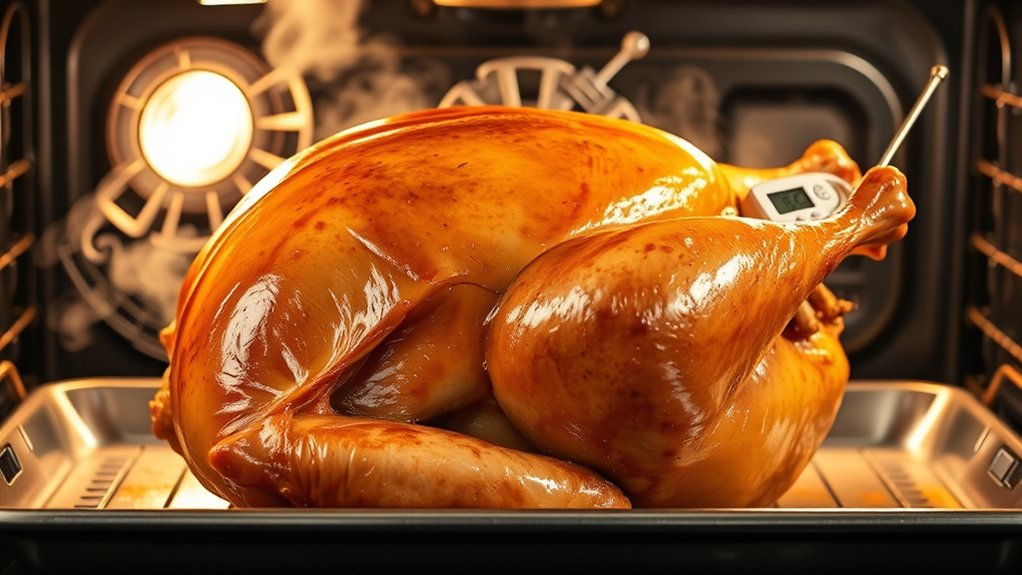
When you cook a stuffed turkey, make sure the stuffing reaches 165°F so it’s safe to eat. You’ll usually need to roast the turkey longer than an unstuffed bird, since the stuffing slows down cooking and must heat through fully.
Once it’s done, let the turkey rest before you carve it so the juices settle and the stuffing stays hot.
Safe Stuffing Temperatures
A stuffed turkey needs extra care because the stuffing must reach a safe 165°F, not just the meat. Use safe handling from start to finish, and keep kitchen hygiene tight so you don’t spread bacteria. Pack stuffing loosely so heat can move through it, and place it only in a fully thawed bird.
Check the center of the stuffing with a food thermometer, since the turkey’s outer meat can be ready before the filling is safe.
- Insert the thermometer into the thickest part of the stuffing.
- Avoid overpacking, which slows heating.
- Keep utensils, hands, and surfaces clean.
If the stuffing isn’t 165°F, keep cooking and check again. Don’t guess, and don’t rely on color alone. Temperature is the only sure sign it’s safe to eat.
Turkey And Stuffing Timing
How do you time a stuffed turkey safely? You should roast it longer than an unstuffed bird, because the stuffing slows heat transfer. Plan on about 15 to 30 extra minutes, depending on size and how tightly you pack the cavity.
Insert a thermometer into the center of the stuffing and aim for 165°F, while the turkey breast and thigh also reach safe temperatures. Don’t stuff the bird ahead of time; fill it just before roasting.
If you want more control, bake the stuffing separately in a casserole dish, almost like twice baked sides, and keep the turkey cavity loosely filled. That method helps the meat cook evenly and gives you more gravy options from the drippings.
Resting Before Carving
Once your stuffed turkey comes out of the oven, let it rest for at least 20 to 30 minutes before carving so the juices settle and the stuffing finishes equalizing in temperature. This resting before carving step helps you keep the meat moist and lowers the risk of scorching yourself with steam.
Cover the bird loosely with foil, but don’t wrap it tight or you’ll soften the skin. Use this time to check that the stuffing reached 165°F in the center. For safe handling and flavor considerations, carve only after the turkey has rested.
Keep the turkey on a warm, stable surface. Let carryover heat finish the interior. Slice and serve promptly for best texture.
Cooking Times for Whole and Boneless Turkey
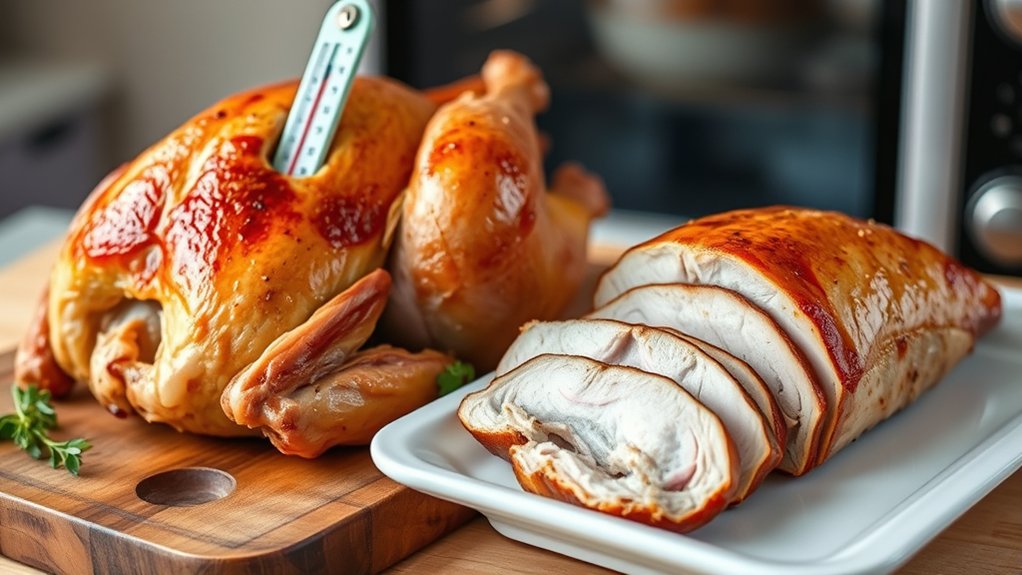
Cooking times vary by turkey type, so you’ll want to adjust based on whether you’re roasting a whole bird or a boneless cut. For a practical plan, use weight and oven temperature to estimate your timeline, then build in a little cushion for leftovers storage and gravy pairings.
| Turkey type | Temp | Time |
|---|---|---|
| Whole 8–12 lb | 325°F | 2.5–3 hr |
| Whole 12–16 lb | 325°F | 3–4 hr |
| Whole 16–20 lb | 325°F | 4–5 hr |
| Boneless breast 2–3 lb | 350°F | 1–1.5 hr |
| Boneless roast 4–6 lb | 350°F | 1.5–2.25 hr |
If you’re cooking a whole bird, plan on slower roasting and more total time. Boneless cuts cook faster and fit tighter schedules. Keep the oven steady, check your plan early, and adjust for size and shape rather than guessing.
How to Tell When Turkey Is Done?
You can tell turkey is done by checking its internal temperature with a meat thermometer; the thickest part should reach 165°F. You’ll also see clear visual signs, like juices running clear and the meat no longer looking pink near the bone.
When both the temperature and appearance look right, you can safely take it out of the oven.
Internal Temperature Check
How do you know when turkey is done? Check the internal temperature with a reliable meat thermometer. Insert it into the thickest part of the breast, avoiding bone, then test the innermost part of the thigh and wing joint.
You’re looking for 165°F in the breast and 175°F in the thigh for safe, juicy meat. If your reading seems off, verify thermometer calibration before trusting it.
Clean the probe before each check. Take readings in more than one spot. Let the temperature stabilize for a few seconds.
If the turkey hasn’t reached target temperature, keep roasting and recheck soon. Once it hits the mark, remove it from the oven and let it rest before carving.
Visual Doneness Signs
A thermometer gives you the most reliable answer, but a few visual cues can help confirm turkey doneness. Look for clear juices, browned skin, and legs that move easily at the joint.
The meat should look opaque, not pink near the bone. You can also check aroma indicators; a fully cooked turkey usually smells rich and savory, not raw or metallic.
| Sign | What to Look For |
|---|---|
| Skin color | Deep golden-brown |
| Juices | Clear, not pink |
| Legs | Loosen easily |
| Meat | Opaque throughout |
| Aroma | Fully cooked, savory |
If you cut into the thickest part, the juices should run clear. Trust these visual cues only after the thermometer confirms safe doneness.
Rest, Carve, and Serve Turkey
Once the turkey comes out of the oven, let it rest for at least 20 to 30 minutes so the juices settle and the meat stays moist. This resting science helps the temperature even out, so you get cleaner slices and better texture.
Cover the bird loosely with foil, but don’t wrap it tight or you’ll soften the skin.
When you carve, follow basic carving etiquette: use a sharp knife, steady the bird on a board, and slice against the grain for tender pieces. Start by removing the legs and wings, then cut the breast meat in even slices.
- Rest on a warm platter or cutting board
- Carve with long, confident strokes
- Serve immediately for the best flavor
Arrange the slices neatly, spoon over any juices you collected, and bring the turkey to the table while it’s still warm. This keeps the presentation tidy and the meat at its best.
How to Fix Dry, Undercooked, or Uneven Turkey
Even with careful resting and carving, turkey can still turn out dry, undercooked, or uneven, and the fix depends on the problem. If it’s dry, slice it thin and spoon on warm broth, gravy, or pan juices so the meat can reabsorb moisture. You can also serve it with a moist side or sauce for flavor contrast.
If the center is undercooked, return the bird to the oven at 325°F, cover the breast with foil, and keep cooking until the thickest part reaches 165°F. Use dry heat evenly by rotating the pan and checking the thigh and breast separately.
For uneven cooking, tent the darker areas and shield thin sections with foil before continuing. If one side finished early, carve that portion and chill it while the rest cooks. Always verify temperature with a thermometer, not color alone.
Frequently Asked Questions
Can I Cook Turkey From Frozen?
Yes, you can cook turkey from frozen, but you’ll need longer roasting times and safe frozen thawing planning.
You should roast it immediately, then check doneness carefully; the center must reach 165°F.
Should I Cover Turkey With Foil While Roasting?
Yes, you should cover it loosely with foil at first. Use foil tenting to prevent overbrowning, then uncover to crisp.
If you’re using spatchcock roasting, you usually don’t need foil unless parts brown too quickly.
What Oven Rack Position Is Best for Turkey?
You’ll get the best roast when you set the turkey on the lower-middle rack; that oven placement gives even heat and protects the skin.
If the bird fits, rack height matters less than airflow.
How Often Should I Baste the Turkey?
Baste every 30 to 45 minutes, but don’t overdo it. You’ll lose heat each time. Use butter sparingly for butter usage, and keep your basting frequency low so the turkey cooks evenly and stays juicy.
Can I Use a Roasting Bag for Turkey?
Yes, you can use roasting bags for turkey. You’ll trap moisture, speed cooking, and reduce cleanup.
Just follow the turkey bag instructions, cut slits for steam, and check the internal temperature carefully.
Conclusion
To cook turkey well, watch the weight, temperature, and timing. You’ll roast an unstuffed bird for about 13–15 minutes per pound at 325°F, then use a thermometer to confirm 165°F in the thigh. Let it rest so juices stay juicy, then carve and serve.
If it’s dry, underdone, or uneven, you can still fix it. With steady steps and smart checks, you’ll serve a safe, savory, satisfying turkey.
By following these guidelines, you’ll know exactly how long to cook turkey in oven for the best results.