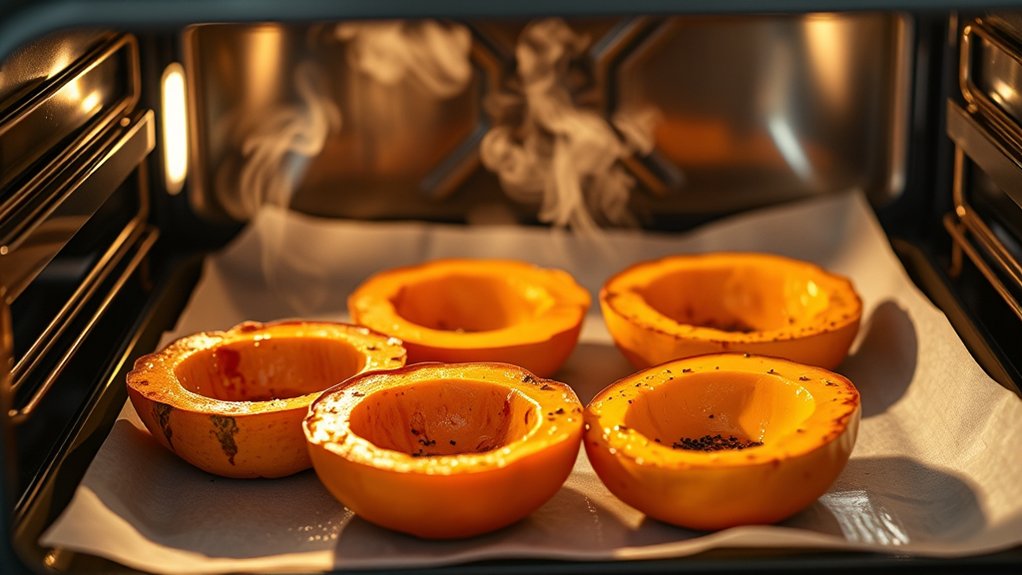
How to Cook Butternut Squash Oven
Like a golden sunset in your oven, butternut squash oven roasting turns this vegetable sweet and silky when done right. You’ll start by trimming, peeling, and cutting it into even pieces.
Then, toss them with olive oil, salt, and pepper before placing them on a parchment-lined sheet at 400°F.
In about 30 to 60 minutes, the edges will deepen and the flesh will soften.
Knowing exactly when it’s ready makes all the difference.
Key Takeaways
- Peel, seed, and cut butternut squash into even pieces for uniform oven cooking.
- Toss cubes with olive oil, salt, pepper, or seasonings like cinnamon, paprika, garlic, rosemary, or thyme.
- Roast at 400°F on a parchment-lined sheet in a single layer for 35–50 minutes.
- The squash is done when edges are golden, flesh is tender, and a fork slides in easily.
- Cool, store refrigerated up to 4 days, and reheat in the oven, skillet, or air fryer.
How to Prep Butternut Squash
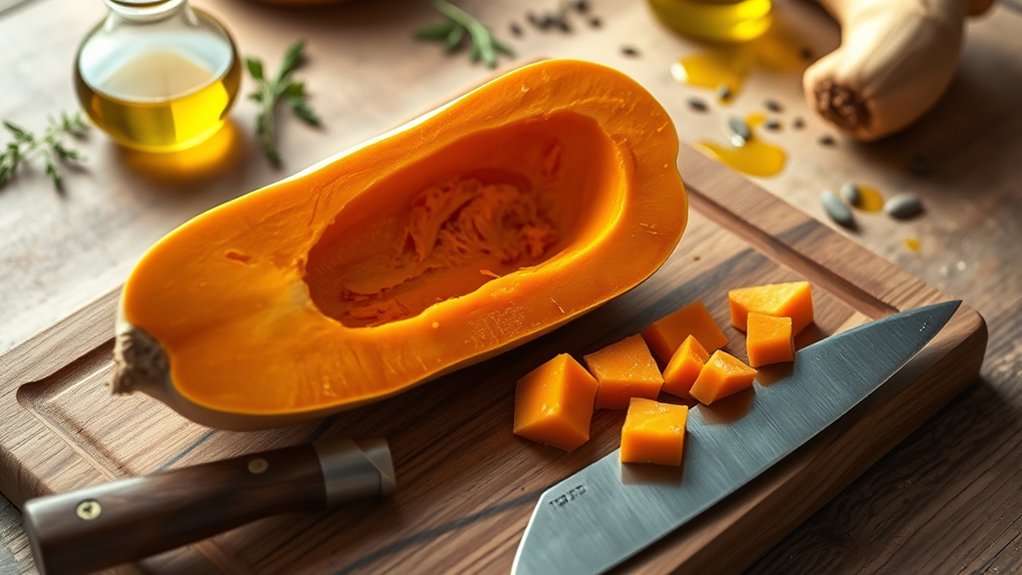
Start with a sturdy butternut squash, then use a sharp chef’s knife to trim off both ends so it sits flat and steady. Set it on your board and peel away the tough skin with a vegetable peeler, working in smooth strokes that reveal the bright orange flesh beneath.
If you spot stringy bits or pale spots, shave them off for a cleaner roast. For prepping peels, collect them quickly and discard them before they clutter your workspace. Scoop out the seeds with a spoon, then cut the squash into even pieces so it cooks uniformly in the oven.
Pat the chunks dry, then toss them with oil, salt, and choosing spices like cinnamon, paprika, sage, or thyme, depending on the flavor you want. Keep the seasoning light enough to let the squash’s natural sweetness shine through. Once everything’s coated, you’re ready to roast.
How to Cut Butternut Squash Safely
To cut butternut squash safely, you’ll want a sharp chef’s knife that can glide through the dense, glossy skin with less force. Set the squash on a sturdy cutting board and steady it with a damp towel underneath so it won’t slip.
With the squash firmly anchored, you can slice it cleanly and get it ready for roasting.
Choosing The Right Knife
Which knife should you reach for when tackling a butternut squash? Choose a sturdy chef’s knife with a wide blade and a sharp edge; it gives you the control you need without forcing a culinary misalignment.
A flimsy paring knife often creates a technique mismatch, making the cut harder and more dangerous. You want a blade that can glide through the tough skin and dense flesh with one confident motion.
Keep the knife razor-sharp, because dull steel slips and demands extra pressure. Use a knife that feels balanced in your hand, so you can work with steady, deliberate slices.
When the blade matches the squash’s firmness, you cut cleaner, waste less flesh, and set yourself up for sweet, caramelized pieces ready for roasting.
Stabilizing The Squash
Once you’ve got a sharp chef’s knife in hand, the next step is keeping the butternut squash steady so every cut feels controlled. Set it on a dry cutting board and trim a thin slice from the base to create a flat surface.
If the neck rolls, halve the squash crosswise first; that gives you better leverage and cleaner cuts. Use these stability tips:
- Tuck a folded towel under the board.
- Hold the squash with curled fingertips, away from the blade.
- Slice downward in firm, even strokes.
For storage considerations, keep any unused squash whole in a cool, dark place, or wrap cut pieces tightly and refrigerate. Once stabilized, the flesh gives way with less effort, revealing sweet, orange meat ready for roasting.
How to Roast a Whole Butternut Squash
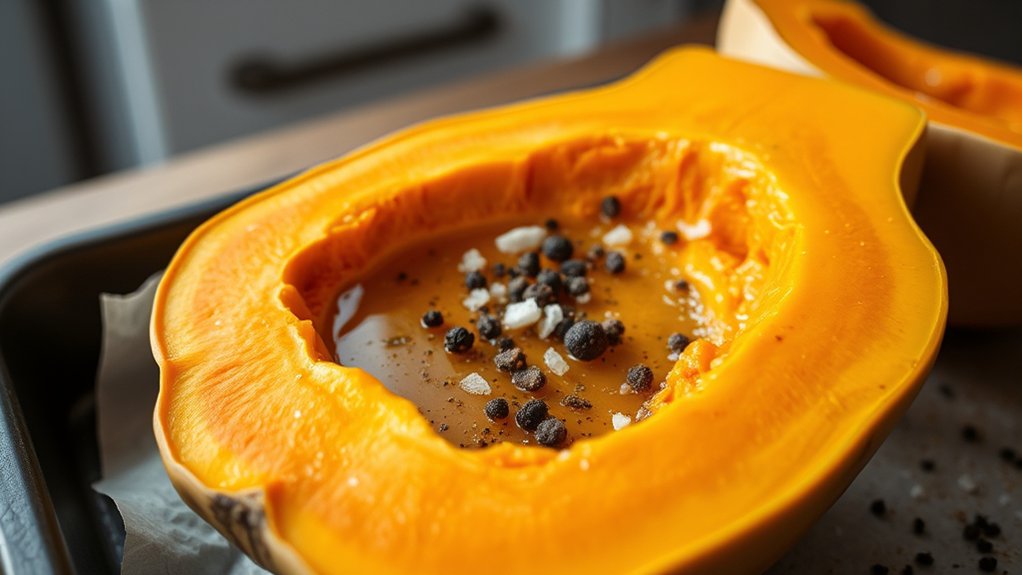
Roasting a whole butternut squash is one of the easiest ways to bring out its naturally sweet, nutty flavor. Preheat your oven to 400°F, then rinse and dry the squash. Pierce the skin several times with a sharp knife so steam can escape, and keep knife safety in mind as you handle the hard shell.
Set it on a parchment-lined baking sheet or in a shallow dish, then roast until the flesh feels tender when pressed and the skin looks deeply browned. The squash will smell warm, caramelized, and cozy, with tips for autumn flavors already shining through.
Let it cool just enough to handle, then slice it open lengthwise and scoop out the seeds. You can use the soft, golden flesh right away in soups, mash, or salads, or store it for later.
Simple Seasoning Ideas for Roasted Butternut Squash
For a simple, flavorful finish, toss your roasted butternut squash with olive oil, salt, and black pepper while it’s still warm so the seasonings cling to the tender flesh. You can keep the flavor bright or cozy with just a few pantry staples. Try these easy ideas:
Toss warm roasted butternut squash with olive oil, salt, and pepper for a simple, flavorful finish.
- Cinnamon and maple syrup for a sweet, caramel-like glaze.
- Smoked paprika and garlic powder for savory depth and gentle heat.
- Rosemary and thyme for a fragrant, earthy finish.
You can also add a pinch of cayenne if you like a little kick, or a dusting of brown sugar for extra warmth. Butternut squash loves roasted spices because they highlight its natural sweetness without overpowering it.
Taste as you go, then adjust the seasoning until every bite tastes balanced, golden, and rich. A squeeze of lemon at the end can wake up the flavors and make the squash taste even more vibrant.
How to Roast Butternut Squash at 400°F
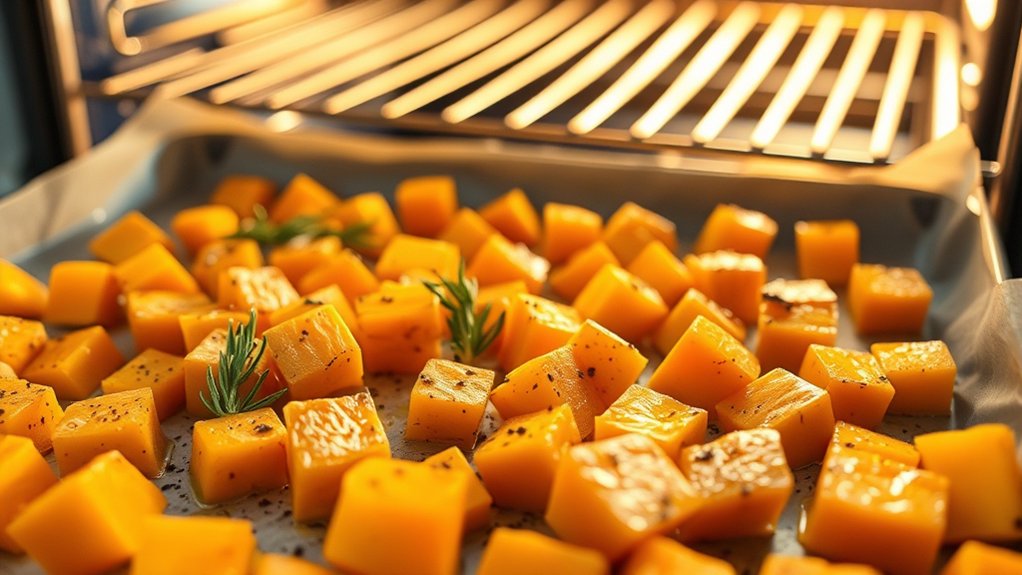
How do you roast butternut squash at 400°F so it turns tender and caramelized? You start by peeling, seeding, and cutting the squash into even cubes or halves, then toss it with oil, salt, and any seasonings you like.
Spread it in a single layer on a rimmed baking sheet, giving each piece room to breathe. That spacing helps the edges brown instead of steam. Roast it at 400°F in a hot oven until the flesh softens and the surfaces deepen into golden, sticky sweetness.
Good roasting techniques also mean turning the pieces once for even color. Don’t fall for butternut squash myths that say you need lots of sugar or complicated prep; the squash already tastes rich on its own.
When you pull it out, it should smell nutty, savory, and slightly sweet, with crisp caramelized corners that make every bite irresistible and comforting.
How Long to Roast Butternut Squash?
How long you roast butternut squash depends on the size of your pieces and the oven temperature, but cubes usually turn tender in about 25 to 35 minutes at 400°F.
If you’re roasting halves, expect closer to 45 to 60 minutes, until the flesh is golden, soft, and fragrant. You’ll know it’s done when a fork slips in easily and the edges caramelize into a sweet, nutty finish.
Roast Time by Size
The size of your butternut squash sets the roasting clock: small halves usually need about 30 to 40 minutes, medium ones 40 to 50 minutes, and larger pieces can take 50 to 60 minutes or more. You’ll get the best results by matching roasting temps to squash sizes, so the flesh turns tender and sweet without drying out.
- Small halves caramelize fast and stay silky.
- Medium pieces develop a richer, deeper flavor.
- Large chunks need extra time to soften fully.
When you cut evenly, you help each piece roast at the same pace. Watch for golden edges and a fork that slips in easily. That’s how you know the squash has reached its most buttery, appetizing peak.
Temperature and Timing
Once you’ve matched roasting time to the squash’s size, oven temperature becomes the next key to getting tender, caramelized flesh. Set your oven to 400°F for reliable browning, or use 425°F if you want a deeper, sweeter roast.
Halved squash usually needs 35 to 50 minutes, while cubes can finish in 20 to 30 minutes, depending on their size. Keep pieces in a single layer so heat reaches every edge evenly.
Use sharp knife skills and safe handling when you trim and seed the squash, then coat it lightly with oil and salt before it goes in. Rotate the pan halfway through roasting to encourage even color and keep the texture soft, rich, and fragrant without drying out.
Signs It’s Done
You’ll know butternut squash is ready when the edges turn deeply golden, the flesh looks glossy and caramelized, and a fork slides in with little resistance. Check the thickest pieces first; they should feel tender, not mushy.
If you want a sweeter roast, leave it in a few more minutes until the sugars darken and the aroma turns nutty. For butternut squash safety, handle the hot pan with oven mitts and let the squash cool slightly before serving or cutting.
- Look for browned edges.
- Test tenderness with a fork.
- Rest briefly for easier slicing and kitchen cleanup.
If the squash still feels firm, roast a little longer, then check again.
How to Tell When Roasted Squash Is Done
Watch for the squash to turn tender and caramelized, with golden-brown edges and a fork that slides in easily with just a little resistance. You’ll notice the flesh looks slightly glossy and deepens in color, while the cubes hold their shape instead of collapsing.
Use texture cues: the outside should feel lightly crisp, and the inside should mash softly when you press it with the tip of a knife. That tasty science comes from the sugars concentrating as moisture cooks off, so the squash tastes sweeter and richer when it’s ready.
Check a few pieces in the center of the pan, since smaller edges can finish sooner. If the squash still feels firm or pale, give it a few more minutes and check again. When it’s done, it should smell nutty, look inviting, and taste naturally sweet.
How to Store and Reheat Roasted Squash
Let the roasted squash cool completely, then transfer it to an airtight container and refrigerate it for up to 4 days. Follow these storage guidelines so the cubes stay tender, not soggy, and keep their sweet, caramelized flavor. For the best results, spread them in a single layer before chilling.
To reheat, use heat that wakes up the edges without drying the flesh out:
- Oven: Warm at 400°F for 8–10 minutes.
- Skillet: Heat over medium with a light drizzle of oil.
- Air fryer: Re-crisp at 375°F for 3–5 minutes.
If you want a crispy texture, avoid microwaving unless you’re in a rush; it softens the browning fast. Reheat only what you need, and let the squash sit briefly after warming so the steam settles. You’ll bring back its glossy, golden finish and enjoy each bite as if it just came from the oven.
Easy Ways to Use Roasted Butternut Squash
Roasted butternut squash is wonderfully versatile, so it’s easy to turn a simple batch into several meals. Toss warm cubes into grain bowls with quinoa, arugula, feta, and a bright vinaigrette for a sweet-savory lunch.
For a cozy dinner, blend the squash into soup with broth, garlic, and cream, then finish with toasted pepitas. You can also fold it into risotto, pasta, omelets, or tacos for extra color and richness.
If you love flavor pairing, try maple and sage, cumin and lime, or goat cheese and walnuts. For a quick side, mash it with butter, salt, and a pinch of cinnamon.
Safety tips matter too: use a sharp knife, let the squash cool before handling, and store leftovers promptly in shallow containers. With a little creativity, you’ll keep every roasted bite exciting and waste less.
Frequently Asked Questions
Can You Roast Butternut Squash With the Skin On?
Yes, you can roast butternut squash with the skin on; it softens nicely. For easy roasting skin on, halve it, scoop seeds, and roast cut-side down.
Freezing prep works better if you peel first.
Should Butternut Squash Be Peeled Before Freezing?
No, you don’t need to peel butternut squash before freezing if you’re freezing cubes, but peeling helps with freezing prep and smoother use later.
For best peeling guidance, remove the skin, cut, blanch, then freeze.
Can You Roast Frozen Butternut Squash Directly?
Yes, you can roast frozen butternut squash directly, but you’ll get more steam than caramelization. Use a hot roasting technique, spread pieces out, and expect softer texture outcomes.
You’ll still enjoy sweet, golden, tender bites.
What Oven Rack Position Is Best for Roasting Squash?
You’ll get the best roast on the middle oven rack; it promotes even heat and caramelization. For reliable roasting techniques, use proper oven rack placement, spacing squash pieces well so they brown beautifully and cook through.
Can You Make Roasted Butternut Squash Crispy?
Yes, you can coax roasted butternut squash into a golden, crackling finish. Cut it small, use olive oil spray, and roast hot.
Don’t overcrowd the pan; you’ll invite a crispy texture and sweeter edges.
Conclusion
With a little care, you can coax butternut squash into a tender, caramelized treat that fills your kitchen with a warm, sweet aroma. Once it’s golden and fork-tender, it’s ready to grace soups, salads, mash, or a simple weeknight side.
Keep leftovers chilled, reheat gently, and you’ll have more of that cozy richness on hand.
So grab your squash, trust the oven, and let it quietly work its magic. Cooking butternut squash in the oven is an easy way to bring out its natural sweetness and create a delicious dish every time.