How to Clean Grease From Oven
Grease on your oven doesn’t have to stay there, but the wrong approach can make the job harder or damage the finish. Cleaning grease from your oven requires a few simple supplies and the right technique. The process becomes easier when you follow the correct order.
First, you’ll deal with the racks and loose buildup. Then, you can target the baked-on spots that resist a quick wipe. The key is knowing what to use, and what to avoid.
Key Takeaways
- Let the oven cool completely, then remove racks and wipe away loose grime with a damp microfiber cloth.
- Make a baking soda and water paste, apply it to greasy spots, and avoid heating elements and vents.
- Leave the paste for several hours, then scrub small sections with a nonabrasive sponge or plastic scraper.
- Wipe loosened grease with a damp microfiber cloth, rinsing often; use white vinegar for stubborn buildup or odor.
- Clean racks separately in warm soapy water, dry completely, and wipe spills promptly to prevent future grease buildup.
How to Clean Oven Grease
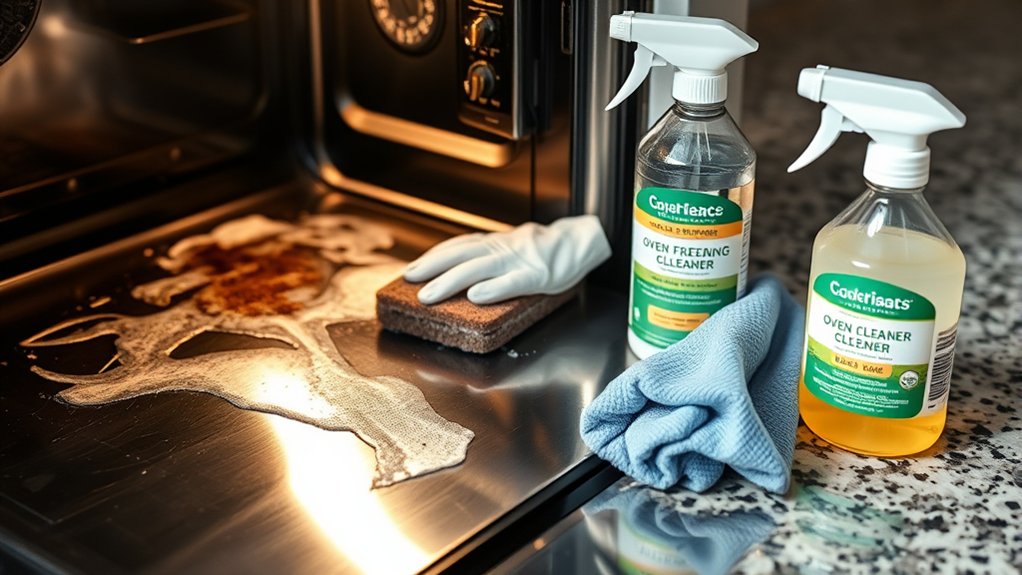
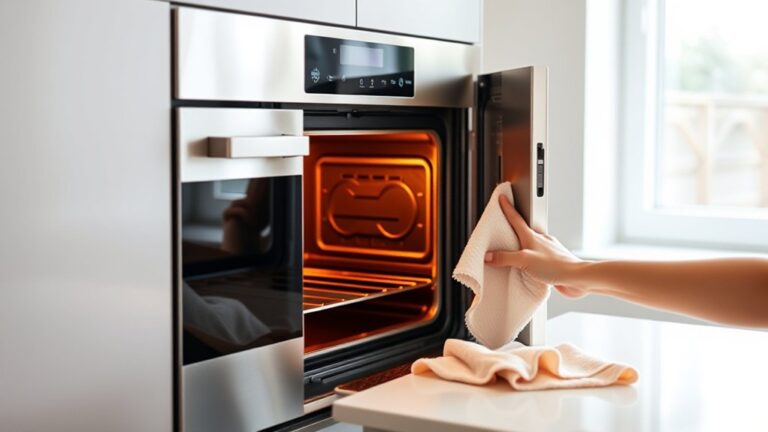
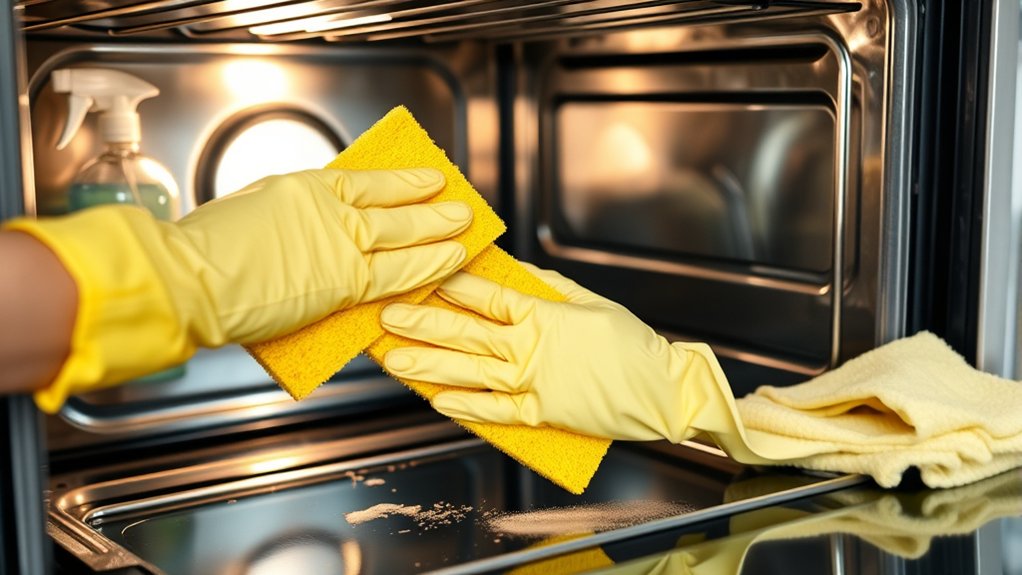
Start by letting the oven cool completely, then remove racks and loose debris so you can reach the greasy spots easily. Wipe the interior with a damp microfiber cloth to lift surface grime before it hardens.
Let the oven cool, remove racks, and wipe away surface grime with a damp microfiber cloth.
For stubborn grease, apply a simple paste of baking soda and water, spread it on the affected areas, and leave it in place long enough to loosen buildup. Then scrub with a nonabrasive sponge, focusing on corners, door seams, and the bottom panel.
Use a damp cloth to remove residue, repeating until the surface feels clean. If odor lingers, wipe the oven with a little diluted vinegar for odor control.
These cleaning hacks work best when you treat small sections at a time and avoid excessive moisture. Finish by drying every surface thoroughly so no streaks or film remain, and your oven’s interior looks cleaner and smells fresher.
What You’ll Need
To clean oven grease effectively, you’ll want a few basic supplies on hand: baking soda, water, white vinegar, a microfiber cloth, a nonabrasive sponge, and a spray bottle. You’ll also need rubber gloves if your skin is sensitive, plus a small bowl for mixing paste.
These items let you lift baked-on residue without scratching the finish or spreading grime.
Baking soda helps loosen stubborn grease, while vinegar cuts through cleaning oils and helps wipe away film. Fill the spray bottle with vinegar or water, depending on the step you’re on.
Use the microfiber cloth for final wiping, since it traps residue better than paper towels. The sponge works well on heavier spots, including stovetop splatters near the oven opening.
Keep everything within reach before you start so you can work quickly and avoid drips. With the right tools, you can clean efficiently and keep the process controlled.
How to Clean Oven Racks
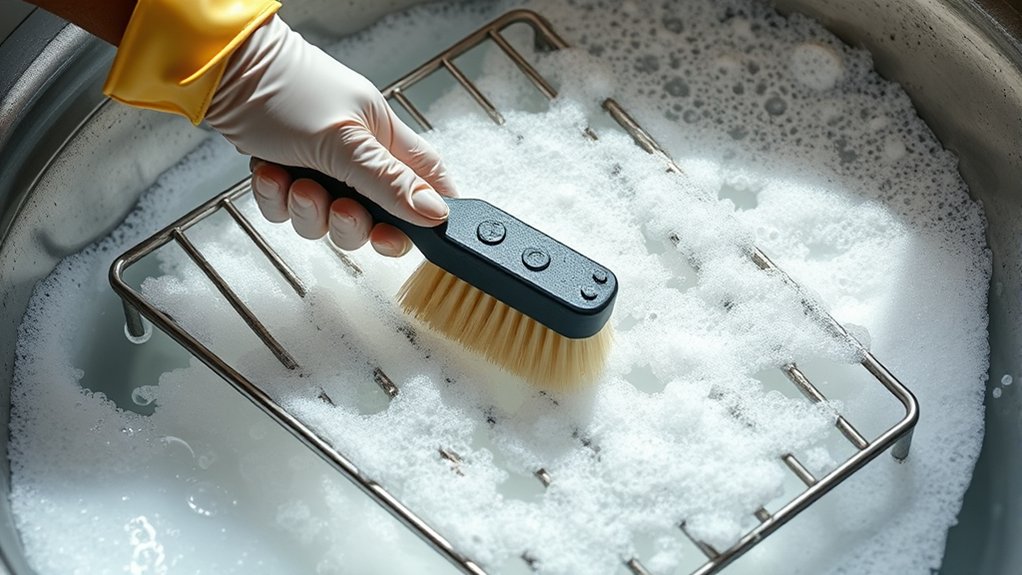
Remove the oven racks first so you can clean them separately and reach the oven interior more easily. Let them cool, then wear gloves for cleaning safety. Fill a tub with warm water and a little dish soap, or use a large sink if the racks fit.
Soak them for 20 to 30 minutes, then wipe each bar with a nonabrasive sponge. Rinse well and dry completely to prevent spots and rust. For stubborn residue, scrub gently with a nylon brush; don’t use metal tools that can scratch the finish.
Regular rack care supports appliance maintenance and keeps your oven working cleanly.
- Remove loose crumbs before soaking.
- Use warm, soapy water for routine cleaning.
- Scrub only with nonabrasive tools.
- Dry racks fully before reinstalling.
How to Remove Baked-On Grease
With the racks out, you can focus on the baked-on grease inside the oven. Mix a paste of baking soda and water, then spread it over the greasy spots, avoiding heating elements and vents. Let it sit for several hours so the cleaning chemistry can break down hardened residue.
For thick buildup, apply a little white vinegar after the paste dries; the fizz helps lift grime. Scrub with a nonabrasive sponge or plastic scraper, working in small sections. Wipe away loosened grease with a damp microfiber cloth, rinsing it often.
If the oven still smells smoky, place a bowl of vinegar in the empty cavity for odor removal after cleaning. Finish by wiping the interior again with clean water and drying it completely. For stubborn patches, repeat the paste treatment rather than using harsh tools, which can scratch the surface and make future cleaning harder.
How to Prevent Grease Buildup
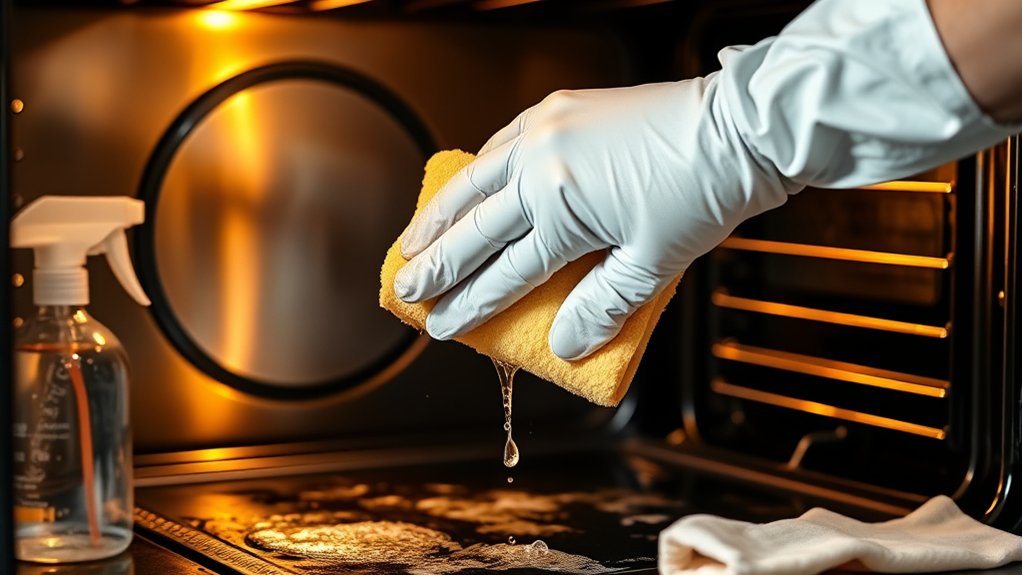
Once your oven is clean, you can keep grease from building up by wiping spills as soon as the oven cools. That simple habit supports grease prevention and cuts future scrubbing.
For steady oven maintenance, check the oven after roasting, broiling, or baking foods that splatter. Use a damp microfiber cloth for light messes, and a mild degreaser for sticky spots.
- Cover dishes with lids or foil when possible.
- Place a baking sheet under casseroles and pies.
- Clean racks and trays before residue hardens.
- Inspect door seals so heat and grease don’t escape.
You should also avoid overcrowding pans, because tight spacing increases splatter. If you cook greasy meats often, line the lower rack with a reusable oven liner approved by the manufacturer.
Finish by scheduling a quick monthly wipe-down, so small messes never turn into heavy buildup.
Frequently Asked Questions
Can I Clean Oven Grease Without Chemical Cleaners?
Yes, you can clean oven grease without chemical cleaners. Use baking soda, vinegar, and hot water for natural cleaning.
You’ll scrub, wipe, and repeat until the surfaces look grease free and fresh.
How Often Should I Deep Clean My Oven?
You should deep clean your oven every three to six months; if you bake weekly, do it monthly. For example, a busy home cook cut smoke by cleaning sooner.
Use cleaning frequency and heat safe methods.
Is It Safe to Clean a Hot Oven?
No, you shouldn’t clean a hot oven. You risk burns, fumes, and chemical splatter.
Let it cool completely first, then do safe cleaning with gloves, ventilation, and a nonabrasive cleaner.
Can I Use Vinegar on Self-Cleaning Ovens?
No, you shouldn’t use vinegar on self-cleaning ovens. It can damage finishes and exceed self cleaning limits.
For vinegar safety, check your manual first, then wipe cool surfaces with mild soap and water instead.
How Do I Know if Grease Damage Is Serious?
You’ll know grease damage is serious if you see smoke, burning smells, recurring grease staining, or sticky residue near heating elements. Stop using the oven and check oven safety before cleaning or calling a technician.
Conclusion
By cleaning your oven regularly, you protect your food, extend your appliance’s life, and make every meal feel easier to prepare. You remove grease before it hardens, you avoid harsh scrubbing later, and you create a safer, fresher kitchen.
Keep up the habit: cool the oven, lift out the racks, treat spills early, and wipe down often. Small effort now saves big effort later, and your oven will thank you with cleaner, better cooking.
Incorporating these steps into your routine ensures effective grease removal and helps maintain a spotless appliance. Regularly cleaning grease from your oven is key to preserving its performance and your kitchen’s cleanliness.