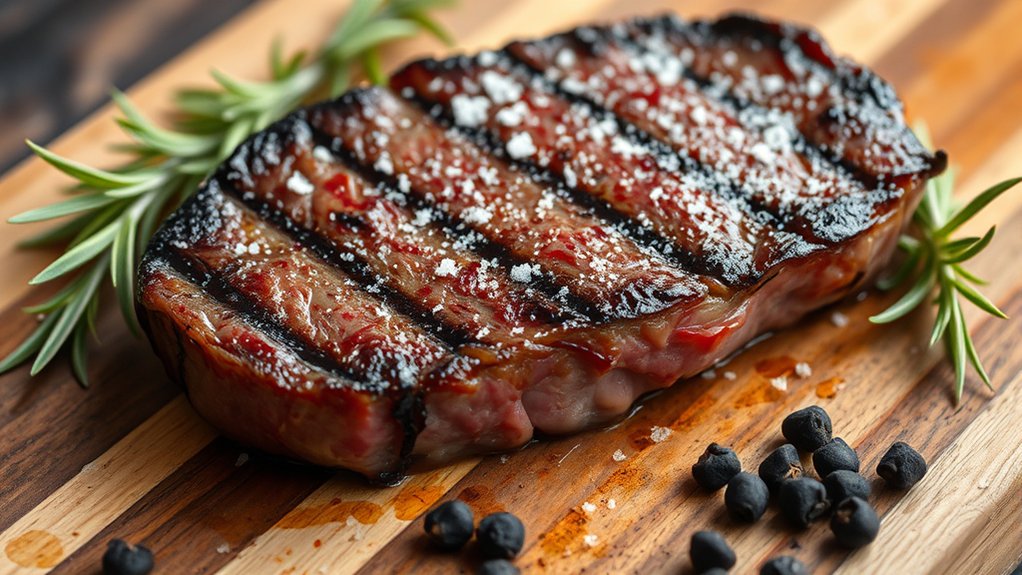
How to Cook Skirt Steak in Oven
To cook skirt steak in the oven, you need to start with the right prep: season it well, decide whether a quick sear is worth the extra step, and use a hot oven so the meat cooks fast without drying out.
The real difference comes from timing and doneness, and if you miss either, the result changes fast. Here’s how you handle each step so the steak stays tender and full of flavor.
Key Takeaways
- Pat the skirt steak dry, trim excess silver skin, and let it sit at room temperature for 20–30 minutes.
- Season simply with salt, pepper, and optional garlic or paprika to enhance the beef’s natural flavor.
- Preheat the oven to 425–450°F and, if desired, sear the steak briefly in a very hot pan first.
- Bake based on thickness: about 4–6 minutes for 1/2 inch, 6–8 for 3/4 inch, and 8–10 for 1 inch.
- Rest 5–10 minutes, then slice thinly against the grain for the most tender serving.
How Do You Prepare Skirt Steak for the Oven?
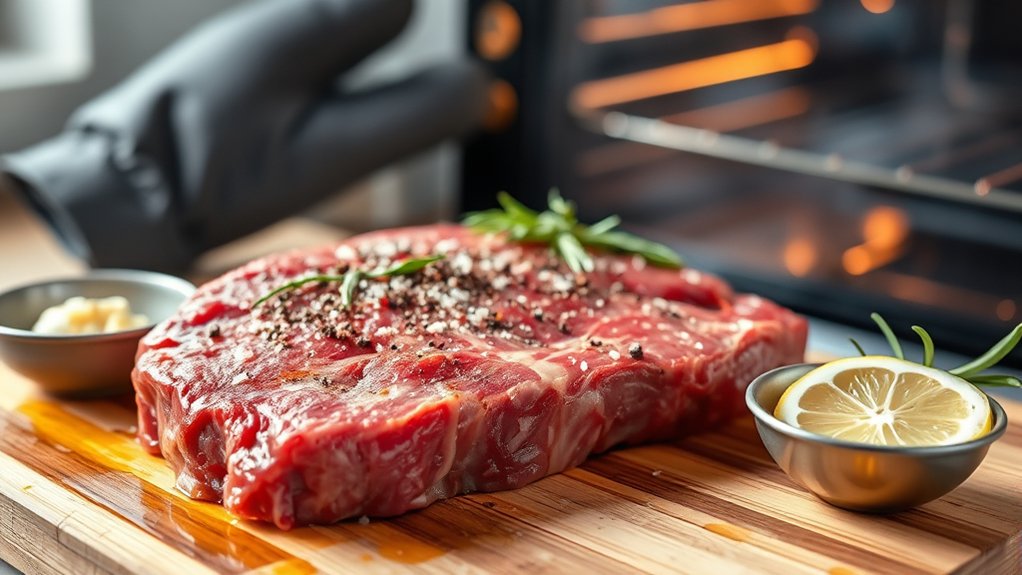
Before you roast skirt steak, pat it dry with paper towels and trim away any thick silver skin or excess fat. Set the steak on a cutting board and inspect both sides, removing loose membrane and stray bits that won’t soften in the oven.
If the piece is unusually long, cut it into sections that fit your pan without crowding. Let it sit at room temperature for 20 to 30 minutes so it cooks more evenly.
Meanwhile, preheat your oven and line a sheet pan or baking dish with foil or parchment for easier kitchen cleanup. Use tongs to transfer the steak, and keep your prep work organized so you don’t handle raw meat more than necessary.
Place the steak on a rack if you have one; that helps air circulate and promotes even browning. At this stage, the meat should be clean, dry, and ready for the next step.
How to Season Skirt Steak
Choose seasonings that complement skirt steak’s bold flavor, such as salt, black pepper, garlic, and a touch of paprika or cumin. You can keep it simple or add a marinade, but you should focus on ingredients that enhance the meat without overpowering it.
Apply the seasoning evenly on both sides so every bite tastes balanced and well seasoned.
Choosing Seasonings
What seasonings work best for skirt steak? Start with salt and black pepper, then build with garlic powder, onion powder, and smoked paprika. These basics respect seasoning chemistry: salt helps the meat taste fuller, while paprika adds mild sweetness and color without masking beef flavor.
You can add cumin for depth or chili powder for heat, but keep blends simple. Skirt steak has a bold, mineral taste, so choose spices with clear spice compatibility rather than sweet or delicate mixes.
Rosemary and thyme work in small amounts, but they’re stronger, so use them sparingly. If you want acid, pair seasoning with a dry rub that includes a touch of ground coriander.
Focus on balance, not complexity, so the steak stays savory and distinct.
Applying Seasoning Evenly
Now that you’ve picked a simple seasoning blend, spread it evenly over every surface of the skirt steak so each bite tastes balanced. Use your hands to press the seasoning into the meat, including the edges, for even flavor and better adhesion.
Don’t dump it in piles; light, uniform coverage works best. For a clean process:
- Pat the steak dry first.
- Season both sides and the edges.
- Let it rest 15 minutes before cooking.
Dry seasoning clings better and helps the oven promote even browning. If you use salt, season just before cooking or give it enough time to draw in. Finish by checking for bare spots and adding a small pinch where needed.
Should You Sear Skirt Steak First?
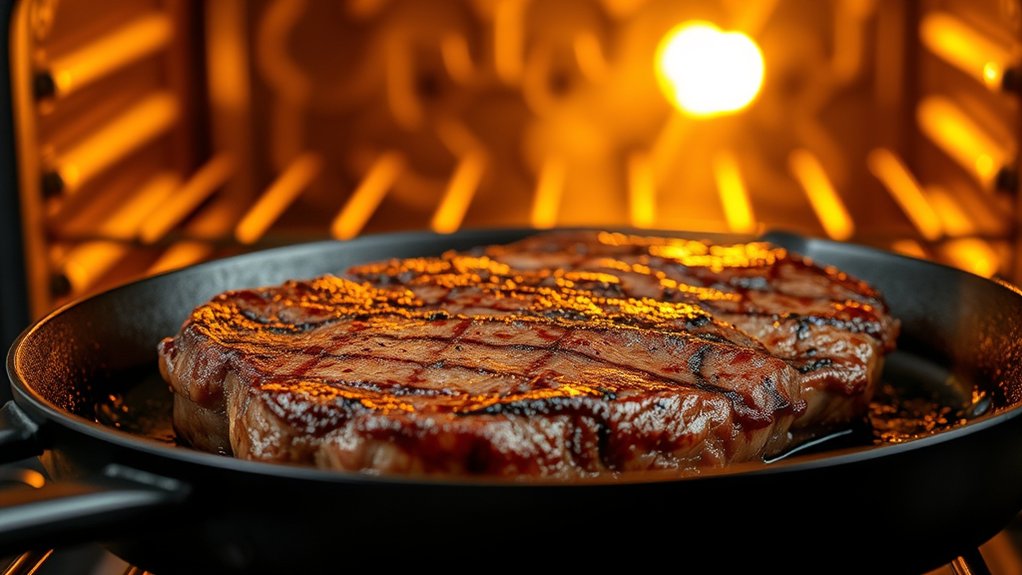
Yes, searing skirt steak first can help build a flavorful crust and deepen the beefy taste, but it isn’t strictly necessary if your main goal is even oven cooking. You should sear if you want better browning and a more pronounced outer texture; skip it if you prefer a simpler, cleaner process.
The key sear vs steam distinction is moisture control: a dry surface browns, while a wet surface steams. Pat the steak dry, then sear it briefly in a very hot pan before it goes into the oven. That extra step also makes skirt steak feel closer to a grill alternative, giving you more char-like flavor without firing up the grill.
If you don’t sear, the steak can still cook well, but you’ll lose some crust and aromatic depth. For the best balance, sear quickly, then finish in the oven without crowding the pan.
Best Oven Temperature for Skirt Steak
For the best balance of browning and tenderness, set your oven to 425°F to 450°F when cooking skirt steak. This range gives you the best oven temperature for fast, even cooking without drying out the meat. You’ll get strong surface color and a juicy interior if you use proper baking techniques and avoid low heat, which can toughen this thin cut.
- Preheat fully so the oven reaches a steady, high heat before the steak goes in.
- Use a rimmed sheet pan or hot cast iron to promote quick, efficient heat transfer.
- Keep the temperature in the 425°F to 450°F window for reliable results every time.
If your oven runs hot, stay near 425°F. If it runs cool, move closer to 450°F. You want direct, intense heat that cooks skirt steak fast and preserves tenderness.
How Long to Bake Skirt Steak
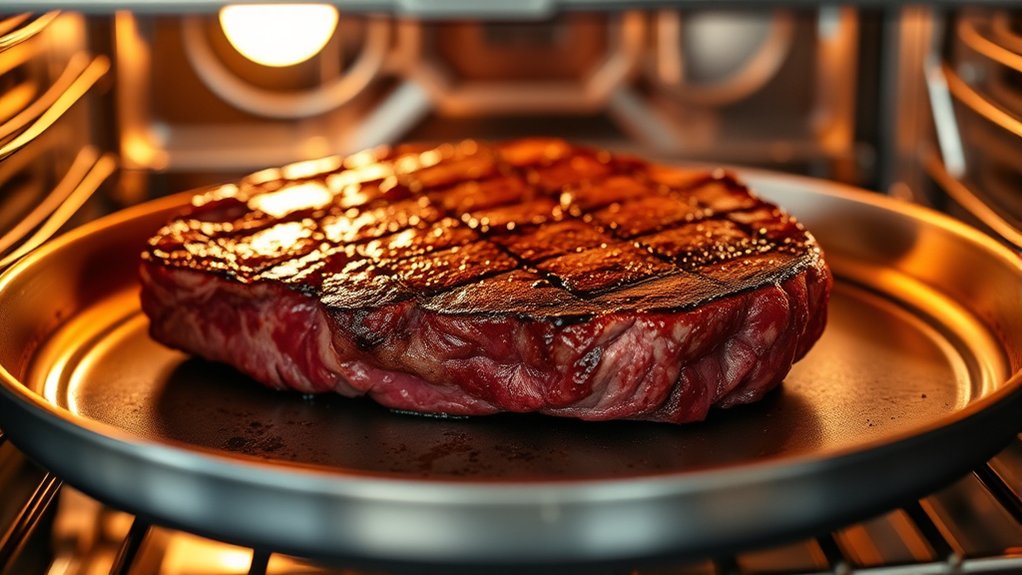
How long you bake skirt steak depends on its thickness, so thinner cuts finish faster and thicker cuts need a little more time. Start checking early, because skirt steak cooks quickly and overbakes easily.
Use a meat thermometer and pull it at your target doneness temperature for the best result.
Bake Time by Thickness
Bake skirt steak according to its thickness, since thinner cuts cook fast and thicker ones need a few extra minutes. You can ignore oven myths that promise one universal time; that advice is thread invalid for this cut.
Instead, match the bake time to the steak’s width and watch it closely.
- 1/2 inch: bake 4 to 6 minutes.
- 3/4 inch: bake 6 to 8 minutes.
- 1 inch: bake 8 to 10 minutes.
Use a hot oven and keep the steak on a preheated pan so heat transfers quickly. Pull it once the center looks slightly firm, not dry.
Rest it briefly before slicing against the grain, and you’ll preserve juiciness and tenderness.
Doneness Temperature Guide
Doneness depends on internal temperature, not the clock, so use an instant-read thermometer to judge your skirt steak. For the best texture, pull it at 125°F for rare, 130°F for medium-rare, 135°F for medium, and 145°F for medium-well.
That doneness temperature gives you control because skirt steak cooks quickly and keeps rising a few degrees after you remove it from the oven. If you want the juiciest result, aim for medium-rare; if you prefer less pink, push it a little farther.
A steak doneness guide helps you stay consistent, but rest your steak for 5 minutes before slicing. During rest, carryover heat finishes the center and redistributes juices, so you don’t lose moisture when you cut.
How to Rest and Slice Skirt Steak
Once your skirt steak comes out of the oven, let it rest for 5 to 10 minutes so the juices can settle back into the meat. Use resting techniques that keep the steak uncovered on a cutting board; tenting it tightly traps steam and softens the crust.
During this pause, the internal temperature evens out, and you’ll get cleaner slices and better texture.
Follow these slicing tips:
- Identify the grain before you cut.
- Slice across the grain, not with it.
- Cut thin pieces at a slight angle.
Use a sharp knife and steady pressure so you don’t shred the meat. Skirt steak has long muscle fibers, so slicing across them shortens each bite and makes the steak feel more tender.
If the edges cool first, that’s fine; the center stays juicy. Serve immediately after slicing so the texture stays firm and the meat tastes its best.
What to Serve With Skirt Steak
Skirt steak pairs best with simple sides that balance its bold flavor and quick-cooking texture. You should serve it with creamy mashed potatoes, roasted potatoes, or rice to catch the juices. Add grilled asparagus, green beans, or a crisp salad for freshness and contrast.
If you want budget friendly sides, choose sautéed onions, corn, or warm tortillas; they stretch the meal without dulling the steak. A bright chimichurri, salsa verde, or pan sauce also works well because it adds acidity and cuts richness.
Keep portions modest so the steak stays the focus. If you have leftovers, cool them fast and follow skirt steak storage best practices: refrigerate in an airtight container and use within three days. Reheat gently to avoid drying out.
For a balanced plate, pair one starchy side, one vegetable, and one sauce. That combination gives you texture, color, and enough flavor to complement the steak without overpowering it.
Frequently Asked Questions
Can Skirt Steak Be Cooked From Frozen?
Yes, you can cook skirt steak from frozen, but you’ll need extra time and careful heat control.
You’ll get an oven friendly one two punch: sear first, then finish in the oven for even doneness.
What Internal Temperature Indicates Medium-Rare Skirt Steak?
Medium-rare skirt steak hits 130–135°F; think of it like a sunrise, brief, bright, and fleeting.
You’ll nail the medium rare internal temp with oven searing techniques, then rest it so juices don’t escape.
Can I Use a Wire Rack in the Oven?
Yes, you can use a wire rack; it improves airflow and helps your oven setup cook the steak evenly.
Set it over a sheet pan, and you’ll catch drippings while promoting better browning.
How Do I Keep Skirt Steak From Drying Out?
You keep moisture by searing first, then finishing quickly and pulling the steak early. Rest it 5 minutes, slice against the grain, and don’t overcook it. That prior sear helps protect juiciness.
Is Marinating Skirt Steak Overnight Better?
Yes, overnight marinating usually helps you more: you get stronger marination benefits and a deeper flavor impact.
You’ll still want a fast, hot cook and careful slicing, or you’ll lose juiciness fast.
Conclusion
With a hot oven and a little care, you’ll turn skirt steak into a tender, juicy ribbon of flavor. Season it well, sear it if you want extra depth, then bake it just until it reaches your target doneness.
Let it rest so the juices settle, then slice against the grain for maximum tenderness. Serve it up while it’s still warm, and you’ll have a fast, elegant meal that tastes like a chef made it.
Mastering how to cook skirt steak in oven ensures a delicious, restaurant-quality dish every time.