What to Cook in a Dutch Oven
Like a stage built for slow transformations, your Dutch oven is the perfect tool for what to cook in a Dutch oven beyond just a simple stew. You can braise meats, simmer soups and chilis, roast chicken, bake no-knead bread, and even finish pasta sauces with controlled evaporation.
Its thick walls and tight lid hold steady heat, so you can sear on the stovetop, deglaze, then move straight to the oven. The real range starts when you match method to dish—and the next step changes everything.
Key Takeaways
- Braise meats in a Dutch oven for tender, flavorful results.
- Simmer soups, stews, and chili with steady heat and minimal evaporation.
- Bake bread inside it to trap steam and create a crisp crust.
- Roast or cook pasta, sauces, and quick dinners in one versatile pot.
- Fry or sear foods at high heat, then deglaze to build deeper flavor.
What Can You Cook in a Dutch Oven?
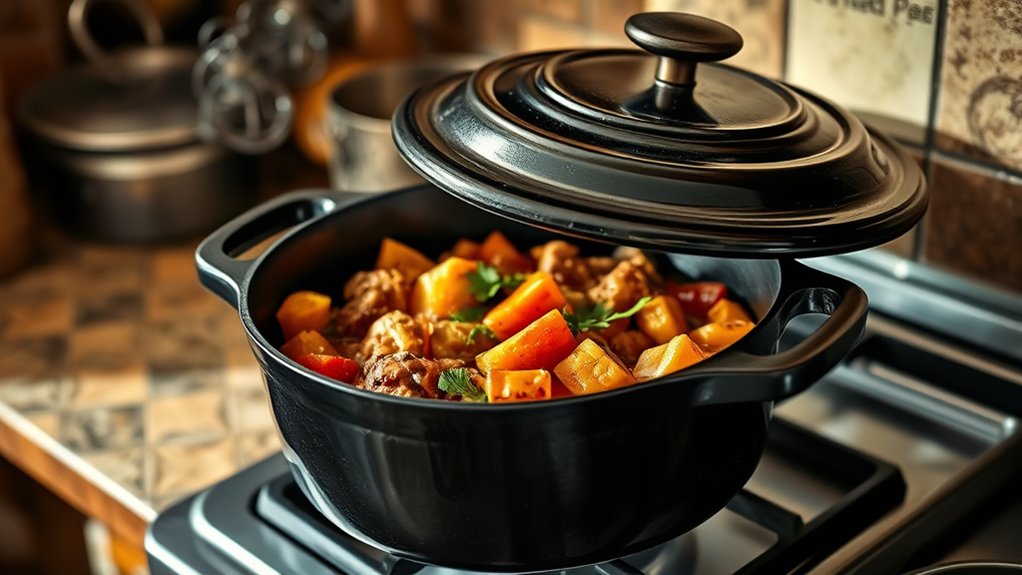
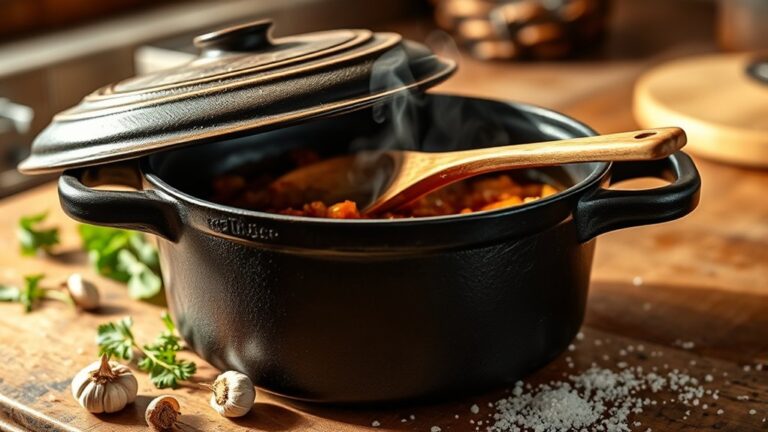
A Dutch oven is one of the most versatile tools in your kitchen: you can use it for braising meats, simmering soups and stews, baking bread, making chili, cooking pasta, frying, and even roasting. You can also sear proteins, deglaze fond, reduce sauces, and finish dishes in the oven.
A Dutch oven is incredibly versatile, handling everything from braises and soups to bread, pasta, frying, and roasting.
Its heavy lid and thick walls stabilize heat, so you can move from stovetop to oven without losing control. Use it for high-hydration doughs, one-pot rice dishes, or shallow-heat frying when you need consistent temperature.
For best results, preheat gradually, match the vessel size to the batch, and monitor moisture to prevent scorching. If you fry or roast at high heat, maintain strong kitchen ventilation to control smoke and grease.
Choose a Dutch oven when you want reliable heat retention, low evaporation, and flexible technique. It also supports creative plating because you can serve directly from the pot with minimal transfer and cleaner presentation.
Dutch Oven Soups, Stews, and Chilis
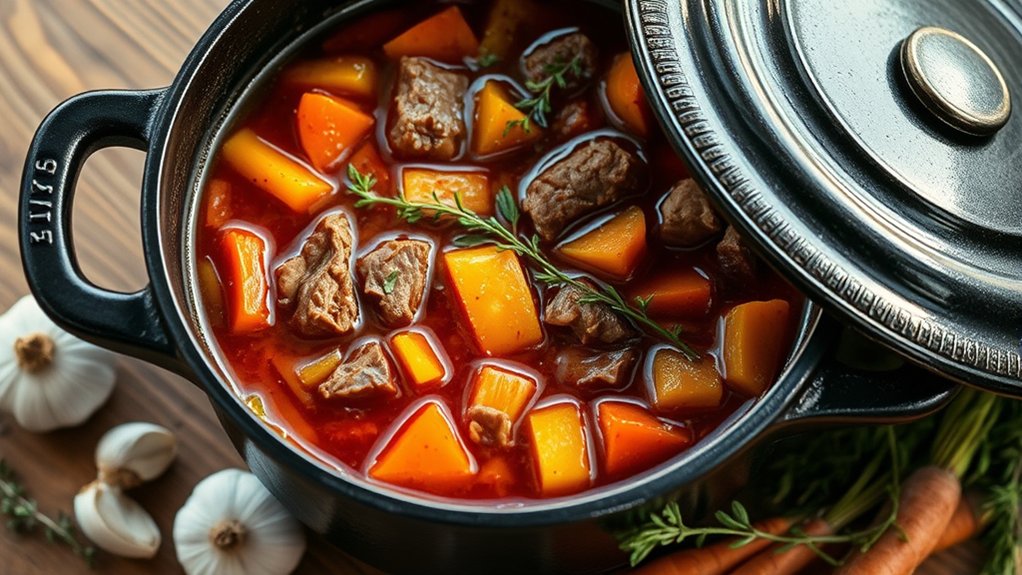
When you want deep flavor with minimal babysitting, soups, stews, and chili are among the best Dutch oven uses. You can start by sweating aromatics in a thin layer of oil, then deglaze the pot to capture browned bits.
Use steady, low heat so the pot’s heat distribution stays even and prevents scorching at the bottom. For soup techniques, add ingredients in stages: hard vegetables first, quick-cooking items later, and herbs near the end to preserve aroma.
If you’re making stew or chili, keep the liquid just at a gentle simmer; a rolling boil can toughen textures and cloud broth. Stir occasionally, scraping the sides and base.
Choose a stock or water level that covers solids without diluting flavor too much. The tight lid reduces evaporation, so you retain body while ingredients meld.
Taste and adjust salt, acid, and spice before serving for balanced, repeatable results.
Dutch Oven Roasts, Chicken, and Braises
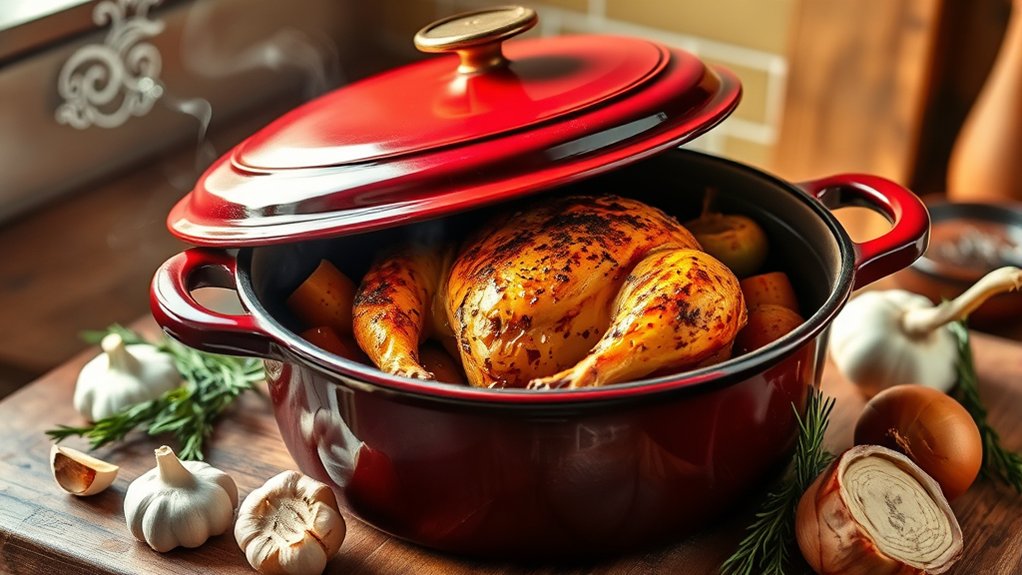
For roasts, chicken, and braises, the Dutch oven gives you strong bottom heat for browning and a tight, heavy lid for controlled oven cooking. You should preheat the pot, then sear meat in a thin film of oil to build fond before adding aromatics and liquid.
Use roast techniques that keep larger cuts in contact with the hot base early, then transfer the covered pot to the oven so heat circulates evenly. For chicken, start skin-side down, then turn and finish covered to protect the breast from drying.
For braised poultry, keep liquid below the top of the meat so you steam and simmer, not boil. Check tenderness with a fork; it should slide in with little resistance. Rest roasts before carving so juices redistribute. Adjust salt after reduction, since the Dutch oven concentrates flavor efficiently.
Dutch Oven Breads and No-Knead Loaves
Dutch ovens also excel at bread baking, where their heavy walls and tight lid create a small steam chamber that helps loaves spring, blister, and brown. You can mix a high-hydration dough, rest it overnight, then shape it lightly to preserve gas.
Set the preheated pot in the oven, lower in the dough, and cover immediately; this drives oven spring and a crisp crust. In bread science, moisture delays surface setting, so your loaf expands before the crust fixes.
| Step | Action | Result |
|---|---|---|
| Mix | Combine flour, water, salt, yeast | Elastic dough |
| Rest | Ferment 12–18 hours | Flavor develops |
| Preheat | Heat pot thoroughly | Strong heat transfer |
| Bake | Cover, then uncover | Brown crust |
| Cool | Wait before slicing | Set crumb |
Use parchment for safe lifting, score decisively, and keep your first bake simple.
Easy Dutch Oven Dinner Recipes
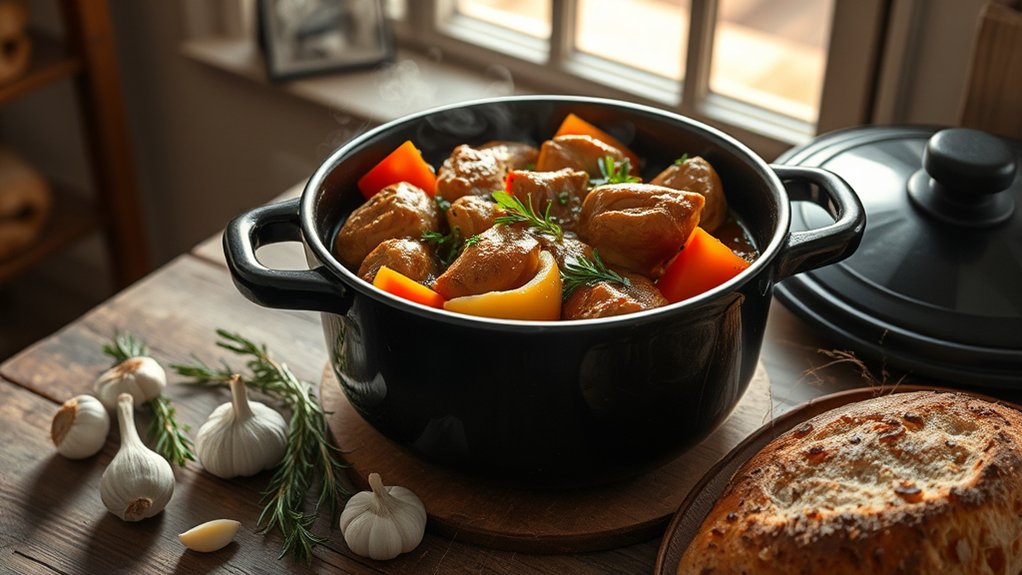
Need a reliable dinner that cooks evenly and still builds deep flavor? Use your Dutch oven for braised chicken thighs, beef stew, or sausage-and-bean skillets. You can sear ingredients first, then deglaze the pot with stock, wine, or tomatoes to capture browned fond.
Keep heat moderate; the heavy lid traps moisture and prevents scorching.
For quick meal prep, chop vegetables uniformly so they soften at the same rate. Add hardy items like potatoes, carrots, and onions early, then stir in tender greens near the end.
When you want budget friendly dinners, choose beans, lentils, cabbage, or chicken leg quarters; they deliver strong flavor at low cost. Season in layers, tasting after each simmer stage.
If the sauce seems thin, remove the lid for the last 10 minutes to reduce it. Finish with herbs or acid, such as parsley or lemon, to sharpen the flavor and balance richness.
Frequently Asked Questions
Can I Use a Dutch Oven on Induction Cooktops?
Yes, you can use a Dutch oven on induction cooktops if it has induction compatibility and magnetic cookware compatibility. You’ll get efficient, even heating; cast iron and magnetic stainless steel work best.
How Do I Clean Stubborn Burnt-On Dutch Oven Residue?
Soak it first; you’ll soften burnt on residue. Then scrub with baking soda and a nonabrasive pad.
When I rescued a crusted pot, it felt like peeling barnacles. Gentle residue removal works best.
What Size Dutch Oven Is Best for Two People?
You’ll usually want a 3- to 4-quart Dutch oven for two people; it handles two person meals efficiently and suits portable stovetop options without wasting space, heat, or ingredients.
Can a Dutch Oven Go From Stovetop to Oven Safely?
Yes, you can usually move it from stovetop to oven safely. Think of a cast-iron Dutch oven like a train on rails—steady and built for transfers.
You should still test oven safety and compare stovetop vs oven usage.
How Do I Season a Cast-Iron Dutch Oven Properly?
You’ll season cast iron by washing, drying, then wiping on a thin oil layer. Bake it upside down at 450°F for an hour. Repeat for oven safe handling and a durable, nonstick finish.
Conclusion
So, when you’re deciding what to cook in a Dutch oven, think in layers: simmer soups, stew chilis, braise meats, and bake breads. Use its heavy lid to trap moisture, its thick walls to hold steady heat, and its stovetop-to-oven design to simplify every stage.
Sear first, deglaze next, then finish uncovered for deeper flavor. You’ll get better texture, richer taste, and more consistent results every time.
Mastering these techniques will help you make the most of your Dutch oven and elevate whatever you choose to cook in a Dutch oven.