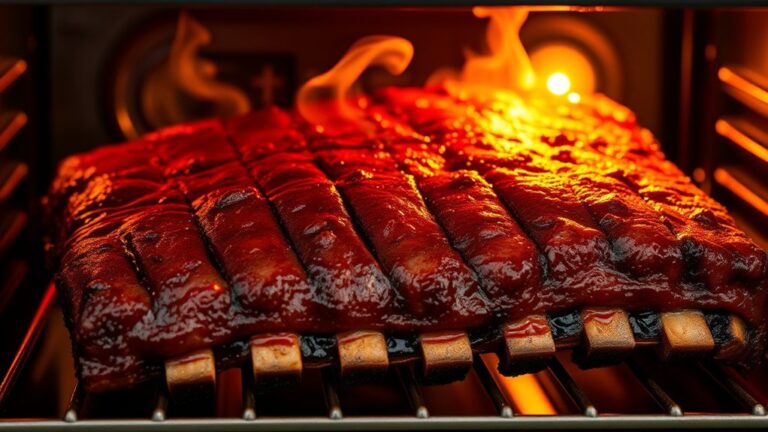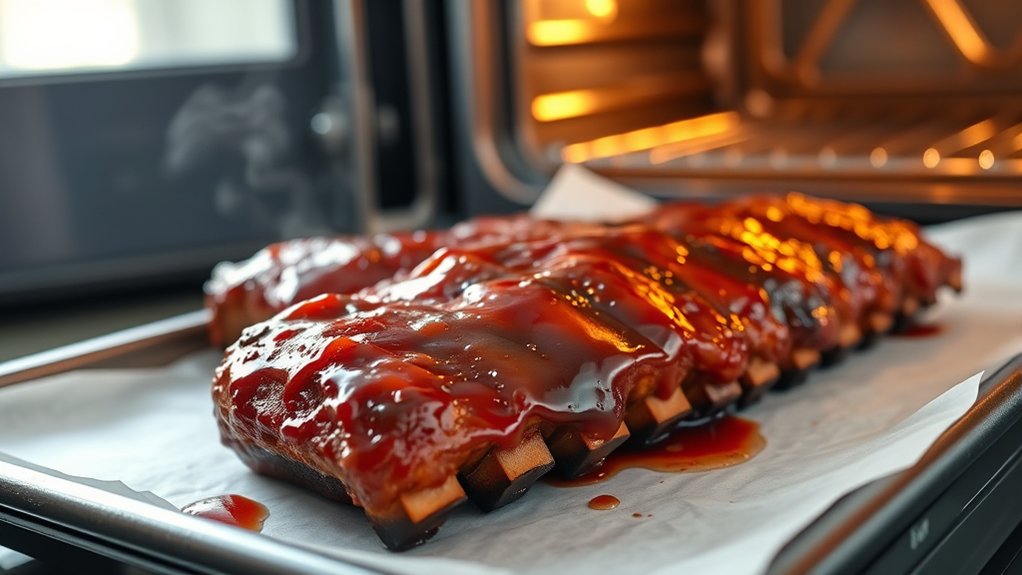
How to Make Ribs in Oven Fast
Most people don’t realize that when you want to make ribs in the oven fast, trimming the ribs, removing the membrane, and cutting them into smaller sections can reduce cooking time more than the rub itself.
You’ll get faster, more even results if you season every side, wrap them tightly in foil, and bake them at 300–325°F on the center rack.
A quick glaze at the end is where the real difference shows up.
Key Takeaways
- Trim excess fat, remove the membrane, pat ribs dry, and season all sides evenly for faster browning and better flavor.
- Cut the rack into smaller sections, then wrap tightly in heavy-duty foil with a little liquid for steam-tender ribs.
- Bake on a rimmed sheet pan at 300°F to 325°F in a fully preheated oven for quicker, controlled cooking.
- Cook baby backs for 1.5 to 2 hours or spare ribs for 2 to 2.5 hours, checking for tender, pull-back meat.
- Brush on glaze during the last 10 to 15 minutes, then rest the ribs before slicing so the glaze sets.
How to Make Ribs in the Oven Fast
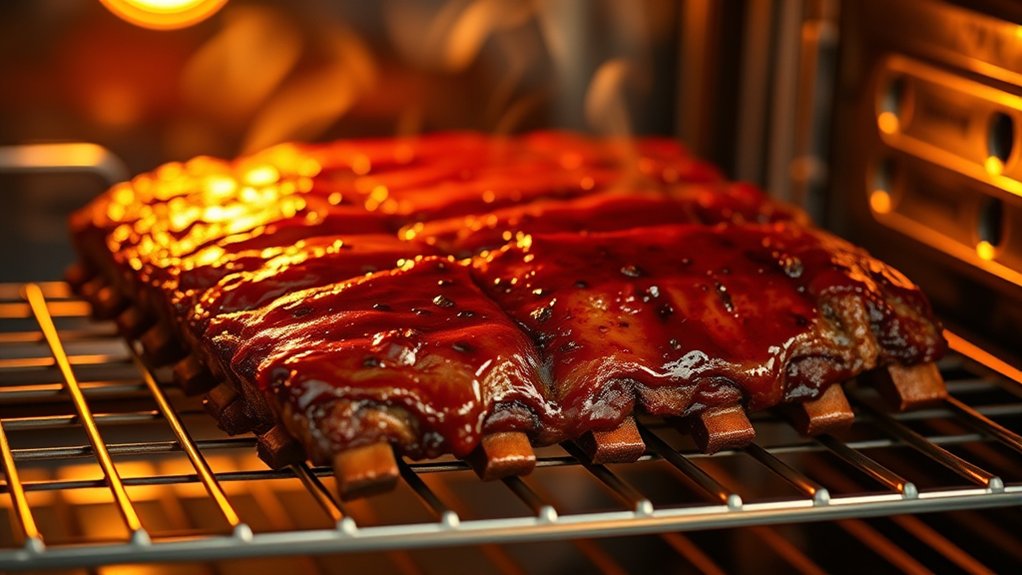
Making ribs in the oven fast starts with a smart shortcut: use smaller cuts, trim the membrane, season well, and bake them covered at a higher temperature so they cook through quickly without drying out. You can mimic the efficiency of fast grilling by using a hot oven, usually 375°F to 425°F, which drives heat through the meat faster than low-and-slow methods.
Place the ribs on a rack over a pan so air circulates and excess fat drains away. This keeps the texture cleaner and supports rib nutrition by reducing surface grease without sacrificing flavor. Cover the pan tightly with foil to trap steam, then uncover near the end if you want a firmer exterior.
Check doneness with a fork; the meat should feel tender and pull back from the bone. Rest the ribs briefly before serving so the juices settle and the bite stays moist.
Prep the Ribs for Faster Cooking
Start by trimming any excess fat and removing the thin membrane from the back of the ribs, since both steps help the meat cook more evenly and let seasoning reach the surface. Next, pat the ribs dry so the rub sticks and the exterior browns faster.
Trim excess fat, remove the membrane, and pat the ribs dry for better browning and seasoning.
You’ll speed things up by cutting the rack into smaller sections or separating individual ribs if your recipe allows. That increases surface area and helps heat move through the meat, which is simple rib science.
- Trim thick fat pockets.
- Peel off the membrane.
- Pat the ribs dry.
- Cut the rack into smaller pieces.
After that, season all sides evenly and press the spices in with a quick squeeze of your hand. This contact improves coverage without wasting rub. Keep the prep lean and deliberate, and you’ll set up the ribs for faster oven cooking without sacrificing texture or flavor.
Bake Ribs Fast With Foil
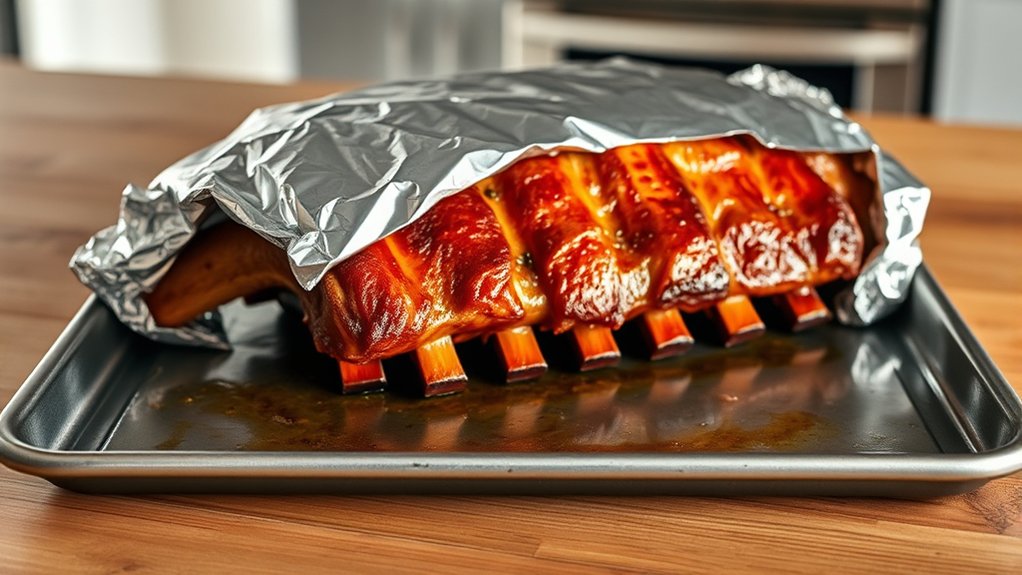
Wrap the ribs tightly in foil to trap steam and speed up oven cooking. You’ll turn a slow roast into a sharper, more efficient method by sealing moisture inside. Use heavy-duty foil and double-layer it if the rack is large or the bones are sharp.
Place the ribs meat-side up, then fold the edges into a firm packet with no gaps. Add a small splash of liquid if you want extra tenderness, but don’t flood the foil. The goal is steam, not braising.
Set the packet on a rimmed sheet pan so you can move it safely and catch drips. These fast techniques help the meat soften faster while keeping the surface protected.
For more foil hacks, crimp the seams tightly and avoid opening the packet early. Every time you break the seal, you lose heat and steam, which slows progress. Keep the package snug, stable, and fully enclosed.
Use the Right Oven Time and Temperature
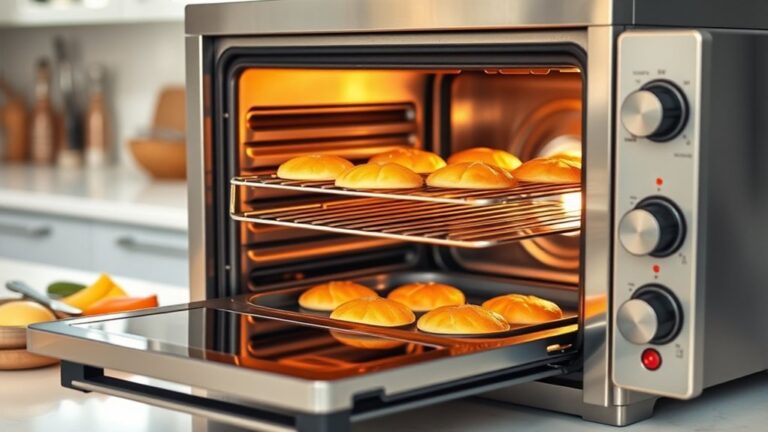
For fast oven ribs, set the temperature high enough to move the cook along without drying out the meat: 300°F to 325°F is the sweet spot for most racks. You want fast heat, but you also need control, so keep the oven fully preheated before the ribs go in. Use rack placement wisely: center rack gives even circulation, while a lower rack can shield the meat from harsh top heat if your oven runs hot.
- Bake baby backs for 1.5 to 2 hours.
- Bake spare ribs for 2 to 2.5 hours.
- Check tenderness near the end; meat should pull back from the bone.
- Rest the ribs 10 minutes before slicing.
Keep the door closed as much as possible. Every peek drops temperature and slows the cook. If you’re tracking time carefully, you’ll get ribs that finish fast and stay juicy.
Finish Ribs With a Quick Glaze
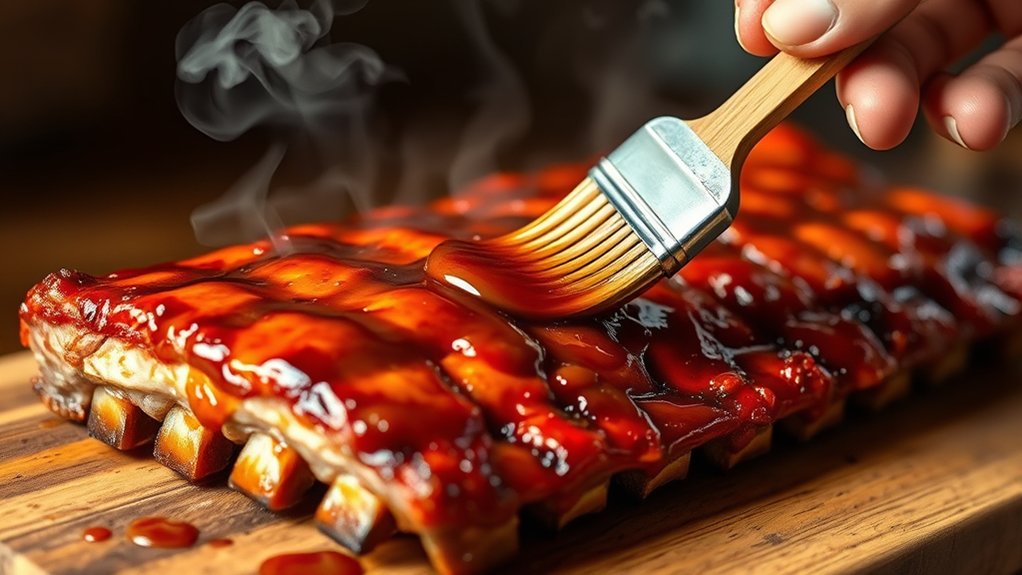
A quick glaze adds flavor and a glossy finish without slowing down your ribs. Brush it on during the last 10 to 15 minutes of baking, when the meat is already tender and the surface can set without burning.
That glaze timing gives you shine and keeps the sauce from caramelizing too early. Use a thin, even coat first, then add a second light layer if you want a deeper finish. Keep the oven hot enough to help the sugars tighten, but watch closely so the glaze doesn’t scorch.
Brush on the glaze late, in a thin layer, so it shines without scorching and sets into a glossy finish.
If the sauce seems too thick, thin it with a little vinegar, broth, or reserved pan juices until the glaze consistency spreads easily. If it runs, simmer it a bit longer. Pull the ribs when the coating looks sticky and lacquered.
Let them rest a few minutes before slicing so the glaze firms up and clings to every bite.
Frequently Asked Questions
Can I Use Spare Ribs Instead of Baby Back Ribs?
Yes, you can use spare ribs instead of baby back ribs; they’re meatier and need longer cooking. For spare rib substitutes, adjust time and temperature.
If you want sauce free options, season them well and roast slowly.
Should I Remove the Membrane Before Baking?
Yes, you should remove the membrane before baking. It improves ribs texture and lets seasoning penetrate.
Studies show cooked ribs become noticeably more tender when you’re removing membrane, so you’ll get better flavor and easier chewing.
Do I Need to Marinate Ribs Overnight?
No, you don’t need to marinate ribs overnight. For fast oven cooking, 30 minutes to 2 hours boosts flavor profiles enough.
Longer marination timing helps, but you’ll still get tender, tasty ribs without it.
Can I Make Oven Ribs Without Barbecue Sauce?
Yes, you can. You’ll get great ribs by replacing barbecue sauce with spice rubs, then roasting until tender.
Why drown good meat? Let the seasoning shine, and you’ll taste deeper, cleaner flavor fast.
How Do I Know When the Ribs Are Fully Cooked?
You know ribs are done when the meat pulls back from the bones, bends easily, and a thermometer reads 190–203°F. Use doneness testing and texture tips: they should feel tender, not mushy or tough.
Conclusion
Now you know how to make ribs in the oven fast without sacrificing tenderness or flavor. Trim and season them well, wrap them tightly in foil, and bake them at the right temperature until they’re tender.
Finish with a quick glaze for extra shine and flavor. Keep in mind, patience pays off even when you’re rushing—good ribs need time to turn out right.
Slice, serve, and enjoy your fast oven-baked ribs. With these tips, you can confidently make ribs in the oven fast that are juicy and delicious every time.