What Is Broil in Oven
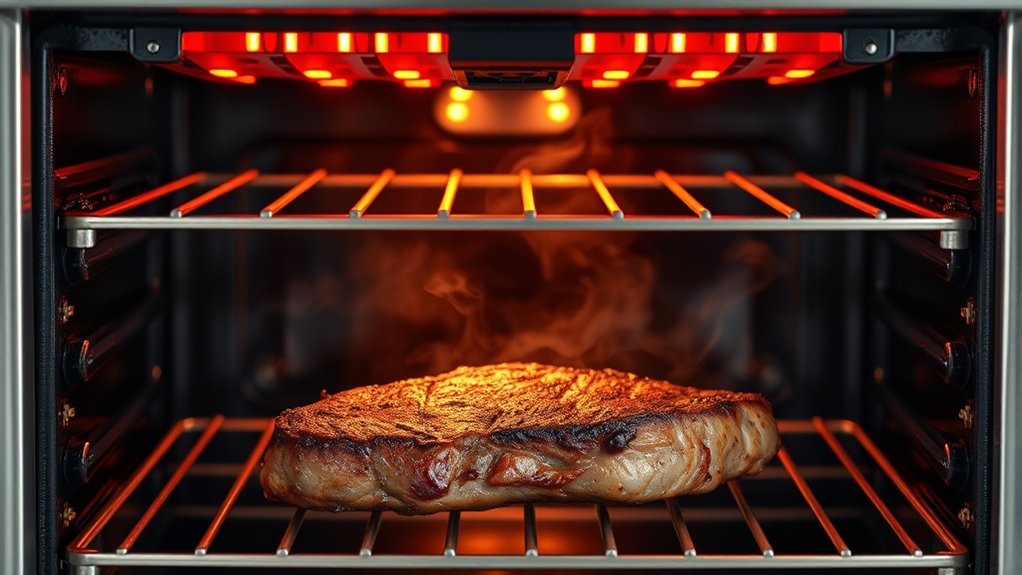
Like a culinary spotlight, broil in oven uses the top heating element to blast food with intense heat from above. You’ll use it when you want quick browning, crisp edges, or a lightly charred finish without cooking the center much further.
Set your rack close, keep food in a broiler-safe pan, and watch it carefully, because the line between perfectly done and burnt is thin.
Key Takeaways
- Broiling uses the oven’s top heating element to cook food quickly with intense heat from above.
- It is mainly used for browning, crisping, charring, or melting the tops of foods.
- Broil is different from bake: broil is fast and direct, while bake uses steady heat to cook through.
- Food should be placed on a broiler-safe pan, usually 4–6 inches from the heat source.
- Broiling needs close attention because food can brown or burn very quickly.
What Is Broiling in the Oven?
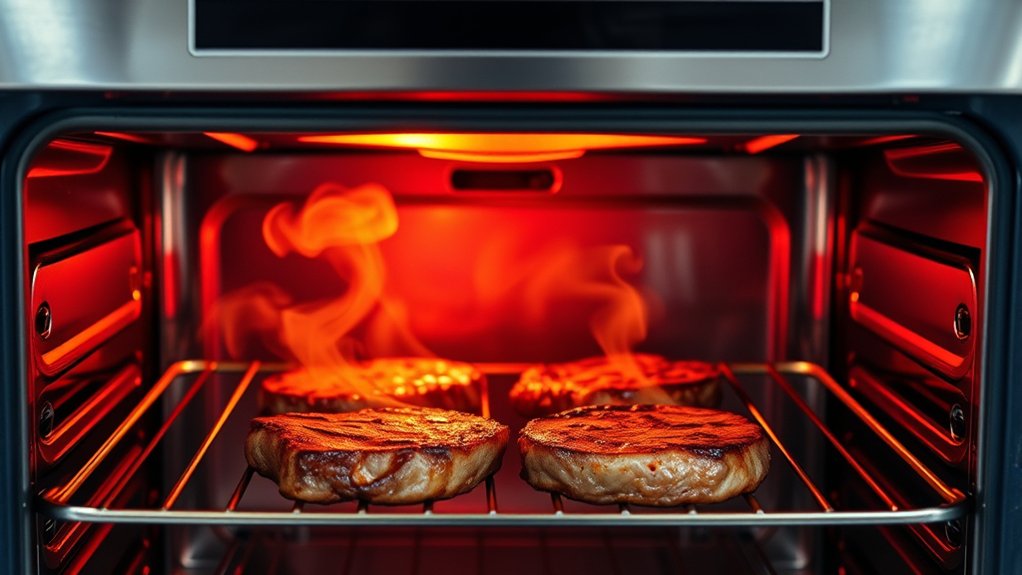
Broiling in the oven is a high-heat cooking method that uses the oven’s top element to cook food quickly from above. You place food close to that heat source so the surface browns, crisps, or chars in minutes.
When you use broil terminology, think of intense top-down heat, short cooking time, and careful monitoring. In broil terminology in ovens, the setting usually has low and high options, and each one changes how strong the heat feels.
You should preheat the broiler if your recipe calls for it, position the rack properly, and use a broiler-safe pan. Keep the oven door cracked only if your manual allows it, and watch the food closely because it can burn fast.
Broiling works well for thin cuts, fish, vegetables, and finishing melted toppings, so you can get a browned exterior without long cooking.
Broil vs Bake: What’s the Difference?
Broil uses intense heat from above, while bake surrounds your food with steady heat from all sides. You’ll usually broil when you want fast browning or crisp edges, and bake when you need even cooking throughout.
Knowing the difference helps you choose the right setting for the texture and result you want.
Heat Source Differences
When you compare broil and bake, the biggest difference is where the heat comes from: broiling uses intense heat from above, while baking surrounds food with steady heat from all sides. That difference starts with the oven design and the heat source.
In broil mode, the top element or gas flame sits near the food and radiates direct heat downward. In bake mode, the lower element or hidden heating system warms the oven cavity, and air circulates around the dish.
You should choose broil when you want top-down exposure from the heat source. You should choose bake when you need even, surrounding heat. Knowing how your oven is built helps you set the right mode and place food correctly.
Cooking Speed And Texture
Speed matters here: broil cooks food fast because its intense top heat quickly browns and crisps the surface, while bake works more slowly and gives food time to cook through evenly. You’ll notice broiling changes color and texture in minutes, so keep a close eye on it.
That quick cooking speed gives you strong texture control when you want a charred top, a crisp edge, or a light crust. Baking, by contrast, builds a more uniform texture because heat surrounds the food and works gradually.
Use broil when you want surface results fast; use bake when you need the inside to finish without rushing the outside. If you understand this difference, you can choose the method that matches the texture you want.
When To Use Each
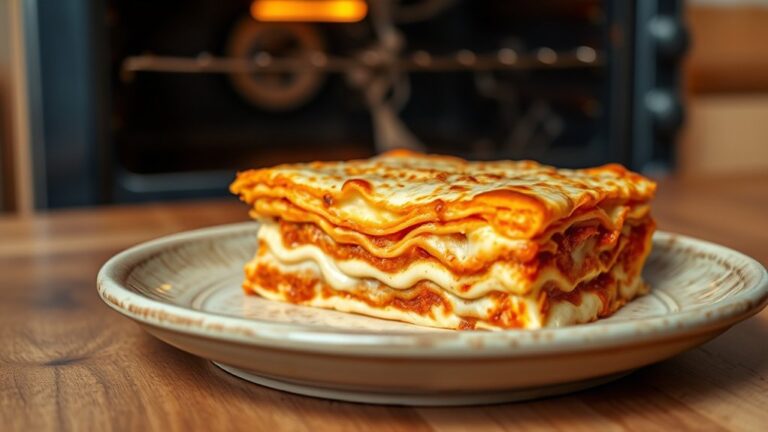
Choose broil for quick browning, crisping, or melting the top of food, and use bake when you need steady, even heat to cook things through. You’ll reach for broil on casseroles, fish, toast, nachos, or a finished steak that needs color fast.
Use bake for cakes, breads, roasted vegetables, and anything thick that needs time to cook evenly. Watch oven placement closely: broil foods on the upper rack, but keep baked dishes centered for balanced heat.
Follow broiling etiquette by staying nearby, using a broiler-safe pan, and turning food if the top starts to darken too quickly. If you want a browned finish after baking, switch to broil for the last minute or two, then pull it out promptly.
How Broiling in the Oven Works
Broiling works by using intense heat from the oven’s top heating element, so your food cooks quickly from above instead of all around. You place the rack close to the element for direct exposure, and that oven rack setup controls how fast the surface browns.
If you move the rack lower, you slow the browning a bit and give thicker foods more time to cook through. Broiling safety matters because the heat can ignite food or cause splatter, so keep a close eye on what’s inside.
You should use a broiler pan or a rimmed sheet to catch drips and let hot air circulate. Turn food only if needed, since opening the oven lets heat escape. The top heat creates crisp edges, browned spots, and a fast finish without heating the whole oven cavity for long.
When to Use Broil
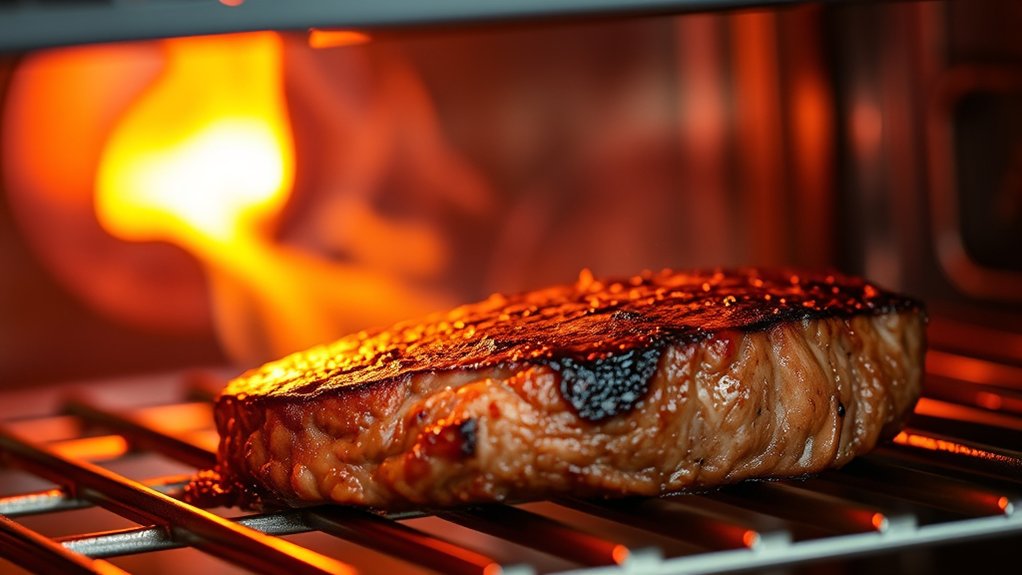
Use broil when you want quick browning on foods like casseroles, meats, or vegetables. It’s also a good choice when you need to finish a dish fast and add a crisp top without overcooking the inside.
Keep a close eye on it, since broiling works in minutes.
Quick Browning
When you need fast, even browning, broil is the setting to reach for. Use it when your dish looks cooked but lacks color on top.
The intense oven heat from above helps you get quick browning on cheese, breadcrumbs, vegetables, or meats without drying the center too much. Position the rack close enough for browning, but not so close that the surface burns before the color develops.
Watch the food closely, because broil works quickly and can turn from golden to charred in seconds. Keep the door slightly open if your oven calls for it, and use a timer every time.
Broil’s strength is surface color, so treat it as a finishing tool for appearance and texture, not a long-cook setting.
Fast Finishing
Need to finish a dish in a hurry? Use broil for fast finishing when the food is already cooked but needs color, crispness, or a hot top. Place the rack near the broiler, watch closely, and keep the door slightly open if your oven allows it.
Broiling works well for quick browning on casseroles, melted cheese, fish, and vegetables.
| Food | Broil Time | Result |
|---|---|---|
| Cheese-topped casserole | 1–3 min | Golden top |
| Salmon fillet | 2–4 min | Crisp edge |
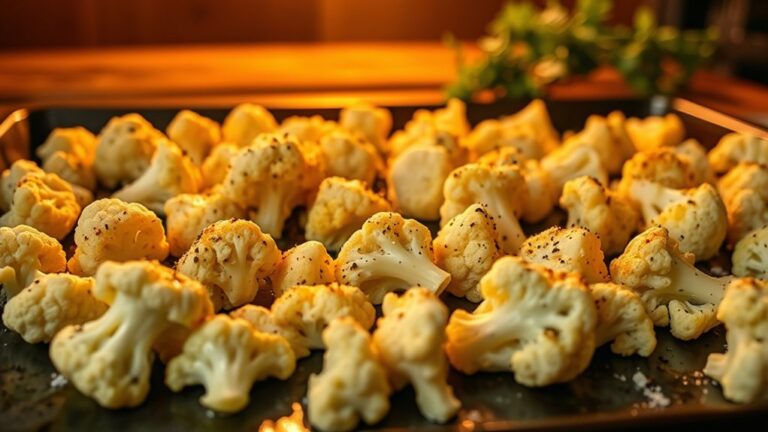
| Vegetables | 3–5 min | Charred spots |
Use broil when you want fast finishing without drying out the center. Pull the dish once it reaches the color and texture you want.
How to Prepare Your Oven for Broiling
Before you broil, move the oven rack so the food sits close to the top heating element, usually 4 to 6 inches away. Then preheat the broiler for a few minutes so the element gets fully hot before you add food.
Set a sturdy broiler pan or a rimmed sheet on the rack to catch drips and help air circulate. If your oven has a broil setting with options like high or low, choose the one that matches your recipe and preheat time.
For broil safety, clear the oven of extra pans, keep the door slightly open if your model requires it, and use dry oven mitts when handling hot metal. Check that the rack sits level and won’t slide.
This setup also supports energy efficiency because broiling uses intense heat for a short time. Once everything’s ready, you can cook quickly without wasting energy or time.
How to Broil Food Without Burning It
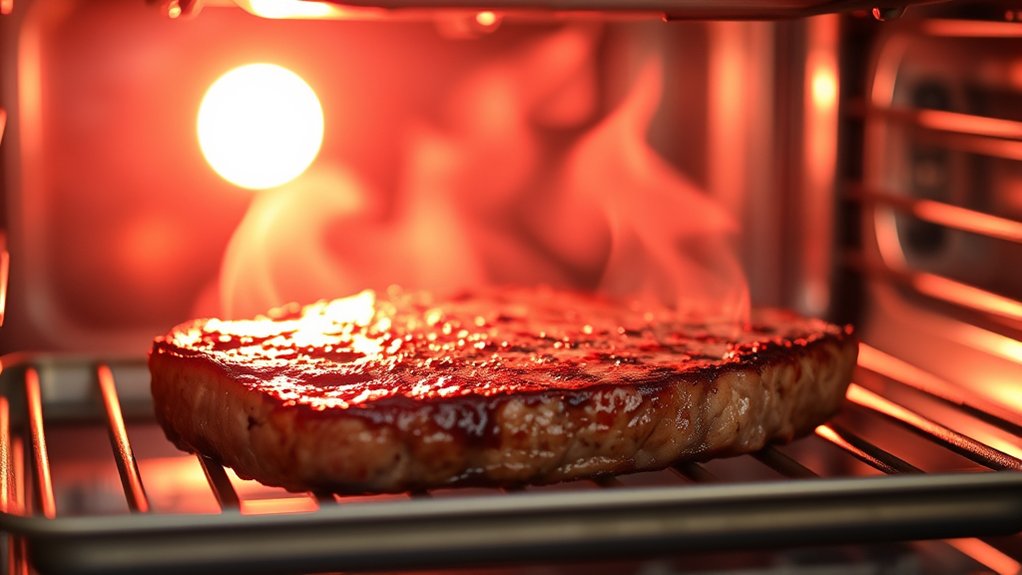
To broil food without burning it, keep a close eye on the timing and position the food evenly under the heat source. Use the top oven rack, but adjust it if the surface browns too fast.
You should preheat briefly, then place the food on a broiler-safe pan lined for easy cleanup. Watch through the oven door, and don’t walk away, because a few extra seconds can turn crisp into charred.
Turn the food once if needed, and use tongs for control. For broiling safety, keep handles turned inward and wear dry oven mitts.
If you use a nonstick pan, check its heat limit first; some coatings can’t handle direct broiler heat. Remove the food when it looks just shy of done, since carryover heat can finish the job.
Let it rest for a minute, then serve right away for the best texture and flavor.
Best Foods for Broiling in the Oven
The best foods for broiling are thin, quick-cooking items that can handle intense top heat without drying out. You should choose steaks, chicken cutlets, pork chops, fish fillets, shrimp, salmon, tofu, asparagus, zucchini, tomatoes, and halved peppers. These foods cook fast, so broiling gives you browned edges and juicy centers.
If you want a crisp finish, try open-faced sandwiches or sliced fruit like pineapple or peaches. You’ll get the best results when pieces are similar in size, so they finish at the same time. Lightly oil the food and season it before it goes under the broiler. This helps with browning and keeps sticking down.
Broiling misconceptions often make people think only meat works, but many vegetables and seafood shine here too. For oven safety, use a broiler-safe pan, keep the rack properly positioned, and stay nearby while the food cooks.
Common Broiling Mistakes to Avoid
Ever wonder why broiling can go from perfectly browned to burnt in seconds? You’re usually too far from the heat, or you leave food unattended. Broilers cook fast, so preheat the pan, watch closely, and keep the rack at the right height.
Don’t use a flimsy tray; it can warp and spill. Also, avoid wet food, because extra moisture blocks browning.
| Mistake | Better move |
|---|---|
| Ignoring the broiler | Stay nearby and check often |
| Using the wrong rack | Adjust distance for control |
| Skipping prep | Dry food and oil lightly |
Think in two word ideas like “close watch” and “dry surface.” These simple habits help you avoid unrelated topics, like multitasking, that pull attention away. When you understand the heat, you’ll cook with more control and less guesswork.
Frequently Asked Questions
How Long Does It Take to Preheat for Broiling?
It usually takes 5 to 10 minutes to preheat, but your ideal preheat time depends on your oven.
You’ll want how long to preheat checked in the manual for broiling results.
Which Oven Rack Is Best for Broiling?
You’ll usually place the rack 4 to 6 inches from the broiler, often in the upper-middle position. Use the broiling rack for even heat, and avoid side by side placement so food browns properly.
Can You Broil With Aluminum Foil?
Yes, you can broil with aluminum foil if you keep it away from the heating element and cover only the pan, not the rack.
Watch foil safety, since it can affect heat distribution and cause hot spots.
Is Broiling Healthier Than Frying?
Yes, broiling’s usually healthier than frying. You use less oil, so you cut calories and fat.
When comparing frying vs. broiling health, you should still avoid charring food and watch cooking times carefully.
Do All Ovens Have a Broil Setting?
No, you won’t find broil in every oven; it’s like a hidden attic door. Check your oven settings, because some models skip it.
Don’t trust broiling myths. Read your manual and look near the top heat element.
Conclusion
Now you know what broiling in the oven means: you use intense heat from above to give food a fast, flavorful finish. Think of it as a spotlight, not a campfire—close enough to brown, but only if you keep a sharp eye on it.
When you set the rack right, preheat properly, and watch the clock, you’ll turn simple ingredients into crisp, golden results without letting them go up in smoke.
Mastering these steps is key to perfect broil in oven cooking every time.