How to Season Cast Iron in Oven
If you want to season cast iron in the oven properly and build a hard, nonstick finish, you need to do it the right way. Start with a clean, dry skillet and wipe on a very thin layer of oil. Then bake it hot enough to bond that oil into the metal.
The details matter here because one small mistake can leave you with a sticky surface instead of a dependable one. Following the correct steps ensures a durable and smooth seasoning layer that improves with use.
Key Takeaways
- Clean the cast iron thoroughly, then dry it completely before seasoning.
- Apply a whisper-thin layer of high-smoke-point oil and buff away all excess.
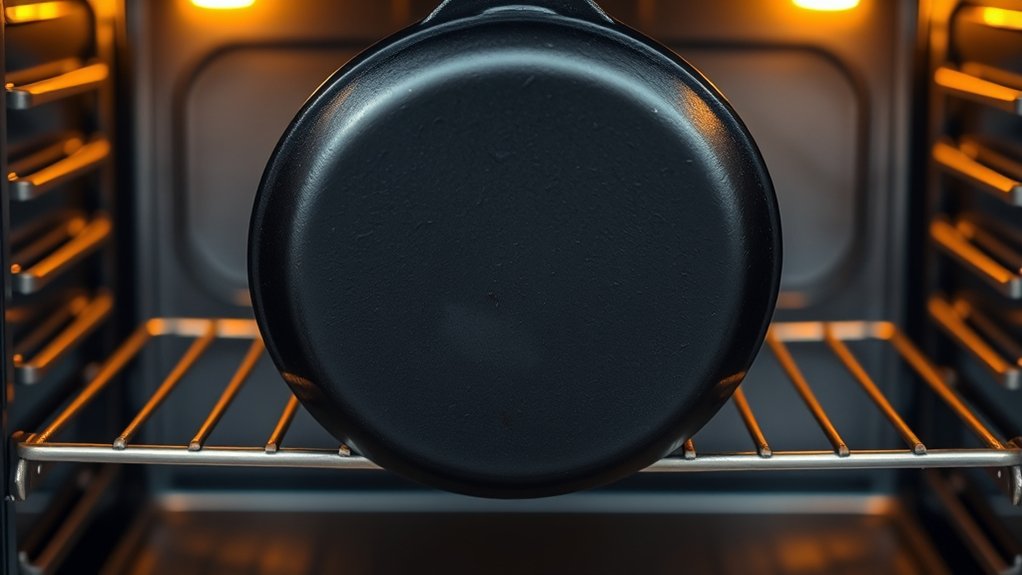
- Place the pan upside down in a 450–500°F oven with a tray below to catch drips.
- Bake for about one hour, then cool the pan inside the oven to help the coating bond.
- Repeat 1 to 3 thin coats as needed, and store the pan dry with a light oil rub after use.
Why Season Cast Iron in the Oven
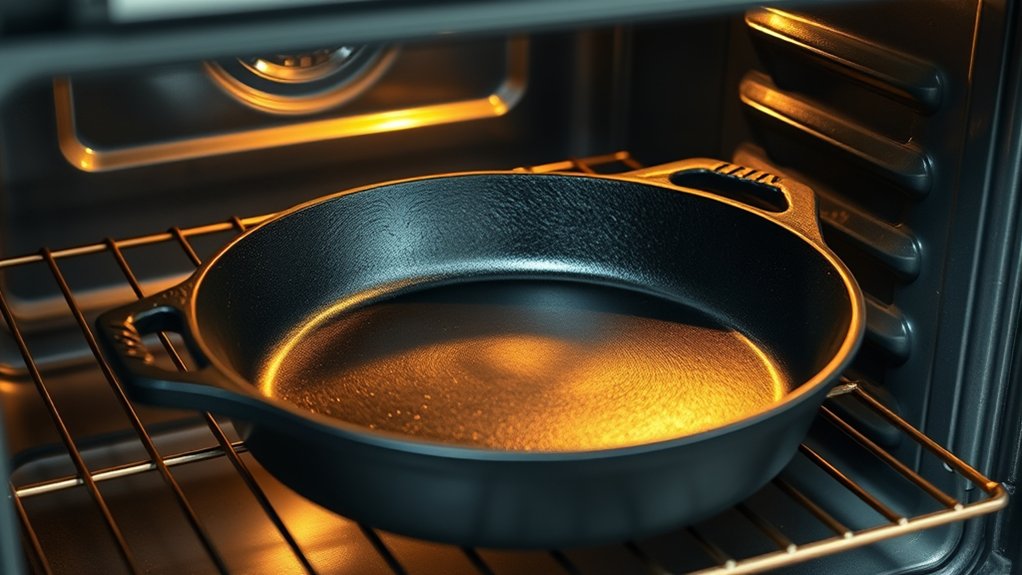
Using the oven gives you the most even, reliable way to season cast iron. You control the heat around the entire pan, so the oil bonds consistently instead of pooling or burning in hot spots. That matters because a uniform layer builds a smoother, tougher finish that resists rust and improves release over time.
It also lets you season more than one piece at once without constant monitoring, which saves effort and reduces mistakes.
Many seasoning myths come from trying to rush the process on a burner or over an open flame. Those methods can work in specific cases, but they’re less forgiving. Oven myths often claim higher heat automatically creates better seasoning, yet excess heat can break down oil before it cures properly.
In practice, steady oven heat gives you repeatable results, especially when you’re building the first few layers. You get cleaner polymerization, fewer odors, and better control, which makes the process simpler and more dependable.
What You Need to Season Cast Iron
To season cast iron in the oven, you only need a few basics: a clean, dry pan, a neutral oil with a high smoke point, a lint-free cloth or paper towel, and an oven that can hold a steady temperature.
Choose oil selection carefully: canola, grapeseed, or vegetable oil works well because they polymerize reliably without leaving a sticky film. You don’t need specialty sprays or thick layers; thin, even application matters more than brand claims.
A cloth helps you spread just enough oil to coat the surface without pooling. Your oven should reach the target temperature consistently, since fluctuating heat slows bonding and can weaken the finish.
Ignore common seasoning myths that say more oil means better seasoning or that only bacon grease works. With these simple tools, you can build a durable, smooth layer that protects the pan and improves release over time.
How to Clean Cast Iron Before Seasoning
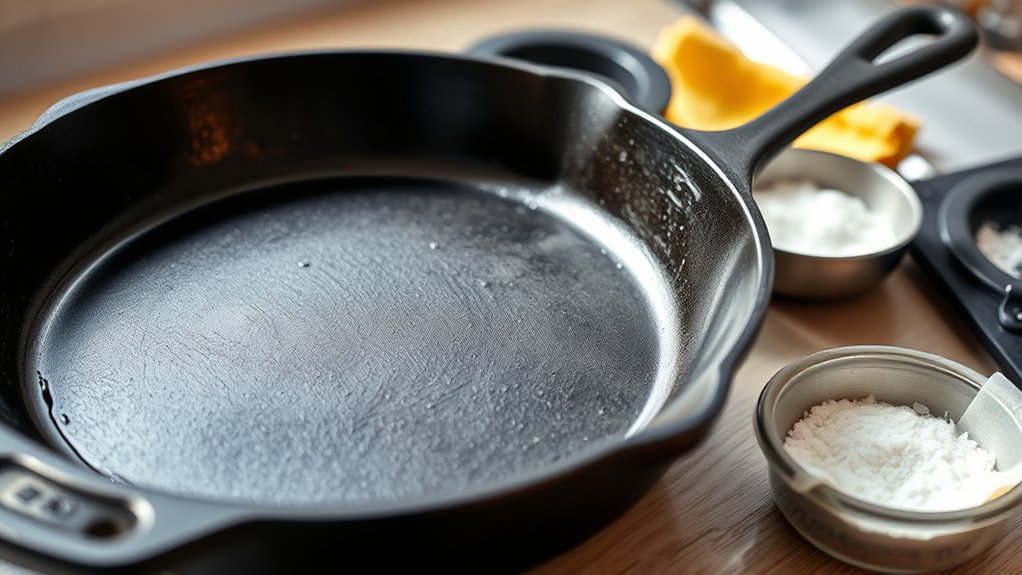
Before you season cast iron, remove any food residue so the surface is clean and ready to bond with oil. Scrub the pan with warm water and a stiff brush to lift stuck-on debris without using harsh soap.
Then dry it completely, since any remaining moisture can prevent a proper seasoning layer.
Remove Food Residue
Even a well-loved cast iron pan needs a clean surface before you season it, so scrub away any stuck-on food, grease, or rust with hot water and a stiff brush or nonmetal scrubber. This helps you remove residue without gouging the iron or leaving behind debris that can interfere with the oil bond. Don’t trust oven myths that say seasoning fixes a dirty pan; it doesn’t.
| Problem | Why it matters | What you do |
|---|---|---|
| Grease | Blocks seasoning | Wipe thoroughly |
| Food bits | Burns during heating | Scrub loose particles |
| Rust | Weakens the surface | Remove residue fully |
If the pan still feels slick or gritty, keep cleaning until the metal looks even. A spotless surface gives you a stronger, more durable finish in the oven.
Scrub With Warm Water
Use warm water and a stiff brush to scrub the skillet’s surface, loosening any remaining grease, dust, or fine debris without damaging the iron. Keep your scrub warm water technique focused on the cooking surface, rim, and handle, using just enough pressure to lift residue.
If you find a stubborn spot, repeat the warm water scrub instead of reaching for harsh soap or abrasive pads. Your goal is a clean, bare surface that’s ready to accept seasoning evenly.
Rinse away loosened particles as you go so they don’t settle back onto the pan. This careful wash helps the oil bond later, which improves the finish and durability of your cast iron seasoning, and sets up the oven process well.
Dry Completely Before Seasoning
Once you’ve rinsed away the loosened debris, dry the skillet completely so no moisture remains on the surface. Wipe it with a lint-free towel, then place it over low heat for a few minutes to drive off hidden water in the handle, rim, and pores.
This drying technique helps prevent flash rust and prepares the metal for even oil absorption during seasoning. If you see any gray dampness or steam, keep heating until the pan looks matte and feels warm, not wet.
Turn off the heat, then let it cool just enough to handle safely before applying oil. A fully dry pan lets the seasoning bond properly, giving you a smoother, more durable finish and better protection against rust.
How to Season Cast Iron in the Oven
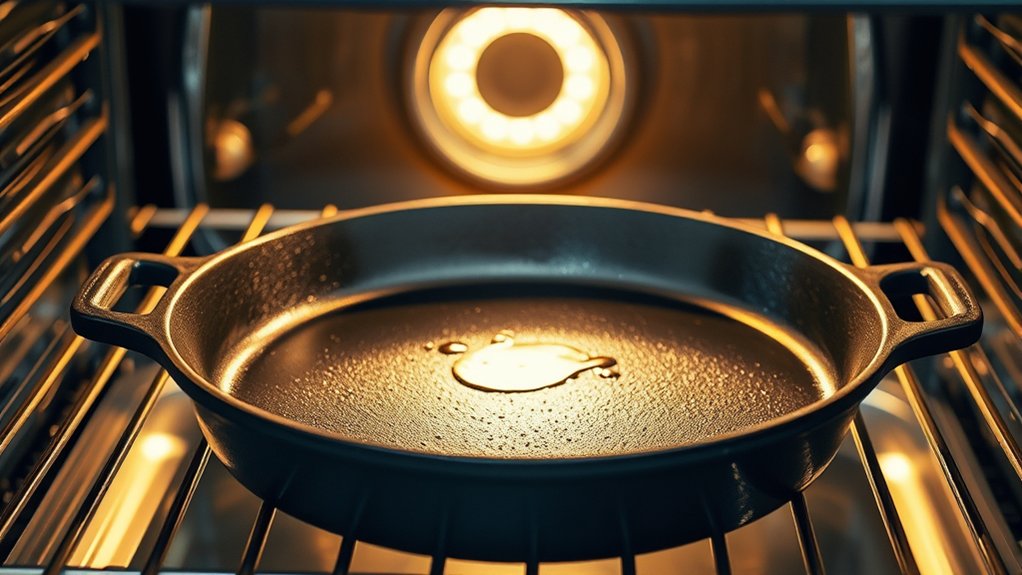
How do you build a durable, nonstick finish on cast iron in the oven? First, wipe the dry pan with a thin, even layer of high-smoke-point oil, then buff away every visible puddle. Place the pan upside down on the center rack and set a baking sheet below it to catch drips.
Heat your oven to 450 to 500°F, and bake the skillet for one hour. Let it cool inside the oven, so the surface hardens gradually. Repeat the process if the pan looks dull or patchy.
For reliable seasoning tips, keep the coating light, and always heat the cookware fully. Good oven maintenance matters too: line the lower rack if needed, and avoid heavy smoke by using a clean oven.
After seasoning, wash the pan gently, dry it well, and store it in a dry place.
How Many Coats of Oil to Apply
For most cast iron, one to three ultra-thin coats of oil are enough to build a strong seasoning layer in the oven. You don’t need to flood the pan; you need even coverage and tight coating thickness.
After cleaning and drying, apply a small amount of seasoning oil, then wipe it until the surface looks almost dry. If you can see pooled oil, you’ve used too much. Each coat should leave only a trace film on the iron, including the handle, exterior, and rim.
Wipe on a whisper-thin coat until the pan looks nearly dry; pooled oil means too much.
A single thin coat can work for a lightly used pan, but two or three coats usually create a more durable finish. Let each layer bond before adding the next, and keep the application consistent from one pass to the next.
Thin coats build better than thick ones because excess oil can stay sticky and weaken the surface you’re trying to develop.
What Oven Temperature Works Best
A steady oven temperature of 450°F is the most reliable choice for seasoning cast iron because it’s hot enough to polymerize the oil without being so extreme that it burns off too quickly. You should preheat fully, then keep that oven temperature consistent so the oil bonds evenly and forms a durable finish.
If your oven runs hot, use 425°F; if it runs cool, 475°F can help. Avoid random heat swings, since they can leave sticky spots or uneven color. For food safety, make sure the skillet reaches a stable heat and stays dry before cooling.
| Oven temperature | Best use | Result |
|---|---|---|
| 425°F | Slightly hot ovens | Slower seasoning |
| 450°F | Standard seasoning | Balanced, even layer |
| 475°F | Cooler ovens | Stronger polymerization |
You don’t need higher heat for better results; you need control.
How Long to Bake Cast Iron
You should bake cast iron for about one hour per seasoning coat so the oil can fully bond to the surface. If you use a thicker layer or a particularly rough pan, you may need a little more time, but heat and duration should stay steady for even results.
Let the pan cool in the oven after baking so the finish sets cleanly.
Baking Time Basics
How long should you bake cast iron in the oven? You usually need 60 minutes for a thin, even coat, but the exact time depends on the pan’s size and how much oil you’ve applied.
Keep your layer light to avoid tacky buildup and common seasoning mistakes. Use this quick guide:
| Pan condition | Bake time |
|---|---|
| Lightly oiled skillet | 45–60 min |
| Older, uneven finish | 60 min |
| Heavy coating | 60+ min |
After baking, let the pan cool inside the oven before handling. This helps the finish set cleanly.
Once it’s fully cool, wipe away excess residue, then move it to dry cast iron storage so moisture doesn’t undo your work. Repeat only when the surface looks dull or patchy.
Heat And Duration
For reliable seasoning, set your oven to 450–500°F and bake the cast iron long enough for the oil to polymerize without pooling or smoking excessively. Usually, you’ll bake it for one hour, then let it cool in the oven; this gives the coating time to bond.
If the pan still looks tacky, add another 15–30 minutes, not more oil. Seasoning science shows thin layers cure better than thick ones, and mineral oil myths often lead you to underperforming results because that oil won’t polymerize well.
- Preheat fully before timing.
- Apply a whisper-thin coat.
- Recheck after cooling.
When you repeat the cycle, you build a harder, darker surface with less risk of sticky buildup.
How to Care for a Seasoned Skillet
A well-seasoned cast iron skillet stays in great shape with a little regular care. After cooking, let it cool slightly, then wipe out crumbs and wash it with warm water and a soft brush. Skip harsh soap unless you need it for stuck-on residue, and never soak the pan.
Dry it completely on the stove over low heat so moisture can’t cause rust. While it’s still warm, rub on a thin layer of oil, then buff away any excess so the surface feels almost dry. These care tips help preserve the seasoning without making it sticky.
If food starts to cling, reapply heat and oil after cleaning instead of scrubbing aggressively. Store your skillet in a dry place with the lid off. Ignore seasoning myths that say you must deep clean or reseason often; steady, light upkeep usually works best.
With consistent handling, your skillet will stay slick, durable, and ready for everyday cooking.
Frequently Asked Questions
Can I Season Cast Iron With Flaxseed Oil?
Yes, you can season cast iron with flaxseed oil, but you’ll need thin coats and high heat. Use it sparingly because seasoning frequency matters; reapply only when the surface looks dull or dry.
Does Seasoning Work on Enameled Cast Iron?
No, seasoning usually doesn’t bond to enameled cast iron; you’ll see the glossy enamel coating like glass, making seasoning compatibility low and enamel coating suitability poor.
Instead, you should clean gently and use it as is.
How Often Should I Re-Season My Skillet?
You should re-season your skillet whenever food starts sticking or the surface looks dull; there’s no fixed re-season frequency. With regular skillet upkeep, a light touch-up every few months usually keeps it performing well.
Can I Season Cast Iron on a Grill?
Yes, you can season cast iron on a grill, and you’ll catch that outdoor cooking aroma. Like a blacksmith’s forge, your seasoning on grill needs steady heat, thin oil, and patience for an even finish.
Is Smoke During Seasoning Harmful?
Usually, no, but you should limit smoke risk. If you see heavy smoking, your oil’s overheating.
Turn off heat, ventilate, and check for flame growth. Use a thin oil coat to prevent problems.
Conclusion
Seasoning cast iron in the oven really does work best when you keep it simple: clean the pan, apply a very thin oil layer, and bake it hot enough to bond the oil without leaving a sticky film. If you’ve heard that more oil means better seasoning, that’s not true. Thin coats win.
With a little patience, you’ll build a smooth, durable finish that protects your skillet and gets better every time you use it. Remember, the key to success is consistent care and proper technique.
By following these steps, seasoning cast iron in the oven will help you achieve a long-lasting, non-stick surface that enhances your cooking experience.