How Long to Cook Pizza in Oven
How long to cook pizza in oven is key to achieving a crisp, bubbling pie without overdoing it. You usually bake it for 10 to 15 minutes, but your oven, crust thickness, and toppings all affect the timing.
Preheat your oven to 475–500°F and use a hot stone or steel for the best results. Keep an eye on the pizza as it cooks.
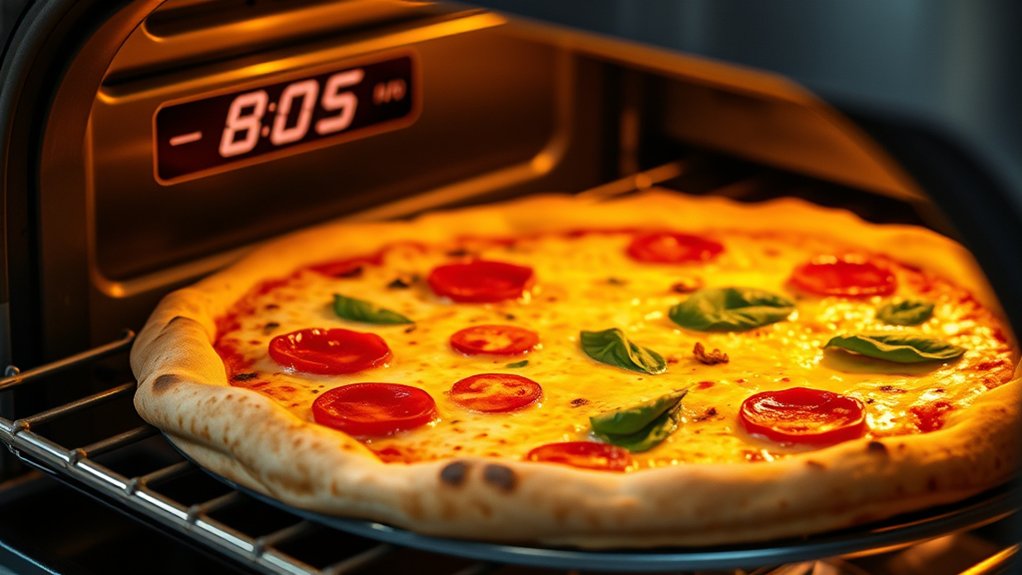
Watch for browned edges, melted cheese, and a golden bottom. The exact minute matters less than these visual cues.
Key Takeaways
- Homemade pizza usually bakes in 10 to 15 minutes at 475°F to 500°F.
- Thinner dough finishes closer to 10 minutes; thicker dough may need 12 to 15 minutes.
- Use visual cues like browned crust, melted cheese, and bubbling sauce instead of relying only on the clock.
- Preheat the oven at least 30 minutes, especially with a stone or steel, for even cooking.
- If using convection, reduce the temperature by about 25°F and adjust for your oven’s heat.
How Long to Cook Pizza in the Oven
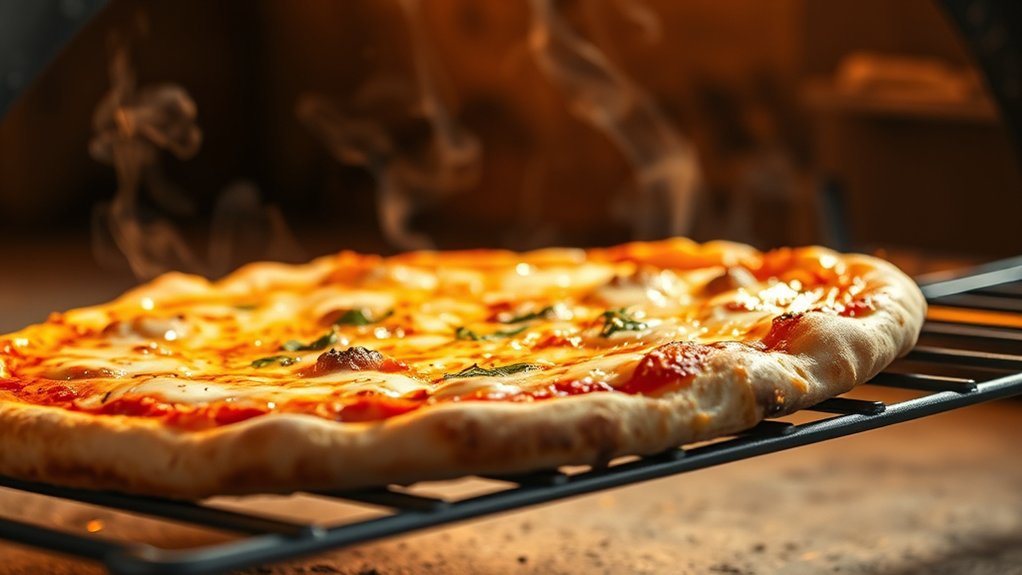
How long should you cook pizza in the oven? You’ll usually bake a homemade pizza for 10 to 15 minutes. The exact time depends on how thick your pizza dough is and how much moisture your toppings add.
Homemade pizza usually bakes in 10 to 15 minutes, depending on dough thickness and topping moisture.
Thin dough often finishes closer to 10 minutes, while thicker dough may need 12 to 15 minutes. Check for a browned crust, melted cheese, and bubbling sauce before you remove it.
You should also watch toppings placement carefully. If you pile heavy toppings in the center, the middle can stay undercooked while the edges brown too fast.
Spread ingredients evenly, and avoid overloading the dough. That helps the pizza cook through at the same pace.
Start checking a few minutes before the estimated time ends. Every oven heats a little differently, so visual cues matter more than the clock alone.
If the crust looks set and the cheese is golden, your pizza’s ready.
Pizza Oven Temperatures for Homemade Pizza
For homemade pizza, a hot oven usually gives you the best results. Set your home oven to 475°F to 500°F, and let it preheat for at least 30 minutes so the stone or steel stores enough heat. If your oven reaches 550°F, you can use that top setting for a faster bake and better browning.
Always follow oven safety: keep racks stable, use dry mitts, and place the pizza carefully to avoid burns.
You should also match the heat to your dough hydration. A wetter dough often handles higher temperatures better because it puffs quickly and stays tender inside. A drier dough may need slightly less heat to avoid a tough crust.
If you use a convection setting, reduce the temperature by about 25°F, since moving air cooks the pizza more aggressively. Check your oven’s real temperature with an oven thermometer, because dials can be inaccurate.
Why Pizza Cook Time Changes
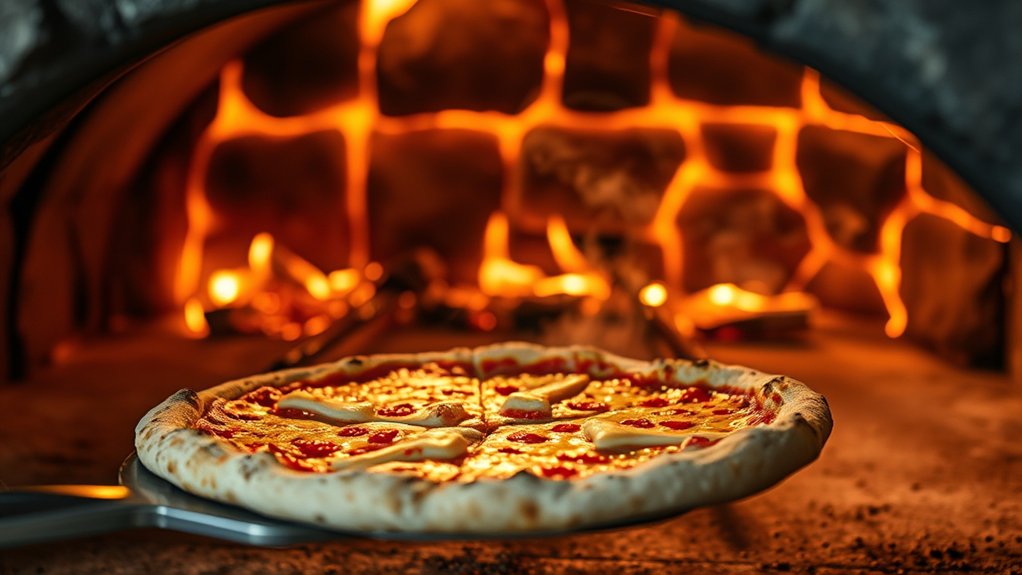
Your pizza’s cook time changes mainly with oven temperature, since a hotter oven bakes the crust and toppings faster. Crust thickness matters too, because a thin pizza cooks through quicker than a thick one.
When you adjust either factor, you’ll need to watch the pizza closely so you don’t undercook or burn it.
Oven Temperature Matters
Oven temperature changes pizza cook time because heat drives how fast the crust browns, the cheese melts, and the toppings cook through. When you set the right oven temperature, you can predict a shorter or longer baking duration with more accuracy. Use these quick checks:
- Higher heat speeds browning.
- Lower heat extends baking duration.
- Stable heat cooks more evenly.
- Preheating improves timing.
- Rack position affects exposure.
You should match the temperature to your pizza style, then watch the pie closely near the end. If your oven runs hot, start checking early. If it runs cool, expect extra minutes.
Consistent temperature control helps you avoid undercooked centers and overdone edges, so your pizza finishes when the surface looks set and the cheese bubbles steadily.
Crust Thickness Differences
Crust thickness changes how long pizza needs in the oven because thicker dough takes longer for heat to reach the center. If you use a thin crust, you can expect a shorter bake time, often with a crisp edge and fast browning.
A thicker crust holds more moisture and needs extra minutes so the middle cooks through without burning the top. When you adjust crust thickness, watch both color and texture, not just the clock.
Check the bottom for even browning and lift a corner to see if the center feels set. If your pizza has heavy toppings, add a little more bake time, since they slow heat transfer too.
For best results, match your oven setting to the style of crust you choose.
How Long to Cook Frozen Pizza
How long should you cook a frozen pizza? For most brands, you’ll bake it at 400°F to 425°F for 12 to 18 minutes, but your oven timing should follow the package first. A frozen pizza cooks best when you preheat fully, place it on the middle rack, and check it near the end.
Bake frozen pizza at 400°F to 425°F for 12 to 18 minutes, following the package first.
You want melted cheese, bubbling sauce, and a crisp crust, not a soggy center.
- Read the box before you start.
- Preheat so the oven reaches full heat.
- Keep the pizza on the middle rack.
- Watch for browned edges and melted cheese.
- Let it rest 2 minutes before slicing.
If your oven runs hot or cool, adjust the time slightly. Thin-crust pizzas usually finish sooner, while thicker styles need a few extra minutes.
Use the package as your guide, then fine-tune based on appearance and texture.
Take-and-Bake Pizza Timing Tips
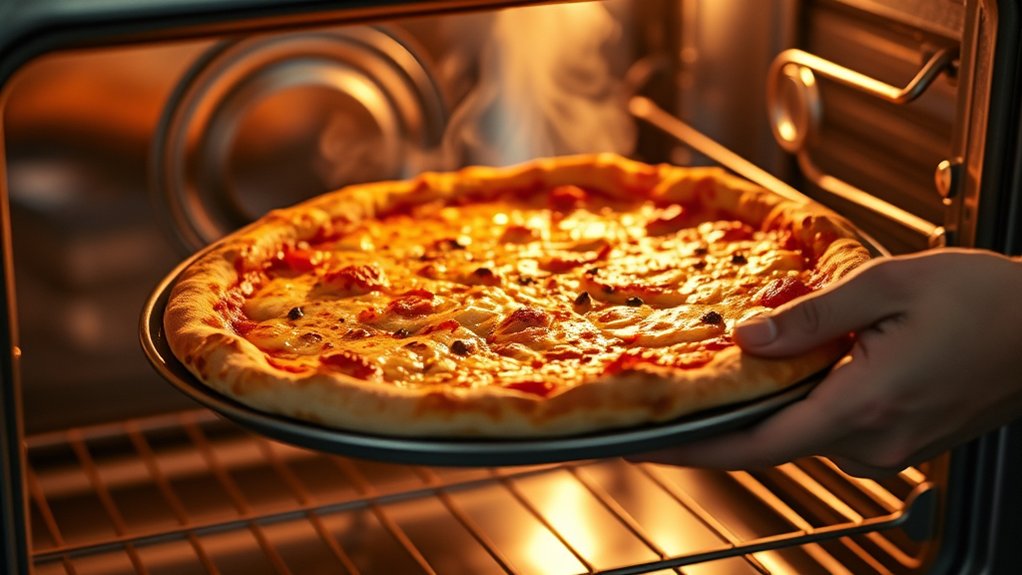
Start by reading the package directions, since take-and-bake pizzas often have specific time and temperature guidance. You’ll still need to adjust for your oven type, because convection and standard ovens can cook at different rates.
Check the crust and cheese near the end, and pull the pizza when the crust is golden and the cheese is melted and bubbling.
Read Package Directions
For take-and-bake pizza, your package directions should always be the first guide you follow, since bake times and oven temperatures can vary by brand, crust type, and topping load. When you read package directions, you’ll know the exact temperature, rack placement, and timing the maker tested for best results.
This also supports oven safety by preventing overheating, spills, and underbaked centers. Use the label as your baseline, then check the pizza near the end so you don’t overcook it.
- Confirm the recommended oven temperature
- Note the suggested bake time
- Check whether a tray or stone is required
- Watch for browning cues
- Follow cooling instructions before slicing
Adjust For Oven Type
Your oven type can change take-and-bake pizza timing more than you might expect, since convection, toaster, and standard ovens heat and circulate air differently. In a convection oven, you’ll usually need less time because moving air speeds heat transfer.
In a toaster oven, the heating elements sit closer, so you may need to reduce time and watch for hot spots. A standard oven often follows the package range most closely.
Use the rack position the label suggests, and account for any oven accessories, like a pizza stone or steel, which can store heat and alter timing. Baking science explains that airflow and radiant heat affect how fast the crust bakes, so keep your settings consistent and note the exact time that works best for your appliance.
Check Crust And Cheese
How do you know when take-and-bake pizza is done? Check the crust and cheese together, not separately. You want the crust texture to turn firm, dry, and evenly browned, with the edge lifting slightly from the pan.
The bottom should look set, not pale. Watch the cheese bubbling: it should melt across the surface and show small browned spots, but it shouldn’t scorch. Use these quick checks:
- Lift one edge with a spatula.
- Look for golden crust color.
- Confirm the center isn’t doughy.
- Watch for steady cheese bubbling.
- Let it rest 2 minutes before slicing.
If the crust still bends too easily, bake a little longer. If the cheese darkens fast, lower the rack or tent loosely with foil.
How to Tell When Pizza Is Done?
Wondering if your pizza is done? Check the crust first: it should look browned, firm, and slightly blistered, not pale or wet. Next, inspect the cheese; it should be fully melted and bubbling, with a few toasted spots.
If you lift the edge, the bottom should feel set and crisp, not doughy. Use these signs together for a reliable two word discussion idea, two word discussion idea, instead of guessing by time alone.
| Sign | What to Look For | Result |
|---|---|---|
| Crust color | Golden-brown edges | Ready |
| Cheese | Bubbling, lightly spotted | Ready |
| Bottom | Firm and crisp | Ready |
| Center | Set, not jiggly | Ready |
| Aroma | Toasted, savory smell | Ready |
If one area still looks underdone, give it a little more time and check again soon.
Best Oven Settings and Rack Placement
For most pizzas, set your oven as hot as it safely goes, usually 475°F to 500°F, so the crust can brown quickly while the toppings cook through. Use the middle oven rack for a balanced bake; it keeps the top from scorching before the center finishes.
If you use a baking stone, place it on the lower-middle rack and preheat it with the oven so it holds steady heat.
- Middle rack: best for standard thin or hand-tossed pizzas
- Lower-middle rack: useful with a baking stone for stronger bottom heat
- Upper rack: only if your toppings need extra browning
- Avoid crowding: give the pizza space for even airflow
- Preheat fully: a hot oven improves timing and consistency
Keep your pizza centered on the oven rack or stone for even exposure. If your oven runs hot, lower the rack one notch. If it runs cool, give it more preheat time instead of changing the temperature.
How to Get a Crispy Pizza Crust
A crisp pizza crust starts with dry heat and a hot surface, so preheat your oven fully and use a baking stone, steel, or preheated sheet pan if you have one. Stretch the dough thin enough for even browning, and leave a slightly thicker edge for structure.
Keep toppings light, because excess moisture softens the crust and slows crisping. Use just enough sauce to support flavor without flooding the dough, and aim for good sauce balance so the center doesn’t turn soggy. Brush the rim lightly with oil for better color and a firmer bite.
Bake the pizza directly on the hot surface until the bottom is deeply golden and the crust texture feels firm when you lift it with a spatula. If needed, finish the last minute or two on a lower oven rack to dry the base. Let the pizza rest briefly before slicing so steam can escape and the crust stays crisp.
Common Pizza Baking Mistakes
Even with a hot oven and a crisping setup, a few small mistakes can ruin the result. You can avoid most problems by checking dough thickness, rack placement, and bake time before you slide in the pie. Don’t overload the top; too much sauce or cheese traps moisture and slows browning.
Skip constant door opening, because every peek drops heat and stretches cooking time. Keep your focus on technique, not irrelevant topics like toppings trends or two word ideas that don’t affect the bake.
- Preheat fully, not halfway.
- Use the right rack position.
- Stretch dough evenly.
- Limit wet toppings.
- Watch the crust, not the clock.
You should also rotate the pizza once if your oven bakes unevenly. If the bottom browns too fast, lower the heat or move the pizza up. If the top looks pale, finish with brief broiling. Small adjustments keep your pizza crisp, balanced, and done on schedule.
Frequently Asked Questions
Can I Cook Pizza Directly on the Oven Rack?
Yes, you can, but you should place it on a preheated stone or pan if possible. Direct heat browns the crust fast, and a rack can affect crumb texture, making it drier.
Should I Preheat a Pizza Stone Before Baking?
Yes, you should preheat it. Like a stage set before the curtain rises, a hot stone gives you crisp crust.
Place it on the middle oven rack, and preheat the stone fully before baking.
Can I Reheat Leftover Pizza in the Oven?
Yes, you can reheat leftover pizza in the oven. Use oven techniques like 375°F on a baking sheet for 8-10 minutes.
This leftover reheating restores crisp crust and melted cheese without drying slices.
Does Oiling the Crust Improve Oven-Baked Pizza?
Yes, you can oil crust lightly, and oiling surface helps browning and crispness. You’ll get a richer flavor, but don’t overdo it; too much oil can make the crust greasy and soft.
Can I Bake Pizza on Parchment Paper?
Yes, you can bake pizza on parchment paper; it’s convenient. You’ll enjoy parchment paper advantages like easy transfer and cleanup, though high heat can soften it and affect crust texture impact slightly.
Conclusion
When you pull your pizza from the oven, you’re chasing more than dinner—you’re watching for the signal of a well-baked pie. Let the golden crust, bubbling cheese, and browned bottom guide you more than the clock.
With a hot oven, middle rack, and careful eyes, you’ll know when it’s ready. Trust the cues, not just the minutes, and you’ll turn a simple dough circle into a crisp, glowing success.
Remember, how long to cook pizza in oven varies, but relying on these visual cues ensures your pizza is perfectly baked every time.