What Is Conventional Oven and Convection Oven
You may not realize that the main difference between a conventional oven and a convection oven isn’t just a fan. A conventional oven cooks food using stationary top and bottom heat, providing steady and consistent warmth.
In contrast, a convection oven uses circulating air to speed browning and create more even results. This difference affects texture, timing, and rack placement, making it more important than most recipes mention.
Key Takeaways
- A conventional oven uses stationary heat from top and bottom elements without a fan.
- A convection oven uses a fan to circulate hot air for more even cooking.
- Convection ovens brown food faster and cook more evenly on multiple racks.
- Conventional ovens suit delicate baked goods, casseroles, loaves, and custards.
- Convection often needs about 25°F less temperature and shorter cooking time.
Convection Oven Vs. Conventional Oven
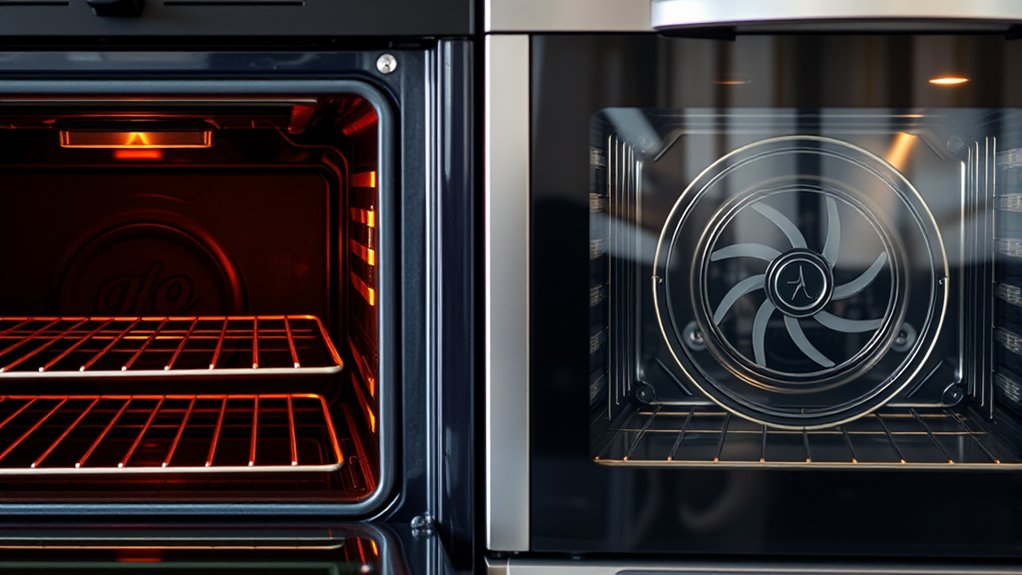
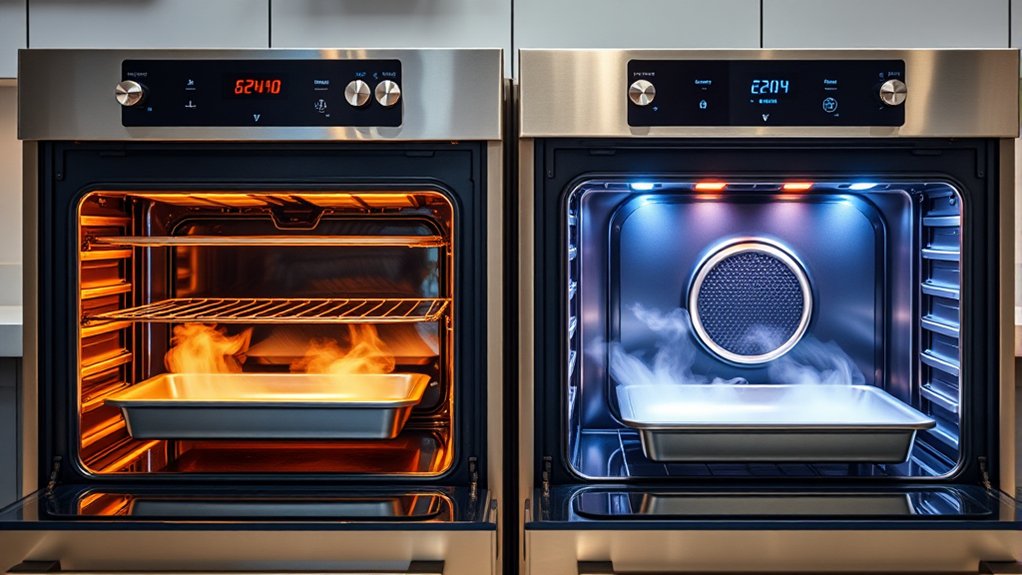
When you compare a convection oven with a conventional oven, the main difference is how heat moves inside the cavity: a convection oven uses a fan to circulate hot air, while a conventional oven relies on stationary radiant heat from the top and bottom elements.
Convection ovens circulate hot air with a fan, while conventional ovens use stationary radiant heat.
You get more even surface browning and faster moisture removal in convection mode, so your convection efficiency usually improves for roasted vegetables, sheet-pan meals, and pastries. You can also lower set temperatures and shorten cook times without sacrificing doneness.
In a conventional oven, you may need to rotate pans more often to reduce hot spots and uneven coloring. Check bakeware compatibility before you switch modes: shallow metal pans and rimmed sheets typically perform best, while tall, insulated, or tightly packed bakeware can block airflow and reduce results.
Choose the mode that matches your recipe, pan size, and finish target.
What Is a Conventional Oven?
A conventional oven heats food with stationary radiant heat from electric heating elements or a gas burner, rather than moving air with a fan. You use it for baking, roasting, and broiling with predictable results.
Heat rises naturally, so temperature can vary between racks, and you may need to rotate pans for even browning. This design keeps operation simple, making it budget friendly for most kitchens.
You’ll also find many models are energy efficient for standard cooking tasks, especially when you avoid frequent door openings. Because the oven cavity doesn’t rely on forced circulation, it often preserves familiar cooking times and recipes.
You can set the temperature, place your food inside, and let the oven do the work. For everyday meals, a conventional oven gives you reliable control, straightforward maintenance, and a practical balance of cost and performance.
How a Convection Oven Works
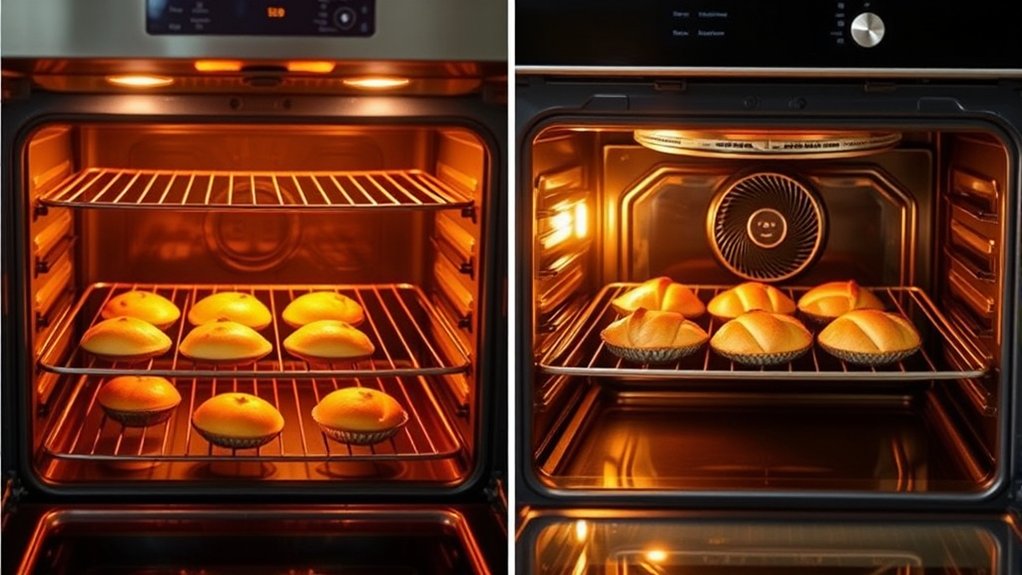
How does a convection oven create more even results? You rely on a fan and exhaust system that move hot air continuously around the cavity. That forced circulation reduces temperature layering, so your food receives heat from every side with less stagnation. The result is higher convection efficiency and tighter control over browning.
| Component | Function | Effect |
|---|---|---|
| Fan | Circulates air | Evens heat distribution |
| Heating element | Supplies thermal energy | Replaces lost heat quickly |
| Vent | Releases excess moisture | Supports crisp surfaces |
Because air keeps moving, the oven transfers heat faster than a still-air model. You can often use bake time optimization by monitoring doneness earlier and adjusting temperature precisely. This design also helps minimize hot spots near the walls and improves repeatable outcomes across racks.
In practice, the convection system turns heat flow into a controlled process rather than a passive one.
When to Use Each Oven Type
Choose a conventional oven for tasks that benefit from steady, gentle heat, such as roasting, baking large batches, or cooking delicate items that dry out too quickly under stronger airflow. You’ll also want it when you need consistent browning on casseroles, loaves, custards, or meringues.
Use a convection oven when you want faster surface setting, improved browning, and more uniform results on multiple racks. It’s a strong choice for cookies, sheet-pan vegetables, poultry, and crisping foods with exposed surfaces.
For energy efficiency, convection often performs better because the fan circulates heat more effectively, so the cavity reaches useful cooking conditions with less idle time.
If you’re doing taste testing, compare both ovens with the same recipe and note texture, color, and moisture retention. Pick the oven that matches the food’s structure and the result you want, not just the fastest option.
How to Adjust Time and Temperature
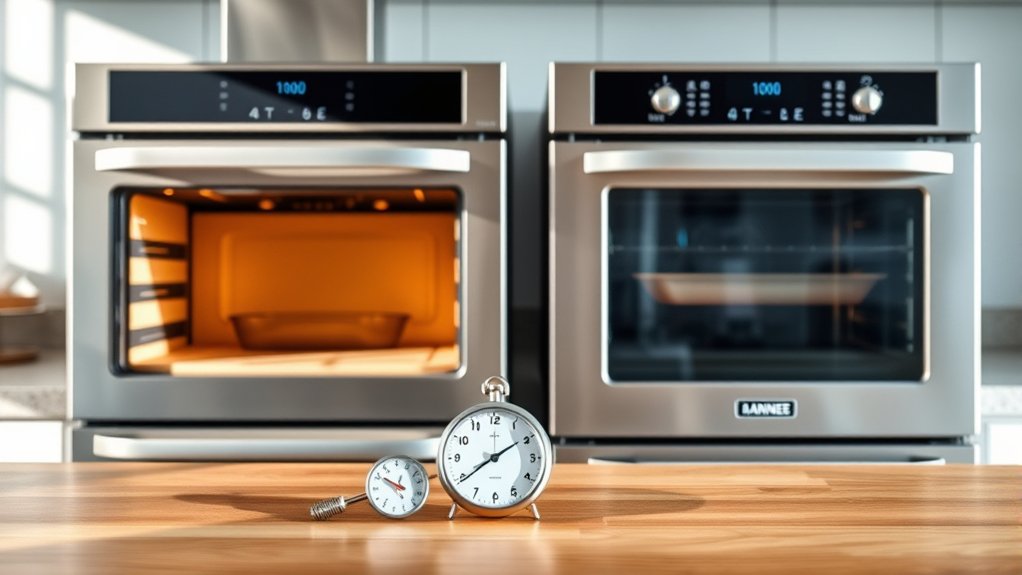
Once you’ve picked the oven type, adjust the recipe to match its heat behavior: convection usually lets you reduce the temperature by about 25°F (about 15°C) and often shortens cook time, while conventional ovens typically use the recipe’s stated settings.
You should start checking doneness earlier than the timer suggests, especially for lean proteins, cookies, and roasted vegetables. Use visual cues, internal temperature, and texture rather than time alone. For a side dish, such as potatoes or gratin, convection can brown edges faster, so tent with foil if needed.
Your bakeware choices also matter: shallow, light-colored pans promote faster, more even heating, while dark or oversized pans can intensify browning and require extra monitoring.
If you switch from conventional to convection, lower heat first, then fine-tune time in small increments. For recipes with delicate batters or custards, keep the original temperature and watch closely, because forced air can set surfaces too quickly.
Frequently Asked Questions
Which Oven Type Is More Energy Efficient?
Convection ovens usually give you better energy efficiency because they cook faster and at lower temperatures. In your energy comparison, you’ll save more power overall, especially for baking or roasting when you use circulation well.
Do Convection Ovens Require Special Cookware?
No, you usually don’t need special cookware. Just think of the bake, not the pan.
You can use most convection cookware and ordinary dishes, but choose low-sided special bakeware for better airflow and even browning.
Are Convection Ovens Noisier During Operation?
Yes, convection ovens often make slightly more noise during operation because the fan and motor run continuously. You’ll usually gain better energy efficiency, though, since they cook faster and distribute heat more evenly.
Can You Convert Recipes Between Oven Types Automatically?
You can’t fully automate recipe conversion, because auto conversion feasibility depends on ingredients, pan size, moisture, and browning.
You should apply recipe adaptation rules, then test temperature and time changes for each oven type carefully.
Which Oven Is Better for Baking Bread?
You’ll usually bake bread better in a conventional oven, because it gives steadier oven temperature control and preserves bread texture.
Use convection only if you lower heat and monitor browning closely for even results.
Conclusion
You can think of a conventional oven as your steady, dependable option: fixed top-and-bottom heat, best for casseroles and custards.
A convection oven, by contrast, uses a fan to move hot air, so food cooks faster and browns more evenly. In practice, that airflow can reduce cooking time by about 25% and often lets you lower the temperature by 25°F.
Use the right mode, and you’ll get better control, consistency, and results. Understanding the difference between a conventional oven and convection oven helps you choose the best cooking method for your needs.