Can You Put Cardboard in the Oven
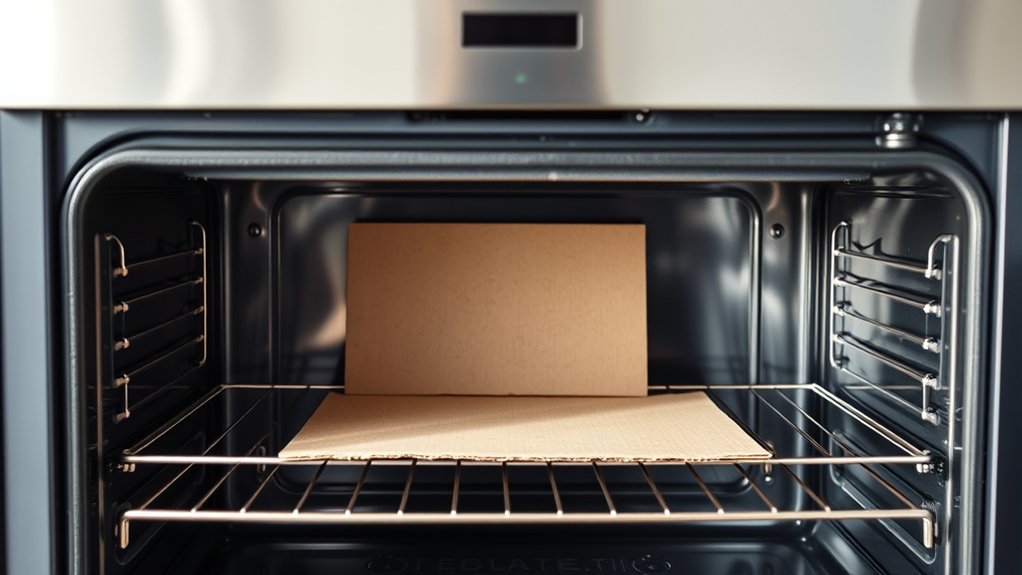
Like a match near dry straw, cardboard in the oven can turn risky fast. You shouldn’t assume a pizza box or any other box can handle heat, because cardboard can char, smoke, warp, and ignite, especially if it has coatings, glue, or wax.
Before you use any package in the oven, you need to know what it’s made for—and the safe alternatives may change the whole answer.
Key Takeaways
- No, cardboard should not go in the oven unless the manufacturer explicitly labels it oven-safe.
- Cardboard can warp, char, smoke, or ignite because it is dry, porous, and heats poorly.
- Pizza boxes are not oven-safe cookware and should not be used for baking or broiling.
- If you need heat-safe packaging, use parchment paper, silicone mats, glass, ceramic, or metal bakeware.
- If cardboard burns, turn off the oven, keep the door closed, and let it cool before removal.
Can You Put Cardboard in the Oven?
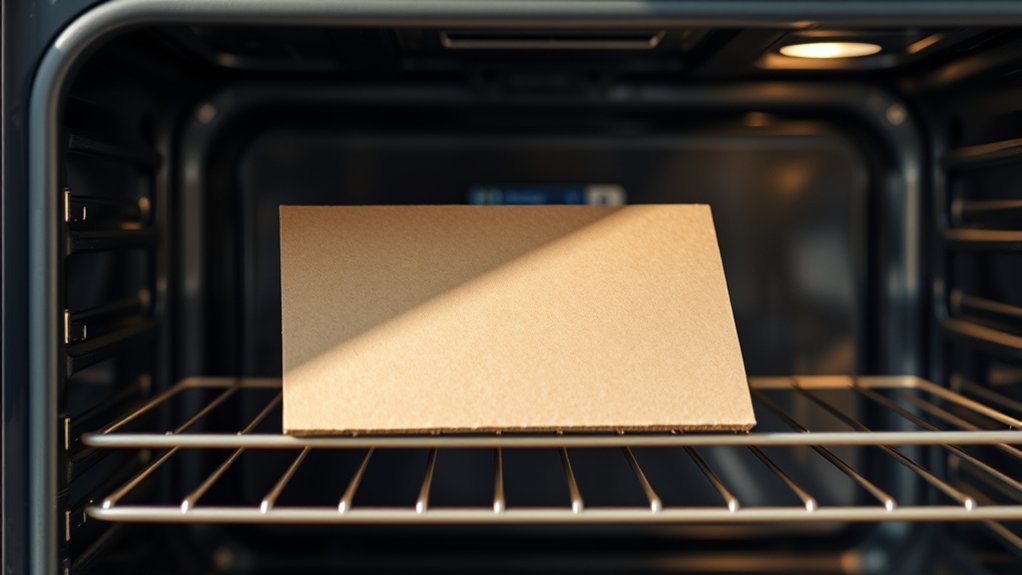
No, you should not put cardboard in the oven unless you are following a very specific product instruction that explicitly says it is oven-safe. You need to treat cardboard safety as a material-limit issue, not a convenience issue.
Most cardboard can warp, shed fibers, or release unwanted compounds when exposed to oven temperatures, even if the exposure seems brief. You should check the manufacturer’s label, liner type, coatings, and temperature rating before you rely on it.
If you can’t verify those details, use a metal, glass, or ceramic tray instead. Your oven awareness should include airflow, rack placement, and any contact between cardboard and heating elements or hot surfaces.
You shouldn’t assume a pizza box, shipping box, or insert is suitable just because it looks sturdy. When in doubt, keep cardboard out of the oven and choose a verified heat-safe container.
Why Cardboard Catches Fire
Cardboard catches fire because it’s a dry, porous paper product that ignites at relatively low temperatures once enough heat builds up. You should treat it as a serious fire risk, especially when you’re judging cardboard safety near hot appliances.
Cardboard is a serious fire risk: dry, porous, and able to ignite at relatively low temperatures.
Its fibers contain cellulose, which burns readily when exposed to sustained heat, and the thin structure lets oxygen reach the material easily. If you’re using cardboard around heat, these factors matter:
- Low ignition threshold
- High surface area
- Dry fiber content
- Easy oxygen access
- Rapid flame spread
Even small heat sources can weaken cardboard before ignition, so you shouldn’t assume it’s stable just because it looks intact. Oils, food residue, or coatings can also reduce cardboard safety by adding fuel.
In practical terms, you need to keep cardboard away from any source that can concentrate heat, because once combustion starts, it can spread quickly and unpredictably.
How Cardboard Reacts to Oven Heat
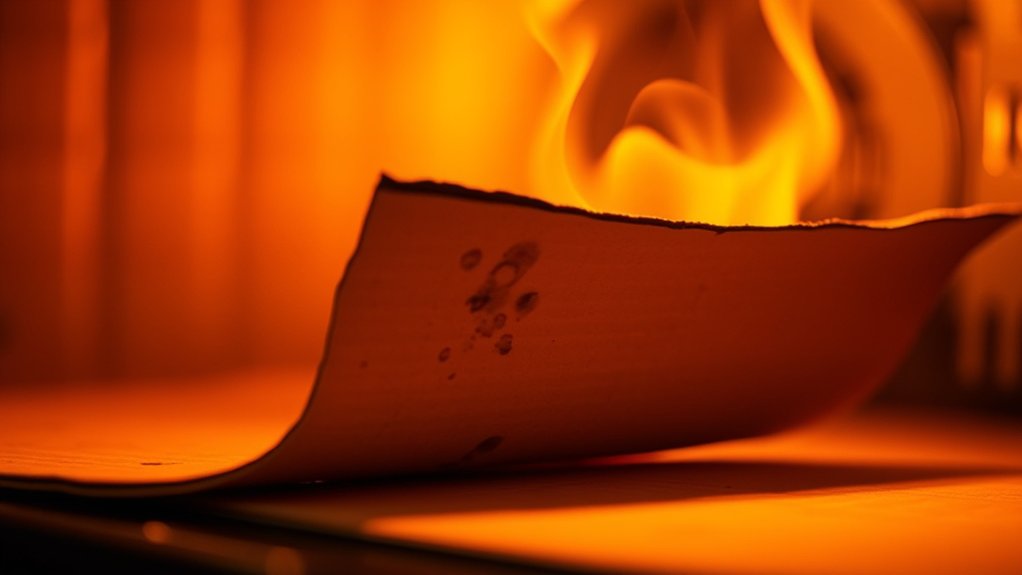
In an oven, cardboard doesn’t simply “get hot.” It starts to dry out, deform, and weaken as heat drives off any remaining moisture and stresses the fibers. You’ll see cardboard thermal behavior change quickly once temperatures rise: the material loses stiffness, edges curl, and surfaces can warp unevenly.
As the internal structure dries, glue layers and printed coatings may separate, which accelerates oven degradation and reduces mechanical integrity. Because cardboard is a porous fiber composite, it transfers heat irregularly, so hotspots can form where thin sections overheat faster than thicker ones.
You shouldn’t expect stable performance under prolonged heat exposure; even moderate oven temperatures can push the material past its practical limits. If you’re evaluating cardboard near heat, treat visible discoloration, brittleness, or distortion as warning signs that the board is failing structurally and no longer behaving predictably under thermal stress.
Is Pizza Box Cardboard Oven-Safe?
A pizza box isn’t oven-safe in the way a baking pan is. You should treat it as temporary packaging, not cookware. In cardboard testing, you’d see that pizza boxes can weaken, warp, or scorch as heat rises, especially near hot elements.
Many oven myths suggest a box can “just warm” food safely, but that ignores adhesives, inks, and the lid’s low heat tolerance.
Keep the box away from direct heating
Don’t use it under a broiler
Watch for browning or smoke
Avoid preheating with the box inside
Remove pizza before any longer heating
If you need to reheat, you should transfer food to a proper oven-rated surface. That approach gives you predictable heat transfer and lowers fire risk.
A pizza box may survive brief warmth, but it isn’t a reliable or tested cooking vessel.
Which Food Packaging Is Oven-Safe?
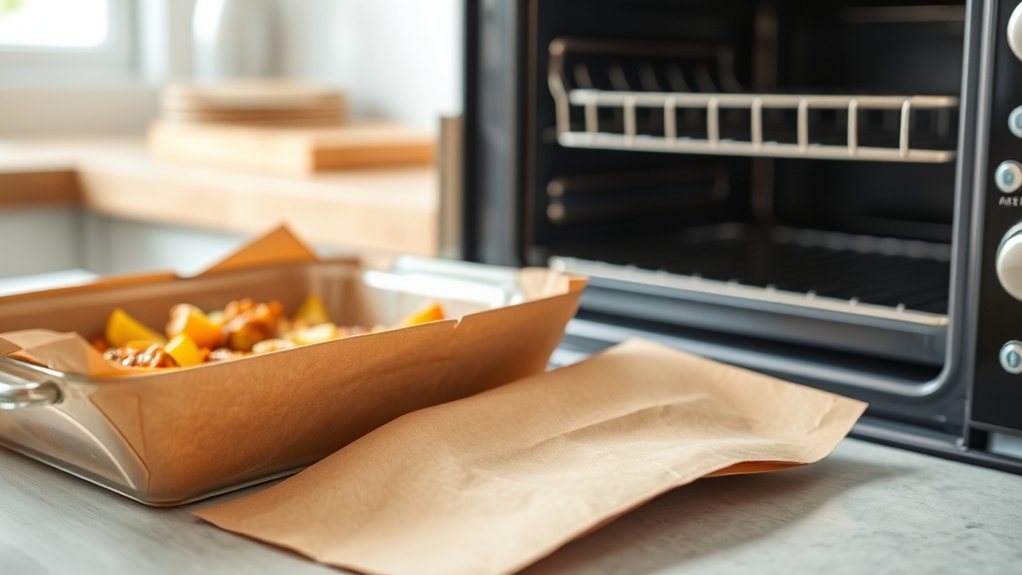
Which food packaging can you actually put in the oven? You should rely on materials made for heat exposure, not ordinary paperboard. In practice, oven-safe packaging includes ceramic dishes, tempered glass, silicone bakeware, and some engineered box packaging labeled for high temperatures.
These products are designed to tolerate radiant heat, contact heat, and short baking cycles without softening or releasing unwanted compounds. If you use metal trays, you can usually expect better thermal stability, faster heat transfer, and less deformation than with fiber-based containers.
Even so, metal isn’t automatically safe if it has coatings, adhesives, or mixed components that aren’t rated for oven use. You should keep packaging dry, avoid direct flame, and respect the manufacturer’s stated temperature range. When packaging lacks explicit oven compatibility, you shouldn’t assume it can handle baking conditions, even if it looks sturdy or industrial.
How to Tell If Packaging Is Oven-Safe
You should first check for an explicit oven-safe label on the package, since that’s the clearest indicator. Then inspect the material for plastic films, wax, glue, or glossy coatings, because those finishes can change how the packaging behaves under heat.
Finally, verify the manufacturer’s instructions, since the label alone doesn’t always confirm safe oven use.
Check Oven-Safe Labels
Before you heat any cardboard, check the packaging for an explicit oven-safe label, temperature rating, or manufacturer instructions. You should trust only clear, printed guidance; vague claims don’t count. If the label is absent, treat the item as unsafe and choose cardboard alternatives or other safe packaging designed for heat.
- Look for “oven-safe,” “heat-resistant,” or a maximum temperature.
- Read all sides, including flaps and bottom panels.
- Confirm the rating matches your oven setting.
- Follow any time limits or usage notes.
- Discard packaging with no instructions.
When you can’t verify the label, don’t improvise. Cardboard may seem sturdy, but labels tell you whether the material was engineered for thermal exposure. Use the manufacturer’s directions as your final check before placing anything in the oven.
Inspect Material Coatings
Even with a printed oven-safe claim, the surface finish can tell you a lot about whether the packaging can handle heat. You should inspect coating integrity closely before you expose cardboard to any oven cycle.
Glossy films, waxy layers, or laminated seals often reduce coating safety because they can soften, blister, or separate under temperature stress. Matte, uncoated fiberboard may tolerate heat better, but only if it stays rigid and dry.
| Surface cue | Risk signal |
|---|---|
| Shiny plastic layer | Possible melt or off-gassing |
| Wax-like sheen | Reduced heat stability |
| Flaking or peeling | Failed coating integrity |
If you see discoloration, tackiness, or an uneven finish, treat the package as unsafe. Trust the material’s condition, not its appearance alone.
Verify Manufacturer Instructions
Check the manufacturer’s instructions first, because the package itself should state whether it’s oven-safe and under what limits. You should verify safety labels, batch codes, and temperature ratings before exposure to heat. If the packaging is unclear, assume it isn’t approved.
- Read all printed warnings.
- Find maximum temperature limits.
- Confirm whether grease resistance changes safety.
- Check for adhesives, inks, or laminates.
- Test area with thermometer only if the maker authorizes it.
Look for terms such as “oven-safe,” “heat-resistant,” or “do not expose to direct heat.” If you see recycling symbols only, that doesn’t prove suitability. Keep in mind that cardboard varies widely in composition, and hidden coatings can fail quickly. When in doubt, choose a container designed for baking.
Safer Alternatives to Cardboard
You should choose oven-safe materials such as metal, ceramic, or tempered glass instead of cardboard when heat exposure is involved. These heat-resistant containers can tolerate baking temperatures more reliably and reduce the risk of scorching, warping, or contamination.
Always verify the manufacturer’s temperature rating before you use any container in the oven.
Oven-Safe Materials
If you need a substitute for cardboard in the oven, choose materials rated for high heat, such as parchment paper, silicone baking mats, glass, ceramic, or metal bakeware. You should check the manufacturer’s temperature limit before use. These options help you manage cardboard safety because they won’t char or release smoke under normal oven behavior.
Use them only for their intended purpose, and keep food centered to avoid direct contact with heating elements.
- Parchment paper for lining sheets
- Silicone mats for repeated baking
- Glass for steady heat distribution
- Ceramic for even, controlled heating
- Metal for durable, direct baking
You should still monitor the oven closely, since heat zones vary and misuse can damage even approved materials.
Heat-Resistant Containers
When cardboard won’t do, use heat-resistant containers designed for oven use, such as glass baking dishes, ceramic casseroles, stainless steel pans, or cast-iron cookware. You protect food quality and reduce fire risk. Check each vessel’s temperature rating and avoid sudden thermal shock.
Never assume cardboard sanitation improves after heating; fibers can char, smoke, or transfer contaminants. Skip heat resistant plastics unless the manufacturer explicitly labels them oven-safe.
| Container | Typical Use | Risk Level |
|---|---|---|
| Glass | Baking | Low |
| Ceramic | Casseroles | Low |
| Stainless steel | Roasting | Low |
| Cast iron | Searing | Low |
| Plastic | Heating | High |
Choose rigid, clean, unwarped cookware, and verify handles, lids, and coatings before you preheat.
What to Do If Cardboard Burns
If cardboard starts burning in the oven, shut it off immediately and keep the door closed until the flames die down or you can safely remove the item. You should prioritize cardboard safety and burn prevention by avoiding sudden airflow, which can intensify combustion.
If smoke remains heavy, turn on the kitchen vent and open windows only after the fire is out. Use oven mitts and remove the cardboard with metal tongs if it’s intact; otherwise, let it cool fully. Inspect nearby racks, walls, and crumbs for char or ignition points.
Dispose of the cardboard in a metal container, not plastic. Clean the oven after it’s cold to remove soot and odor.
- Keep the door closed
- Cut power at the source
- Ventilate after flames stop
- Remove residue carefully
- Monitor for re-ignition
Frequently Asked Questions
Does Cardboard Release Toxic Fumes When Heated?
Yes, cardboard can release toxic fumes when heated, depending on coatings, inks, and adhesives. You should treat cardboard safety seriously and avoid inhaling oven fumes, since overheating may generate irritating or harmful compounds.
Can Coated Cardboard Ever Be Used in the Oven?
No, you shouldn’t use coated cardboard in the oven. Coatings can melt, smoke, or release chemicals, so oven safety isn’t guaranteed.
You should choose oven-safe metal, glass, or ceramic instead.
What Temperature Makes Cardboard Ignite?
Cardboard typically ignites around 425°F (218°C), though you shouldn’t treat that as safe; moisture, coatings, and airflow can lower it.
You’re courting dangerous baking and flame risk, so keep cardboard far from ovens.
Are Parchment Liners Safer Than Cardboard?
Yes, parchment liners are safer than cardboard for baking because you avoid cardboard safety risks like scorching or ignition.
You should choose certified alternative liners since parchment withstands higher oven heat and gives more predictable, precise performance.
How Do You Safely Dispose of Burnt Cardboard?
You should let it cool, then bag the burnt cardboard in a metal container; that burning odor means residual risk.
You’ll seal ash disposal separately, keep it dry, and follow your local waste rules.
Conclusion
So, no, you shouldn’t put cardboard in the oven unless it’s explicitly rated for that heat. Cardboard behaves like a tiny, ardent pyromaniac: it can scorch, smoke, warp, and spread unwanted particles onto your food.
If you want dinner, use parchment, silicone, glass, ceramic, or metal instead. Check the packaging first, and if you’re unsure, treat the box like a bad idea with a slogan—“I was never meant for 400 degrees.”
In conclusion, avoid putting cardboard in the oven to keep your food safe and your kitchen hazard-free.