What Is a Convection Oven
If you’ve ever wondered why some ovens cook food more evenly and brown it faster, a convection oven may be the answer. A convection oven uses a fan, and sometimes a third heating element, to move hot air around the food so heat reaches every side.
That simple shift can change how your meals turn out in surprising ways, especially when you compare it with a regular oven. The circulating air helps cook food more quickly and evenly, resulting in better texture and flavor.
Key Takeaways
- A convection oven uses a built-in fan to circulate hot air around food.
- The moving air helps food cook more evenly and often faster than in a regular oven.
- It reduces hot spots, improves browning, and can create crispier results.
- Convection ovens work well for roasting, baking, and cooking multiple trays at once.
- Cooking times and temperatures often need slight adjustments for convection settings.
What Is a Convection Oven
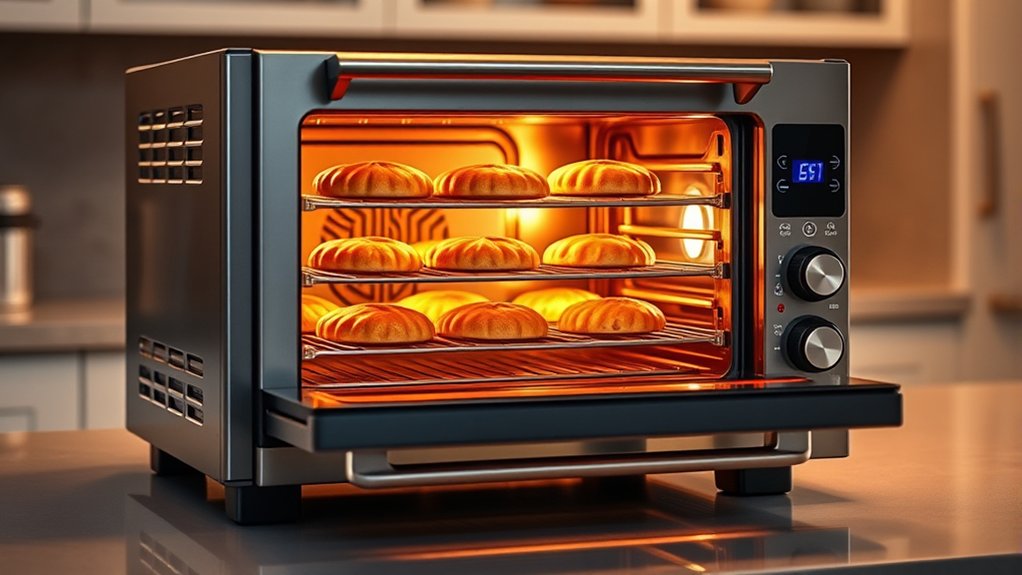
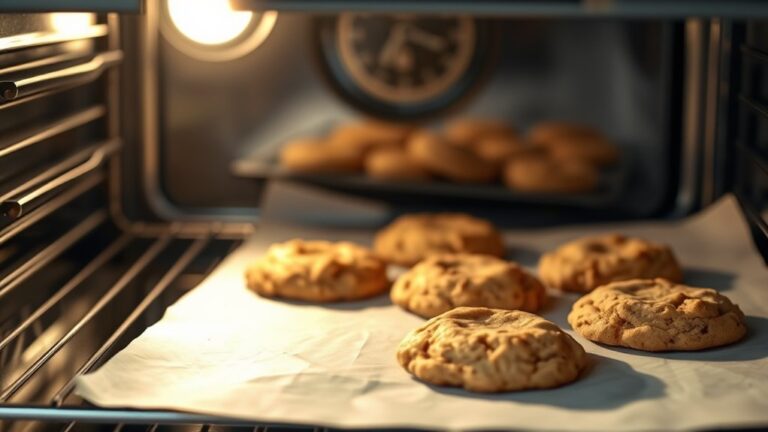
A convection oven is a type of oven that uses a built-in fan to circulate hot air around your food, helping it cook more evenly and often more quickly than a conventional oven. You’ll notice this difference when you roast vegetables, bake cookies, or crisp chicken, because heat reaches more of the surface at once.
That even cooking can improve texture, reduce hot spots, and give you better browning without much guesswork. If you enjoy taste testing, you may appreciate how consistently it delivers results from batch to batch.
You might also hear a bit more kitchen noise than with a standard oven, since the fan runs during operation. Still, for many home cooks, that extra sound feels like a small tradeoff for reliable, appetizing results.
When you want steady performance and a more uniform finish, this appliance can become a helpful part of your everyday cooking routine.
How a Convection Oven Works
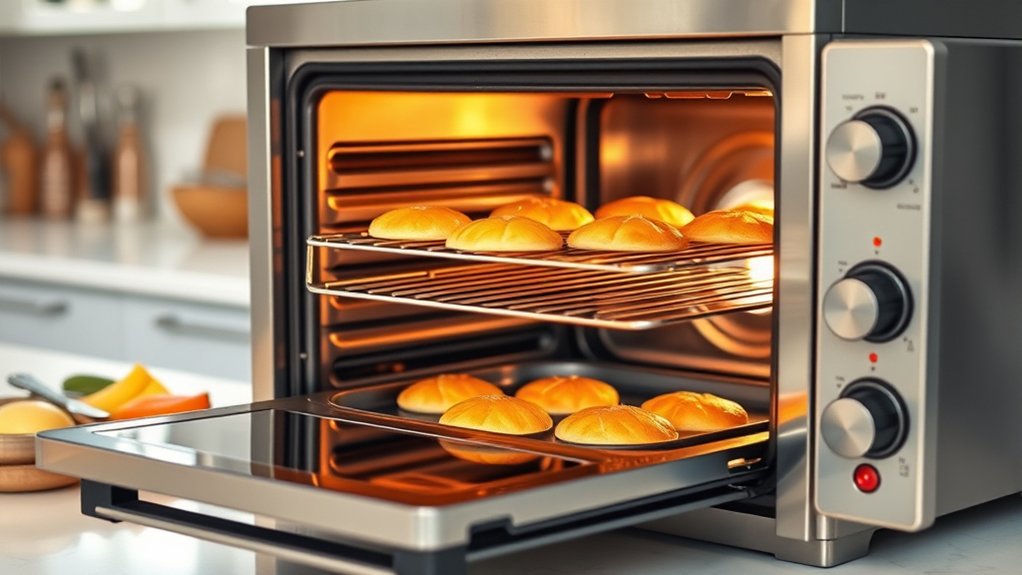
When you turn on a convection oven, its heating elements warm the air while a fan pushes that heat throughout the cavity, creating a steady flow around your food. That circulation helps the oven heat more evenly, so you can place multiple trays inside and still get consistent results.
In other words, how a convection oven works comes down to moving hot air, not just trapping it.
| Part | Job | Result |
|---|---|---|
| Element | Heats air | Builds temperature |
| Fan | Circulates air | Spreads heat |
| Cavity | Holds food | Cooks evenly |
You’ll notice the air keeps moving instead of lingering in one spot, which helps surfaces brown and edges dry a little faster. Many convection oven myths suggest it changes the recipe entirely, but it really just manages airflow.
Once you understand the pattern, you can predict cooking behavior and use your oven with more confidence every time.
Convection Oven vs Regular Oven
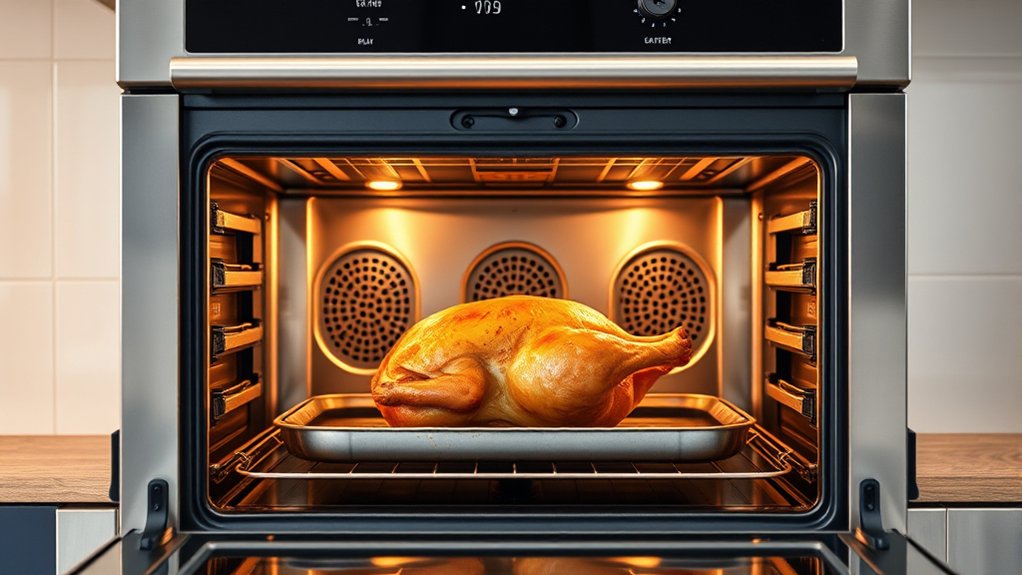
When you compare a convection oven with a regular oven, you’ll notice the biggest difference is how heat moves around the food.
A convection oven uses a fan to circulate hot air, so it often cooks more evenly and faster than a standard oven. That means you may need to shorten cooking times and adjust temperatures to get the best results.
Heat Circulation Differences
Ever wonder why food cooks more evenly in a convection oven? You’re seeing the difference in heat circulation. A convection oven uses a fan to push hot air around the food, so heat circulation stays constant and reaches every side more directly.
That moving air creates steady airflow patterns, which help reduce hot spots and cold spots inside the cavity. In a regular oven, heat mostly rises and lingers near the top or around the walls, so the air can feel still and uneven.
You may notice one area bakes faster than another because the oven doesn’t actively move heat across the rack. With convection, the circulating air surrounds your dish, giving you a more balanced environment for browning, roasting, and baking with less guesswork.
Cooking Time Comparison
How much time can a convection oven really save you? In a regular oven, you often wait longer because hot air stays still. In a convection oven, the fan moves heat around, so you usually finish faster and more evenly.
For this niche comparison, you can often cut baking or roasting time by about 25%. That means less hovering and more dinner sooner. Ignore unrelated metrics like exterior size; cooking speed matters more when you’re hungry.
- You pull out crisp chicken sooner.
- You save minutes on cookies.
- You feel less stress before guests arrive.
- You keep weeknight meals moving.
Key Benefits of Convection Cooking
With convection cooking, you can get meals on the table faster because the fan helps hot air move around your food more efficiently.
You’ll also notice more even heat distribution, so your dishes cook more consistently from edge to center. That steady airflow can give you better browning results, leaving roasts, vegetables, and baked goods crisp and golden.
Faster Cooking Times
A convection oven cooks faster because a built-in fan continuously circulates hot air around your food, helping heat reach every side more efficiently. You get faster cooking without hovering over the clock, so weeknight meals feel less rushed and more manageable.
That speed can boost energy efficiency, too, since your oven often runs for less time.
- You can serve dinner sooner.
- You feel less stress when guests arrive.
- You save precious minutes on busy nights.
- You enjoy hot, fresh food while it still feels special.
When you need crisp results quickly, convection helps you move from prep to plate with confidence. It’s a practical upgrade that makes everyday cooking feel smoother, lighter, and more rewarding.
Even Heat Distribution
Even heat is convection cooking’s quiet advantage: the fan moves hot air across your food so the oven doesn’t leave one side pale and the other overdone. You get steadier results because the heat surrounds each dish more evenly, reducing hot spots that can sneak in with standard ovens.
That even heat helps you roast vegetables, bake cookies, and warm casseroles with fewer surprises. Instead of rotating pans halfway through, you can trust the oven to manage the airflow.
When you’re cooking multiple trays, the distribution differences between racks matter less, so each batch comes out closer in texture and doneness. If you value consistency, convection gives you a more balanced cooking environment and a smoother path to reliable meals every time.
Better Browning Results
That steady airflow does more than keep temperatures even. It also helps your food brown more deeply and evenly. You get the best browning on roasted vegetables, chicken skin, and baked pastries because moving air pulls moisture away from the surface, letting heat work faster.
The result is richer color, crisp edges, and savory flavor that feels restaurant-worthy. With convection, you’ll notice caramelization enhancements that make sugars and proteins turn golden instead of pale.
- Feel proud when dinner looks stunning.
- Taste the crunch you’ve been craving.
- Enjoy fewer soggy spots and bland bites.
- Serve plates that invite compliments fast.
Best Foods for a Convection Oven
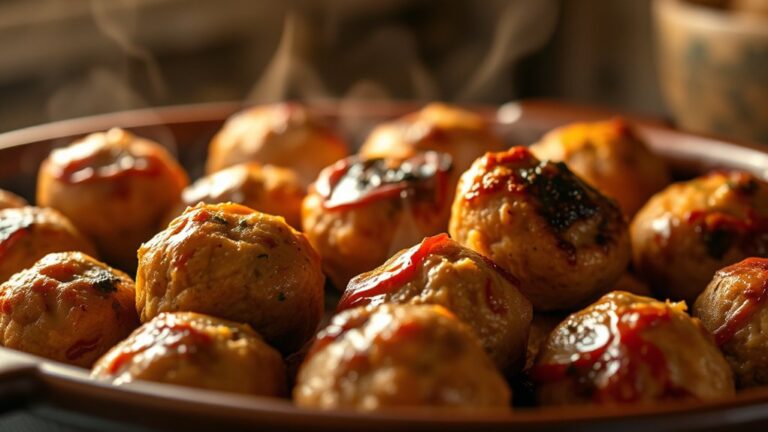
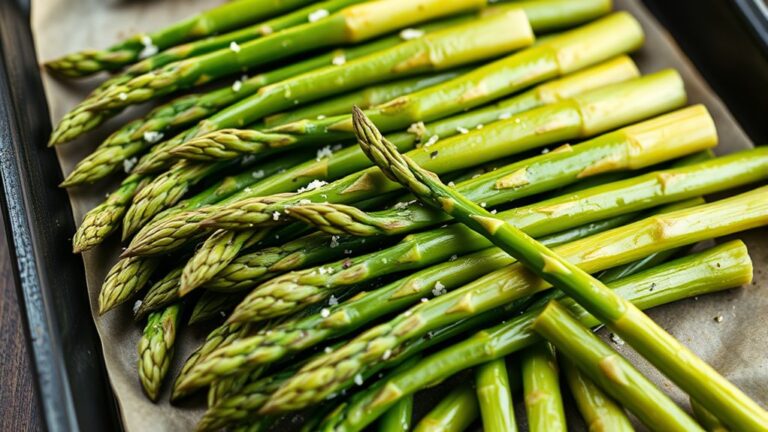
What foods shine in a convection oven? You’ll get the best foods when you want crisp edges, even color, and fast, reliable results. Roasted vegetables, such as carrots, Brussels sprouts, and cauliflower, caramelize beautifully and keep their flavor.
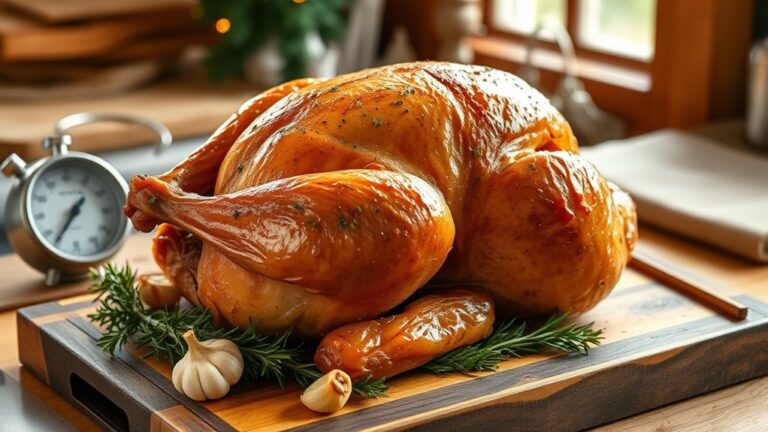
You can also bake sheet-pan chicken, turkey cutlets, and bone-in thighs, which turn juicy inside and golden outside. For novice cooks, pizza, cookies, and pastries are easy wins because the circulating air helps them brown evenly without soggy spots.
You’ll notice roasted potatoes develop a crackly shell, while fish fillets cook through with a delicate crust. Casseroles, granola, and toasted nuts also benefit from the steady airflow.
Keep pieces similar in size so everything finishes together, and use shallow pans to let the heat move freely. With these choices, you’ll make the most of your convection oven every time.
When to Use a Convection Oven
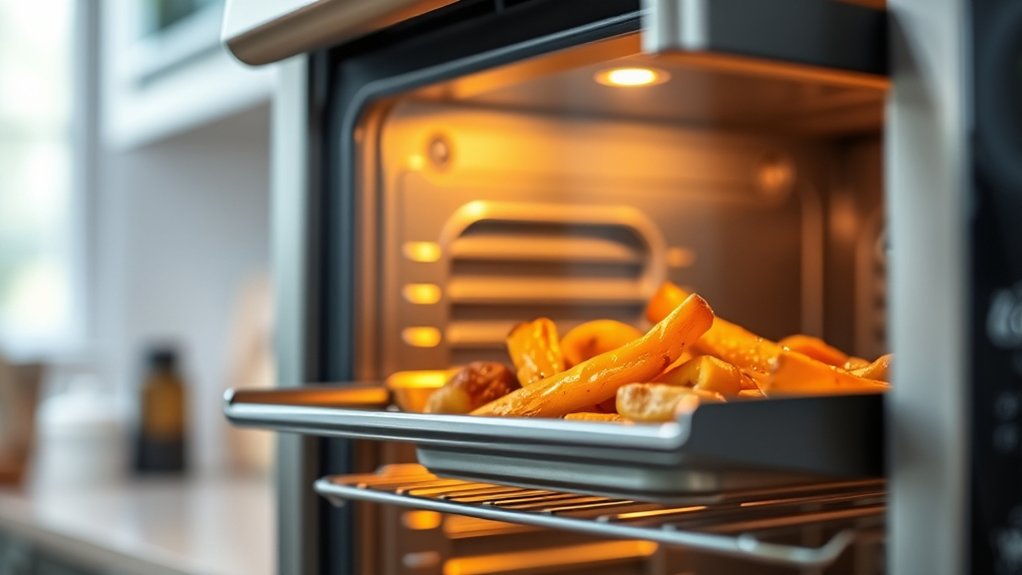
Use a convection oven when you want faster, more even browning and a crisp finish on foods like roasted vegetables, chicken, cookies, and pastries. You’ll notice the fan helps hot air move around your food, so dinner feels brighter and more reliable.
Reach for it when you want edges that sing and centers that stay tender.
- You want weeknight meals that feel special.
- You want golden cookies that make the kitchen smell warm and comforting.
- You want pastry that lifts with a delicate, satisfying crunch.
- You want less guessing and more confidence at the table.
Trust it for foods that benefit from steady airflow and quick color. It’s especially helpful when you’re watching timing tweaks and checking for doneness a little earlier than usual.
For delicate batter textures, the even heat can support a cleaner finish and a more inviting look. When you crave crispness and control, this oven delivers.
How to Adjust Recipes for Convection
When you switch a recipe to convection, start by lowering the oven temperature by about 25°F and checking for doneness a little earlier than the original time suggests. You’ll usually get more even browning and faster cooking, so keep an eye on color as well as texture.
If a recipe relies on a shallow pan, consider adjusting bakeware to a lighter, lower-sided option so hot air can move freely around the food. For cookies, roasted vegetables, and pastries, spacing matters: leave room between pieces so the fan can circulate heat efficiently.
For casseroles or custards, watch the center closely, since edges may finish first. You may also hear the oven fan noise more clearly than in a standard oven; that’s normal and means air is moving.
With a few small changes, you can adapt favorite recipes confidently and get crisp, even results without guesswork.
Common Convection Oven Mistakes
A convection oven can make cooking easier, but a few common mistakes can throw off your results fast. You might trust convection myths, crowd the rack, or forget that air needs room to move. That can leave you with soggy middles, burnt edges, and a frustrating dinner.
Overloading the oven also hurts energy efficiency because the fan works harder to compensate for blocked airflow.
- You place pans too close together, and food steams instead of browning.
- You ignore the recipe’s temperature changes, so cakes rise unevenly.
- You use the wrong pan, trapping heat and ruining crisp texture.
- You open the door too often, letting heat escape and patience disappear.
When you understand these missteps, you protect flavor, texture, and your own confidence. A convection oven rewards attention, not guesswork, and that makes each meal feel less stressful and more satisfying.
Pro Tips for Better Convection Results
Better convection results start with a few smart habits that work with the oven, not against it. You should lower the temperature by about 25°F, since the fan moves heat faster and can dry edges if you overdo it.
Lower the temperature by about 25°F so convection heat works with your food, not against it.
Use shallow pans so air can circulate, and leave space between dishes; crowded racks block the flow and slow browning. Rotate trays once during baking for even color, especially when you’re roasting vegetables or cookies.
For delicate cakes, choose the standard bake setting instead, since convection can set the crust too quickly. You’ll also get better results if you preheat fully before loading food, because steady heat helps the fan do its job.
If you’re testing recipe tweaks, keep two word ideas in mind: small changes and careful notes. Ignore unrelated topic distractions and focus on airflow, timing, and pan placement. With a few adjustments, you’ll turn everyday cooking into crisp, reliable results.
Frequently Asked Questions
Can Convection Ovens Air Fry Food Effectively?
Yes, you can air fry food effectively in a convection oven. You’ll get crisp, browned results thanks to strong convection efficiency, though it may not match a dedicated air fryer’s speed or extra-crisp finish.
Do Convection Ovens Need Special Bakeware?
No, you usually don’t need special bakeware, which is almost funny. Your old pans often work fine. You’ll just want to check convection efficiency and bakeware compatibility, since lighter, low-rim pieces help air circulate better.
Are Convection Ovens Louder Than Standard Ovens?
Yes, you’ll usually hear more fan noise from convection ovens than standard ovens, though it’s still mild.
In your noise comparison, convection can seem louder, but its energy efficiency often offsets the extra hum.
Can You Use Parchment Paper in a Convection Oven?
Yes, you can use parchment paper in a convection oven, and you’ll keep your baking tidy. Choose parchment labeled for parchment safety, and don’t let it block oven airflow efficiency, or it may whisper trouble.
How Often Should a Convection Oven Be Cleaned?
You should clean your convection oven after every few uses, or monthly if you cook lightly.
Regular cleaning frequency keeps buildup down, and these maintenance tips help you avoid odors, smoke, and uneven cooking.
Conclusion
So, when you use a convection oven, you’re giving your food a steady breeze of heat that cooks it faster and more evenly. It’s like having a smart kitchen partner that helps you brown, crisp, and roast with less guesswork. Just remember to lower the temperature a bit and watch your timing.
When you do, you’ll get better results with less hassle, every time you turn it on. Understanding how to use a convection oven properly can truly transform your cooking experience.