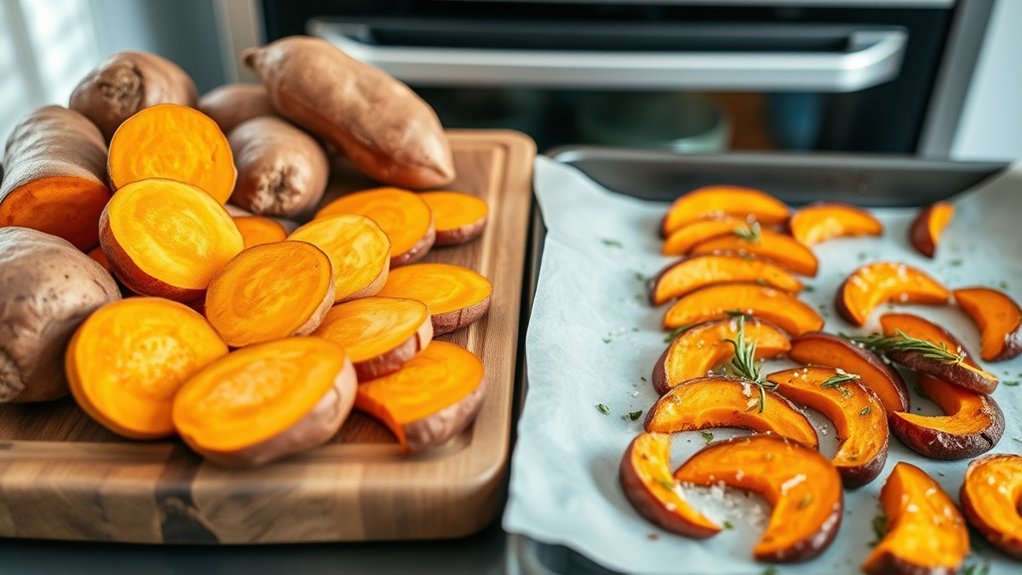
How to Cook Sweet Potatoes in Oven
At 400°F, cooking sweet potatoes in the oven transforms them from firm to silky in about 45 to 60 minutes, much like a simple lock turning once the right key fits. You’ll start by washing and piercing the sweet potato, then bake it until the skin puckers and the center yields easily.
Next, you’ll split it open and add butter or yogurt, finishing with a drizzle of olive oil and a squeeze of lemon.
The best part comes next, when you learn how to time each step precisely.
Key Takeaways
- Wash, scrub, dry, trim, and poke sweet potatoes several times with a fork before baking.
- Place them on a parchment-lined baking sheet and lightly coat with oil, salt, pepper, or spices.
- Bake at 400°F on the middle rack until tender: 35–45 minutes for small, 45–60 for medium, 60–75 for large.
- Test doneness by sliding a fork in easily; the skin should wrinkle slightly and the ends may split.
- Split open, fluff, and serve with butter, yogurt, cinnamon, chili, herbs, beans, or other toppings.
Ingredients and Tools You’ll Need
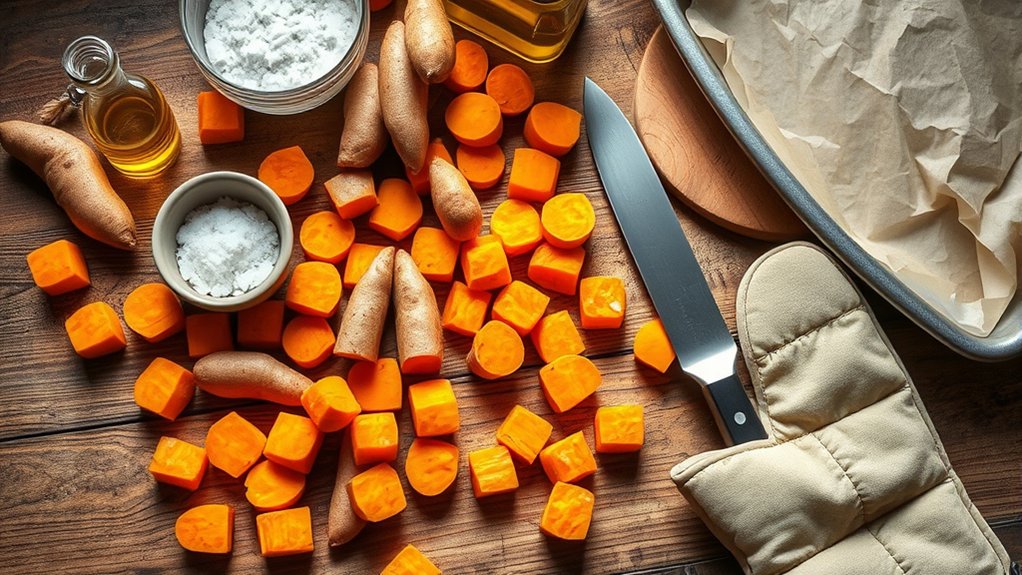
Before you start, gather a few simple ingredients and tools so the process goes smoothly: sweet potatoes, olive oil or melted butter if you want extra richness, and basic seasonings like salt and pepper. You’ll also want a sturdy baking sheet, parchment paper or foil, a sharp knife, a cutting board, and a fork for testing tenderness.
If you prefer a softer center, keep a small bowl nearby for tossing the potatoes with oil and seasonings. Choose medium-sized sweet potatoes for even cooking and a tidy presentation style. Budget friendly tips matter here: buy loose potatoes instead of prepackaged ones, and use pantry staples rather than specialty spices.
A clean kitchen towel helps steady slippery potatoes, and an oven mitt protects your hands when you move the hot pan. With these simple tools ready, you can work efficiently, reduce mess, and focus on getting reliable results every time.
How to Prep Sweet Potatoes for Baking
Start by washing and scrubbing the sweet potatoes well to remove any dirt from the skin. Trim off any bruised spots, then poke each potato a few times with a fork so steam can escape as it bakes.
If you want a softer, more flavorful skin, lightly coat them with oil and season them before they go into the oven.
Wash And Scrub
Rinse the sweet potatoes under cool running water, then scrub them well with a clean vegetable brush to remove dirt from the skin. You should wash potatoes one at a time, rotating each one so you clean every curve and crease.
Use firm, even pressure to scrub potatoes without tearing the skin, since the skin helps protect the flesh during baking. If you spot stubborn soil, keep rinsing and brushing until the surface feels clean.
Pat each potato dry with a clean towel so excess water doesn’t cling to the skin before baking. This step matters because dirt can affect texture and flavor in the oven. Clean sweet potatoes also bake more evenly and give you a better-tasting, more polished result.
Trim And Poke
Now that the sweet potatoes are clean, trim away any long root ends or damaged spots with a sharp knife or paring knife. This quick step gives you a neater shape and better oven prep for even baking.
Next, use a fork to poke each potato several times, spacing the holes across the skin. These trim and poke ideas help steam escape, so the potatoes won’t split while they roast.
- Cut off blemishes cleanly.
- Leave most of the flesh intact.
- Poke 6 to 8 deep holes.
- Work on all sides for even venting.
Keep the cuts small and the pokes firm, not shallow. Once you finish, your sweet potatoes are ready for the next baking step.
Season Or Oil
For extra flavor and a better skin texture, you can lightly coat each sweet potato with oil before baking. Use just enough to help the skin crisp and the flesh cook evenly.
If you want to season oil, add salt, pepper, or a spice mix directly to the oil, then rub it over the potatoes for even coverage.
| Option | Best For | Effect |
|---|---|---|
| Oil only | Simple baking | Crisp skin |
| Salted oil | Basic seasoning | Balanced flavor |
| Spice mix oil | Bold taste | Deeper aroma |
| No oil | Lower fat | Softer skin |
| Light oil | Even browning | Better texture |
You don’t need much, about one teaspoon per potato usually works. Skip heavy coatings, which can make the skin greasy.
What Temperature to Bake Sweet Potatoes At?
You’ll get the best results baking sweet potatoes at 400°F, which gives you a tender center and evenly caramelized skin. Higher heat can speed up cooking and boost browning, especially if you want a crispier exterior.
If your potatoes are large, add more time; if they’re small, check them earlier so they don’t overcook.
Ideal Baking Temperature
The best oven temperature for sweet potatoes is 400°F: it’s hot enough to caramelize the natural sugars and create a tender, creamy interior without drying the flesh out. You’ll get even baking and reliable results for medium-sized potatoes.
Use this temperature when you want a balanced texture and predictable timing.
- Pierce each potato so steam can escape.
- Rub the skin with oil and salt for better texture.
- Place them on a lined sheet for easy cleanup.
- Check doneness when a knife slides in easily.
At 400°F, you can also plan for leftovers, including tips for freezing cooked potatoes and trying alternative toppings like yogurt, cinnamon, or chives. Keep the temperature steady, and your potatoes’ll stay moist, flavorful, and ready to serve.
High Heat Benefits
Why bake sweet potatoes at high heat? You should set your oven to 400°F to 425°F because that range drives fast surface browning while the interior softens efficiently. The high heat contrast between the skin and flesh helps you build a lightly crisp exterior and a creamy center without drying the potato out.
At this temperature, starches gelatinize sooner, so you get a sweeter, more custard-like texture and deeper caramel notes. You also shorten overall bake time, which reduces moisture loss.
Watch oven smoke dynamics if you use oil or a sheet pan with residue; hotter ovens can intensify any drips and scorch marks. For reliable results, preheat fully and bake on a middle rack for even radiant heat.
Adjusting For Size
Sweet potato size changes how you should apply that 400°F to 425°F range. Small potatoes cook best at 425°F for faster browning, while larger ones need 400°F so the centers soften before the skins overdarken.
Watch size variance closely; even two potatoes on the same tray can finish at different times. Place them on the middle oven rack position for steady, even heat.
- Small: bake 35 to 45 minutes.
- Medium: bake 45 to 60 minutes.
- Large: bake 60 to 75 minutes.
- Check tenderness with a fork at the thickest point.
If you want crisp skins, keep the temperature higher. If you want a fluffier interior, lower it slightly and extend the bake.
How Long to Bake Sweet Potatoes
How long you bake sweet potatoes depends on their size, whether you leave them whole or cut them, and the oven temperature you use. At 400°F, plan for a practical range:
| Form | Time |
|---|---|
| Whole medium potatoes | 45–60 minutes |
| Whole large potatoes | 60–75 minutes |
| Cubes or wedges | 20–30 minutes |
If you need to how to store leftovers, cool them first, then refrigerate in a sealed container for up to 4 days. For better flavor pairing, serve baked sweet potatoes with butter, cinnamon, rosemary, chili, or tangy yogurt.
Lower temperatures stretch the baking time, while higher heat shortens it. You can also cut them into even pieces to speed things up and keep cooking consistent. Keep the skin intact when baking whole potatoes; it helps hold moisture and supports a tender, creamy texture inside.
How to Tell When Sweet Potatoes Are Done
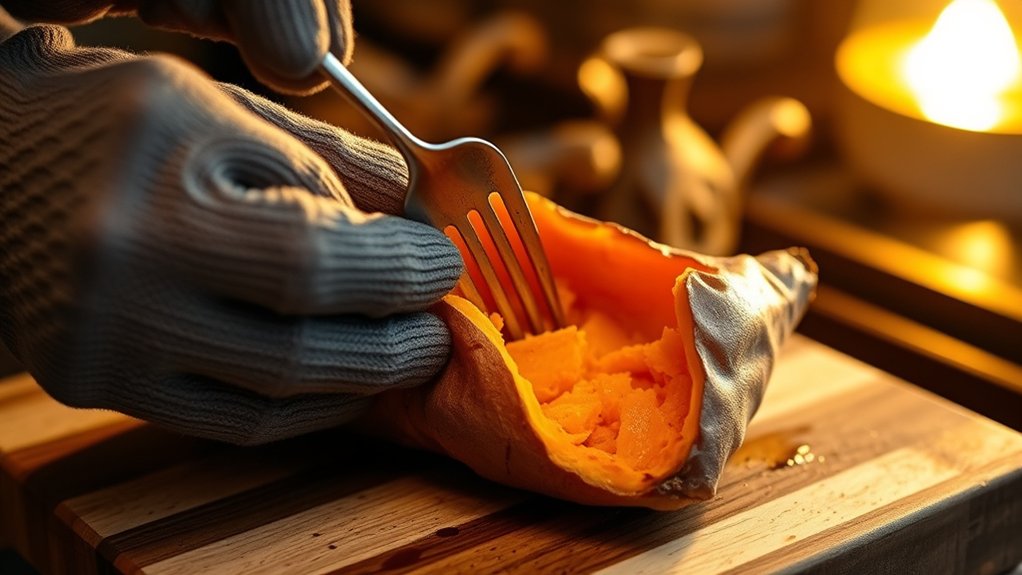
You’ll know sweet potatoes are done when a fork or paring knife slides into the center with little resistance and the flesh feels soft all the way through. If you pierce the thickest part and meet firmness, give them a few more minutes.
The skin should look slightly puckered, and the ends may begin to split, which signals the interior has fully cooked.
- Check the center, not just the edges.
- Look for even softness from tip to tip.
- Avoid overbaking; it can dry the flesh.
- Let them rest briefly before handling.
After cooling, you can refrigerate them in an airtight container; that’s the simplest how to store method for keeping texture stable. For flavor pairings, note that subtle sweetness works well with cinnamon, butter, chili, or herbs, so don’t judge doneness by taste alone.
Trust the fork test, then confirm by feel and appearance.
Easy Ways to Serve Baked Sweet Potatoes
Once your baked sweet potatoes are tender, serving them is mostly about balancing their natural sweetness with contrasting flavors and textures. Split each potato open, fluff the flesh with a fork, then add a small pat of butter, a spoonful of Greek yogurt, or a drizzle of olive oil and lemon.
For a savory meal, top them with black beans, salsa, and crumbled feta, or with shredded chicken and sautéed greens. If you want breakfast, use cinnamon, chopped nuts, and plain yogurt.
For easy plating, serve the potatoes on a wide plate with one bright garnish, such as chives, cilantro, or toasted seeds, so the dish looks intentional without extra work. Budget tips: buy toppings you already use in other meals, like beans, cabbage, or eggs, and stretch leftovers into lunch bowls or stuffed skins.
Frequently Asked Questions
Should I Wrap Sweet Potatoes in Foil Before Baking?
No, you don’t need to wrap foil. You’ll get better skin if you bake them unwrapped.
Wrap foil only if you want softer skins; timing variations depend on size, usually 45-70 minutes.
Can I Bake Sweet Potatoes Ahead of Time?
Yes, you can bake sweet potatoes ahead of time. For best pre-bake timing, cool them quickly, refrigerate within two hours, and reheat thoroughly.
Use refrigeration tips like airtight containers to preserve texture and flavor.
Do Different Sweet Potato Sizes Need Different Oven Times?
Yes, different sizes need different oven times; a knight’s clock won’t help here. You’ll bake smaller sweet potatoes faster, larger ones longer, and you should stagger them for even cooking, checking doneness with a fork.
Can I Microwave Sweet Potatoes Before Oven Baking?
Yes, you can microwave sweet potatoes first for microwave prep, then finish them in the oven. Skip foil wrapping in the microwave; wrap only if baking afterward. This shortens baking time and keeps interiors creamy.
How Do I Store Leftover Baked Sweet Potatoes?
Store leftover baked sweet potatoes in an airtight container, cool them quickly, and refrigerate them within two hours. For leftover storage, you’ll keep them safe for three to four days. Use a gentle reheating method.
Conclusion
So there you have it: the humble sweet potato, transformed by heat, patience, and your surprisingly competent oven. Wash it, prick it, bake it at 400°F until tender, then split it open and dress it like it deserves better than a weeknight.
Add butter, Greek yogurt, olive oil, and lemon if you like a little drama. When the skins pucker and the flesh yields, you’ve done it right.
Now serve it before someone calls it “just a side.” Cooking sweet potatoes in the oven brings out their natural sweetness and makes for a delicious, comforting dish.