How to Bake Potatoes in the Oven
To bake potatoes in the oven, you need to start with the right type, the right prep, and the right heat. Choose firm russets, scrub them clean, dry them well, and pierce the skins before seasoning. A light coat of oil and salt can make a big difference, but timing and temperature matter just as much.
Get those details wrong, and the result won’t be as crisp or fluffy as it should be.
Key Takeaways
- Choose uniform russet potatoes, scrub and dry them well, then pierce each potato several times with a fork.
- Rub skins lightly with oil and sprinkle with coarse salt for crisp, flavorful skin.
- Bake directly on the oven rack at 425°F for about 45 to 60 minutes.
- Test doneness by slipping a knife or fork into the center with little resistance.
- Rest for 5 minutes, then slice open, fluff the interior, and add toppings like butter, sour cream, or chives.
What Kind of Potatoes Bake Best?
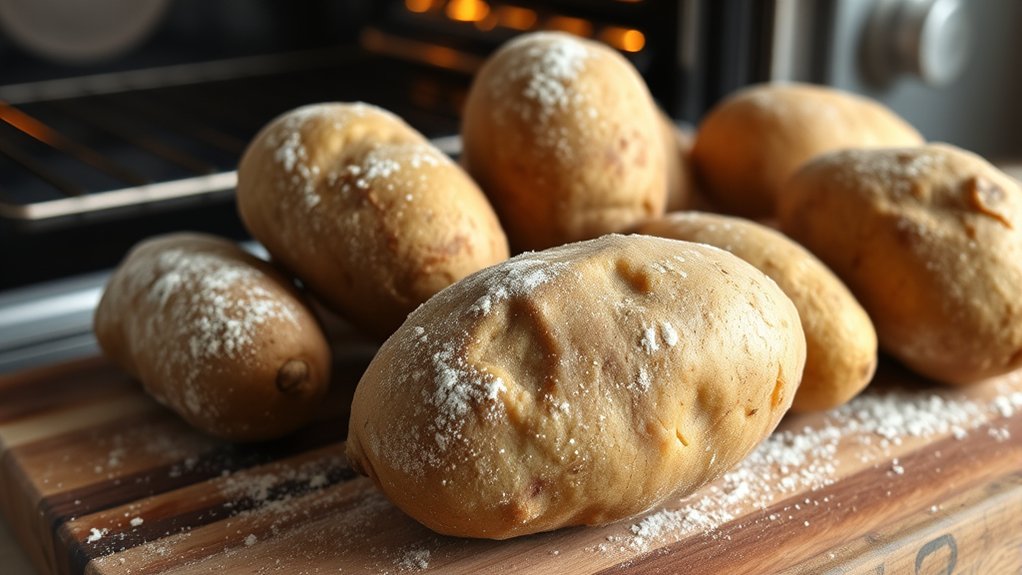
When you want potatoes that bake up fluffy and tender, choose high-starch varieties like Russet potatoes. You can also use Yukon Golds if you want a creamier, denser texture, but they won’t turn as light. Avoid waxy potatoes such as red or fingerling types; they hold more moisture and stay firm after baking.
For the best result, pick potatoes that feel heavy for their size and have smooth, unblemished skin. Uniform size helps them bake evenly, so your timing stays consistent.
Good potato nutrition includes fiber, potassium, and vitamin C, and baking preserves much of that value when you serve the skin. Proper potato storage also matters: keep potatoes in a cool, dark, well-ventilated place, not in the refrigerator, so their texture and flavor stay stable.
If you store them correctly and select the right variety, you’ll get potatoes that bake reliably, taste clean, and deliver the best oven performance.
How to Prep Potatoes for Baking
Before baking, scrub each potato under cool running water to remove dirt, then dry it well so the skin can crisp instead of steam. Inspect the surface and trim away bruises, sprouts, or soft spots.
Use a fork to pierce each potato 6 to 8 times, spacing the holes evenly; this lets steam escape and helps prevent splitting. If you want uniform baking, choose potatoes of similar size so they finish together.
Leave the skins intact, because they protect the flesh and support crispy skins in the oven. Place the potatoes on a rack or directly on the oven rack for better airflow, not in a tight pan.
Handle them gently after washing to avoid tearing the skin. With this preparation, you’ll set up potatoes that bake evenly, hold their shape, and develop tender, glossy interiors.
Season the Skins for More Flavor
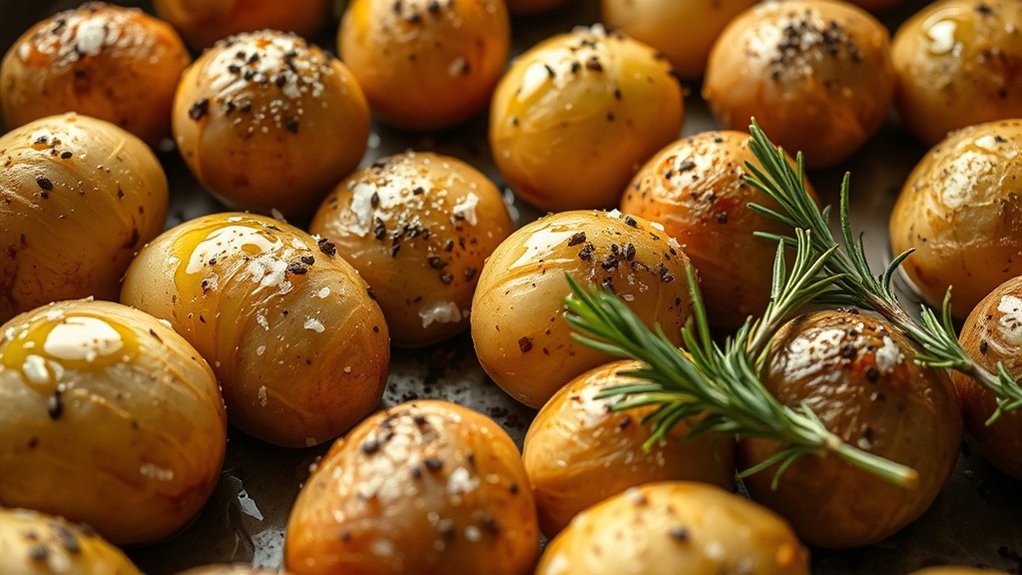
Rub the potato skins lightly with oil, then sprinkle them evenly with coarse salt to boost flavor and help the skins crisp in the oven. You can also add black pepper, garlic powder, or smoked paprika for extra depth, but keep the coating thin so the skin still dries and bakes well.
When you season skins, work the oil and spices across the entire surface, including the ends, for consistent flavor boosting. If you prefer a sharper finish, add a little onion powder or dried herbs; they’ll stick better to the oiled skin.
Avoid heavy seasoning blends that contain sugar, since they can darken too quickly. Use just enough seasoning to enhance the potato without overpowering it. This simple step gives you a more savory, appealing baked potato and sets up a well-seasoned exterior before baking.
What Temperature Should You Bake Potatoes At?
You should bake potatoes at 425°F for a reliable balance of crisp skin and fluffy interior. If you need them faster, a higher temperature works, but you’ll need to watch them closely so they don’t dry out.
For larger potatoes, lower the heat slightly and extend the baking time so they cook through evenly.
Ideal Oven Temperature
The ideal oven temperature for baking potatoes is 425°F, which gives you a crisp skin and a fluffy interior without drying them out. You should preheat fully, then place potatoes on the middle rack for even heat. Choose cookware choices that support airflow, such as a baking sheet or directly on the rack.
Use these storage tips: keep raw potatoes in a cool, dark place before baking, and don’t refrigerate them.
| Oven Temp | Result | Best Use |
|---|---|---|
| 400°F | softer skin | larger potatoes |
| 425°F | balanced texture | standard baking |
| 450°F | faster browning | thinner skins |
| 375°F | slower cooking | when your oven runs hot |
If you want consistency, 425°F remains your best target.
Fast Vs. Slow Baking
Wondering whether to bake potatoes fast or slow? You should use a fast bake at 425°F for most russet potatoes if you want crisp skin and tender flesh in about 45 to 60 minutes.
A slow bake at 375°F works when you prefer a gentler cook; it usually takes 60 to 75 minutes and can yield a softer skin. Keep the oven fully preheated before you start, and place the potatoes directly on the rack or on a baking sheet for even heat circulation.
Choose the method that fits your schedule and texture preference. If you want speed and a pronounced exterior, choose the fast bake. If you want a slightly more gradual cook, choose the slow bake. In either case, test doneness with a fork.
Adjusting For Potato Size
Potato size should guide your oven temperature and timing: small potatoes bake well at 400°F to 425°F, while larger russets often do better at 375°F to 400°F so the centers cook through before the skins overbrown. When you sort by potato sizing, you can match heat to thickness and avoid underdone cores.
If your batch includes mixed sizes, roast the smaller potatoes on a separate tray or add them later to account for variable yields in cook time. Check for doneness by inserting a knife into the thickest potato; it should slide in easily.
For extra-large potatoes, lower the temperature slightly and extend baking time, rather than cranking up the heat. This keeps the exterior crisp and the interior fluffy without scorching.
How Long to Bake Potatoes in the Oven
Baking time depends on the size of your potatoes, so larger potatoes need more time than smaller ones. As a general guide, you can expect medium potatoes to take about 45 to 60 minutes in a hot oven.
Check for doneness by piercing the center with a fork; it should slide in easily when they’re ready.
Potato Size Matters
Size has a real impact on bake time, so adjust your oven plan to match the potato you choose. A large russet needs more time than a small red, and a dense potato variety may heat differently than a waxy one. Use your oven technique to support even cooking by selecting potatoes of similar size when you can.
| Potato size | Effect |
|---|---|
| Small | Cooks faster |
| Medium | Cooks evenly |
| Large | Needs extra time |
You should also check thickness at the center, since broad potatoes hold more cold mass. Keep the skins intact, and let the potato reach the same doneness throughout. When you size-match your potatoes, you make the oven work more predictably and reduce uneven results.
Bake Time Guide
How long should you bake potatoes in the oven? For medium russet potatoes, bake them at 425°F for 45 to 60 minutes. If you choose larger potatoes, allow 60 to 75 minutes; smaller ones may finish in 35 to 45 minutes.
You should test doneness by inserting a fork or skewer into the center; it should slide in easily. Don’t rely on time alone, since oven accuracy and potato size affect results.
Keep the skins dry and unwrapped for crisp texture and better potato nutrition retention. Once baked, let the potatoes rest for 5 minutes before serving. Then add hot toppings such as Greek yogurt, chives, or chili for a balanced, satisfying meal.
How to Tell When Baked Potatoes Are Done
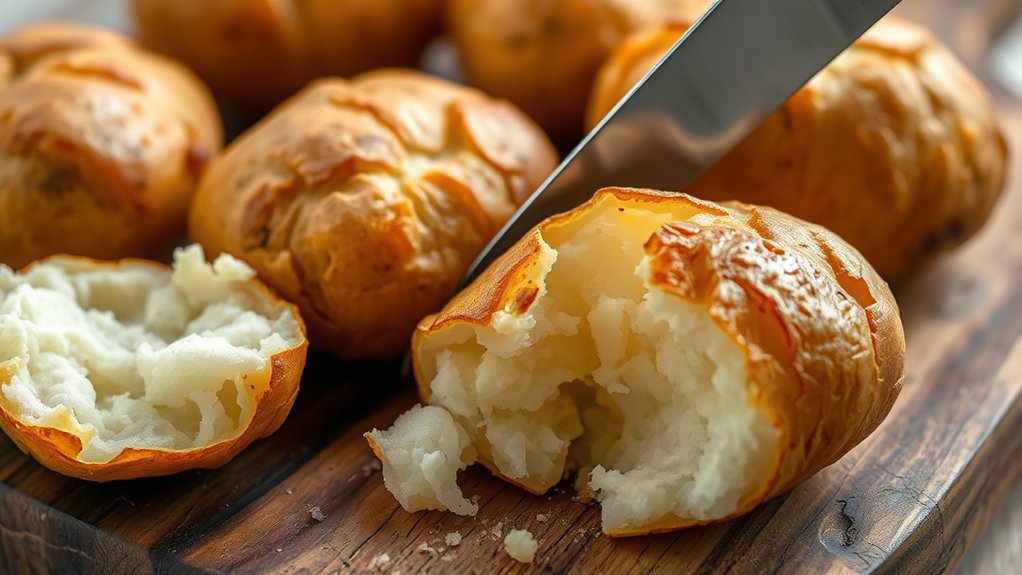
A properly baked potato feels tender when you squeeze it gently with an oven mitt, and a knife or skewer should slide into the center with little resistance. Check the thickest part, not the edge, so you judge the center accurately.
If the utensil meets firm resistance, bake the potato a few minutes longer and test again. You can also verify doneness by looking for an internal texture that gives easily when pierced.
Different potato varieties may finish at slightly different times, so rely on feel more than the clock. Proper potato storage also helps; cold, aged potatoes can bake unevenly, while potatoes kept in a cool, dry place usually cook more predictably.
If you’re testing several potatoes, choose the largest one first. When it’s done, remove it promptly and let it rest briefly before serving.
Get Crispy Skin and Fluffy Centers
For crispy skin and a fluffy center, start by drying the potatoes well before baking; any moisture on the surface will soften the skin. Choose potato varieties such as russets, which bake up light and dry, and store them in a cool, dark place so potato storage supports even texture.
Dry potatoes well, choose russets, and store them cool and dark for the best fluffy bake.
Rub each potato with a thin coat of oil, then sprinkle on salt to help the skin blister and crisp. Place them directly on the oven rack or on a preheated sheet pan so hot air can circulate freely.
- Bake at 400°F for steady heat.
- Avoid wrapping them in foil, which traps steam.
- Let them finish until a knife slips in with little resistance.
During baking, the interior steams and expands while the exterior dries and browns. If you want extra crunch, raise the temperature for the final 10 minutes. Remove them promptly so the skin stays crisp and the center stays tender.
How to Slice and Serve Baked Potatoes
Set each baked potato on a cutting board and use a sharp knife to slice it lengthwise, stopping just before the bottom so the halves stay connected if you want a classic presentation. If you prefer, finish the cut and gently separate the halves for easier serving.
Use a fork to fluff the interior, which creates space and improves texture. For cleaner potato carving, hold the potato steady with a folded towel and make one deliberate cut rather than sawing.
Transfer each potato to a warm plate so it stays hot longer. Serve immediately after slicing to preserve the skin’s crispness and the center’s light texture.
Keep your presentation simple and neat, especially when you plan to offer topping variations later. A small incision across the top also helps steam escape and makes the potato easier to eat.
Arrange the potatoes evenly on the plate, and let each person add their own finishing touches.
Best Toppings for Oven-Baked Potatoes
Classic baked potatoes taste best with toppings that balance richness, freshness, and texture. You can build a simple, satisfying potato by starting with a creamy base, then adding contrast.
The best toppings include ingredients that melt well, add brightness, and give each bite structure. For a dependable combination, use:
- Sour cream, chopped chives, and black pepper for cool, sharp flavor.
- Cheddar, Monterey Jack, or other cheesy toppings that melt smoothly over the hot potato.
- Crispy bacon, green onions, or steamed broccoli for salt, color, and texture.
You should season each layer lightly so the potato stays balanced. If you want a richer finish, add butter first, then your chosen toppings.
For a lighter option, use Greek yogurt, salsa, or fresh herbs. Keep portions moderate so the skin stays crisp and the filling remains distinct. With the right toppings, you’ll turn a baked potato into a complete, well-structured side.
Common Baked Potato Mistakes to Avoid
You shouldn’t skip potato prep, because washing, drying, and pricking the skins help the potatoes cook evenly and avoid steam buildup.
You also shouldn’t overcrowd the oven, since crowded potatoes block heat flow and slow browning. Give each potato enough space so you get a crisp skin and a tender interior.
Skipping Potato Prep
Before you bake potatoes, give them a little prep work; skipping this step can lead to a bland skin, uneven cooking, or even a burst potato. You don’t need much time, but you do need consistency.
Wash and scrub each potato to remove dirt, then dry it completely so the skin can crisp. Next, pierce the potato several times with a fork to release steam. Finally, rub the skin with a little oil and salt for better texture and flavor.
- Wash and dry
- Pierce the skin
- Oil and salt
These simple steps counter skipping prep and common potato myths that say potatoes bake well untouched. With proper prep, you’ll get a tender interior and a better crust every time.
Overcrowding The Oven
Overcrowding the oven traps heat and blocks air circulation, so potatoes cook unevenly and their skins stay soft instead of crisp. Give each potato space on the rack or baking sheet, with at least an inch between them, so hot air can move freely around every surface.
If you stack pans or crowd too many potatoes in one area, you’ll slow cooking and create hot spots, which are common overcrowding consequences. Watch the oven airflow impact closely: limited circulation delays browning and can leave centers underdone while outer areas dry out.
Bake in batches if needed, and rotate the pan once during cooking for even results. Proper spacing helps you achieve tender interiors, crisp skins, and consistent doneness every time.
Frequently Asked Questions
Can I Bake Potatoes Without Oil?
Yes, you can bake potatoes without oil. You’ll still get tasty results by scrubbing, drying, and seasoning them.
Try oil free alternatives like parchment or a light mist; they’ll help preserve potato skin textures.
Should I Pierce Potatoes Before Baking?
Yes, you should pierce potatoes before baking. Like a tiny pressure valve, this piercing purpose helps steam control, preventing bursts.
You’ll let moisture escape safely, and your potatoes’ll bake more evenly in the oven.
Can I Bake Potatoes on a Rack?
Yes, you can bake potatoes on a rack. Rack baking improves air circulation, so you’ll get crisper skins and even cooking.
Place potatoes directly on the rack, and don’t let them touch each other.
Do Baked Potatoes Need to Rest Before Serving?
Yes, you should let baked potatoes rest briefly before serving. You’ll improve texture and protect serving temperature.
Rest time of 5 minutes lets steam redistribute, so you’ll get fluffier interiors and a better bite.
Can I Reheat Baked Potatoes in the Oven?
Yes, you can reheat baked potatoes in the oven. Set the reheating temp to 350°F, wrap them in foil, and heat for 15–20 minutes.
Check the oven timing until they’re hot through.
Conclusion
Bake your potatoes with confidence, and you’ll see the payoff in every bite: crisp, salted skins and a soft, cloudlike center.
When you choose uniform russets, prep them well, and bake them at 425°F, the results line up beautifully—knife, fork, and steam all working together.
Let them rest, slice them open, and pile on your favorite toppings.
Avoid the common mistakes, and you’ll serve potatoes that look as good as they taste.
Mastering how to bake potatoes in the oven ensures you enjoy perfectly cooked spuds every time.