What Is a Dutch Oven
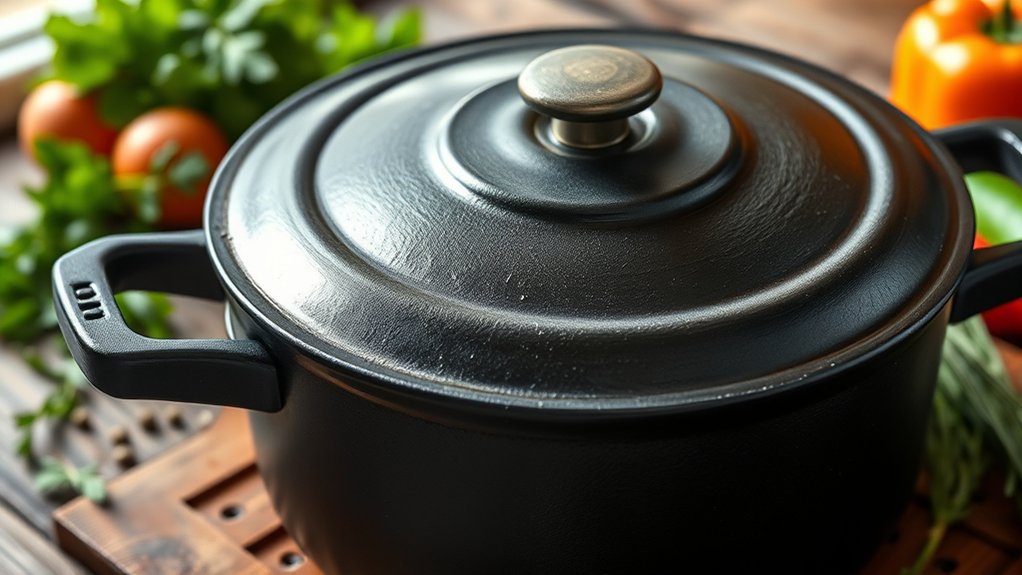
If you’ve ever wondered about that humble Dutch oven, it is a sturdy, lidded cooking vessel that quietly handles the heavy lifting in your kitchen. This versatile pot keeps heat steady and moisture locked in, making it ideal for a variety of cooking methods.
You can use a Dutch oven for braising, soups, bread, and slow-cooked meals on the stove or in the oven. Its real value shows up in how it performs when ordinary cookware starts to struggle, proving itself indispensable for many recipes.
Key Takeaways
- A Dutch oven is a heavy, lidded cooking pot designed for even heat and steady cooking.
- It is commonly made of cast iron or enamel-coated cast iron.
- Its thick walls and tight-fitting lid help retain heat and moisture.
- It works well for soups, stews, braises, bread, and one-pot meals.
- It can be used on the stovetop or in the oven for searing, simmering, baking, and roasting.
What Is a Dutch Oven?
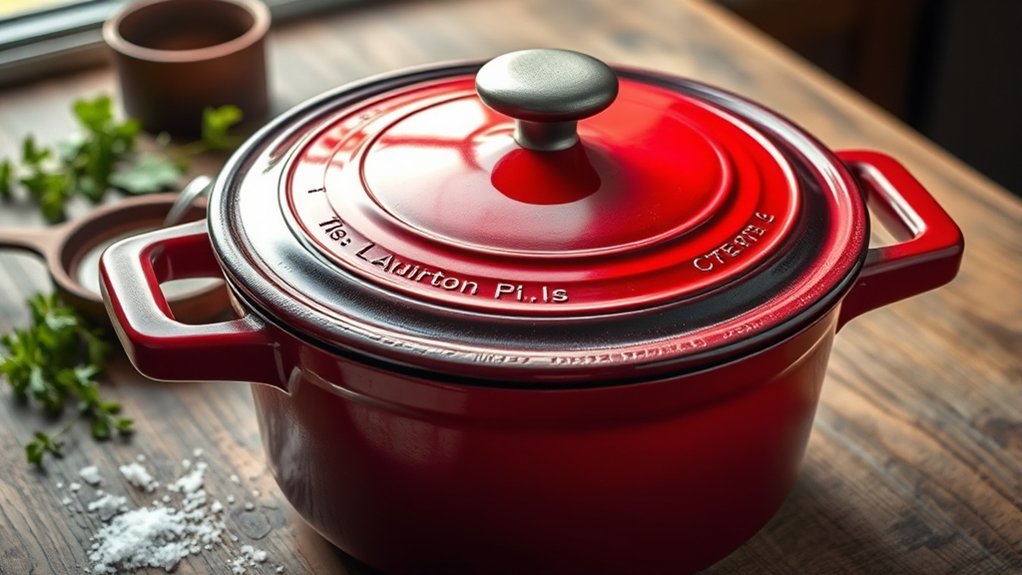
A Dutch oven is a heavy, lidded cooking pot made to handle high heat and steady cooking. You use it for soups, stews, braises, bread, and one-pot meals on the stove or in the oven. Its thick walls and tight-fitting lid help you cook evenly, and its size makes it useful for family meals or batch cooking.
You can choose cast iron for durability or enamel-coated cast iron for easier cleanup and less upkeep. The pot works well when you need to sear meat, simmer vegetables, or bake a simple side dish. You can also turn to it for dessert ideas, like cobblers or fruit crisps.
If you want cookware that does more than boil water, a Dutch oven gives you flexibility, dependable results, and a practical tool for everyday cooking.
How Dutch Ovens Retain Heat
What makes a Dutch oven so effective is how well it holds and spreads heat. You benefit from strong heat retention because the pot stores energy, then releases it steadily as you cook. Its thermal mass helps keep temperatures stable, so your food doesn’t drop in heat when you add cold ingredients or lift the lid.
A Dutch oven’s thermal mass stores heat and releases it steadily, keeping cooking temperatures stable and reliable.
That even behavior gives you more control and fewer hot spots.
- You get consistent simmering for soups and stews.
- You can brown food, then lower the heat without losing momentum.
- You avoid fast temperature swings during long cooking.
- You save energy because the pot keeps cooking efficiently.
When you preheat it, the whole vessel warms through, not just the surface. That lets you roast, braise, and bake with dependable results. In practice, you can set it, monitor it, and trust it to stay steady.
Dutch Oven Materials and Sizes
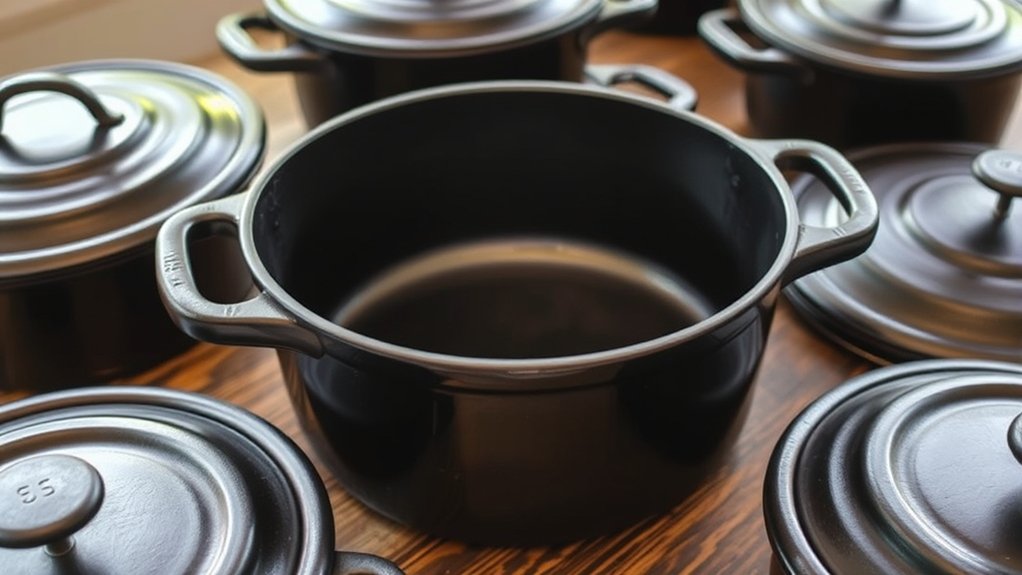
Once you understand how a Dutch oven holds heat, the next thing to consider is what it’s made of and how big it should be. You’ll usually choose among cast iron, enameled cast iron, or lighter alloys, and each changes how you cook and clean.
Strong dutch oven materials feel heavy, but they store heat well and last for years. Check sizes and weights before you buy, because a pot that’s too large can feel awkward, while a smaller one may limit you.
| Choice | What you’ll feel |
|---|---|
| Cast iron | Solid confidence |
| Enameled cast iron | Easy relief |
| Small size | Quick control |
| Large size | Room to breathe |
| Lid fit | Secure comfort |
Also, look at dutch oven lid designs and compatibility. A snug lid helps trap heat and steam, so the pot performs the way you expect. Choose the size you can lift safely.
What to Cook in a Dutch Oven
You can use a Dutch oven for hearty stews and soups that cook low and slow and build rich flavor. It’s also great for braised meats and poultry, since the heavy pot holds heat evenly and keeps food tender.
You can bake breads, casseroles, and sides in it too, making it one of the most versatile pots in your kitchen.
Hearty Stews And Soups
A Dutch oven really shines when you’re making hearty stews and soups, because its heavy lid and thick walls trap heat evenly and keep a steady simmer. You can build rich flavor with simple pantry staples, then let everything cook without much attention.
Try:
- Bean soups with onions, garlic, and herbs
- Vegetable stews with potatoes and carrots
- Tomato-based chili with beans
- Pasta soups with greens and broth
You’ll get deep, balanced taste from long, gentle cooking, and the pot helps prevent scorching. Add liquid as needed, stir occasionally, and keep the heat low.
For hearty soups, this pot gives you comfort food that’s easy to make and easy to serve.
Braised Meats And Poultry
Braised meats and poultry are another place where a Dutch oven really earns its keep, because the heavy pot browns meat well, holds moisture, and keeps a steady, low heat for tender results.
You can sear braised beef first, then add a little liquid and let it cook slowly until it turns rich and fork-tender. The same method works for braised poultry, especially when you want juicy meat and a flavorful pan sauce.
Because the lid fits tightly, you lose less moisture and need less attention than with a regular pot. You’ll get better browning, deeper flavor, and evenly cooked meat. Use it for short ribs, chicken thighs, or pork shoulder when you want a reliable, hands-off braise.
Breads, Casseroles, And Sides
What else can a Dutch oven do? You can use it for breads topics, casseroles ideas, and simple sides that cook evenly and taste great. Its heavy lid traps steam, so you get crusty loaves, tender grains, and bubbling bakes without much effort.
You can mix, bake, and serve from the same pot, which saves time and cleanup.
- Bake no-knead bread with a crisp crust
- Cook macaroni, rice, or potato casseroles
- Roast vegetables until they’re caramelized
- Warm beans, cornbread, or skillet-style sides
For best results, preheat the pot when baking bread and keep the heat moderate for casseroles. You’ll get reliable results, even heat, and dishes that stay warm at the table.
How to Use a Dutch Oven on the Stove and in the Oven
To use a Dutch oven on the stove and in the oven, start by choosing the right heat for the material: enameled cast iron works well for simmering, searing, and baking, but it shouldn’t face extreme temperature swings. Bare cast iron can handle higher heat and needs seasoning.
Use medium heat on the stove, then move it to the oven with oven mitts. Keep the lid on for braises and soups; leave it off to brown food. These techniques help you control texture and moisture while improving safety.
| Step | What you do |
|---|---|
| Preheat | Warm it gradually |
| Stove | Use steady, medium heat |
| Oven | Transfer carefully with mitts |
| Finish | Check food, then serve |
You can also use it for one-pot meals, bread, and roasted vegetables. Avoid dry heating for long periods, and use utensils that won’t scratch the surface.
How to Clean and Care for a Dutch Oven
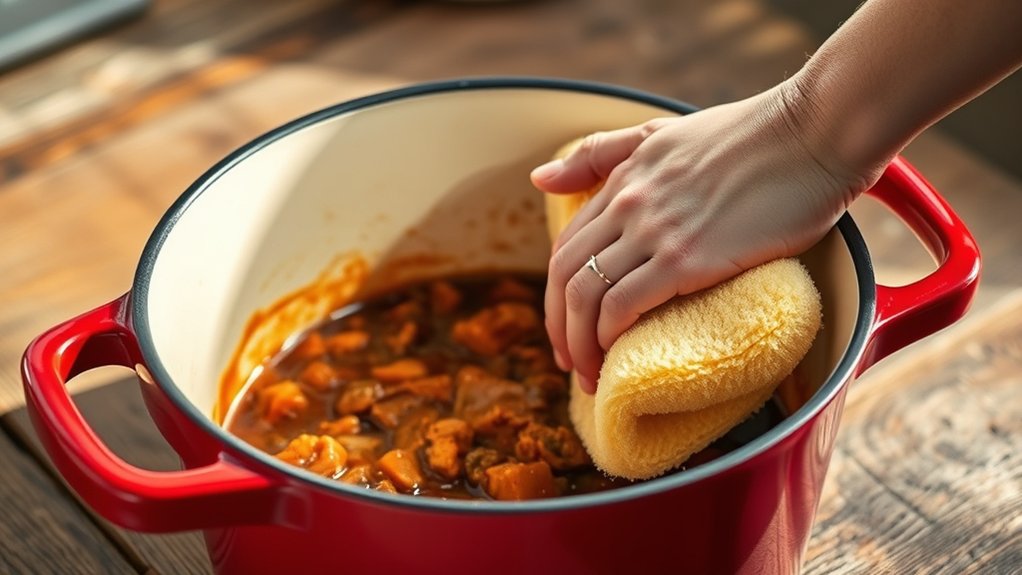
After each use, clean your Dutch oven with warm water, a soft sponge, and a mild soap if needed, then dry it completely. If it’s cast iron, you’ll want to keep the seasoning in good shape by applying a light coat of oil after cleaning.
Store it in a dry place with the lid slightly ajar so moisture doesn’t build up.
Cleaning After Each Use
When you’re done cooking, let your Dutch oven cool a bit, then wash it with warm water, mild soap if needed, and a soft sponge to remove food and grease without damaging the finish. This simple step keeps your care routines easy and helps you talk temperature changes safely.
- Rinse promptly after use.
- Scrub gently with nonabrasive tools.
- Tackle stuck-on bits with a brief soak.
- Dry it completely with a clean towel.
If residue remains, repeat the wash instead of scraping hard. Avoid harsh pads or strong cleaners that can dull the surface. Clean the lid, handles, and rim too, since food hides there. A careful wash after each meal keeps your Dutch oven ready for the next recipe and makes daily upkeep quick and stress-free.
Seasoning And Storage
Once your Dutch oven is clean and fully dry, give the cooking surface the care it needs so it stays in good shape. Rub a thin layer of seasoning oil over the inside and outside, then wipe away any excess so you don’t leave a sticky film.
Heat it briefly if your care instructions recommend it, since that helps the oil bond and protects the finish. Store the Dutch oven in a cool, dry place with the lid slightly ajar so moisture can escape.
If you stack it with other cookware, place a soft cloth or paper towel between pieces to prevent scratches. Avoid sealed storage containers that trap humidity. Check it occasionally for rust, and reapply seasoning oil when the surface looks dull or dry.
Frequently Asked Questions
Can a Dutch Oven Be Used Over an Open Campfire?
Yes, you can use a Dutch oven over an open campfire if you manage the coals carefully. Your campfire techniques should control heat distribution, prevent scorching, and keep the pot stable for safe cooking.
What’s the Difference Between a Dutch Oven and a Stockpot?
You’ll notice Dutch oven vs stockpot right away: one’s heavy cast iron, built for browning and baking, while the other’s lighter, tall, and best for soups.
You’ll also need cast iron care, unlike with stainless stockpots.
Are Dutch Ovens Safe for Induction Cooktops?
Yes, you can use dutch ovens on induction cooktops if they’re induction compatible, usually with magnetic bases.
You’ll need proper care and maintenance to protect the finish, prevent scratching, and keep heating even.
Do Dutch Ovens Need Seasoning Before First Use?
No, you don’t always need seasoning before first use. If it’s cast iron, season it first for seasoning basics and oil polymerization.
Enamel-coated Dutch ovens don’t need seasoning; just wash, dry, and start cooking.
Can I Use Metal Utensils in a Dutch Oven?
Yes, you can use metal utensils in a Dutch oven, but be gentle. For best care tips, avoid scraping enamel coatings hard, and choose silicone or wood when possible to protect your cookware.
Conclusion
Now you know what a Dutch oven is and why it’s such a useful tool in your kitchen. You can use it to sear, simmer, braise, bake, and slow-cook with steady, even heat. Whether you choose cast iron or enamel, a good Dutch oven helps you make hearty meals with less fuss.
Clean it well, store it dry, and it’ll last for years. As the saying goes, “A stitch in time saves nine.” In the end, having a reliable Dutch oven in your kitchen makes cooking easier and more enjoyable.