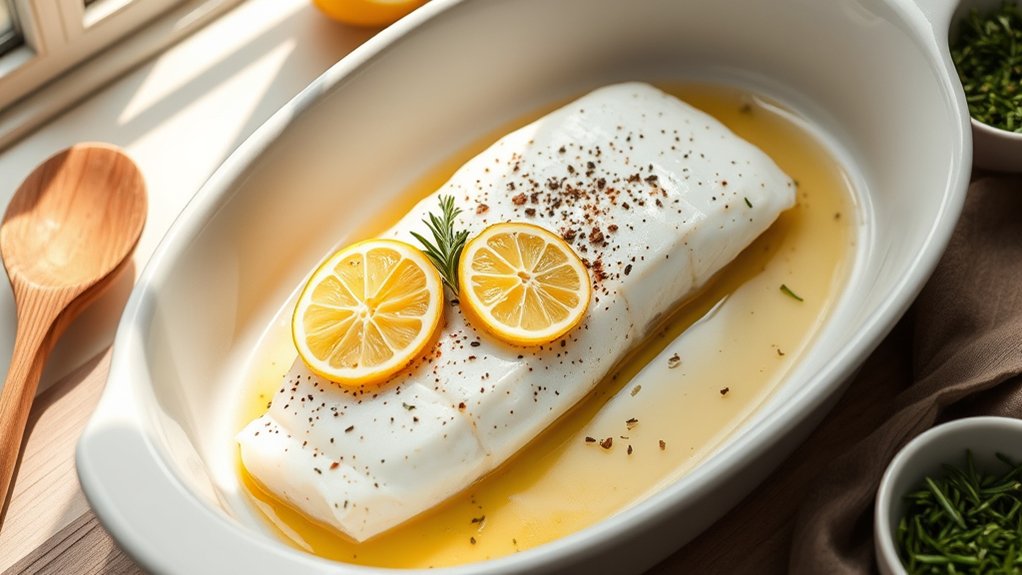
How to Cook Halibut in the Oven
Halibut’s mild flavor makes it one of the most popular white fish choices for cooking halibut in the oven, yet its lean texture can turn dry fast if you miss the timing.
You’ll get the best results by choosing thick, even fillets, drying them well, and baking them hot enough to set the exterior before the center overcooks.
The right temperature, seasonings, and doneness cues make all the difference—and the next step is simpler than you might expect.
Key Takeaways
- Choose firm, translucent halibut fillets with a clean ocean smell, and pat them dry before seasoning.
- Brush with oil or butter, season with salt, pepper, and herbs, then place fillets spaced on a lightly oiled pan.
- Bake at 400°F to 425°F for about 10 to 15 minutes, depending on thickness.
- Cook until the fish is opaque and flakes easily, or reaches about 130°F to 145°F internally.
- Serve immediately with a light sauce, lemon, and simple sides like asparagus, rice, or green beans.
What Kind of Halibut Should You Buy?
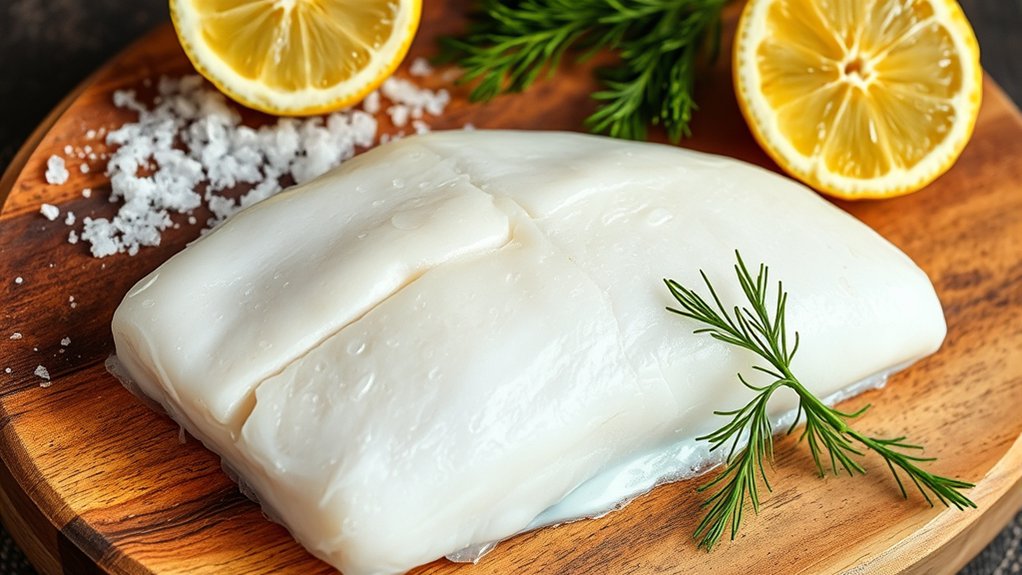
When you’re buying halibut, look for firm, translucent flesh with a clean ocean smell and no browning around the edges. Choose steaks or fillets that feel moist but not slimy, and pick pieces cut evenly so they cook at the same rate.
If you can, ask about fish sourcing; responsibly handled halibut usually arrives chilled, properly labeled, and free from excess liquid in the package. Pacific halibut is the standard choice for baking because it’s mild, lean, and thick enough to stay intact in the oven.
Avoid fish with a strong ammonia odor, dull color, or dry surfaces, since those signs point to age or poor handling. Buy portions sized for your recipe so you don’t overbuy and store leftovers too long.
Keep the fish refrigerated until you’re ready to cook, and follow oven safety by placing it in a preheated, stable oven on a rimmed pan.
How Do You Prep Halibut for Baking?
Before the halibut goes into the oven, pat it dry with paper towels so the surface can brown instead of steam. Trim any ragged edges, then check for pin bones with clean kitchen equipment, like tweezers or fish pliers. This prep matters because halibut science shows that excess moisture slows surface browning and dilutes seasoning.
- Lay the fillet on a cold cutting board and inspect it under good light.
- Remove remaining bones, skin scraps, or dark bloodline tissue if present.
- Brush both sides lightly with oil or melted butter, then season evenly with salt, pepper, and any herbs you want.
Set the prepared fish on a lightly oiled baking dish or sheet pan lined for easy release. Leave space around each piece so heat reaches it evenly. If you’re using a sauce, spoon only a thin layer underneath or over the top so the flesh still bakes cleanly.
What Oven Temperature Is Best for Halibut?
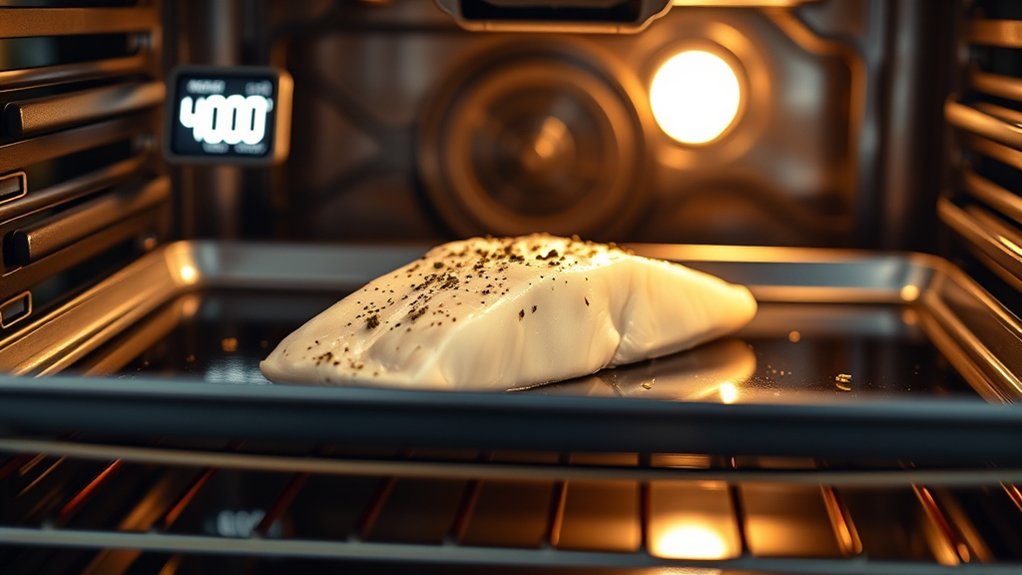
For halibut, you’ll get the best results by baking it at 400°F, which gives the fish a tender, flaky texture without drying it out.
At this temperature, thick fillets usually need a few extra minutes, while thinner pieces cook more quickly, so you should always check the fish by thickness. Watch for opaque flesh that flakes easily, and pull it from the oven as soon as it’s done.
Ideal Baking Temperature
The best oven temperature for halibut is usually 400°F to 425°F, which gives you a nicely cooked, flaky fish without drying it out. At this range, you keep the flesh tender while building light browning on the surface.
When you plan your oven temperature, match it to your halibut selection: thicker, fresher pieces benefit from the hotter end, while delicate fillets do well at 400°F.
- Picture the fish set on a lined baking sheet.
- Imagine the edges turning opaque and firm.
- See the top just beginning to glisten and color.
Use steady heat, and don’t overcomplicate the process. A preheated oven gives you consistent results, so you can cook halibut with confidence and keep the flavor clean, mild, and bright.
Timing By Thickness
Once your oven is set to 400°F to 425°F, thickness becomes the main guide for timing. Use timing by thickness to prevent dry halibut: bake 10 minutes per inch at the thicker end of the fillet, or until the center just turns opaque and flakes easily.
If your piece is 1/2 inch thick, start checking at 6 minutes; for 1 inch, check at 10 minutes; for 1 1/2 inches, check around 15 minutes. Your oven temperature matters because higher heat cooks the surface faster, so watch closely near the end.
Pull the fish when it reaches 145°F internally, then rest it briefly. This keeps the flesh moist and gives you clean, reliable results every time.
How Long Should You Bake Halibut?
How long should you bake halibut? For most fillets, bake it at 400°F for 10 to 15 minutes, depending on thickness. In a clean kitchen, set the fish on a lightly oiled sheet pan so heat moves evenly. Keep budget tips in mind: a simple seasoning mix of salt, pepper, and lemon lets the fish shine without extra cost.
Use this quick guide:
- Thin fillets, about 1/2 inch: 8 to 10 minutes.
- Standard fillets, about 1 inch: 10 to 12 minutes.
- Thick fillets, 1 1/2 inches or more: 12 to 15 minutes.
Your oven’s heat, the pan’s material, and whether you start with chilled fish all affect timing. If you want reliable results, preheat fully and bake on the center rack. Pull the halibut when the cooking window closes, then let it rest briefly before serving.
How Do You Know When Halibut Is Done?
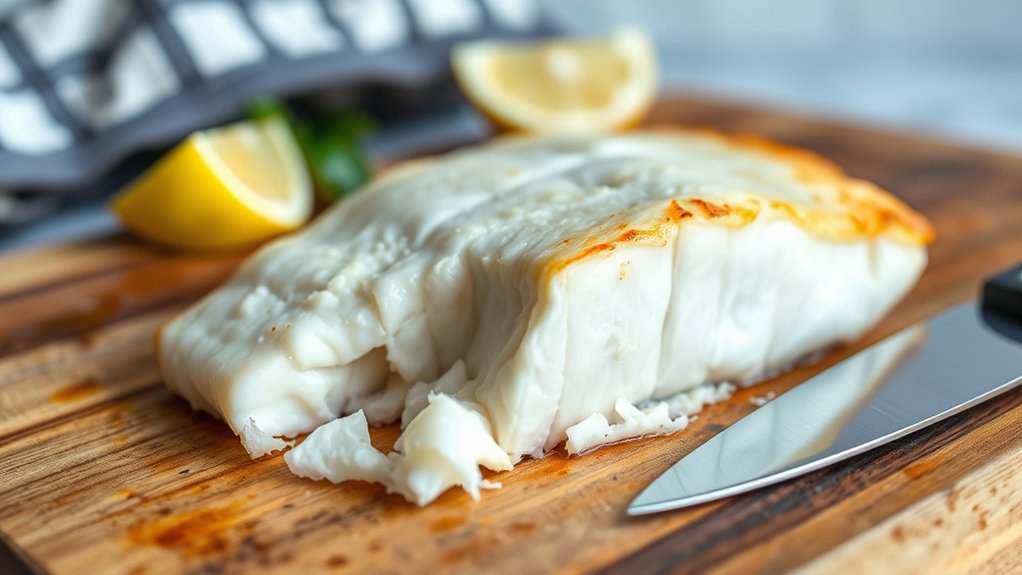
You’ll know halibut is done when it turns opaque and flakes easily with a fork at the thickest part. Check the center first; it should look pearly white, not translucent.
If you use an instant-read thermometer, pull the fish when it reaches 130°F to 135°F, then let carryover heat finish the job. This method gives you a reliable result without guessing.
| Check | Done looks like | Why it matters |
|---|---|---|
| Color | Opaque throughout | Shows the flesh has set |
| Texture | Flakes with gentle pressure | Confirms the protein has firmed |
| Temperature | 130°F–135°F | Prevents overcooking |
Use fish selection tips before you cook: choose firm fillets with a clean scent and moist surface. Good halibut storage also helps; keep it cold and cook it promptly so the texture stays dependable.
Avoid cooking past the done point, or the fish can turn dry and tough.
How Do You Keep Halibut Moist?
Keep halibut moist by cooking it just until it turns opaque and flakes easily, then pulling it from the oven before it dries out. Choose thick fillets for better moisture retention, and focus on halibut sourcing that favors firm, glossy flesh with a clean ocean scent.
Pat the surface dry, then brush lightly with oil so the heat moves evenly without stripping juices.
- Place the fillet in a snug baking dish, like a snowbank cradling a fish.
- Add a thin layer of liquid or pan juices beneath it, creating a gentle steam.
- Cover loosely for part of the bake, then uncover near the end for control.
Use moderate heat and check early; residual heat finishes the center. Let the fish rest briefly after baking so juices redistribute instead of spilling onto the plate.
What Seasonings Work Best on Halibut?
What seasonings work best on halibut? Start with salt and black pepper, then build with garlic powder, onion powder, and a little paprika. These basics sharpen halibut’s mild flavor without overpowering it.
You can also use seasoning blends that include lemon peel, dill, thyme, parsley, or tarragon, since those herbs match the fish’s clean taste. If you want more depth, add a pinch of cumin or coriander, but keep the amount small.
For reliable flavor pairings, choose bright, fresh notes such as lemon zest, chives, or cracked pepper. These ingredients help the fish taste lively after baking.
Apply seasonings evenly to both sides, using just enough to coat the surface. If you’re using dried herbs, rub them lightly with oil first so they cling better and toast gently in the oven.
Keep the profile simple; halibut cooks best when the seasoning supports, not masks, its delicate texture and natural sweetness.
What Sauces Go Well With Baked Halibut?
Bright seasonings set halibut up nicely, and the right sauce can finish the dish without covering its mild flavor. You should choose sauces that add brightness, fat, or gentle heat, not heaviness. A lemon-butter sauce works well because it mirrors the fish’s clean taste, especially when your oven timing keeps the flesh just opaque.
Dill yogurt sauce adds cool tang and suits halibut sourcing that emphasizes fresh, high-quality fillets. A light caper vinaigrette brings salinity and sharpness, making each bite feel crisp.
- Lemon butter, glossy and pale yellow, pooling lightly on the fillet.
- Dill yogurt, cool and speckled green, spooned in a thin ribbon.
- Caper vinaigrette, shimmering and briny, dotted over the flaky surface.
For the best result, warm sauces gently and spoon them over the fish right before serving. That way, you preserve texture, protect moisture, and keep the halibut’s delicate flavor front and center.
What Should You Serve With Halibut?
You should pair halibut with light side dishes like roasted asparagus, steamed green beans, or a simple rice pilaf to keep the meal balanced.
Add a bright sauce, such as lemon butter or dill yogurt, to complement the fish without overpowering it. Finish with fresh herbs, capers, or a squeeze of citrus to sharpen the flavor and tie the plate together.
Light Side Dishes
When serving halibut, keep the sides light so the fish stays the star of the plate. Choose crisp, simple dishes that add color and texture without weighing you down. Try:
- Steamed asparagus with a squeeze of lemon
- Tender baby potatoes tossed in olive oil and dill
- A clean cucumber salad with salt and herbs
You can also add sautéed spinach or roasted zucchini in oven safe pans for easy cleanup and even cooking. If you’ve planned ahead, check halibut storage so your fillets stay fresh and firm before baking.
Aim for sides that finish quickly and share the same gentle flavor profile. When you balance the plate this way, you highlight halibut’s mild sweetness and flaky texture with every bite, without crowding the dish.
Sauces And Garnishes
A simple sauce and a few fresh garnishes can finish oven-baked halibut without overpowering its mild flavor. You can serve it with lemon butter, dill yogurt, or a light white wine pan sauce. Keep the sauce bright and balanced, so it complements the fish’s clean taste.
Add chopped parsley, chives, or tarragon for color and freshness, then finish with lemon zest or capers for a sharper edge. If you bought your fillet with careful halibut sourcing in mind, you’ll need fewer extras to make it shine.
Use oven safe pans so you can move from roasting to sauce-making with less fuss. Spoon the sauce around the fish, not over it, to preserve the crisp top and delicate texture.
What Mistakes Should You Avoid When Baking Halibut?
Why does halibut sometimes turn out dry or bland in the oven? You’re likely making one of a few avoidable mistakes. Start with proper halibut sourcing; a fresh, firm fillet holds moisture better and tastes cleaner.
Next, respect oven dynamics: preheat fully, verify the rack position, and avoid opening the door too often, since heat loss can push the fish past its ideal point.
- Don’t overcook it. Halibut turns flaky quickly, so pull it when the center is just opaque and still slightly glossy.
- Don’t skip seasoning. Salt, oil, and a little acid help flavor penetrate the flesh before baking.
- Don’t use a cold or uneven pan. A hot, evenly heated baking surface gives you better texture and reduces sticking.
You should also avoid crowding the fish; give each fillet space so steam doesn’t soften the exterior.
Frequently Asked Questions
Can I Bake Halibut From Frozen?
Yes, you can bake frozen halibut, but you’ll need to add bake times and check doneness carefully. Bake it longer at a moderate temperature, and cook until it flakes easily and reaches 145°F internally.
Should I Cover Halibut While It Bakes?
Yes, you should usually cover halibut loosely at first; that’s no coincidence if you want moisture retention and skin flavor preservation.
Uncover it near the end so you can gently brown the top.
Can I Use Parchment Paper for Halibut?
Yes, you can use parchment paper for halibut; it helps prevent sticking and eases cleanup. You can also try parchment alternatives like foil, and choose flavor pairings such as lemon, dill, or capers.
Is Halibut Skin Edible After Baking?
Yes, halibut skin can be edible after baking if it’s crisp and well-cleaned. You’ll want to contemplate texture considerations, since thicker skin may stay chewy.
If you dislike it, simply remove it before serving.
Can I Broil Halibut at the End?
Yes, you can broil halibut at the end for a broil finish. You’ll add color fast, so watch closely. Use this for slight fat reduction and crisp edges without overcooking the delicate flesh.
Conclusion
In the oven, halibut cooks best when you keep it simple: buy firm, even fillets, pat them dry, season lightly, and bake at 400°F until the fish just turns opaque and flakes easily.
For example, a 1-inch fillet may be done in about 10 minutes, while a thinner piece finishes sooner. Don’t overcook it. If you pull it at 130–135°F and let it rest briefly, you’ll keep it moist, tender, and delicious.
Following these steps ensures perfectly cooked halibut in the oven every time, making your meal both flavorful and enjoyable.