How Long to Cook Eggs in Oven
If you want to know how long to cook eggs in the oven for the best results, it’s important to get the temperature and timing just right.
You’ll usually bake them at 300–350°F, but the exact cook time varies depending on the dish you use, from muffin tins to ramekins to casseroles.
Watch for set whites and yolks that still look glossy, as a few extra minutes can make all the difference.
This way, your baked eggs will stay tender instead of turning rubbery.
Key Takeaways
- Bake eggs in greased ramekins at 350°F for about 12–20 minutes.
- Muffin tins usually take about 12–18 minutes at 350°F.
- Casserole-style baked eggs generally need 25–40 minutes at 350°F.
- Check early; eggs are done when whites are opaque and yolks are still glossy.
- Let eggs rest 1–5 minutes after baking so carryover heat finishes setting them.
How Long to Cook Eggs in the Oven
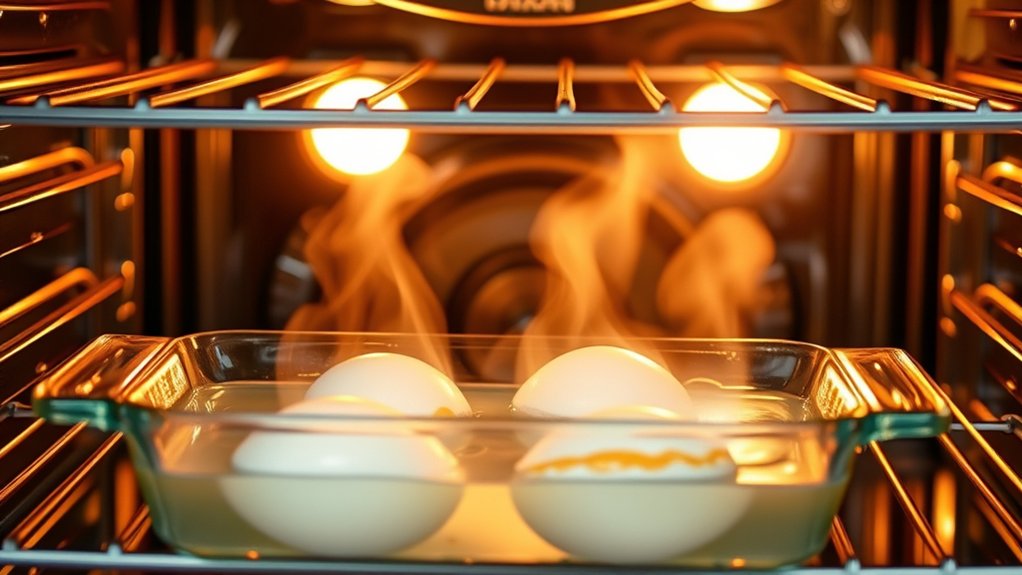
How long you cook eggs in the oven depends on the style you’re making and the result you want. For soft, custardy baked eggs, check them after 10 to 12 minutes. For firmer set eggs, plan on 15 to 18 minutes.
If you bake them in muffin cups or ramekins, smaller portions cook faster, so start checking early. You should watch the whites closely; once they turn opaque and the yolks reach your target, pull them out right away.
Use timing tweaks to match your dish, since a few extra minutes can change the texture a lot. For flavor ideas, add herbs, cheese, diced vegetables, or a little hot sauce before baking.
Always test one egg first if you’re trying a new method, because pan size and egg amount affect doneness. Let the eggs rest briefly after baking so they finish setting without overcooking.
What Oven Temperature Works Best?
For most baked eggs, you’ll get the best results at 350°F, which gives you steady, even cooking.
If you raise the temperature, the eggs set faster and can turn rubbery around the edges. If you lower it, they cook more gently and stay softer, but they’ll need more time.
Ideal Baking Temperature
What oven temperature works best for baked eggs? You’ll usually get the most reliable results at 350°F. This temperature gives you enough heat to set the eggs without rushing the edges.
If you’re baking in ramekins or a shallow dish, 350°F keeps the process steady and easy to monitor. You can also use 325°F when you want a gentler bake and a little more control.
Higher oven temperatures may shorten cooking time, but they can also reduce consistency from batch to batch. Stick with one temperature while you test your timing, then adjust only if needed.
For most home kitchens, 350°F is the best starting point because it balances speed, doneness, and predictable texture outcomes.
Temperature Effects On Texture
Baking temperature has a direct effect on texture, so the oven setting you choose can make eggs turn out silky, firm, or rubbery. For the best balance, use 325°F to 350°F and watch for temperature effects that change doneness fast.
- At 300°F, eggs set slowly and stay tender.
- At 325°F, you get even cooking and fewer texture changes.
- At 350°F, the edges firm up sooner, which helps if you want a set center.
- Above 375°F, eggs can overcook and turn tough.
You should keep dishes covered for softer results and uncover them only when you want light browning. Check eggs near the end, because a few extra minutes can shift the texture from creamy to dry.
How Long to Bake Eggs in a Muffin Tin
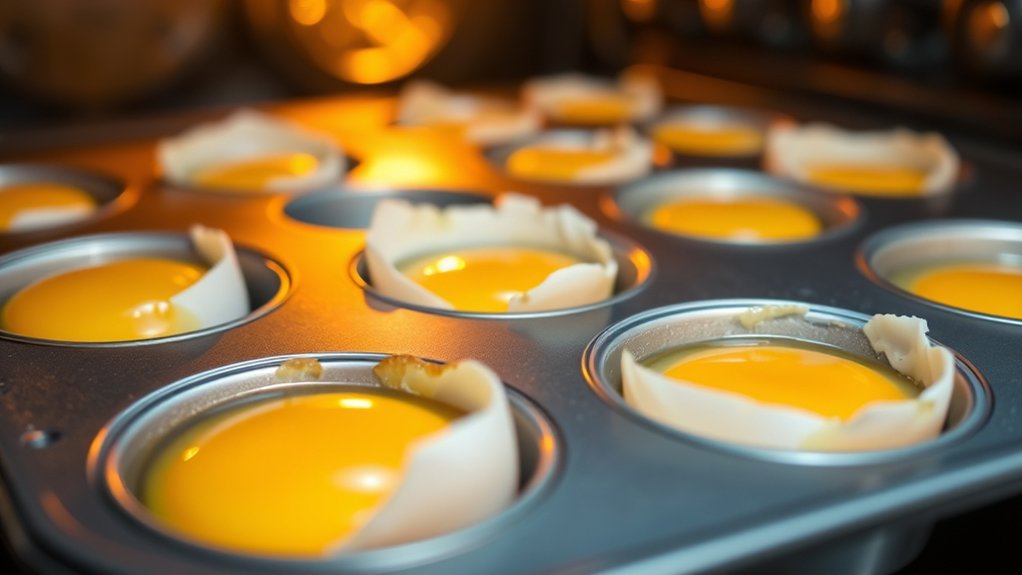
If you’re baking eggs in a muffin tin, expect them to set in about 12 to 18 minutes at 350°F, depending on how runny you want the yolks and how full each cup is. Lightly grease the tin, crack one egg into each cup, and season before baking.
For firmer whites with soft centers, start checking at 12 minutes; for fully set eggs, give them closer to 18 minutes. Remove the pan when the whites look opaque and the centers still jiggle slightly, then let the eggs rest for a minute. Use a thin spatula or spoon to lift them out cleanly.
This method works well for breakfast prep, meal batches, and toast pairing, since the eggs hold their shape. Keep your kitchen equipment simple: a standard muffin tin, oven mitts, and a timer are enough for consistent results. If you add fillings, expect a longer bake time.
How Long to Bake Eggs in Ramekins
Ramekins usually take about 12 to 20 minutes in a 350°F oven, depending on how set you want the eggs. For soft centers, pull them early; for firmer egg ramekins, leave them a few minutes longer. When baking ramekins, use butter or oil so the eggs release easily.
- Preheat your oven fully.
- Grease each ramekin lightly.
- Crack in the eggs and season them.
- Bake until the whites look opaque.
Check doneness by gently shaking the dish. If the center still jiggles a lot, keep baking. If you want extra accuracy, insert a thermometer near the edge; the eggs should reach a safe temperature without drying out.
Let the ramekins rest for 1 minute before serving. That brief pause helps the heat finish setting the eggs and makes the texture smoother. Serve right away with toast, herbs, or cheese.
How Long to Bake Eggs in a Casserole
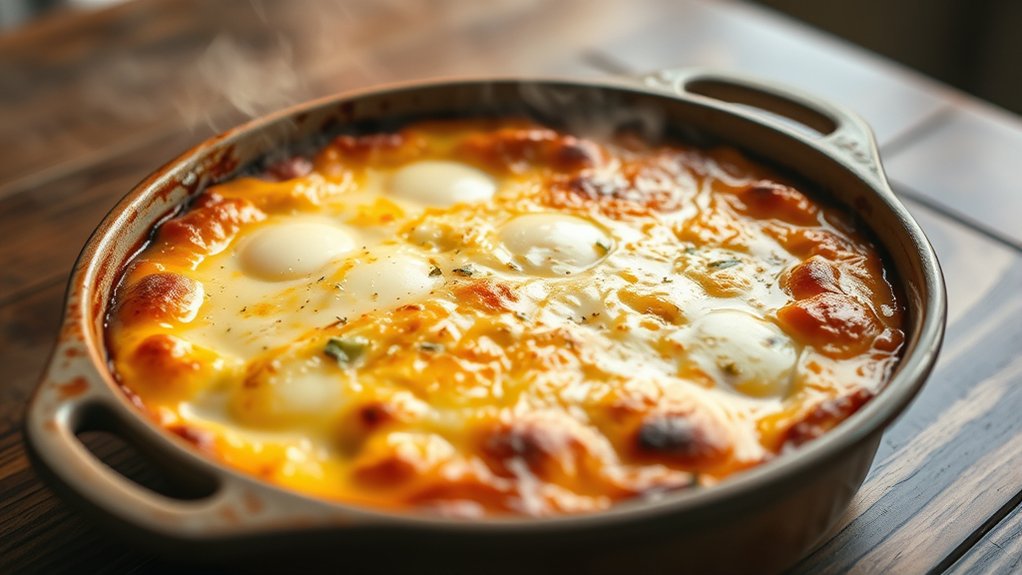
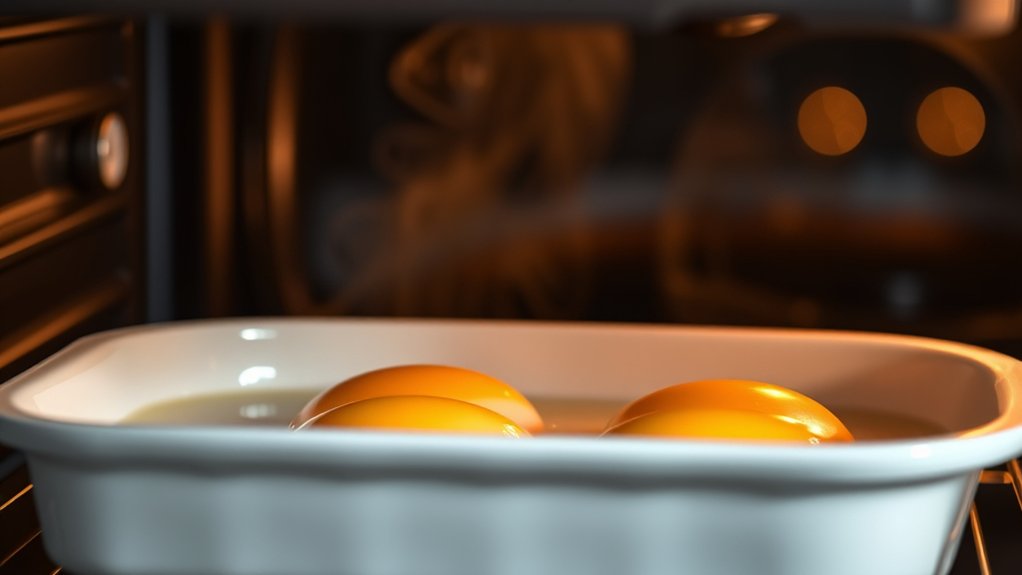
For a casserole, you’ll usually bake the eggs until the center sets, which often takes 25 to 40 minutes at 350°F depending on the dish size and depth. You’ll get a softer texture with a shorter bake and a firmer one as the custard finishes cooking, so keep an eye on the edges and middle.
To check doneness, insert a knife near the center or gently jiggle the dish; it should come out mostly clean and barely wobble.
Casserole Egg Timing
How long you bake eggs in a casserole depends on the pan size, egg mixture, and oven temperature, but most casseroles need about 30 to 45 minutes at 350°F. For reliable casserole timing, check the center with a knife; it should come out mostly clean.
To guide your egg texture, use this quick plan:
- Use a shallow dish for faster setting.
- Keep fillings evenly spread so the eggs cook uniformly.
- Start checking at 25 minutes if your casserole is thin.
- Let it rest 5 minutes before slicing.
If the edges set but the middle still jiggles, give it a few more minutes. Don’t overbake, or the eggs can turn rubbery. Focus on the pan and mixture, and you’ll hit the right bake time.
Temperature And Texture
At 350°F, your casserole eggs usually set in about 30 to 45 minutes, but the exact time depends on thickness and add-ins. For reliable temperature tips, keep the oven steady and avoid opening the door often, since heat loss can slow the center.
A deeper dish needs more time than a shallow one, and wetter fillings, like tomatoes or spinach, extend baking. For firmer texture specifics, bake toward the longer end; for a softer, custardy result, pull it earlier.
If you use a dark pan, expect faster browning and slightly quicker edges. Glass and ceramic hold heat longer, so they can finish the middle a bit after the pan leaves the oven. Let the casserole rest briefly so the eggs finish setting cleanly.
Doneness Testing Tips
Check doneness by inserting a knife or toothpick near the center; if it comes out mostly clean and the middle no longer looks wet, your casserole eggs are ready. For reliable doneness testing, watch the surface and edges first, then check the center last.
You want slight jiggle, not slosh. If you prefer firmer eggs, bake a minute or two longer, but stop before they overcook and turn rubbery.
- Insert a tester in the thickest spot.
- Look for moist crumbs, not liquid.
- Note texture variation across the pan.
- Rest the casserole 5 minutes before serving.
That rest firms the custard and helps you judge final texture accurately.
How to Tell When Baked Eggs Are Done
You’ll know baked eggs are done when the whites are fully set and the yolks have only a slight jiggle in the center. Check the surface first: it should look opaque, not glossy or wet.
Gently nudge the dish; the center should wobble a little, but it shouldn’t slosh. If you insert a knife near the edge, the whites should hold their shape, and the yolk area should resist lightly.
Remember that different eggs can finish at slightly different rates, so use visual cues plus touch, not time alone. Pull the dish when the eggs look just set, because residual heat keeps cooking them after they leave the oven.
For kitchen safety, use oven mitts and place the dish on a stable counter before testing. If the eggs still seem loose, return them to the oven for 1 to 2 minutes, then check again. That small adjustment helps you avoid overcooking and keep the texture tender.
Tips for Perfect Baked Eggs Every Time
For consistently tender baked eggs, start with a well-greased baking dish or ramekins so the whites release cleanly and don’t stick. Keep your oven fully preheated, because steady heat gives you more control over egg temperatures and consistent baking textures. Use room-temperature eggs if you can; they cook more evenly and reduce the chance of rubbery edges.
Well-greased ramekins, a hot oven, and room-temperature eggs help baked eggs turn out tender, clean, and evenly set.
- Crack each egg into a small cup first, then slide it into the dish for cleaner placement.
- Add a spoonful of cream, milk, or sauce only if you want a softer set.
- Season before baking, not after, so salt distributes evenly.
- Check early and pull the eggs when the whites are just set and the yolks still look slightly glossy.
If you’re baking several ramekins, rotate them once for even heat. Let them rest for one minute before serving so carryover heat finishes the set without drying the eggs.
Frequently Asked Questions
Can I Bake Eggs From Frozen?
Yes, you can bake frozen eggs, but you should thaw them first. Use safe thawing methods in the fridge or cold water, then bake promptly.
You’ll get better texture and even cooking.
Do I Need to Preheat the Oven?
Yes, preheat it. About 90% of oven recipes rely on stable heat, and you’ll get better results with a fully heated oven.
Preheating necessity depends on your oven temperature, but consistent heat helps eggs cook evenly.
Should I Use Fresh or Older Eggs?
Use fresh eggs for the best texture and easier handling. You can use older eggs too, but check egg freshness first.
Shell color doesn’t affect cooking, so choose by freshness, not appearance.
Can I Add Milk to Baked Eggs?
Yes, you can add milk to baked eggs, but use it sparingly; milk additions create softer texture changes. You’ll whisk in a little for creaminess, yet too much can make your eggs watery and less set.
How Do I Prevent Eggs From Sticking?
Grease the dish well, and your eggs won’t glue themselves to it. Use butter, oil, or parchment, then crack in eggs, set a kitchen timer, and lift them out with a discarded shell or spatula.
Conclusion
Now you know how long to cook eggs in the oven: about 12–20 minutes in ramekins or muffin tins, and 25–40 minutes in a casserole, at 300–350°F.
I once pulled a dish at 18 minutes and watched the yolks finish setting like a sunrise after the timer stopped. Use that same patience. Check for set whites, glossy yolks, and a slight jiggle, then let carryover heat do the rest.
With these tips, you’ll master how long to cook eggs in the oven every time.