How to Cook Prime Rib in Oven
Want a prime rib that turns a holiday meal into a steady success? Cooking prime rib in the oven is the key to achieving a tender, flavorful roast that impresses every time.
You’ll start by choosing a good bone-in or boneless roast, then trim, tie, and season it well before roasting hot to form a crust. After that, lower the oven temperature to finish cooking gently.
The real difference comes from temperature control, doneness checks, and a proper rest—details that separate a decent roast from an exceptional one.
Key Takeaways
- Choose a bone-in or boneless prime rib with good marbling; plan about one pound per person.
- Pat it dry, trim excess fat, tie for even shape, and place on a rack in a roasting pan.
- Season generously with salt, herbs, garlic, and butter, coating all sides evenly before roasting.
- Start at 450°F for 15 minutes, then reduce to 325°F and roast until desired internal temperature.
- Rest loosely tented with foil for 20–30 minutes before carving against the grain into even slices.
What Cut of Prime Rib Should You Buy?
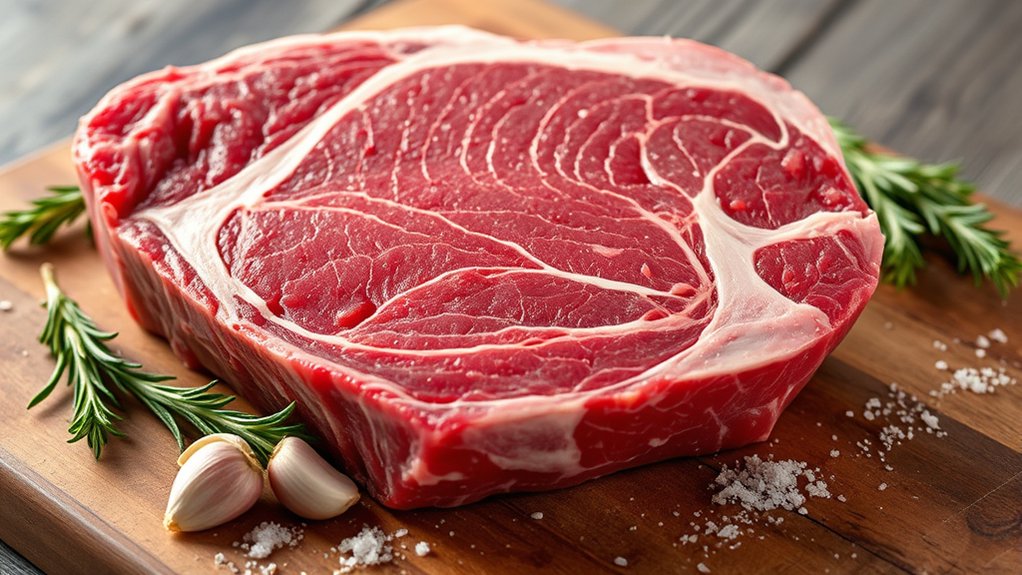
When you’re choosing a prime rib, look for a bone-in standing rib roast if you want the most flavor and the easiest carving, or a boneless roast if you prefer simpler slicing and more even cooking. You should also check the grade: Prime has the most marbling, Choice gives you strong flavor at a lower cost, and Select usually tastes leaner.
Ask for a roast with a thick fat cap and even shape, because that helps the cut cook predictably. If you’re feeding a crowd, plan on one rib for about two people, or roughly one pound per person. Buy from the rib section, not a chuck roast, because true prime rib comes from ribs six through twelve.
Trimmed roasts reduce waste, while bone-in cuts often improve presentation and make prime rib carving etiquette easier at the table. If you expect prime rib leftovers, choose a slightly larger roast so you can slice, store, and reheat without running short.
How to Prepare Prime Rib for Roasting
Before roasting, pat the prime rib dry with paper towels, then trim off any excess surface fat while leaving enough to protect the meat and baste it as it cooks. Next, tie the roast at even intervals with butcher’s twine so it holds a uniform shape and cooks evenly.
Set it on a rack in a shallow roasting pan, which lets hot air circulate around the meat and keeps the bottom from steaming. If you’re wondering how to marinate prime rib, skip wet marinades; they add little and can weaken the exterior. Instead, keep the roast uncovered in the refrigerator for a few hours to help the surface dry further.
Let it sit at room temperature briefly before roasting so it starts cooking more evenly. This prep also makes slicing cleaner later, whether you’re learning how to carve ribeye or serving thick, restaurant-style portions.
How to Season Prime Rib for Big Flavor
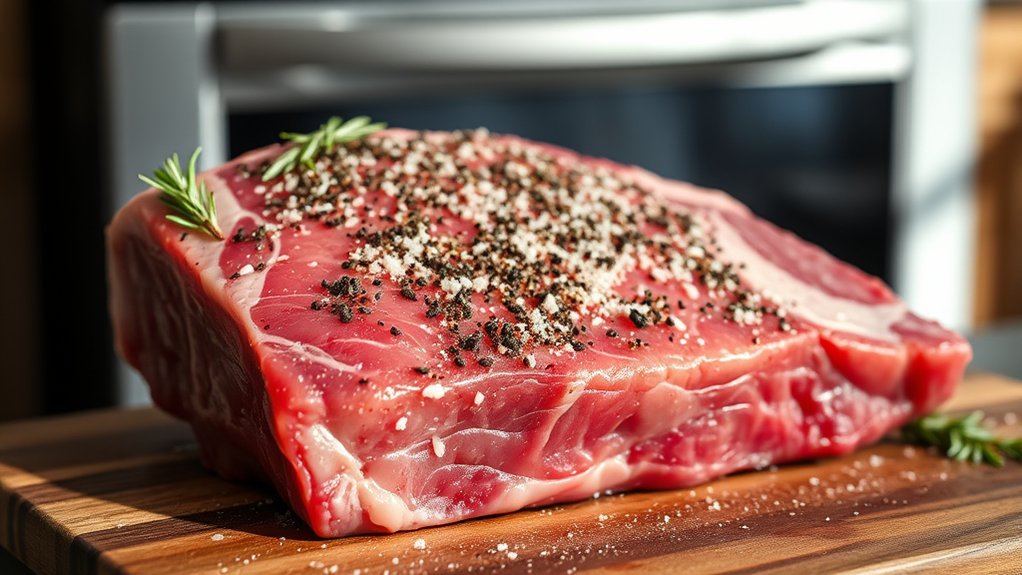
Season the prime rib generously with salt and a chopped herb rub so the flavors can penetrate the meat as it roasts. Add minced garlic and softened butter, then coat the surface evenly to create a rich, savory crust.
You’ll build deeper flavor by letting the seasoning cling well before the roast goes into the oven.
Salt and Herb Rub
For the best flavor, rub the prime rib all over with kosher salt, freshly ground black pepper, minced garlic, and chopped rosemary and thyme. Use enough salt to coat every surface evenly, then let it rest so the seasoning penetrates the meat; this salt duration improves flavor and helps the crust form.
Choose an herb pairing that complements beef without overpowering it: rosemary brings piney depth, while thyme adds a subtle earthy note. Press the rub firmly into the fat cap and any exposed meat, but don’t leave thick clumps.
If your roast has uneven edges, work the seasoning into the seams so each slice tastes balanced. Season the roast well before cooking, and let it sit uncovered in the refrigerator if time allows, so the surface dries slightly.
Garlic Butter Coating
Whisk softened butter with minced garlic, chopped rosemary, thyme, and a pinch of salt, then spread it evenly over the prime rib’s exterior. This garlic butter layer adds richness and helps seasonings adhere.
Use your hands or a spatula to coat every surface, including the ends, so the roast browns evenly. As the meat roasts, the butter melts and bastes the surface, creating a deep, savory crust.
If you want a stronger herb crust, press a little extra rosemary and thyme into the coating before cooking. Don’t overdo the salt if you already salted the roast earlier.
Apply the mixture just before roasting, since chilled butter won’t spread well. A thin, even layer gives you better flavor and a cleaner finish.
Best Oven Temperature for Prime Rib
What temperature should you set the oven to for prime rib? Set it to 450°F to start, then lower it to 325°F for steady roasting. This high-then-moderate approach builds a well-browned crust while keeping the center juicy.
For best results, choose your discussion idea1 and discussion idea2 around your preferred doneness before you heat the oven.
| Oven stage | Temperature |
|---|---|
| Initial blast | 450°F |
| Main roast | 325°F |
| Rare target | 325°F |
| Medium-rare target | 325°F |
| Resting heat | Off |
Use an oven thermometer if yours runs hot or cool. Keep the roast on a rack so air can circulate evenly. Avoid opening the door often, because heat loss slows browning and creates uneven cooking.
Once you’ve set the right temperature, let the oven do the work and focus on maintaining consistency.
Prime Rib Cooking Time by Weight
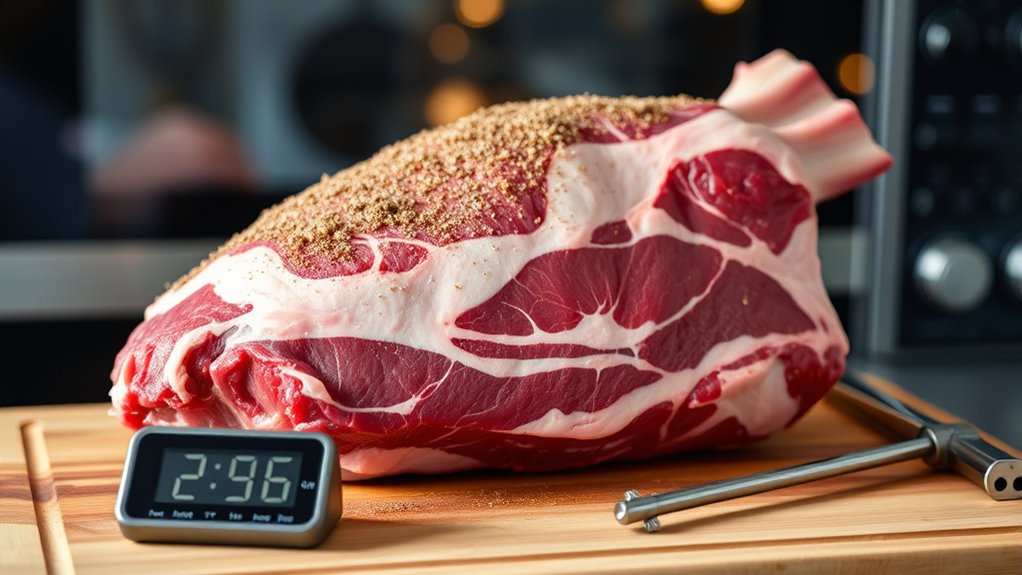
You can estimate prime rib cooking time by weight, with larger roasts needing more total time at the same oven temperature. Use a meat thermometer to target your preferred doneness: about 120°F for rare, 130°F for medium-rare, and 140°F for medium.
After roasting, let the meat rest so the juices redistribute and the internal temperature finishes rising.
Weight-Based Timing
How long should prime rib cook in the oven? Use weight timing to plan ahead. For a bone-in roast, estimate about 12 to 15 minutes per pound at 325°F for medium-rare, and 15 to 18 minutes per pound for medium.
For boneless cuts, shave off a few minutes per pound because heat moves faster. As you build your schedule, think in two word ideas like roast size, cook rate, and resting time so you can adjust without guesswork.
A 4-pound roast won’t need the same oven time as an 8-pound one, so scale your plan carefully. Start with the pound count, apply your timing range, and give yourself a buffer. That way, you’ll cook efficiently and keep control over the whole process.
Doneness Temperature Guide
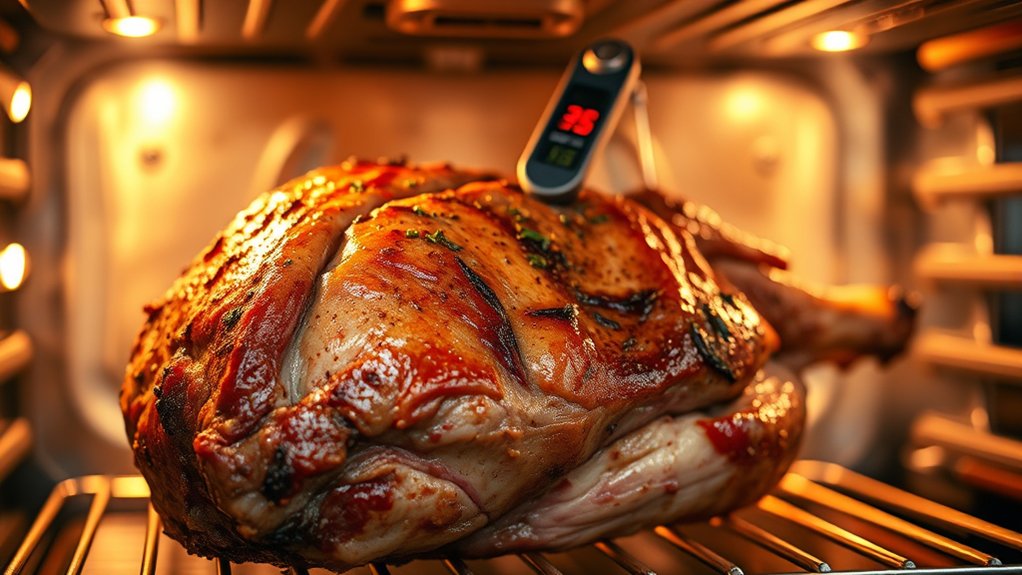
Use a meat thermometer to track prime rib doneness, because temperature tells you far more reliably than time alone. Aim for a doneness temperature of 120°F to 125°F for rare, 130°F to 135°F for medium-rare, and 140°F to 145°F for medium.
Insert the probe into the thickest part of the roast, avoiding fat or bone, so you get an accurate reading. A larger roast may take longer to reach each target, but weight only guides timing; temperature decides doneness.
Check early, then monitor closely as the roast nears your goal. When you pull it at the right temperature, you protect internal moisture and keep the meat tender. If you overshoot, the roast’ll lose juiciness and become less forgiving.
Resting Time Matters
Once the roast hits your target temperature, pull it from the oven and let it rest so the juices can settle back into the meat. Keep it on a cutting board, tent it loosely with foil, and resist slicing too soon.
Your resting time should match the size of the roast; larger cuts need longer to relax and finish gently. Use the resting temperature to guide carving, not the oven reading.
| Roast weight | Resting time |
|---|---|
| 3–4 lb | 15–20 min |
| 5–6 lb | 20–25 min |
| 7–8 lb | 25–30 min |
| 9–10 lb | 30–35 min |
| 11+ lb | 35–45 min |
When the center feels warm and stable, carve against the grain for cleaner slices and better juiciness.
How to Check Prime Rib Doneness
To check prime rib doneness accurately, insert an instant-read thermometer into the thickest part of the roast, avoiding bone and large pockets of fat. For medium-rare, look for 125°F to 130°F; for medium, target 135°F.
If you’re comparing two word discussion ideas like prime 7 vs prime 8, remember that doneness is about internal temperature, not size or grade. Check several spots if the roast is uneven, because the center often cooks slower than the ends.
Don’t rely on color alone; a browned exterior can hide an underdone center. When the thermometer reads your target, you know the roast is ready to leave the oven.
Use the reading as your guide, and adjust future cooks based on your oven’s performance and your preferred finish. Keep the probe steady, read the number quickly, and avoid repeated punctures.
Why Prime Rib Must Rest Before Slicing
Resting prime rib after it comes out of the oven lets the juices settle back into the meat instead of running out when you slice it. You should tent it loosely with foil and let it rest 20 to 30 minutes, depending on size.
Resting prime rib lets the juices settle back into the meat for a juicier, more tender slice.
During this pause, carryover cooking finishes the center, the muscle fibers relax, and moisture redistributes from the hotter exterior to the cooler middle. If you cut too soon, you’ll lose flavorful juices and end up with drier slices.
This rest also helps you keep control of prime rib terminology: the roast stays a roast until you carve it, and the proper carving technique depends on a stable, rested structure. Use a sharp knife, slice against the grain, and aim for even thickness so each portion looks clean and tastes juicy.
Patience here improves texture, preserves flavor, and gives you the best possible serving presentation.
Frequently Asked Questions
Can I Cook Prime Rib From Frozen?
Yes, you can cook prime rib from frozen, but you’ll need frozen cooking and oven methods that allow extra time.
You should thaw for best results, though, because it cooks more evenly and develops better texture.
Should Prime Rib Be Seared Before Roasting?
Yes, you should sear it first, ironically to save time later. You’ll gain searing benefits through faster crust formation, better flavor, and a richer exterior.
Then roast it gently so you don’t overcook the center.
What Sides Go Best With Prime Rib?
You’ll want side dishes that balance prime rib’s richness: creamy potatoes, roasted asparagus, Yorkshire pudding, sautéed mushrooms, and horseradish sauce. These flavor pairings add contrast, brighten each bite, and keep your meal elegant.
Can I Reheat Leftover Prime Rib Without Drying It Out?
Yes, you can reheat leftover prime rib without drying it out. You’ll want to use low heat, add a little broth, and cover it tightly.
That’s key to reheating leftovers while avoiding dryness.
How Do I Make Au Jus for Prime Rib?
You’ll make au jus by simmering beef drippings, broth, garlic, and herbs, then straining and seasoning.
Like liquid gold, it elevates everything; your jujus and sauces improve when you use careful roasting techniques.
Conclusion
With the right cut, simple prep, and a steady oven, you can cook prime rib confidently at home. Don’t worry if it feels like a special-occasion roast—once you season it well, start hot, then finish low and slow, the process is straightforward.
Use a thermometer, pull it at your target temperature, and let it rest before slicing. That resting step isn’t optional; it keeps the juices in the meat, so every slice stays tender and flavorful.
Following these steps will help you master how to cook prime rib in oven, ensuring a delicious and perfectly cooked roast every time.